Sexual violence in conflict destroys lives and damages communities.
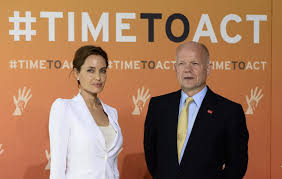
The Foreign Secretary and Angelina Jolie, Special Envoy for the UN High Commissioner for Refugees, are co-chairing the Global Summit to End Sexual Violence in Conflict on 10-13 June 2014 at ExCel London.
This is the largest gathering ever brought together on the subject, with a view to creating irreversible momentum against sexual violence in conflict and practical action that impacts those on the ground.
The Foreign Secretary and Angelina Jolie, Special Envoy for the UN High Commissioner for Refugees, are co-chairing the Global Summit to End Sexual Violence in Conflict on 10-13 June 2014 at ExCel London.
 This is the largest gathering ever brought together on the subject with over 100 NGO’s and international partners taking part alongside 48 Foreign Ministers and over 600 government delegates from 113 countries.
You can watch the Summit via our live blog and webcast on 10 to 13 June here http://live.esvcsummit.com
The Global Summit to End Sexual Violence will only lead to real change if governments start to do things differently.
This was the main message from Nobel Peace Laureate Leymah Gbowee who addressed the summit during the main plenary this morning.
She said: ”To imagine we can stop rape in conflict without stopping wars, is like imagining we can draw blood without breaking a finger or cutting ourselves. It is impossible. To do things differently we must endeavour to put an end to the militarism that has engulfed our world in ways that are unnecessary.”
Gbowee referred to a recent trip she had made to the Democratic Republic of Congo where she met with her “Congolese sisters”.
She said: “From Bunia to Bukavu, the stories were the same – women stepping up and responding to the need for counselling, humanitarian assistance, solidarity and a strong sense of sisterhood. This was a testament that women who been abused who were no longer going to allow rape and sexual violence to define who they were. They had the purpose to do things differently. If the survivors of such horrific crimes are doing things differently to repair their lives, it is time for those of us who have vowed to journey with them to take the cue: we must start to do things differently.”
Leymah Gbowee is a Nobel Peace Laureate and co-founder of the International Campaign to Stop Rape and Gender Violence in Conflict. The vision of the Campaign is that survivors will be seen, not as victims, but as women who have overcome the trauma of sexual violence and are now helping others to access services and move forward with their lives.
The Campaign is calling for three main actions:
Prevention: calling on world leaders to commit to having policies in place by the time of the 2015 UN Security Council High-Level Review of UNSCR 1325 to ensure women’s participation and independent civil society representation in 100% of peace processes and negotiations.
Protection: calling on world leaders to commit to the sustained resources for the full range of medical, psychosocial, legal and livelihood services for survivors and increase direct funding to local women’s organizations providing survivors with these services.
Prosecution: calling on world leaders to commit to the development and enforcement of robust national laws to hold perpetrators accountable for sexual violence, with particular focus on the training law enforcement officials in investigation and support for prosecutors.
Campaign member, Liz Bernstein: “To effectively stop rape as a weapon of war and bring sustainable peace to communities that have experienced conflict it is important to work with survivors and grassroots women’s organizations. The Summit offers a critical opportunity to turn two decades of international commitments to end rape in war into concrete action to bring about real change on the ground. It is a turning point in the struggle to stop sexual violence in conflict and to address the urgent needs of survivors and communities affected by sexual violence in conflict.”