Lorenzo Quinn: His Art in London

Renowned sculptor Lorenzo Quinn is in London where four of his sculptures were placed in Cadogan Place, One Hyde Park, in Park Lane and one in Berkley Square. This little walk in the Mayfair area is enriched for a period with these admirable works of art. Lorenzo Quinn, son of the famous actor Anthony Quinn, had a stint in the acting industry himself with a couple of films where he interpreted the part of artists such Stradivari or Salvador Dali’, but then, very young the world of art engulfed him and he gained commissions from the United Nations and Absolute Vodka campaign where only the best artists in the world are called.

The Vatican asked him to create a sculpture of Saint Anthony to be placed in the Church dedicated to the saint in Padua. Birmingham City has got a sculpture of this very talented artist, “Tree of Life” dedicated to the citizens of Birmingham who lost their life during the air raid in the Second World War. Lorenzo Quinn most used subject in his works is the human hand because the hand has got multiple meanings, from love to power to hate.

With the hands it is possible to create a work of art or to kill holding a weapon. An exhibition will be at the Halcyon Gallery until the 19th of April called “Metamorphosis” and at the Italian Cultural Institute, five sculptures will be on display until the 11th of March. In this occasion the Salento International Film Festival together with the Italian Cultural Institute organized an evening where Lorenzo Quinn has been the guest of honour. The evening begun with the screening of “In the Hands of Lorenzo Quinn” a film about Lorenzo and his works, from the beginning of his career which included rare footage and interviews. This film has been presented as world premiere at the SIFF 2010 and copies have been gifted to the guests attending the event.

After the screening Lorenzo Quinn took the microphone to talk about his art, recounting anecdotes from his youth and his first steps in the world of painting and sculpture, remembering his father Anthony Quinn as an accomplished painter and sculptor as well as an amazing actor. Lorenzo talked about how he works, which materials he uses for his works like bronze, resin, aluminium, putting bronze as a favourite. He started his career in New York at 21 years old and he claimed that if New York made him a man, London definitely made him an artist, happy with the exhibition at the Halcyon Gallery, a collaboration that has been going on for 14 years.

A series of questions from the audience have been answered by him explaining that his works come from his emotions and his feelings and his fascination with the hands as a subject for his sculptures is dated back to when he was probably just 6 years old. Being half Italian he recognizes that hands are very important for communicating, everywhere in the world gesturing with the hands it is possible to be understood. Everyone left encouraged visiting his exhibition in New Bond Street and admiring his sculptures around London.

Top 300 Italian Scientists’ list was published by the Italian Via-academy

Via-academy is an organisation of Italian academics based primarily in Manchester, in August 2010, created a table league of the ‘Top 300 Italian Scientists’ (TIS). This table league was rather a list of scientists of major impact, measured by their h-index which is a number that represents both the productivity and the scientific impact of a person based on the number of citations received by this person. This h-index has some limits, in particular, the frequency of the citations varies on the different fields and it gets maximum in the biology areas such as immunology.

This ‘Top 300 Italian Scientists’ list was published by the Italian newspaper and since then,many Italian academics started calling and notifying us their h-index. Note, onlyscientists with h-index > 30, are allowed to enter in this list. Now the list has more than 1,700 Italian scientists and it is still growing. 

 to the moment we want to complete the so-called TIS Report004, and to make the classification the Top Italian Institutes based on the h-index. Is a big job that will hock us’ for quite months.

The academy , is formed by about 400 Italians, researchers, teachers and some professionals, like me, that work in the English’s Universities, in particular in Manchester University and in the North England. Of the important people in to academy, we have the teacher Gianandrea Noseda, manager of the orchestra of the BBC, has recently replaced the teacher Francis Muti when he was not very well, (concerts in Chicago), the prof. Lucio Piccirillo, is full Professor of Radioastronomy Technology near the Manchester’s University and manager of the observatory radioastronomico of Jodrell Bank, of the most observatory famous in Europe.


A link of this list can be found here:

http://www.topitalianscientists.org/Top_italian_scientists_VIA-Academy.aspx


Rank Academic H-index Nation Area Italian_Institution note
1 Carlo Croce 125 USA cancer – medicine Ferrara  
2 Napoleone Ferrara 119 USA cancer – medicine   Lasker award 2010
3 Alberto Mantovani 109 Italy immunology – medicine Humanitas e Milano  
3 Giorgio Trinchieri 109 France/USA immunology – medicine    
4 Ettore Appella 102 USA immunology – medicine    
5 Giuseppe Remuzzi 99 Italy nephrology – medicine Mario Negri  
6 Alex Sette 98 USA immunology – medicine   youngest top
7 Lorenzo Moretta 96 Italy immunology – medicine Gaslini GE e Genova Director
7 Tomaso Poggio 96 USA computer, neurosciences, social sciences   most eclectic
8 Peter J Schwartz 95 Italy/South Africa cardiology – medicine Pavia PorP
9 Antonio Lanzavecchia 94 Switzerland immunology – medicine    
10 Alessandro Moretta 93 Italy immunology – medicine Genova  
10 Pietro De Camilli 93 USA cell biology – neurosciences    
11 Giuseppe Mancia 92 Italy clinical – medicine Milano Bicocca  
11 Silvia Franceschi 92 Italy/France epidemiology – medicine Torino top female
12 Alberto Alesina 89 USA economics    
12 PP Pandolfi 89 USA cancer – medicine    
13 G Rizzolatti 88 Italy neurosciences Parma  
14 Piero Anversa 87 USA cancer – medicine    
15 Carlo La Vecchia 86 Italy epidemiology and cancer – medicine Mario Negri e Milano  
15 R Dalla Favera 86 USA cancer – medicine    
15 Tullio Pozzan 86 Italy cell biology Pisa e Padova ISI
16 A Maseri 85 Italy clinical – medicine HSC Onlus Grand Prix Sci. 04
16 M Parrinello 85 Switzerland chemistry – physics   ISI
16 Paolo Sassone-Corsi 85 USA neurosciences    
16 PG Pelicci 85 Italy cell biology – medicine IEO Milano e Milano  
16 Vincenzo Balzani 85 Italy chemistry Bologna ISI
17 Dario Alessi 84 UK biochemistry    
17 PM Mannucci 84 Italy haematology -medicine IRCSS Cà Granda Osp. Maggiore MI e Milano PorP
18 A Sangiovanni Vincentelli 83 USA computer sciences   IEEE Maxwell Award 2009
18 Antonio Colombo 83 Italy cardiology – medicine San Raffaele  
18 Ele Ferrannini 83 Italy diabetes – medicine Pisa e CNR  
19 Juan Rosai 82 Italy/USA pathology – medicine Centro Diagnostico Italiano Milano originally, Giovanni
20 Giorgio Parisi 81 Italy physics Roma ISI, Planck prize 2010
20 Mario Gerla 81 USA computer sciences    
20 Silvia G Priori 81 USA/Italy cardiology – medicine IRCSS Maugeri e Pavia  
20 Vincenzo Di Marzo 81 Italy pharmacology – neurosciences CNR Napoli  
21 Giorgio Bernardi 80 Italy neurology -medicine Roma 2 e IRCSS S. Lucia  
21 Roberto Bolli 80 USA cardiology – medicine    
21 Sergio Romagnani 80 Italy immunology – medicine Firenze PorP
22 A Aguzzi 79 Switzerland neurosciences – medicine    
22 Rino Rappuoli 79 Italy/UK pharmacology Chiron  
23 LL Cavalli-Sforza 78 USA population genetics    
23 Marco Colonna 78 USA immunology – medicine    
23 Renato Baserga 78 USA cancer – medicine   retired?
24 Elisabetta Dejana 77 Italy cancer – mol cell biology IFOM e Milano  
25 Ernesto Carafoli 76 Switzerland/Italy biochemistry – cell biology Padova  
25 Massimo Filippi 76 Italy neurology – medicine San Raffaele  
25 Zaverio Ruggeri 76 USA haematology -medicine    
26 PM Comoglio 75 Italy cancer – medicine IRCC e Torino  
27 Albeto Zanchetti 73 Italy cardiology – medicine Istituto Auxiologico retired?
27 Gianni Tognoni 73 Italy epidemiology – medicine Mario Negri  
27 GL Gessa 73 Italy neurosciences Cagliari retired
27 Umberto Veronesi 73 Italy cancer – medicine Milano senatore
28 Alfonso Caramazza 72 USA/Italy psychology – neurosciences Trento  
28 D Gatteschi 72 Italy chemistry Firenze ISI
28 DC Altieri 72 USA cancer – medicine    
28 Paolo Boffetta 72 France epidemiology – cancer    
29 Elio Riboli 71 UK epidemiology – medicine    
29 Marco Pierotti 71 Italy cancer – medicine Ist Naz Tumori MI PorP
30 Mario Capecchi 70 USA genetics – mol cell biology   Nobel
31 Carlo Patrono 69 Italy pharmacology Cattolica Roma  
31 S Sozzani 69 Italy cancer – medicine Brescia  
32 Andrea Biondi 68 Italy cancer – medicine Milano Bicocca e Ospedale MOnza pediatrician, homonym in legal studies
32 Marino Zerial 68 Germany cell biology    
32 Michele Baccarani 68 Italy haematology -medicine Bologna  
32 Pierluigi Nicotera 68 Germany neurosciences    
32 Umberto Eco 68 Italy semeiotics – literature Bologna  
33 C Franceschi 67 Italy biochemistry – cell biology Bologna  
33 Cesare Montecucco 67 Italy cell biology – biochemistry Padova Paul Ehrich prize 2011
33 G Di Chiara 67 Italy pharmacology – neurosciences Cagliari PorP
33 LM Fabbri 67 Italy clinical – medicine Modena  
33 Luigi Ferrucci 67 USA epidemiology – medicine    
33 Mago Clerici 67 Italy mol cell biology Milano  
33 Soldano Ferrone 67 USA cancer – medicine    
34 Aldo Scarpa 66 Italy/USA biochemistry Verona  
34 Giovanni De Micheli 66 Switzerland computer sciences    
34 Luigi Tavazzi 66 Italy cardiology – medicine Pavia  
34 Mario Rizzetto 66 Italy clinical – medicine Torino  
34 P Gambetti 66 USA neurology – medicine    
34 PP Di Fiore 66 Italy cell biology IFOM e Milano  
34 Renato Iozzo 66 USA cancer – medicine    
34 Sergio Ferrara 66 USA physics    
35 Cristina Bottino 65 Italy immunology – medicine Gaslini GE e Genova  
35 I Bertini 65 Italy chemistry – biochemistry Firenze ISI
35 Jacopo Meldolesi 65 Italy cell biology San Raffaele  
36 Giovanni Gasbarrini 64 Italy clinical – medicine Cattolica Roma  
36 Luca Cardelli 64 UK/USA computer sciences    
36 Riccardo Cortese 64 Italy mol cell biology IRBM Pomezia  
37 Andrea Bacigalupo 63 Italy haematology – medicine Genova  
37 G Tabellini 63 Italy economics Bocconi  
37 Gaetano Thiene 63 Italy cardiology – medicine Padova  
37 Gianfranco Bottazzo 63 Italy/Vatican diabetes – medicine Bambin Gesu’  
37 Giorgio Parmiani 63 Italy cancer – immunology San Raffaele  
37 Marco Dorigo 63 Belgium computer sciences    
37 Massimo Zeviani 63 Italy neurology – genetics Besta Milano e Milano Bicocca  
37 Paola Allavena 63 Italy immunology – medicine Humanitas  
37 Vincenzo Cerundolo 63 UK clinical – medicine    
38 A Caneschi 62 Italy chemistry Firenze ISI
38 Bruno Zumino 62 USA physics – mathematics    
38 Cristiana Peroni 62 Italy physics Torino ISI
38 F Salamini 62 Italy/Germany plant biology Fondazione Mach IASMA  
38 Laura Fratiglioni 62 Sweden epidemiology – medicine    
38 M Mangano 62 Switzerland physics    
39 Angela Barbaro-Gualtieri 61 USA physics    
39 Elisa Bertino 61 USA computer sciences    
39 Gianfranco Parati 61 Italy cardiology – medicine Milano Bicocca  
39 M Prato 61 Italy chemistry Trieste ISI
39 Maria Roncarolo 61 Italy immunology – medicine San Raffaele  
39 Massimo Loda 61 USA cancer – medicine    
40 Adriano Zecchina 60 Italy chemistry Torino ISI
40 Aldo Maggioni 60 Italy cardiology – medicine ANMCO Res. Firenze  
40 Andrea Contin 60 Italy physics Bologna INFN ISI
40 Annamaria Colao 60 Italy endocrinology – medicine Napoli  
40 Camillo Ricordi 60 USA diabetes – medicine    
40 Claudio Basilico 60 USA cancer – medicine    
40 Daniele Piomelli 60 USA/Italy

pharmacology


IIT

IPhone App to “smuggle immigrants”: a game under debate.

Technology is literally going beyond borders. In fact, a new game called "Smuggle Truck: Operation Immigration" allows users to smuggle immigrants “ beyond the border”. the Iphone app consists of driving a truck full of immigrants across the U.S.-Mexican border and through the desert, all the while trying to keep the human cargo from falling off. Scores are calculated by the number of immigrants helped crossing the border. The most careful drivers are awarded a "Green Card" for saving passengers’ lives. The proposed IPhone app was created by Owlchemy (OWL’-cheh-mee) Labs, a Boston-based company and is set to be released in March, if Apple approves.

In spite of being "the premiere smuggling game on the App Store”, according to the developer Alex Schwartz, the game caused a debate and controversy due to the political issue it touches: immigration. In order to clarify the aim of the IPhone app, developers gave insight into the background of this game in a statement. “We want to express the struggle of immigrants through the absurd legal minefield that surrounds U.S. immigration. The game comes out frustration and pains that immigrants suffer while trying to immigrate”.

Though developers explained their reasons, ctitics go on. "This IPhone app pokes fun and trivializes the harsh reality of our current immigration policy that leads to people putting their lives at stake and embarking on dangerous border crossings," a member of the New York Immigration Coalition said. In spite of the critics, the game “smuggle Truck” focuses on a reality: immigration. Therefore it could be seen as a precious and immediate tool of denounciation. 

London School of Economics: “Il Fatto Quotidiano” in London

 London: In the year of the 150th anniversary of the Italian unification, the celebration goes beyond the English channel, and while some people in the belpaese scream to let the others know they do not feel Italian, the London School of Economics (LSE) closed last night the Italian Week, a week aimed at celebrating Italy with no rhetoric, organized by the Italian Society LSE.

After the screening of "Sotto Scacco" for the first time in the UK, the movie by Marco Lillo and Ugo Gumpel that speaks about Mafia massacres in 1992/93 and the obscure and controversial events between the First and Second Republic, Antonio Padellaro and Marco Travaglio, director and vice-director of "Il Fatto Quotidiano", gave a lecture trying to answer the question: what have we learned in 150 years? The thesis of Travaglio and Padellaro, as well as the editorial of Il Fatto, it is well known in the country, but the efforts of a great newspaper, derived from the basic need to boost freedom of information, cannot be sufficient to lead us to open our eyes, the drift must be collective in a country where the media-politics conflict of interest is completely dominated by the Berlusconi’s hegemony.

Observing Italy now means looking at a country bogged down in a swamp of lies. As Director Padellaro pointed out, it is important at this time" to start again by sharing the core values of our democracy", to find a solution for a "politics still chained to the old rites” and held in check by berlusconism, where the instrumental use of media is only addressed to the personal interests of the Premier. Usually ironic, Travaglio considers the Italian journalism to be not free for the most part, it chooses a deceptive "neo-language" that hides facts and news and seems to be determined to forge a strong anti-judiciary armor for the Premier-employer.

 In the past twenty years we have certainly learned to stand still, worn and myopic, we are incapable to go beyond this dilapidated Second Republic that tastes of berlusconism. But what can we learn more? First of all it is right to celebrate our history, even just to remember who we are and perhaps shining a light on the dark corners of our unity, and it is vital at a time like this, when the national identity seems to be cooled and lost in the palace sheets, to start renewing an old and unable to recover country, the reflection that can arise from the celebrations should get off the final push for the renewal of our political class, now unable to find solutions. Will this celebration be useful to find an answer to understand how Italy reached the lowest point in its history after 150 years of life?

Photo: Michele Lilla Italoeuropeo

London School of Economics Italian present the social events

 London:The London School of Economics Italian Society is pleased to announce that we will be launching, in collaboration with the Bocconi Alumni Association, an “Italian Week” to celebrate the 150th Anniversary of the Unification of Italy. Italian Week will take place from the 7th to the 11th of February and will involve a series of lectures and social events:

The London School of Economics- Monday 7th February – “Europe’s Battle for World Competitiveness”, Vittorio Colao (Chief Executive Officer Vodafone) and Bill Emmott (Former Director of The Economist), 7pm, Old Theatre, LSE. RSVP needed.

Followed by small group dinner with Bill Emmott at Tempio Restaurant, 8.45pm. RSVP Needed.

The London School of Economics- Tuesday 8th February –  “The Beautiful Game: Why We Just Can’t Live Without Football”, Gianluca Vialli (Former Italian Striker), 1pm, New Theatre E171, LSE.

In the evening "Walking Through Italian Vineyards and Art” Wine Tasting at Fiumaro Art Gallery, 7.15pm. RSVP Needed.

The London School of Economics- Wednesday 9th February – “At a Crossroads: The Past Successes and Current Problems of the Italian Economy”, Giacomo Vaciago (Professor of Economic Policy at Universita’ Cattolina, editorialist for Il Sole 24 Ore) and Andrea Prat (Professor of Economics at the LSE), 7.00pm, U8, LSE.

Followed by live jazz dinner at St.Martin-in-the-Fields, before 8pm or at 9pm. RSVP Needed.

Thursday 10th February – “La Criminalita’ Organizzata in Italia: Anni Bui ed Anni di Speranza”, Laura Aprati (giornalista)Antonino Birrittella (collaboratore di giustizia – videolink),Alberto Cisterna (Magistrato Direzione Nazionale Antimafia), Antonino de Masi (imprenditore), Enrico Fierro (giornalista), Laura Garavini (Capogruppo PD nella Commissione Parlamentare Antimafia), Federico Varese (Ordinario di Criminologia alla Oxford University), 7pm, Hong Kong Theatre, LSE.*

Followed by Milanese Style Aperitivo Buffet at Rosso Pomodoro with our Guests, 8.45pm. RSVP Needed.

Friday 11th February –

Film Screening of “Sotto Scacco” – an investigation on the Italian mafia (English Subtitles), 2pm, KSWG1. 

“Cosa Abbiamo Imparato in Questi 150 Anni”, Antonio Padellaro (Direttore de Il Fatto Quotidiano), Marco Travaglio (Giornalista), 6.45pm, Old Theatre, LSE.* Tickets needed.

*Please notes that the events on Thursday and Friday will be in Italian.

Tickets are needed for the lectures on Monday and Friday, and the dinners. Seats to all other events will be allocated on a first come first served basis.

For more information and tickets, please visit www.lseitalians.com.

We look forward to seeing you there, The London School of Economics Italian,The Italian Society Team.


Royal Marriage on Friday 29 April at Westminster Abbey

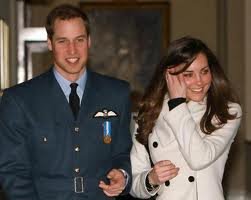
THE NEXT ROYAL WEDDING IN 2011– Westminster Abbey, the venue of the Queen and Queen Mothers wedding, will host the Marriage of Prince William and Kate Middleton, on Friday 29 April. Prime Minister David Cameron, a big fan of Royal weddings, called it “a happy and momentous occasion” and announced it would be marked a public holiday.

The Couple is well aware of the global interest in their wedding. Jamie Lowther-Pinkerton, the prince’s private secretary, has been asked to make sure that everybody is able to enjoy the big day.

The Dean of Westminster is very pleased that the couple chose Westminster Abbey for their marriage: “We look forward to the detailed planning for what will be a great and happy occasion for the couple themselves, for their families and friends, for the country and Commonwealth and for well-wishers across the globe,” he said.

According to the BBC, William and Kate wanted to marry on a Friday in spring and 29 April was chosen because it fell after Easter and Lent and before a busy political programme in May and June. The extra holiday will fall in the same week as Easter Monday, giving millions of workers in England, Wales and Northern Ireland a three-day week.

bannerwiiliamkate2


MORE

Where is Christmas?

London wears its winter coat and the Christmas lights in the shopping streets are sumptuous. The “politically correct” makes religious references disappear: no cave, no bull, no donkey; only the major sponsors and their mega advertising campaigns remain. It is now almost 80 years since the Coca Cola re-invented Santa Claus as an advertising icon of consumerism.  Now Christmas is transformed, from London to Brussels it is renamed "Winter Festival", "White Season" or "Winter Pret, and the lights become a glittering expanse of Christmas packages, bows, astronauts dressed up like Santa suspended among huge paper planets in Carnaby Street, while the upcoming Disney film advertisements illuminate Regent Street.

The European Commission has done much more producing a journal of the European Union as a gift for secondary schools, which contains no reference to Christmas, but it includes Jewish, Hindu, Sikh and Muslim holidays. The Daily Telegraph tells that 330000 copies have been distributed in all British schools accompanied by 51 pages of information about the Union.

The fact would be normal and educative from a point of view on integration, if it did not lack all the Christian holidays, included Christmas. The Catholic community, astonished, declined the matter hoping that the error will be not repeated next year.

The head of European conservatives, Martin Callanan, accuses the European Commission to use the Christmas spirit for propaganda purposes, and putting out the uncomfortable Dickens’ story of Christmas, he says:

More than a century ago, the story of Dickens gave to the British society a laical perspective on Christmas. He was hoping that life would have been recreated each year and devoted to solidarity. He was criticizing a marginalist society towards the less fortunate. Integration starts from knowing the others and sharing traditions and cultures.

London is a good example of multi-racial and multi-religious society that seems to work, several festivities of various religions are celebrated throughout the year, schools of different districts are closed on public Islamic or Hindu holidays. However, in the name of  the “politically correct” there would be the risk of expropriating Christmas of its religious symbols, replacing them with commercial contents.

In the name of a militant secularism, the mutation of Christmas carries on: from religious celebration into pagan-modern rehearsal. This seems to be an attempt to standardize people in an overall profile of the consumer-citizen of the world and to transform Christmas into a commercial event, perhaps the most lucrative event on the calendar. We doubt that freedom of religious belief may be just a way to expropriate this event of its religious features so that it might become palatable to non-Christians as well.

Christmas turns quietly into the gift fair.

Official thanks and congratulations from the Queen Elisabeth.

English person, after 64 years, find his broter In Italy. The “italoeuropeo” helped in the search.

Written by Filippo Baglini Manager Editor of italoeuropeo (member NUJ journalist)

This is a story, which started long time ago. One of these moving stories, that at the end leaves you smiling.

A story that teaches us, not to give up on our dreams, even if someone tries hard to destroy them. A lesson that reminds us, that in life there is always something to fight for, to sacrifice life itself. Do you remember? Some time ago I wrote an article (UN ITALIANO IN CERCA DI SUO PADRE INGLESE UNA STORIA TOCCANTE ITALOEUROPEO SI IMPEGNA NELLA RICERCA)  about Mr Perlini, who contacted me personally asking me if I could help him to find a missing person, a Scottish soldier: his father. I was intrigued by his story. I was touched by the shaking but determined voice, of a man who needed to shed light on his past.

This person who was in an orphanage for 14 years, wanted to know who his father was.As he always told me: “…… I must have come from someone, it does not matter if I discover that my dad is dead, however I would like to know where I come from,if I have relatives….”.

Everything started in the far autumn of1944, his mum was living in Castiglione dei Pepoli (Bologna), met and fell inlove with a Scottish soldier from the Scots Guards called David Jackson, asoldier sent to those regions, during the second world war. Few months latershe realized that she was pregnant, however she had no more news of the soldiershe loved. He had vanished. Even the Italian Tv programme “Chi l’ha visto?”, local and national newspapers tried to investigate, but nobody had managed to bring some hope to Mr Perlini. I was able to get everything delivered to me in London, that had to do with his father: a photo, an old excerpt from anewspaper, an approximate date of birth and an old address in London, that the father left to his mother in the first meetings. I discovered straight away that at that address no Jackson was living any longer. Determined, I started tofollow every trace of this event, digging in the English archives, from Scotland Yard to the National England Archives. In the middle of the search,Raffaella Matera from Termoli (Campobasso) a passionate genealogist decided tohelp me and Mr Perlini. She contacted Mr Perlini and collected the data, butshe needed some (riscontro) and therefore she got in touch withthe Scottish members from the forum http://www.rootschat.com whereshe found some willing people.

Thanks to the help of the Lanark Library staff,she was able to trace the exact place and date of birth of David Jackson, and to rebuild the story of his family in Scotland, in Carluke to be precise. Thedecisive input, the winning idea came from the back of the newspaper excerpt from the time that David Jackson left to the Italian woman. We went back to theplace of origins and we obtained the whole article published in the Carluk Gazette edition of the 19th of May 1944, full of informative data that has allowed the progress of the search until the complete success. David Jackson has sadly died in the Decemberof 1994 in the London area. However, the most fascinating thing wasto find out that Davide Perlini had a sister in London, still alive, who wasglad to know of the existence of an Italian brother. For Mr Perlini, who for 60years thought that he was an only child from an unknown father, to find outthis reality, to know that he has an older sister, was a , like to be bornagain. For them there will be in the short time a first meeting and both ofthem are very emotional. An event born under the bombs of thesecond world war and which ended today.

Myself, L’italoeuropeo, Raffaella Matera and all the wonderful people we met searching, are all glad to deliver this story to England and Italy . Today for the Italoeuropeo is a specialday that we will never forget…

letteraeii.jpg