Tony Blair is refusing to apologise over the kidnapping and torture of Belhadj in Libya

London (Valeria Piccioni) – Tony Blair, the official Special Envoy for peace of the Quartet In the Middle East by order of ONU, European Union, USA and Russia until May 2015, has refused to personally apologise to Lybian leader and fighter Abdel Hakim Belhadj, who was kidnaped and tortured in Libya in 2004 after a tip-off from MI6 gained from London-based informants. Abdel Hakim Belhaj and his wife, Fatima Boudchar, have fought for a compensation and an apology for more than six years after the role that British intelligence played in their kidnap had been revealed.

Belhadj was arrested at Kuala Lumpur International Airport, Malaysia, then he was transferred to Bangkok under the custody of the CIA, and he was kept in a secret prison at the airport. After his return to Libya, he stayed in Abu Salim prison for seven years. However, his pregnant wife Fatima, was released after a few months from the imprisonment.

Belhadj founded the Libyan Islamic Fighting Group (LIFG) against Gaddafi from 1994 forward. After three failed murder attempts on Gaddafi, the LIFG was solved in 1998.

Two weeks after the couple’s kidnapping, Blair came in Libya for his first visit to Gaddafi and during the meeting he declared that Libya had recognised “a common cause” “in the fight against al-Qaida extremism and terrorism”. In the meanwhile , in London, the Anglo-Dutch oil company Shell was signing a deal for gas exploration rights in the Libyan coast.

Moreover another opponent of Gaddafi, Sami al-Saadi, has been kidnapped and with his wife and his four children, they were taken to Libya. The family was incarcerated for over two months before being released. Both Saadi and Belhaj were imprisoned and tortured for more than six years. Al-Saadi has pressed charges against the British government in 2012 receiving £2.2m for compensation.

This month the Prime Minister Theresa May addressed them in order to apologise on behalf of the government and offered Boudchar, Belhadj’s wife, £500,000 compensation.

Differently, Blair had ambiguous behaviour by stating:“There’s been a settlement of the case. As I say, I am content to go along with the government’s apology in relation to it. It is not something I dealt with myself when I was in government. I think that is all I can say.”

Blair’s declaration maintained that the former Prime Minister was not aware of the situation at the time. This could suggest that Jack Straw, Britain’s former Foreign Secretary, did not share several aspects of this specific operation with Blair.

Amnesty International stated that a judicial inquiry  regarding the UK involvement in this circumstance is necessary.

Brexit seen by another point of view

London (Valeria Piccioni) – The phenomenon of the Brexit will have an impact on the future of the European Union: the difficult situation of the UK will affect the trade marketsboth internally and externally. However it is important not to fall in hasty conclusions. Infact, as soon as the UK leaves the EU, many changes will arguably be implemented in the trade with EU and with the Commonwealth countries.

The Commonwealth is an intergovernmental organisation made of 53 member states that are mostly former territories of the British Empire. Leaving the EU, the UK will exit the customs union and the bloc’s external commercial policy. This political phenomenon could put EU in a better position for possible trade market deals with Australia and New Zealand after Brexit. Indeed, New Zealand’s trade minister, David Parker, said that the UK’s withdrawal did not diminish the potential gains for his own country which would come from breaking down trade barriers with the remaining 27 member states.

Moreover also Australia has been currently under the spotlight. As a matter of fact UK is the big country’s eighth largest two-way trading partner. Australia’s Commonwealth Bank currently declared a doubling in costumers.

Australian government is now negotiating a deal with the EU. Nevertheless, according to experts, Brexit could be a new opportunity for the Australia and New Zealand to sell in a tariff-free market in the UK.

By establishing a Free Trade Agreement (FTA), Australia could achieve a new deal between its and UK’s enterprises. This recent treaty will also consider theregulations for the relocations of the enterprises allocated in both of the Countries.

In order to dislocate Australian and New Zealand companies to London, the businesses would require real estate services to stay in UK. For this reason, it is important  to focus on Stonelink International, London’s Real Estate Broker.

“International firms, especially from Australia and New Zeland who have a lot moving parts in terms of relocating staff and family, logistics & transportation of vital equipment want to ensure the commercial space and property they will move into, is ready for them, well ahead of time” said Nicholas Tsiougos, Managing Director of Stonelink International.

It has always been argued that several business and investments will experience  numerous difficulties after  2019. However this hypothesis could possibly not be accurate. As a matter of fact, a considerable amount of businesses has not been affected by Brexit. On the contrary, these enterprises have experience and unexpected growth. Therefore Brexit is likely to offer Britain different opportunities which are neither better nor worse than the previous ones.

A draft bill for Italians abroad

London (Valeria Piccioni) – The new draft of the Italian Government deal takes into consideration the matter of Italians abroad’s.

“Regarding the Italian communities situated abroad, it is necessary to highlight knowledge and experience heritage in order to support Made in Italy, the Italian culture  and the Italian language all over the world. Furthermore, the election procedures in the foreign jurisdiction and the rappresentative institutions of the General Consulate (CGIE and COMITES) must be reformed. These measures will make these organisations more efficient, more transparent and less subjected to vote misrepresentations. Moreover,  concerning the COMITES and the CGIE, it is necessary to specifically reform the purposes of these institutions in order to blend them with the parliamentary representation. Finally, the diplomatic and consular net must be reformed in order to grant adequate services to the growing Italian communities that are settling permanently abroad” declares the final draft officially published on Friday.

Until now there has been a real negligence towards this matters: apparently, only the Italian citizens living in Italy seem to be considered whereas instead 4.2 millions of Italians abroad seem to be neglected.

Meanwhile, on Tuesday, the 18 Parliament members elected abroad from over 1 million and 100 thousand voters met for the first time during this legislation in the Chamber of Deputies. Are they conscious about the current lack of attention towards the Italians abroad? In the meantime, this meeting has highlighted some of the main issues of the Italian communities abroad which are:

  • Foundation of a “Bicameral Commission for the issues of Italians abroad”
  • Reform of voting procedures
  • The strengthening of Consular resources

It is important to remember the controversial relationship between the unborn Italian Government and Bruxelles. The faces of this new Government are still unknown, therefore Europe fears an Italian economical collapse. Recently, Salvini and Di Maio against Manfred Weber, exponent of the German CSU and president of the popular European party at the Europarliament who stated “Irrationals or populists actions could cause a new euro crisis” he said to them. “You are joking with fire because Italy is heavily indebted.”.

“Italians are tired of taking orders from Brussels and Berlin!” replies Mara Bizzotto, leader of the Lega in the European Parliament “Merkel and her proconsuls in Brussels always assembled and disassembled Italian governments according to German and their banks’ interests “.

Love at the time of Tinder: are dating apps making Londoners more lonely?

by Valerio Esposito

London is a city where it’s easy – almost inevitable – to feel lonely. In such a fast-moving environment it is becoming increasingly difficult to connect with other people. You see it every day: your co-worker is leaving for a better job, your neighbour is moving out because the rent is too high and the girl who made your morning coffee moved back to her country.

It’s a city of 9 million people, and yet it’s never enough to ease your misery: everyone is too caught up in their daily drama to care about others, to even realise that they’re there. And at the end of the day, you crawl into an empty bed and search for the easy solution on the screen of your phone, trying to find comfort in yet another dating app.

A recent survey[1] conducted by tech start-up Wonderush showed that 64 per cent of Londoners feel lonely on a daily basis. Of those surveyed, 65 % attributed their loneliness to the demands of their job, while 42 % said that London itself is the main cause.

Loneliness is a tricky concept: it can be social or emotional, the latter being more damaging. Research suggests that the feeling of loneliness does not arise from the lack of company, but rather the lack of emotionally fulfilling connections. Just try to take a train in the city and look around: not a whisper, or a smile or even innocent eye contact. We are like flies in a web, permanently alone, helplessly disconnected.

But are dating apps making it worse? It sure is difficult – almost impossible – to form meaningful relationships just by playing a little game with the thumb: swipe left, swipe right. Ugly and hot. Good and bad. The selection mechanisms have never been so simple – and ruthless. People have become bidimensional exchange goods, with no depth: their worth is established by the movement of a merciless finger.

”I’ve tried Tinder but it didn’t work. I found that fast mechanism of ‘consumption’ degrading and impoverishing. This model makes it impossible to develop a relationship,” comments retail worker Fiorina, 36. “You can’t keep up with it, you’re always greedy and you can’t focus on what’s in front of you because you’re impatient to see what’s next.”

Julia Keller, love coach and author of Attract Authentic Love, attributes this to our “incapability to communicate with each other. Some say that dating apps were invented because we lost this ability. Or maybe they made us lose this ability. It’s a chicken and egg kind of situation, hard to tell”.

We are a selfish generation and yet we live in the senseless effort to project ourselves onto others. That new pair of shoes, that stylish haircut, that rejuvenating cream and the new red lipstick. Why do we do it, if not to make ourselves more appealing – or tolerable – to others? This is just one of the many faces of this business called love.

Dating apps are perhaps the newest – and most insidious – degeneration of this business. It’s no surprise that people’s approach towards relationships has become increasingly business-like. Student Aara Syed, 19, explains how she felt that “dating apps might be a way to tick a box: boyfriend sorted. People might feel that way because it’s so easy to meet people and have many options. But it doesn’t work like that”.

The truth is that, most of the times, dating apps create a demand by exploiting basic needs: human contact – and affection. They claim to sell a solution: if you can’t find the one, they’ll do it for you. ”We’ve lost the notion of process. We don’t take the time to solve the problem but we just move on to the next things. And that’s why we are constantly dissatisfied. And constantly lonely,” Keller adds.

In the meantime, it seems as dating apps try to convince you that what you want is easy to get; and you end up wanting more – and faster. It’s a scam, a palliative. It offers relief but it doesn’t heal people’s brokenness.

Yes, technology is breaking us. We don’t work the way we used to. ‘’How do you even meet people in the real world?’’ is a question that I have heard countless times. I usually answer with another question: ”How did your parents meet?”

Julia Keller argues that ”It’s a completely different world than it was the time of our parents. People are confused and busy. The world is becoming much more superficial and we find ways to make love faster and easier and this leads to a lot of disappointments”.

Indeed, things have changed. Millennials are the main victims, for they were born in the era of dating apps and might not even know that they have an alternative. Jekaterina Drozdovica, 20, a student in London, explains how “what were normal human interactions are now considered abnormal. Especially in London, If I just went to a bar and started a conversation with a stranger it would be considered… creepy”.

We got to the point where starting a conversation in a train or in a pub has become weird. But, ironically, sending and receiving ”dick pics” and other obscenities is more tolerable.

Maybe it’s true: the world has changed and dating apps have become an essential tool for human interactions. This leaves us wondering if it’s worth fighting the new system or if it’s just better try to find a way to deal with it. Aara is not sure whether dating apps should be completely demonized: ”I can’t say that they make things worse, but they clearly don’t help”.

Love Coach Keeler, on the other hand, believes that it’s all about “learning to navigate the odds. Good or bad they might be, dating apps are still a practical way to get to know people. And once you’ve met someone you just need to know the right thing to do from there”.

[1] http://blog.wonderush.com/pull-sickie-make-friend-month/

Turing: Maths & Music …the seven musical notes

Luisa Liu
LONDON– Where is nowadays’ elettronic music from? And where is the synthesizer from?
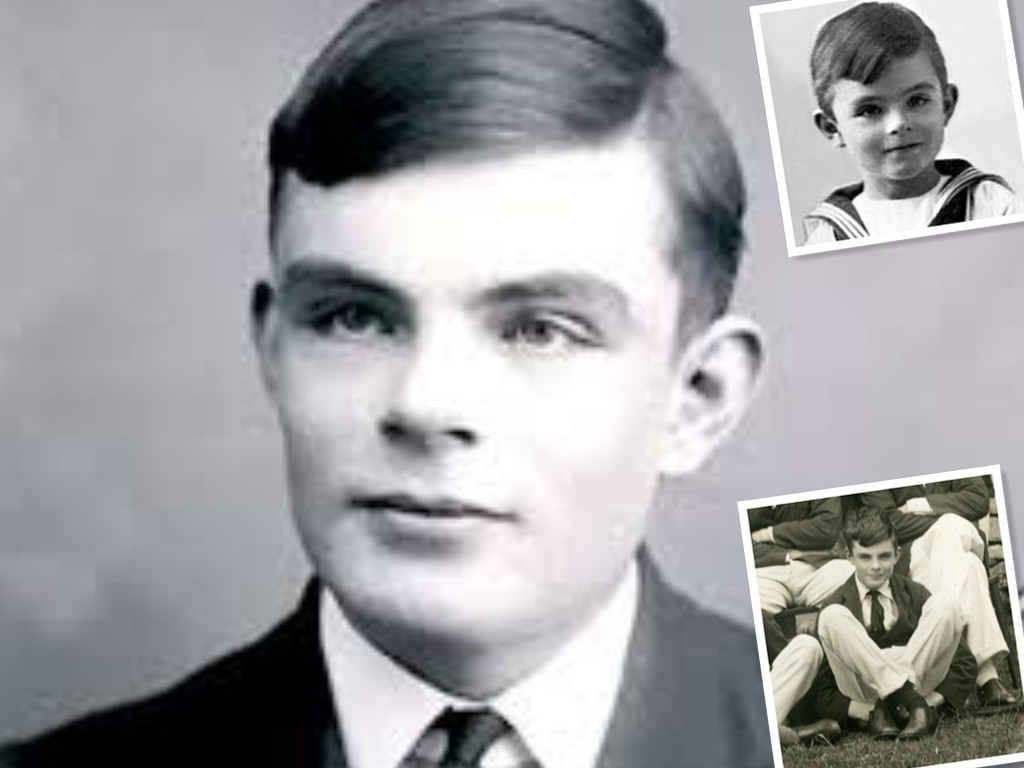
It was Alan Turing -an English scientist, mathematician, logician, cryptanalyst and biologistas, as well as the father of theoretical computer science and artificial intelligence- who created the first artificial music in 1951, 65 years ago.
Actually, Turing highly influences the development of theoretical computer science, providing a diagnosis of the concepts of algorithm and computation with the Turing machine, which is wide considered a model of a general purpose computer.
Turing contributes a lot to innovate the tecnology and the music, revolutionizing the computer so that it becomes a musical instrument. Nobody has ever thought about it.
During the Second World War, Turing did a lot against the Nazis. He played a crucial role in cracking intercepted coded messages that enable the Allies to defeat the Nazis in many critical engagements, including the Battle of the Atlantic. It has been estimated that thanks to his work the war in Europe was shortensed by as many as four years. That’s incredible, just admirable.
After the war, Turing designed the Automatic Computing Engine, an early eletronic stored-program computer design. He also helped Max Newman to develop the Manchester computers. He predicted oscillating chemical reactions, he discover this, he created that, he did so much for the UK, for the Allies, for all the world; …nevertheless, Turing was prosecuted in 1952 for homosexual acts. Such behaviour was still a criminal act in the UK. He accepted treatment with the chemical castration as an alternative to prison. Turing died in 1954 from cyanide poisoning, noboby does really know whether it is a suicide or an accidental poisoning.
Only 55 years after his death, British Prime Minister Gordon Brown made an official public apology on behalf of the British government for his treatment. Queen Elizabeth II granted him a posthumous pardon in 2013.

The Oscar winning movie “The imitation game” told his story, but the link between the matematician Turing and the music had not been highlighted yet.
Canterbury university’s Researchers found the original record, made 65 years ago in Bbc’s study, which contains only three piece:
God Save the King“, the british national anthem;
Baa, baa, black sheep“, a song for children;
In the mood“, a famous song of the American Gleen Miller.
But the professor John Copeland e the composer Jason Long found out that the tape was seriously damaged. Therefore, only after a long time of hard working, the tape was restorated. During the break of “In the mood”, you can hear an ironic comment “In this piece, he was certainly in no mood”.
Thanks also to Christopher Stracey, who remind the name of Turing, today even we can hear the elettronic-music-tape once again, even we can live it once again.

International astronomers unlock secrets of intergalactic space blob

An international team of astronomers led by the University of Hertfordshire have solved the mysteries of a giant space blob by witnessing galaxies forming inside the intergalactic gas cloud.

Lyman-alpha Blobs (LABs) are gigantic clouds of hydrogen gas that can span hundreds of thousands of light years and glow far more brightly than scientists expect. And since their discovery, the processes that makes LABs glow so intensely has been an astronomical puzzle, until now. Scientists, led by Dr James Geach from the University’s Centre for Astrophysics Research, have confirmed that young galaxies are forming within the blobs, causing them to glow.

One of the largest LABs known, is SSA22-Lyman-alpha blob 1, also simply known as LAB-1. Within LAB-1 the team of scientists have found that two galaxies are forming and the blob is actually creating stars at a rate 100 times faster than our own galaxy, the Milky Way. It this intense nature of star formation that is lighting up the gas cloud so brightly.

businessinsider.com
businessinsider.com

Lead author Dr Geach explained: ‘Think of a streetlight on a foggy night — you see the diffuse glow because light is scattering off the tiny water droplets. A similar thing is happening here, except the streetlight is an intensely star-forming galaxy and the fog is a huge cloud of intergalactic gas. The galaxies are illuminating their surroundings.’

LAB-1 is the very first object of its kind discovered and was found 15 years ago. It is located so far away that its light has taken approximately 11.5 billion years to reach Earth. It measures 300,000 light years across and is three times larger than the Milky Way.

To monitor such a large mass, the international team, led by the University of Hertfordshire, used the Atacama Large Millimeter/Submillimeter Array (ALMA), a group of highly developed telescopes that can observe light from dust clouds in distant galaxies millions of light years away.

This meant they could accurately pinpoint several sources of radiation and light within the space blob, where they spotted the two young, growing elliptical galaxies. They then combined the ALMA images with observations from the Multi Unit Spectroscopic Explorer (MUSE) instrument mounted on European Southern Observatory’s Very Large Telescope (VLT). This maps the light that is emitted from the blob, known as Lyman-alpha light and it showed that the sources of light are the forming stars in the very heart of the Lyman-alpha Blob.

Then deep imaging with the NASA/ESA Hubble Space Telescope and spectroscopy at the W. M. Keck Observatory showed in addition that the ALMA sources are surrounded by numerous faint companion galaxies that could be bombarding the central ALMA sources with material, helping to drive their high star formation rates.
Dr Geach added: ‘What’s exciting about these blobs is that we are getting a rare glimpse of what’s happening around these young, growing galaxies. For a long time the origin of the extended Lyman-alpha light has been controversial. But with the combination of new observations and cutting-edge simulations, we think we have solved a 15-year-old mystery: Lyman-alpha Blob-1 is the site of formation of a massive elliptical galaxy that will one day be the heart of a giant cluster. We are seeing a snapshot of the assembly of that galaxy 11.5 billion years ago.’

Are we alone in the Universe?

From the beginning the spark of life is everywhere, longing to spring up in the universe.

The Human Phenomenon – Pierre Teilhard de Chardin ( 1881 – 1955 ).

On May 10th NASA’s Kepler mission announced the discovery of the largest collection of planets ever to be found, a staggering 1,284. Launched in March 2009, Kepler is the first NASA mission to have detected earth – size planets orbiting stars in or near the habitable zone – the orbital region around a star in which liquid water may pool on a planet’s surface.

We have been learning more and more about the origin and structure of the universe, whilst yet remaining in complete ignorance as to whether or not mankind remains the only living system.

Some time before the launch of the Kepler telescope the mathematician Amir Aczel in his book Probability 1 went to great pains to demonstrate the existence of other intelligent life in the universe simply by applying the Drake equation. In fact, according to the astronomer Frank Drake ( 1930  – ) the number ( N ) of possible extra-terrestrial civilisations depends on the product of seven factors, or variables: i) N*, the number of stars in our galaxy; ii) fp , the fraction of those stars with planetary systems; iii) ne , the number of planets per star with environments favourable to the formation of life; iv) fl , the fraction of suitable planets on which life actually appears; v) fi , the fraction of planets on which intelligent life evolves; vi) fc , the fraction of planets with civilizations able to communicate; vii) L, the length of time such civilizations release detectible signs into space.

When seven dice are tossed the probability of achieving a number seven is given by the product of getting a number one from each die, i.e. 1/6 ·1/6 · 1/6 · 1/6 ·1/6 · 1/6 ·1/6, or ( 1/6 ) 7 , where the symbol (·) as used in mathematical equations means multiply. In similar fashion, the probability of getting  (N ) intelligent civilisations in our galaxy is given by N* · fp · ne · fl · fi · fc · L.

The conclusion arrived at by Drake and Aczel was that the existence of intelligent life in the Milky Way was a certainty. Let us now tackle the Drake equation once more, this time using a more prudent approach.

If we estimate the number of stars in the Milky Way to be 300 billion, then ( N* ) where only 5% ( fp )  are sun-like would be N* · fp =  300 billion  · 0.05 = 15 billion.

According to the astronomer Mayor, who discovered the first extra solar planet, every sun-like star possesses at least one planet. This assumption the Kepler mission has now validated. In addition, if the research community is to believed, there could be many more planets than sun-like stars. Thus, if we seek  to determine which planets are orbiting a distant star in the habitable zone, there should be at least 15 billion planets for us to investigate. Several scientists interviewed by Aczel are of the opinion that the fraction of planets with chemistry suitable for triggering the lottery of life should be in the region of 10%. Using a far more conservative estimate we might say it could be in the region of 0.1%, or 0.001 ( ne ).

Thus, N* · fp · ne = 15 million.

Even though a statistically based estimate of the fraction of planets with the right environmental factors for life is not possible, scientists involved in Drake’s equation have conjectured that the value of the factor, or variable, fl, should be 10%, or 0,1. By adopting a rather more conservative approach, dividing 0,1 by 100, fl becomes equal to 0,001. Thus, N* · fp · ne · fl = 15,000.

While it remains arguable whether intelligence is not just a fluke in the genetic development of life, there is a considerable difference between life and intelligent life. According to the scientists discussing Drake’s equation, of all planets supporting life the proportion of those supporting intelligent life, fi, could be in the region of 10%. Again dividing by 100 in pursuit of a more prudent approach, we obtain fi = 0.001.

Thus, by multiplying: N* · fp · ne · fl · fi , we find 15 intelligent planets in the Milky Way.

The Greek, Roman, Egyptian or Mayan civilisations did not have the means to communicate with other extra-terrestrial worlds, thus the factor fc of Drake’s equation can be considered as a sort of technological index, whilst the factor L marks the longevity of a civilisation, given that intelligent civilisations may eventually destroy themselves. An estimate of L might be the distance in time between Marconi inventing the radio and the destruction of Hiroshima.

Several scientists have attributed a probability ratio of about 3 % to both factors fc  and L. By once again dividing both percentages by 100 for prudence sake, we could complete the Drake equation as follows,

N = 15 · 0.032/1002 = 0.00000135. In this way we arrive not at the certainty promulgated by Drake and Aczel, but at the evanescent 1.35 / 1,000,000 probability of the existence of other intelligent planets in the Milky Way.

According to the latest estimates by astrophysicists there are at least 100 billion galaxies in the Universe.

By applying the above evanescent probability to each and every galaxy, we would then have, according to the Law of Large Numbers, 0.00000135 · 100,000,000,000 = 135,000 overall intelligent planets.

In order to determine the probability of Earth being the most intelligent planet, given the complete dearth of information, the principle of symmetry has to be applied, namely that all planets have the same probability of securing first prize. This probability is equal to 1/135,000, or 0,0000074074.

The diameter of the Milky Way spans over 200,000 light-years of space and it takes 50,000 years for the light from its centre to reach the Earth. Bearing in mind that light travels at a speed of 186,000 miles per second, in one earth year light travels almost six trillion miles.

The closest star to Earth is Alpha Centauri, situated at a distance of 4.3 light-years. A hypothetical phone conversation with inhabitants of a planet orbiting this star would last several dozen years, since one would have to wait no less than nine years to get an answer to any question one might wish to pose. In short, should we receive a signal of whatever kind from another intergalactic civilisation, it is quite possible that by the time we receive the signal that civilisation may have disappeared.

Stellar distances preserve Earth’s future from extra-terrestrial aggressors, but not from internal ones.


Ennio Falabella                                                                                                                         London, 3rd August  2016

The Manhattan of London

If you want to see a little Manhattan in the city of London, you can find it in Canary Wharf, situated in Tower Hamlets, east London. It is one of the main financial centres in the UK where the highest buildings of Europe such as the One Canada Square can be found. Canary Wharf is also defined as ‘a city in the City’.

In Canary Wharf the office’s surface is around 14,000,000 square feet. The neighbourhood hosts the most known banks such as Barclays, J.P. Morgan and Citigroup. There is not just business in Canary, but also residents. The majority of the apartments are very small and comfortable.


In Canary Wharf people are always in a hurry; the main square is surrounded by clocks in order to remember that “time is money” so they cannot stop even just for a minute, because every day in Canary Wharf a money could be lost, or could be earned.


If you really want to feel the Manhattan atmosphere you have to see it in the night, when all the buildings are enlightened and one can have a magical feeling.


So do not miss the chance of visiting this amazing area of London!

SAMANTHA CRISTOFORETTI IS COMING BACK!

 She’s called “The woman of the Stars”. She’s the first woman that has gone to the international space station. We are talking about Samantha Cristoforetti, and she is finally coming back home. Her spaceship Soyuz TMA-15M will land in Kazakhstan on June 11.

Her stay in orbit is the longest that has ever been recorded. She has been in the space more than her Italian colleague Paolo Nespoli. She returns with full honours, she will be received in Italy by the Prime Minister. We are sure that she will be a milestone for a lot of women.

She will be an example of determination and tenacity.

Nobody could forget the images of the leaving, she was excited because she was realizing her dreams. How the return will be? Surely it won’t be easy but Samantha will be able to fight this battle too. A piece of the universe is saved in her heart.

Her mission was exciting but complicated, there were unexpected problems (for example the delay of the return). But she’s strong, beautiful and kind and she was able to record interesting data, beautiful pictures and a lot of interesting things to tell.

I’m sure she is already thinking about the next adventure. Have a nice welcome, Samantha!

‘Think carefully’, a threat rather than an advice

The queen spoke outside Cathie Kirk Church in Scotland

 Scottish Referendum–  the Queen issued her first statement near the Cathie Kirk Church in Scotland, even though Buckingham Palace declared its fairness. ‘Scottish have to think very carefully’ she said. This could be the turning point at a critical moment in the future of the UK. In fact, her opinion is very influential (we have to remember that, although she has no political powers, she is still the head of the Anglican Church and the military forces), especially these days: the latest surveys show that ‘yes’ and ‘no’ voters are approximately neck and neck, with a great number of people still undecided. The Scottish Prime Minister and the main ‘yes’ supporter, Alex Salmond, insists that the Queen is impartial and he added that ‘she would be happy if UK broke up’.

After a first period of England’s neutrality, now Westminster is pushing the Scottish to vote ‘no’. Prime Minister David Cameron is trying to keep the UK united. Last weekend, he went to Aberdeen, in Scotland, proclaiming that ‘it is his duty to be clear about the likely consequences of a ‘yes’ vote. Independence would not be a trial separation. It would be a painful divorce’.
The effects of this possible division will be primarily economical. RBS and Lloyds, the most influential banks in Scotland, plan to leave their Scottish headquarters and move to the City. It would cause the financial crisis not only of Scotland but also of the whole of the UK. The pound would lose its power and Scotland would have to make a monetary decision among three choices: to keep the pound, to adopt the Euro or to mint its own coin, all options that bring about enormous risks. The Independentists want to base their economy on petrol like Norway.

Fabio Cavalera, Corriere della Sera’s Italian correspondent, said from Edinburgh: ‘‘In the streets ‘yes’ supporters are more active than their opponents, despite both campaigns are going on frantically. This vote is attracting worldwide coverage, with TVs and journalists coming from everywhere. It will have an impact on the future of all us. The undecided voters will determine the outcome; they would like to become independent but they are also scared of it.’’
The result of this referendum can change the history of Europe. In fact, many countries are calling out their independence, and Scotland would represent an example with the effects of a ‘yes’ or ‘no’ victory. In Spain, Catalonia is asking for more financial independence that can bring to another Independence Referendum.
Independence is becoming a key to exit the crisis for some countries. Only time can demonstrate if this will be the right solution.


Scotland independent or not?

Scotland independent or not?

Sweet news for British Royal family. Prince William and Duchess of Cambridge will soon be parents ag…READ MORE