COP26 Pontignano 2020: Italy and UK new bilateral relations on climate change

London (Rosita Dagh) Italy and UK established a new bilateral relationship on climate change during the Pontignano Conference.

The event took place in London on February 25th.

The Italian and English governments came together to find new solutions to the issues that affect our planet.

Climate change remains one core subjects of global debate to which everyone is called to do something on the matter. In fact, world leaders will join COP26 (Conference of the Parties) in Glasgow next November 2020.

Now the goal of the United Kingdom and Italy is to apply the “Pontignano” method to bring new ideas and projects at the COP26 wich are aimed at reducing CO2 emissions.

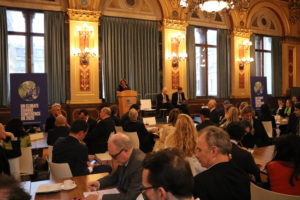
Today The Pontignano Co-President, Carlo Calenda and Lord Willetts, hosted 100 people from the local journalists, politicians and experts at the Foreign and Commonwealth Office in London,  to discuss how to overcome current obstacles related to the climate change.

Zac Goldsmiths, Minister for the Enviroment; Lord David Willetts

The event was also attended by the Minister for the Enviroment, Food and Rural Affairs, Zac Goldsmith, who insisted on the fact that in UK, since 2014, we have assisted to very high temperatures never seen before but, at the same time, he highlighted how the British citizens have always been activeto propose new solutions to the government.

The population has immediately shown interest and willingness to stop this problem” – he said.

Therefore, the Minister concluded that the success of COP26 is not about convinceing people to do something on climate change, but convinceing them of leaders’ capability to take serious measures to protect our planet.

https://www.youtube.com/watch?v=KEthbvbPAUE

MARTA SIMONETTI – Everything we need to know about climate change

(by Stefania Del Monte)

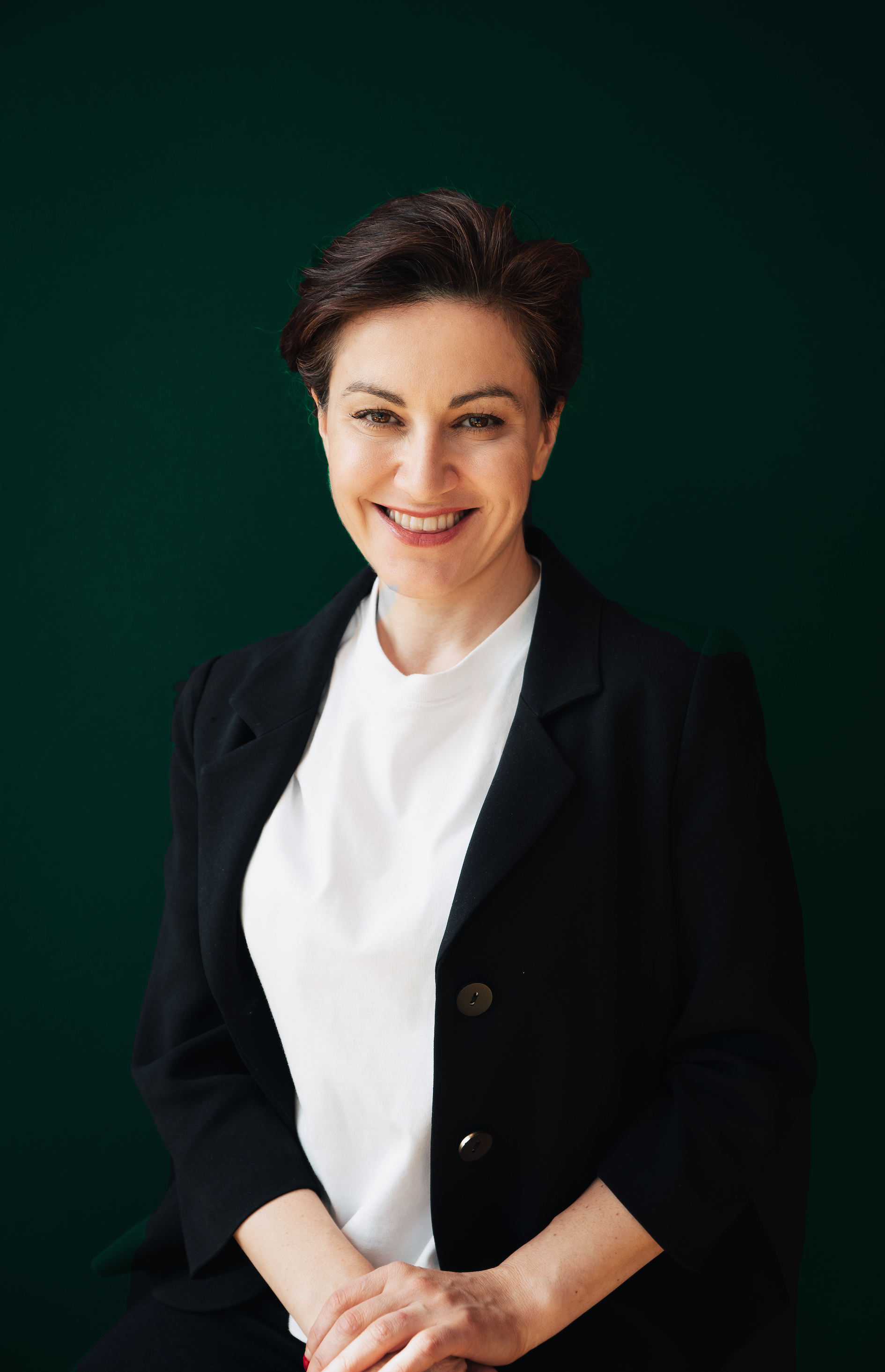
Marta Simonetti is an experienced green finance director based in London. She worked in the City of London, initially in marketing and then in development and transition banking for the European Bank for Reconstruction and Development. In 2017 she set up her consultancy, Globalfields Ltd, which specializes in green finance and sustainable leadership.

From August 2017 to date she has carried out several assignments at senior level for the Green Climate Fund, WWF-US, GIZ, IPC GmbH, Absolute Energy Capital, as well as for private equity companies and governments. She is now focusing on the green transformation of financial markets, working with governments, financial institutions and the consultancy sector in Europe, Africa, Central Asia and south-east Asia.

In her work thus far she has been leading bilateral and multilateral structuring and negotiations in climate and conservation finance, including with the Green Climate Fund, the Global Environment Facility, the NAMA Facility, the German bilateral cooperation agency (GIZ) and multilateral banks, as well as for private companies. Her main skills are in fund management (legal and institutional structuring), blended finance structuring (mixed participation equity and loans; revolving funds; guarantee funds), resource mobilization, programme structuring in climate and environmental finance. She also offers pro-bono work for the delivery of presentations and leadership training programmes specific in the areas of green finance, climate change and environmental degradation, in particular for schools and in careers events at universities in London.

We have met her to try and get a better understanding of this very complex matter.

Marta, your academic and professional experience in the climate and environment field is impressive but we would like to start with a very basic question. We often hear the expressions global warming and climate change. What exactly are they and what’s causing them to happen?

Many thanks for this question, which is not that simple at all! Climate science is an important aspect of our work in green finance as it gives us the evidence of the anthropogenic factors (i.e. the man-made role) in temperature warming vis-à-vis normal patterns of change. It reinforces the fact that we can make a concrete impact in our work with clients.

Specifically, global warming refers to the long-term rising of the average temperatures of Earth’s climate system observed since the pre-industrial period (i.e. the period between 1850 and 1900) due to human activities, primarily fossil fuel burning, rapid urbanization and loss of ecosystems. With time, those have increased heat-trapping greenhouse gas levels in the Earth’s atmosphere.

When we look at historical temperature changes, we see a succession of warm patterns followed by ice ages over the earth’s geological history. Thanks to the analysis of Antarctic ice-cores carbon dioxide (CO2) concentration alongside the study of temperature changes, we know that warm periods, with some exceptions, are periods of high atmospheric CO2, and cold periods, geologically, have been periods of low atmospheric CO2.

After the industrial revolution we see a 40 per cent rise in CO2 atmospheric concentrations during the 20th and 21st centuries. When we look at temperatures between 1880 and now, the ten warmest years ever recorded are within the last 17 years. The hottest temperatures ever recorded were in 2016, 2019, and 2015. There is a lot of convergence on these data among major research organization, including NASA, the Hadley Centre for Climate Science, British Antarctic Survey and the Oceanic National Oceanic and Atmospheric Administration.

(data from ossfoundation.org)

Because of this pattern change in temperatures and CO2 concentrations, we are also experiencing new weather patterns that have remained in place for an extended period of time and cannot any longer be considered as isolated occurrences. This change in the Earth’s climate system is climate change. For example, we are now experiencing an increasing number of extreme weather events, such as violent storms, heavy or irregular precipitation patterns, unprecedented floodings, more frequent and longer-lasting heatwaves, droughts.

In 2020, and with all the research available on the subject, we are still faced with a large number of deniers. How is that possible? Do we have to believe Greta Thunberg or Donald Trump?

I find Greta’s message very powerful because it is really seeking to achieve what we (the older generation) haven’t done fast enough: i.e. bringing about systemic change across all sectors. A crisis such as that we are witnessing now is indeed unprecedented. Think about the bush fires in Australia, the snow-free Christmas day in Moscow, or the current above-average temperatures in England followed by three weekends of storms and torrential rains. Those occurrences used to be abnormal, rare events. Now it is the new normal. Greta would say: Your house is on fire. And rightly so, because we cannot any longer think that those are remote problems that will not affect us. Yet…every crisis brings fundamental questioning, and the way we answer those questions, the motivations we bring behind our answers are the real catalysts for change. I think we are now at the right juncture to substantially speed up climate and environmental action. Our awareness and knowledge of the issue have increased, because the problem is so in our face that we cannot turn away from it.

Climate deniers thrive on instilling doubt and misinformation. We need to remain very aware that the most prominent deniers out there receive significant financial backing from (predominantly) the oil and coal industries, and then also from farming and heavy industries. What I find dangerous in this rhetoric is their effort to disenfranchise and disengage people from the actual conversation. If we are not responsible for climate change, then it follows that we shouldn’t worry so much about what we do because nothing we do actually matters. This is an abdication of responsibility! This is an abdication of our true human nature and our ability to bring change and meaning, in our own lives, as well as for the environments and communities we live in.

The real conversation has another focus. We have the technology to move away from fossil fuels. This is happening faster in some countries and not so fast in others. In a way we can say that it is important to remain mindful of the complex socio-economic transitions that are needed to decrease reliance on coal, oil and gas, as those have a price, expressed in the affordability of clean energy. Yet this transition needs to happen, globally. At the moment, while technology costs are coming down, we still have entry barriers, for example in mismatches between policies on the one hand, and regulation on the other; or political uncertainties which then translate in higher insurance costs or may act as deterrent to investment.

We have two major paradoxes here. Short-termism is now pervasive, in politics and in business. For many politicians it is impossible to think past the next election. This jeopardizes the ability to accept short-term costs for longer-term gains. In business, we want to see quick returns on investments and short pay-back times. When we work in climate action or in sustainability, the work is fundamentally long-term. We seek long-lasting impacts.

The second paradox is that while we seek to reduce emissions through clean energy generation and resource efficiency practices, we have rapidly become a more electrified, digitalized society. Think about how many tasks we now do digitally that were previously done without electricity: paying bills, writing letters, studying, billboards. Who goes now to the post office to pay, say, the water bills? Or when was the last time we sent a friend an actual letter written by hand, using pen and paper? While we may still have books, online content is now so efficient that it can really save us time and energy. And what about money? Here in London, where I live, there are shops that do not accept cash any longer. Now we have smart houses, big data, machine learning, predictive technologies. This is all very useful. It all needs electricity. So, as the population grows, any efficiency gain in carbon mitigation, water efficiency, or resource efficiency that we may achieve through new technology is eroded by the growing rate of consumption of that resource. This is the Jevons paradox, very much used in environmental economics. Before we start thinking though that any efficiency improvements in climate action is futile, let’s add another perspective here: i.e. the growing role of environmental conservation and stewardship of the planet. This is why now more than ever we need to find and implement applicable solutions.

So, when I look at Greta I really see progressive politics fighting against regressive government. In Greta I see the spark for systemic change rather than clinging to the status quo. For our future, the future of our children and humankind, for the health and preservation of the earth systems, we need to choose climate action!

It is too late to prevent climate change?

Climate change is already happening. What we can do now is to make sure that we decrease emissions, and fast. GHG emissions in fact increased in 2017 and 2018, and stabilized in 2019, according to the International Energy Agency. An important concept here is the planetary boundaries of the earth systems. In some instances, we have made useful progress, for example in the reduction of chlorofluorocarbons to slow down stratospheric ozone depletion thanks to the Montreal protocol and more recently the Kigali Amendment.

But in other areas – namely climate change and biosphere integrity – we may have already gone beyond the boundary. What does this mean? That we are fast approaching a tipping point, beyond which certain changes may become irreversible, such as loss of ice cover in polar regions, with subsequent sea level rises; or loss of ecosystems. Some people may find the extinction of some species irrelevant, or may be unmoved by an emergency thousands of miles away from home. Those events, though, are neither unrelated nor irrelevant, because ecosystems are interconnected, planetary boundaries are interconnected and ultimately, we are also connected (to ourselves, to others, to the contexts we live in). Do you remember John Donne’s poem ‘No man is an island entire of itself…’? The balance is in humankind’s approach to become aware that we are all part of a whole system, and that this interconnection is not a new concept or new-age mumbo-jumbo. It is real.

What do you think are the most important priorities, in order to tackle the climate crisis?

There are four key areas of priority where I believe we can bring substantial changes and impacts.

  • Financial support. For many countries, there is still a need to bridge the gap between the technical and impact potential of a project, and its commercial viability. This is where I see still a steady role for public interventions given as blended finance in the form of concessional lending, guarantee instruments and subordinated positions in financial instruments (e.g. first loss and tiered funds). We definitely need a little bit more risk-taking in order to bring new technologies on the market, which can be achieved through concessional equity in incubators and accelerators funds, as well as for venture capital. Supporting the supply of viable projects can strengthen the arguments for the business case of investing in green and SDG-linked products, which is paramount to speed up divestment away from fossil fuels.
  • Technology solutions. There are two ways to look at this: a solution as a new product, design or process (e.g. gravitational technologies for energy storage); and as a system change, i.e. green connectivity, circular economy and cradle-to-grave solutions, ‘green-digital’ urban designs and urban adaptation practices. To name a few…
  • Nature-based solutions. This would include conservation efforts, resource preservation and management, re-building of ecosystem. In this area we have solutions at hand, for example in carbon sequestration through reforestation and afforestation practices. Those solutions need to be implemented at a faster pace that the on-going destructions of those same ecosystem, which is very challenging.
  • Applicable awareness. I hear too often people feeling disempowered: how can one person make a difference? Well, let’s bring awareness to this issue and see what we can do, as individual, as part of a community, and in the bigger political arena, then we are not anymore acting as one but as humankind. As we prepare for next Conference of the Parties (COP26), co-organized by the UK and Italy and taking place in Glasgow in November 2020, we can take the opportunity to learn more about what’s happening and empower ourselves to bring change.

For example, what are some key changes we can bring into our lives?

I would like to give some suggestions… Switch energy supplier to full renewable energy; reduce meat consumption; join a vegan / vegetarian group for inspiration and recipes; reduce food waste; seek bulk or unpacked shops where you can use and reuse your own containers; increase energy efficiency by, for instance, switching all lights off, as well as through efficient lighting, windows and walls; join a clothes swapping group or sales apps; use sharing services rather than owning a product (e.g. car sharing); vote with your wallet by deliberately choosing which product and company you want to support and which you don’t; participate in tree-planting exercises and other sustainability activities organized by your council; use public transport to move around; vote for those candidates who have a clear pro-climate and sustainability agenda.

How can your expertise make a difference?

At Globalfields we look at climate change and sustainability practices in businesses from a variety of angles. We are interested in the interconnectedness of the issues and therefore we are able to offer holistic approaches. As I was mentioning earlier on, clean energy generation and efficiency gains cannot be taken in isolation from conservation efforts and stewardship of the planet. We need to think about energy and resource efficiency solutions alongside their wider impacts. We need to align corporate efforts with the sustainable development goals and with international agreements such as the Paris Agreement.

Globalfields was incorporated almost two years ago, and in this relatively brief time we have worked very closely with a number of governments, public and private-sector institutions to create processes or policies to implement green finance practices.

In particular, our work includes supporting organizations in drafting green finance strategies and roadmaps for their implementation; in designing framework for a company’s alignment with the SDGs; supporting the work around frameworks for green loans and SDG loan certifications; advising on financial instruments in green finance, with specific use of concessional and blended products for developing countries; fund-raising and structuring of funds.

More recently we have also worked on green finance training and made our first investment in small-scale hydropower. Two additional investments are under consideration as we speak.

Most of our work is targeted at corporate level, but we have also designed frameworks for coaching for transformational ‘green’ leadership, delivered individually or in small groups. This is where we aim to empower people to not only understanding the subject matter but also to design the most appropriate pathways for them to become transformational leaders in their organization. Working at corporate and individual levels is in my opinion a necessary undertaking in order to bridge the gap between science, policy and action.

Cover image: Marta Simonetti
 

5 TIPS FOR MAKING THE PERFECT PICNIC

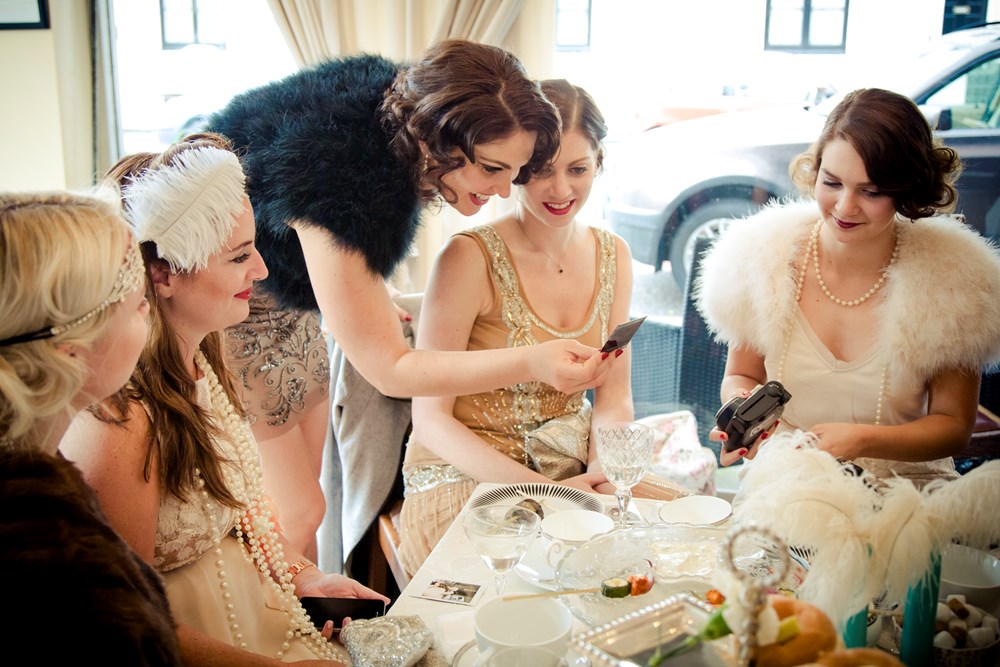
With Wimbledon and a heat wave marrying nicely this summer, picnics are the perfect way to celebrate the tournament, relish the SPF 50 temperatures, and enjoy good food and better company. The Betty Blythe Vintage Tea Rooms is a private vintage tea room in West London, in a little nook called Brook Green. The beautiful 1920s themed setting even offers to the table the Betty Blythe’s Fine Food Pantry.

Serving their very own bespoke picnic hampers that capture the essence of a quintessentially English picnic; from a wicker basket with Chinese ceramics, fresh sandwiches and cakes, to Champagne and lashings of ginger beer! Today Betty Blythe’s own Founder, the UK’s no.1 expert on Street Parties and author of Style Me Vintage Tea Parties, Lulu Gwynne, is giving her top tips on how to be ever ready for a perfect picnic:

Don’t forget a blanket! – genteel folk who picnic in the outdoors must show a commitment to a day of lazing and indulging by having an essential summer luxury of a wool or cashmere blanket to spend the day on. Don’t forget fans, pillows, and sun hats. Ones’ delicate skin can be saved by having a sun umbrella – choose a light colour shade and decorate with pretty bows and frills!

Dress for the day – if the Yahoo! Weather gods allow it, aim to hold your picnic on a sunny day. Choose the perfect dress to spend the day in, think about how comfortable the dress is to sit in; anything tight around waist is bad news for digestion and don’t also choose anything too short, the chaps don’t need a flash of your undergarments whilst enjoying their eats!

 Keep it cool – while quaint picnic hampers are beautiful way to keep all your eating equipment in check, it’s best to the food itself stored in a cool bag or box. Do not turn up with plastic bags! If in doubt borrow these types of things from a kind neighbour!

Fun food – when packing for a period-themed picnic use your vintage china, depression glasses; packed safely using your linen napkins. What about the food I hear you cry! What delicious goodies you could pack? Betty Blythe favourites are tea sandwiches with salmon and cream cheese, thin slices of ham or chicken with asparagus with vinaigrette, rice salad with celery, nuts and raisins, a fruit and cheese plate and to complete your picnic plenty of fresh strawberries, a Victoria sponge and lashings of good cheer!

Boozy beverages – on your picnic, it’s essential to bring a varied menu. White wine and rosé wines are very good for a picnic, being bright and breezy in taste. Champagne is encouraged as its perfect to accompany things like smoked salmon and picnic foods. For cool drinks try a refreshing lemonade or ginger beer!


Located in leafy West London in a little nook called Brook Green, the Betty Blythe Vintage Tea Room is a privately-owned vintage tea room who pride themselves on having the best cake counter in London. Placed in a beautiful 1920s setting that is quintessentially British with a hint of Hollywood glamour

Opening Hours

Monday to Friday – 8am-5.30pm
Weekends –  bookings only

Iconic mural of David Attenborough and Elon Musk appears on Brick Lane, Shoreditch

LONDON, 28 JUNE 2018 – Shoreditch is home to a new meeting of the minds following a dramatic unveiling this morning. An iconic piece of guerrilla street-art has appeared off Brick Lane, Shoreditch, depicting national treasure, David Attenborough, and tech magnate, Elon Musk, side-by-side in the hub of London’s tech community.

The enormous mural has been created to pay homage to two of history’s greatest minds, and to get people thinking ‘what if they collaborated?’ in celebration of the opening of Mindspace in Shoreditch. The global coworking operator opens its 2nd location in the hub of London’s Tech City, with history’s ‘Greatest Minds & Greatest Collaborations’ that could have been.

Having spent his life deeply immersed in the natural world, Attenborough has been painted in collaboration with Musk, a visionary in the technology space, who is transforming the ways in which the natural world navigates its immediate surroundings.

  • Huge 200 sq ft portrait appears in Shoreditch to celebrate the world’s ‘Greatest Minds & Greatest Collaborations’ that could have been
  • Mural marks the opening of Mindspace Shoreditch, the global coworking operator’s 2nd London space, and 22nd global premises
  • New upscale and inspiring coworking space offers imaginatively designed, flexible coworking environments to accommodate 900 coworkers in renowned Tech City
  • Mindspace Shoreditch follows the inaugural opening of Mindspace Aldgate in December 2017

Mindspace, the boutique hotel of coworking, is already brimming with some of London’s most influential startups, enterprise teams, and entrepreneurs. The all-inclusive professional environment boasts private offices, lounges, open plan kitchens, and a team of highly engaged Mindspace community managers. A packed monthly events calendar also includes a fully-fledged wellness program, networking parties, meetups, hackathons, hands-on workshops and industry lectures.

Mindspace Shoreditch will accommodate 900 members across two floors and over 40,500 square feet. Located at 9 Appold Street, Shoreditch, part of the Broadgate Quarter office complex in the vibrant City Fringe market.

Dan Zakai, co-founder and CEO of Mindspace, said, “London is the undoubted European capital of collaboration – specifically in the heart of Tech City, a community emblematic of collaboration and innovation. We are dedicated to contributing more innovation and creativity via our new standard of coworking, and an iconic new mural on the streets of Shoreditch.

We want Mindspace to be the epicentre of collaboration within London, a place where inspired individuals from diverse industries can come together and collaborate to carry out extraordinary work. We want our members to experience a space that is designed to meet their needs and drive them forward, so they can focus on their best work.”

The impetus behind the mural was to get people thinking ‘what if?’ by documenting two of history’s finest minds within the neighbourhood. The connections made at Mindspace are organic, impactful, and manifold – 50% of Mindspace members claim that they are doing business with other members.

ST PETER’S ITALIAN CHURCH – PROCESSION IN HONOUR OF OUR LADY OF MOUNT CARMEL

Like every year, on Sunday 22 July 2018, at St Peter’s italian Church there will be the Procession in honour of Lady of Mount Carmelo, starting at 3:30pm.

This tradition has been ongoing for over 150 years in Clerkenwell, and it was first granted by Queen Victoria. The event itself will last from 11:00 a.m . until 6:00 p.m., and there will be a variety of italian food and drinks available to buy coming from many different regions.

At the Procession there will be a group of First Holy Communicants, and if you would like to get together to walk in the Procession with costumes provided by the St Peter’s italian Church, contact this number: 020 7837 1966.

If any of this years’communicants would like to walk, they have to be inside the Church at no later than 3:00 p.m., dressed in their communion outfits. Everyone is welcome to join this tradition!

Tony Blair is refusing to apologise over the kidnapping and torture of Belhadj in Libya

London (Valeria Piccioni) – Tony Blair, the official Special Envoy for peace of the Quartet In the Middle East by order of ONU, European Union, USA and Russia until May 2015, has refused to personally apologise to Lybian leader and fighter Abdel Hakim Belhadj, who was kidnaped and tortured in Libya in 2004 after a tip-off from MI6 gained from London-based informants. Abdel Hakim Belhaj and his wife, Fatima Boudchar, have fought for a compensation and an apology for more than six years after the role that British intelligence played in their kidnap had been revealed.

Belhadj was arrested at Kuala Lumpur International Airport, Malaysia, then he was transferred to Bangkok under the custody of the CIA, and he was kept in a secret prison at the airport. After his return to Libya, he stayed in Abu Salim prison for seven years. However, his pregnant wife Fatima, was released after a few months from the imprisonment.

Belhadj founded the Libyan Islamic Fighting Group (LIFG) against Gaddafi from 1994 forward. After three failed murder attempts on Gaddafi, the LIFG was solved in 1998.

Two weeks after the couple’s kidnapping, Blair came in Libya for his first visit to Gaddafi and during the meeting he declared that Libya had recognised “a common cause” “in the fight against al-Qaida extremism and terrorism”. In the meanwhile , in London, the Anglo-Dutch oil company Shell was signing a deal for gas exploration rights in the Libyan coast.

Moreover another opponent of Gaddafi, Sami al-Saadi, has been kidnapped and with his wife and his four children, they were taken to Libya. The family was incarcerated for over two months before being released. Both Saadi and Belhaj were imprisoned and tortured for more than six years. Al-Saadi has pressed charges against the British government in 2012 receiving £2.2m for compensation.

This month the Prime Minister Theresa May addressed them in order to apologise on behalf of the government and offered Boudchar, Belhadj’s wife, £500,000 compensation.

Differently, Blair had ambiguous behaviour by stating:“There’s been a settlement of the case. As I say, I am content to go along with the government’s apology in relation to it. It is not something I dealt with myself when I was in government. I think that is all I can say.”

Blair’s declaration maintained that the former Prime Minister was not aware of the situation at the time. This could suggest that Jack Straw, Britain’s former Foreign Secretary, did not share several aspects of this specific operation with Blair.

Amnesty International stated that a judicial inquiry  regarding the UK involvement in this circumstance is necessary.

Love at the time of Tinder: are dating apps making Londoners more lonely?

by Valerio Esposito

London is a city where it’s easy – almost inevitable – to feel lonely. In such a fast-moving environment it is becoming increasingly difficult to connect with other people. You see it every day: your co-worker is leaving for a better job, your neighbour is moving out because the rent is too high and the girl who made your morning coffee moved back to her country.

It’s a city of 9 million people, and yet it’s never enough to ease your misery: everyone is too caught up in their daily drama to care about others, to even realise that they’re there. And at the end of the day, you crawl into an empty bed and search for the easy solution on the screen of your phone, trying to find comfort in yet another dating app.

A recent survey[1] conducted by tech start-up Wonderush showed that 64 per cent of Londoners feel lonely on a daily basis. Of those surveyed, 65 % attributed their loneliness to the demands of their job, while 42 % said that London itself is the main cause.

Loneliness is a tricky concept: it can be social or emotional, the latter being more damaging. Research suggests that the feeling of loneliness does not arise from the lack of company, but rather the lack of emotionally fulfilling connections. Just try to take a train in the city and look around: not a whisper, or a smile or even innocent eye contact. We are like flies in a web, permanently alone, helplessly disconnected.

But are dating apps making it worse? It sure is difficult – almost impossible – to form meaningful relationships just by playing a little game with the thumb: swipe left, swipe right. Ugly and hot. Good and bad. The selection mechanisms have never been so simple – and ruthless. People have become bidimensional exchange goods, with no depth: their worth is established by the movement of a merciless finger.

”I’ve tried Tinder but it didn’t work. I found that fast mechanism of ‘consumption’ degrading and impoverishing. This model makes it impossible to develop a relationship,” comments retail worker Fiorina, 36. “You can’t keep up with it, you’re always greedy and you can’t focus on what’s in front of you because you’re impatient to see what’s next.”

Julia Keller, love coach and author of Attract Authentic Love, attributes this to our “incapability to communicate with each other. Some say that dating apps were invented because we lost this ability. Or maybe they made us lose this ability. It’s a chicken and egg kind of situation, hard to tell”.

We are a selfish generation and yet we live in the senseless effort to project ourselves onto others. That new pair of shoes, that stylish haircut, that rejuvenating cream and the new red lipstick. Why do we do it, if not to make ourselves more appealing – or tolerable – to others? This is just one of the many faces of this business called love.

Dating apps are perhaps the newest – and most insidious – degeneration of this business. It’s no surprise that people’s approach towards relationships has become increasingly business-like. Student Aara Syed, 19, explains how she felt that “dating apps might be a way to tick a box: boyfriend sorted. People might feel that way because it’s so easy to meet people and have many options. But it doesn’t work like that”.

The truth is that, most of the times, dating apps create a demand by exploiting basic needs: human contact – and affection. They claim to sell a solution: if you can’t find the one, they’ll do it for you. ”We’ve lost the notion of process. We don’t take the time to solve the problem but we just move on to the next things. And that’s why we are constantly dissatisfied. And constantly lonely,” Keller adds.

In the meantime, it seems as dating apps try to convince you that what you want is easy to get; and you end up wanting more – and faster. It’s a scam, a palliative. It offers relief but it doesn’t heal people’s brokenness.

Yes, technology is breaking us. We don’t work the way we used to. ‘’How do you even meet people in the real world?’’ is a question that I have heard countless times. I usually answer with another question: ”How did your parents meet?”

Julia Keller argues that ”It’s a completely different world than it was the time of our parents. People are confused and busy. The world is becoming much more superficial and we find ways to make love faster and easier and this leads to a lot of disappointments”.

Indeed, things have changed. Millennials are the main victims, for they were born in the era of dating apps and might not even know that they have an alternative. Jekaterina Drozdovica, 20, a student in London, explains how “what were normal human interactions are now considered abnormal. Especially in London, If I just went to a bar and started a conversation with a stranger it would be considered… creepy”.

We got to the point where starting a conversation in a train or in a pub has become weird. But, ironically, sending and receiving ”dick pics” and other obscenities is more tolerable.

Maybe it’s true: the world has changed and dating apps have become an essential tool for human interactions. This leaves us wondering if it’s worth fighting the new system or if it’s just better try to find a way to deal with it. Aara is not sure whether dating apps should be completely demonized: ”I can’t say that they make things worse, but they clearly don’t help”.

Love Coach Keeler, on the other hand, believes that it’s all about “learning to navigate the odds. Good or bad they might be, dating apps are still a practical way to get to know people. And once you’ve met someone you just need to know the right thing to do from there”.

[1] http://blog.wonderush.com/pull-sickie-make-friend-month/

90,000 affordable house for Londoners

Commenting on the Mayor of London’s plans to deliver 90,000 affordable homes for Londoners, Campbell Robb, Shelter’s chief executive, said: “The Mayor’s plans to deliver 90,000 affordable homes for Londoners will be very welcome news to the millions of people struggling to keep up with sky high housing costs in the capital. “Every day at our Shelter London hub we see the impact of the chronic shortage of affordable homes – with rents eating up huge chunks of people’s income each month, many are facing a constant battle to keep a roof over their heads. And at the sharp end, 88,000 children in the capital will be homeless and living in temporary accommodation this Christmas. “We look forward to working with the Mayor to bring these plans to life and make sure that the homes built are genuinely affordable for Londoners to buy or rent long-term.”

The little Heroine Johanna -4 years old-

LONDON
Luisa Liu
Sometimes we are not on the same page, even though we live in the same area.
Sometimes it is not a matter of you and me, nor a matter of your father and my father, but a matter of your forefather and my forefather. Just like Romeo and Juliet.
Sometimes past wars and conficts influence people’s though and behavior.
It is sad to admit that we are living among judices and sterotype.
Yet Love Your Neighbour”, said genuinely Johanna -4 years old-. She said it in a so genuin way that no argues went on. She said it as if it is the most normal thing. If a 4 years old baby can understand this simple thing -love your neighbour-, why can’t we?
“We are all going to the New Jerusalem, so why can’t we just be happy? Look this flower, it is colourful and it smells… wow! Quarrelling leads nowhere. Why shall we waste time and breath?“.
Short sentences, simple, but deep. Perhaps precisely because of this simplicity, we tend to neglect them.
Sometimes young people are the only one who can remind us so simple things.
Therefore, in this way, the little heroine Johanna has stopped the argue, bringing back the simply feeling of happiness. That’s why she appears in the first page of the magazine Osborne“, which is a “family” business moulded out of a strong sense of partnership with its customers. Osborne is driven by a clear desire to work together in order to solve problems and add value over the long term to make people successful, providing personal culture as well as the professional standards of excellence. The main aim is to establish a supportive environment where creative ideas and solutions are encouraged from everyone involved.
Don’t forget, sometimes just a smile can change your day and the day of people around you. Sometimes the same smile can even change your entire life. Smile, it’s free.

The highest number of refugees in our time

The latest report from the United Nations High Commission for Refugees ( UNHCR ) states that in 2015 there was a record increase in the number of people global forcibly displaced worldwide.

By the end of that year a total of 65.3 million individuals across the globe had compelled to abandon their homes as a result of conflict, persecution, generalized violence, or violations of human rights. Broadly speaking those forced to seek refuge can be categorized as follows: 

– 40.8 million internally displaced within the borders of their own countries;
– 21.3 million refugees (including 123,00 in UK and 118,00 in Italy);
– 3.2 million asylum seekers (including 45,870 in UK and 60,000 in Italy).
Over the previous four years the global population of forcibly displaced people had already increased by more than 50 %, with 42.5 million in 2011, 45.2 in 2012, 51.2 in 2013 and 59.5 million in 2014.

Ban Ki Moon, the United Nations General Secretary, says, “ We are facing the biggest refugee and displacement crisis of our time. Above all, this is just not a crisis of numbers, it is also a crisis of solidarity.”
Filippo Grandi, the UN High Commissioner for Refugees, states “ The willingness of nations to work together not just for refugees but for the collective human interest is what’s being tested today, and it’s this spirit of unity that badly needs to prevail.”

In 2015, 8,6 million people were forced were newly displaced within the borders of their own countries by armed conflict, generalized violence, and human rights violations. Taking into account the cumulative figures of previous years, Colombia ranks as number one for having the highest quantity of internally displaced people (6.9 million), followed by Iraq (4.4 million ).

In 2015 again, 1.8 million people were forced to flee their countries and become refugees. Turkey registered the largest number of new refugees, including 946,800 from Syria.


More than 50% of all refugees worldwide come from just three countries: Syria ( 4.9 million ), Afghanistan ( 2.7 million ) and Somalia ( 1.1 million ). The overwhelming majority of Syrian refugees were hosted by neighbouring countries, most notably Turkey ( 2.5 million ), Lebanon ( 1.1 million ), Jordan ( 628.000 ),
Iraq ( 244.000 ) and Egypt ( 117.000 ). Major hosted countries for Syrian refugees outside the immediate region include Germany (115.600) and Sweden (52,700).
The Afghan refugee population worldwide was estimated at amounting to 2.7 million at the end of 2015. The majority of these refugees are now in Pakistan (1.6 million), Iran ( 950.000 ), with further 30,000 in Germany, 17,500 in Austria, 13,100 in Sweden, 12,200 in Italy and 10,200 in India.
Over 1 million people arrived in Europe in the course of 2015 year, mainly from the three countries best known for crating refugees: Syria (50 % ), Afghanistan ( 21% ) and Iraq ( 9% ), and also from Eritrea, Pakistan, Iran, Nigeria, Morocco and Sudan.

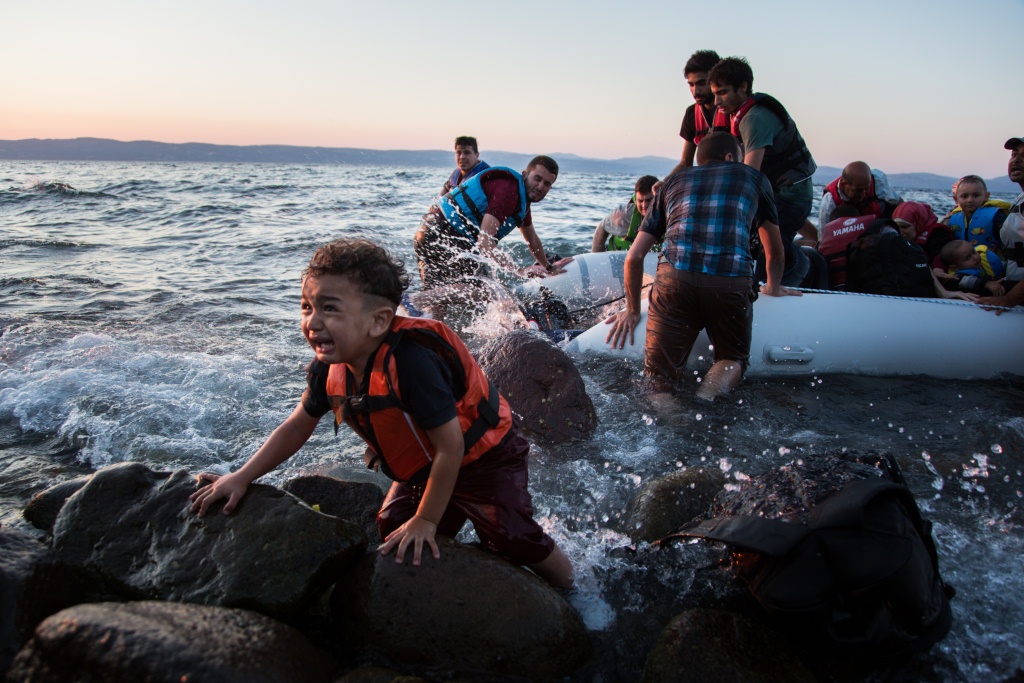
The majority of these new arrivals – at least 850,000 people – crossed the Aegean Sea from Turkey and arrived in Greece, while the minority crossed the Mediterranean Sea and fetched up in Italy (153,800) and Spain (15,400 ). At the same time some 3,770 people died or were reported missing at sea.
The conflicts in Afghanistan, Iraq and Syria have drawn international attention to the dramatic exodus of forcibly displaced peoples, but other humanitarian crises are also scaring Burundi, Libya, Niger, Nigeria, Sudan, Central African Republic, Congo and Yemen.
Every 60 seconds an average of 24 people worldwide are forcibly displaced from their homes. The number of displaced persons is now equal to the population of what would rank as the 21st largest country in the world, ahead of the United Kingdom.
According to the UNHCR’s report, war – or armed conflict – is the main driver of the forcible displacement of people as refugees, of which 50% are children.


In every country the general public is becoming increasingly sensitive to whatsoever is perceived as the effects of immigration on living standards, and people traffickers are generally looked upon as the perpetrators of the greatest of all evils, requiring immediate eradication by any means available. At the same time, however, people hesitate to demand that their governments promote peace and better conditions for life in those areas where people traffickers flourish.