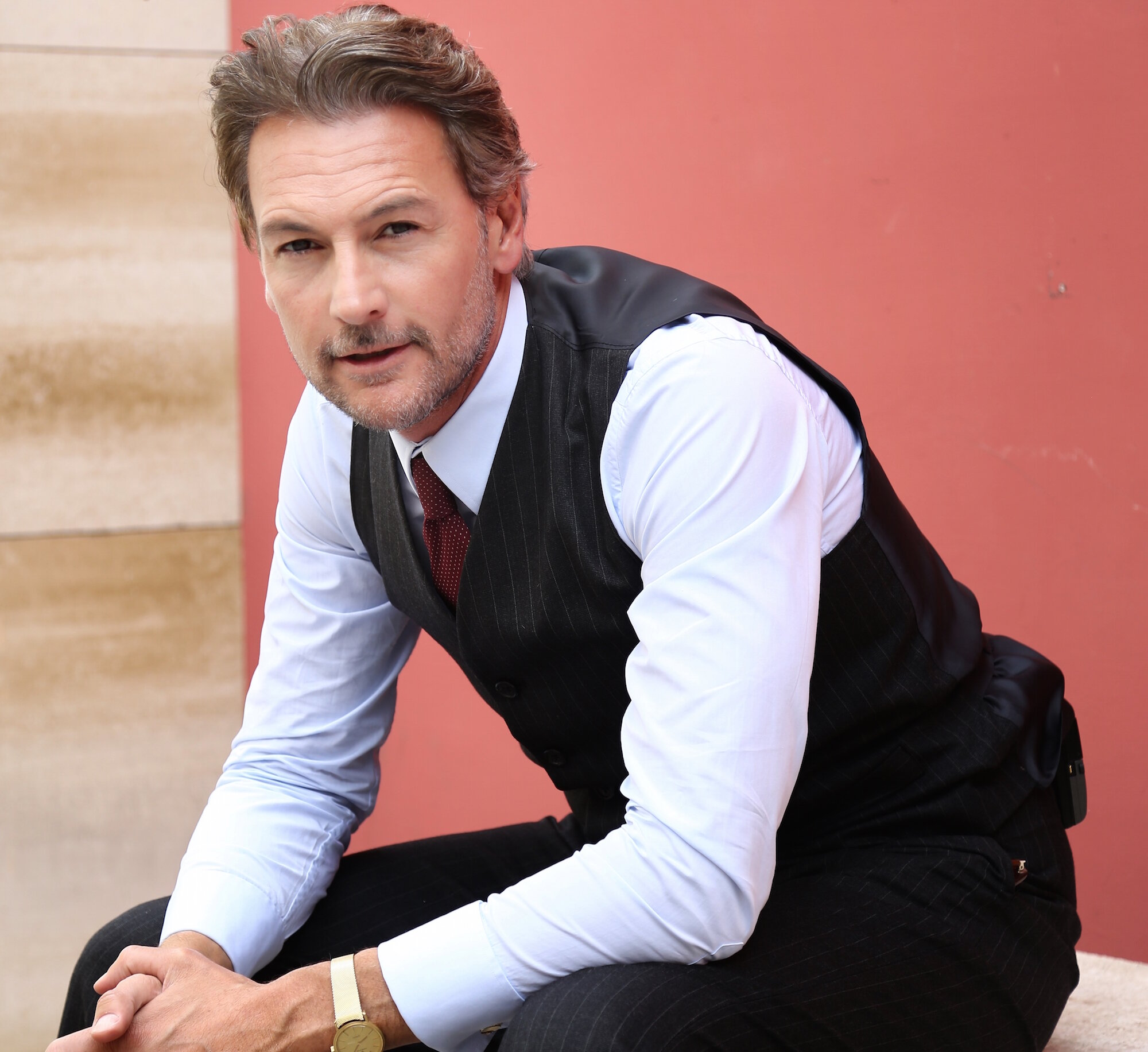
ROBERTO FARNESI – The actor with a passion for cuisine

(by Stefania Del Monte)

Actor and entrepreneur, Roberto Farnesi made his debut as a model and photo novel actor for the magazines Lancio and Grand Hotel. In 1998 he obtained the leading role, alongside Monica Guerritore, in Femmina, a film by Giuseppe Ferlito. Later he divided himself between cinema and television working, among others, with Franco Zeffirelli in A tea with Mussolini. He currently holds the role of Umberto Guarnieri in the Rai1 daily Il Paradiso delle Signore and for some years he has also been working as a restaurateur alongside his acting career.

It is he himself who tells us about this “double life”, which fills him with satisfaction.

Roberto, can you tell us a little about yourself?

Good question! Compared to a few years ago, today I am a much calmer, more serene person. Achieving serenity is a bit of everyone’s goal: perhaps reaching it 100% is a utopia but trying to get closer is a good ambition. Without taking into account the events that have upset the life of each of us in recent months, I can say that I am experiencing a rather peaceful phase of my life. I no longer lead a worldly life, or almost. I live between Pisa and Viareggio. I am lucky enough to have a wing of a farmhouse, in front of a park. I really like nature. I like to live a quiet life with my partner, with whom I have been for almost 6 years, including 5 of cohabitation. I have a business that employs several people and a partner with whom I feel very comfortable and with whom I have been sharing this wonderful experience for several years now. Social networks, in this, are highly effective because public relations, my presence, my image, are amplified exponentially. In short, I lead a much quieter life than a few years ago, but that’s normal, I think. I am 51 years old and, although I feel in great shape, my way of dealing with life has inevitably changed.

How did you get into acting? Was it always your dream or did you have other aspirations?

As a child I loved Sergio Leone‘s films, Spaghetti Westerns. My father used to take me to the cinema to see them, because he loved that genre. He passed it on to me and I relived it in the garden of my house: every now and then I even had some small accident! Other than that, becoming an actor was just a dream for me. Today, with social networks, it is much easier to get closer to this world but once everything was further away and Pisa, in this sense, was light years away from Rome. At first I fell into it almost by chance and then I deepened my preparation in a school in Florence, with Giuseppe Ferlito, who was also my mentor on the first set, shared with an extraordinary actress like Monica Guerritore. That was my first film for the cinema: a good stroke of luck, since I made my debut as a protagonist. A great “full immersion”: afterwards I attended school for another two years. After graduating, I enrolled at the University but without success. As a boy I took things more lightly but, after the death of my father, I decided to turn my acting career into a profession, I moved to Rome and slowly I succeeded.

You have always moved between cinema and television. Do you have a preference?

No, I honestly don’t distinguish between cinema and television. Of course, a film, being shorter, must be more accurate, have more details. In television series, ten scenes are shot a day while in the film two or three are shot, so in the film there is generally more care for the character, but it is not certain that the results are always better in one of the two parts. Even on the set there are no particular differences, apart from the timing. When there is more time to work, obviously the quality is better but it is not so obvious. For example, at Il Paradiso delle Signore we have an extraordinary production system that combines the two: it seemed impossible, but the producers managed to combine quality with extremely fast production. Clearly, playing a film character who is in my heart is always a great ambition but I will never deny having chosen the path of ‘long seriality’ which, in many cases, gives even greater popularity to that of cinema.

Among the great characters you have worked with so far, there is also Franco Zeffirelli. What did that experience leave you?

We had a friend in common with Zeffirelli, a very nice make-up artist: that’s how I met him. I had the honor of shooting under the direction of the Maestro in A Tea with Mussolini and I remember that while we were shooting with Cher – the extraordinary Oscar-winning actress – the scene where we danced together after she had sung Smoke in Your Eyes to me, throwing the smoke on my face, he tapped me on the shoulder saying “Be quiet!”. Franco Zeffirelli was a giant but also a very humble and nice person: I remember him like this.

What is the best moment you remember as an actor?

There are many beautiful moments that I remember from my career but certainly the best one concerns a summer night (at 2 or 3 am) in the middle of nature, while I was shooting a series of great quality and to which I am very attached: Questa è la mia terra, whose female protagonist was Kasia Smutniak, flanked by an amazing cast that included Catherine Spack, Remo Girone, Massimo Poggio, Glauco Onorato, Francesco Venditti, Miriam Catania, Francesco Pannofino and many others: in short, a truly extraordinary group of actors ! I have a beautiful memory of those nights in the Agro Pontino: the story told the reclamation of the Pontine area during the Fascist period and those nights were truly magical. The emotionally strongest sensations, however, I think I experienced on the set of Femmina: the scenes were very engaging and working with an actress of the caliber of Monica Guerritore was really fantastic!

Speaking of your current commitment to the fiction Il Paradiso delle Signore, what prompted you to work on this series?

I immediately understood that it would certainly be a flagship of Rai, as it later happened. A project that, despite being in costume, embraces the future: the first of a long series available on the Raiplay platform, with great feedback. A very ambitious project, with an exceptional care for images, photography, costumes, sets, writing, and with very good actors. It is a project that I immediately aspired to: I was lucky enough to get into it and for this I am also very grateful to the artistic director who wanted me, after having attended my audition. A project far exceeding my expectations, which were already very high.

How difficult is it to play a cynical and ruthless character like Umberto Guarnieri?

It is difficult but also rewarding. As an actor, it is always stimulating to play characters who are a little out of line, like Umberto Guarnieri. Difficulties, in my opinion, exist in any role. There is nothing easy or obvious and playing a “negative” character can be a lot of fun, even if Umberto is a very charming villain, who reminds me of certain extraordinary characters from the television series I saw as a child. The villains, however, also have to be there to give substance to the story, and viewers end up fond of them too.

The series has reached its fourth season and is gaining more and more success. Can you tell us something about the events of your character?

I can’t anticipate anything, also because the working method is deliberately “work in progress”, so I myself discover the evolution of my character day after day. However, I have the impression that in the next few episodes all the knots left open from the previous season will be dissolved and we will see some really good ones!

For several years you have also owned a restaurant: the Ristoro la Bottega del Parco in Pisa. How did the idea for this project come about? What type of customers do you target?

Yes, as a second job I am an entrepreneur: certainly, in this sense, there is a parallelism with Umberto Guarnieri. It’s been nearly eight years now. I am fortunate to have a very competent partner who knows how to manage even a small company like ours, with 18 employees and seven rooms above the restaurant. We have a large number of indoor and outdoor seats: in short, an activity that gives a lot to do, every day, but which also offers many personal and business gratifications. We went through the period of closure provided for by the anti-Covid decree in a critical, sad way, but we emerged well, confident: we took advantage of the closure to do some work in the kitchens that were necessary. The idea was born after having toured for a long time in restaurants because of my work: there, was born the desire to have one of my own, and experience that conviviality up close but also to use my popularity, my image, with those who initially come to visit us for that reason but then find an excellent quality/price ratio, a fascinating environment, service and competence: all fundamental components for the success of a company like ours. If there weren’t those, popularity alone would certainly not be enough.

What, in your opinion, must be the essential qualities of an actor and which of an entrepreneur/restaurateur?

An actor must have a good technical training or a good experience, which then becomes technical over time but I believe that there must also be something innate, which makes the difference. You may be lucky enough to embrace popular projects, which give great visibility, because moving forward, for an actor, also means acquiring ever greater popularity, which is necessary for the journey, but an actor cannot do without talent. The career of a restaurant entrepreneur, on the other hand, is made up of seriousness, rigor and a little “hair on the stomach”, as we say in Italy: you can’t be scared but you have to throw yourself into it; naturally always with awareness, rationality and careful to make the right choices but for that it takes a nose… So, I would say that the essential quality of an actor is talent, while that of an entrepreneur is flair.

Dreams to realize?

Finding a good balance and being able to become a father. That would really be a great dream to fulfil. Let’s see … hopefully this is the right time!

Cover: Roberto Farnesi
Images © Pierfrancesco Bruni/Mauro Sostini

Click here to read the interview in Italian
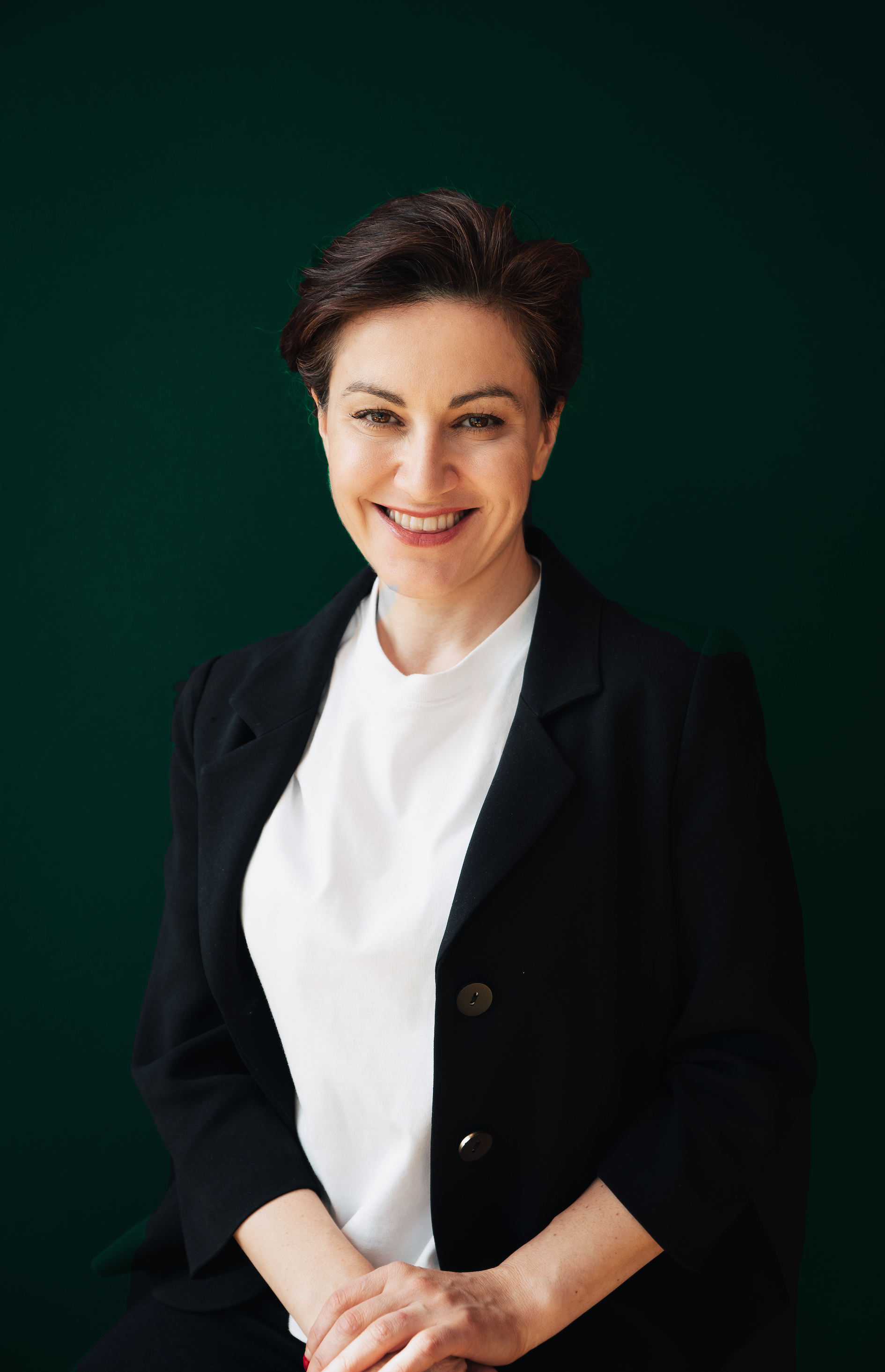


MARTA SIMONETTI – Everything we need to know about climate change

(by Stefania Del Monte)

Marta Simonetti is an experienced green finance director based in London. She worked in the City of London, initially in marketing and then in development and transition banking for the European Bank for Reconstruction and Development. In 2017 she set up her consultancy, Globalfields Ltd, which specializes in green finance and sustainable leadership.

From August 2017 to date she has carried out several assignments at senior level for the Green Climate Fund, WWF-US, GIZ, IPC GmbH, Absolute Energy Capital, as well as for private equity companies and governments. She is now focusing on the green transformation of financial markets, working with governments, financial institutions and the consultancy sector in Europe, Africa, Central Asia and south-east Asia.

In her work thus far she has been leading bilateral and multilateral structuring and negotiations in climate and conservation finance, including with the Green Climate Fund, the Global Environment Facility, the NAMA Facility, the German bilateral cooperation agency (GIZ) and multilateral banks, as well as for private companies. Her main skills are in fund management (legal and institutional structuring), blended finance structuring (mixed participation equity and loans; revolving funds; guarantee funds), resource mobilization, programme structuring in climate and environmental finance. She also offers pro-bono work for the delivery of presentations and leadership training programmes specific in the areas of green finance, climate change and environmental degradation, in particular for schools and in careers events at universities in London.

We have met her to try and get a better understanding of this very complex matter.

Marta, your academic and professional experience in the climate and environment field is impressive but we would like to start with a very basic question. We often hear the expressions global warming and climate change. What exactly are they and what’s causing them to happen?

Many thanks for this question, which is not that simple at all! Climate science is an important aspect of our work in green finance as it gives us the evidence of the anthropogenic factors (i.e. the man-made role) in temperature warming vis-à-vis normal patterns of change. It reinforces the fact that we can make a concrete impact in our work with clients.

Specifically, global warming refers to the long-term rising of the average temperatures of Earth’s climate system observed since the pre-industrial period (i.e. the period between 1850 and 1900) due to human activities, primarily fossil fuel burning, rapid urbanization and loss of ecosystems. With time, those have increased heat-trapping greenhouse gas levels in the Earth’s atmosphere.

When we look at historical temperature changes, we see a succession of warm patterns followed by ice ages over the earth’s geological history. Thanks to the analysis of Antarctic ice-cores carbon dioxide (CO2) concentration alongside the study of temperature changes, we know that warm periods, with some exceptions, are periods of high atmospheric CO2, and cold periods, geologically, have been periods of low atmospheric CO2.

After the industrial revolution we see a 40 per cent rise in CO2 atmospheric concentrations during the 20th and 21st centuries. When we look at temperatures between 1880 and now, the ten warmest years ever recorded are within the last 17 years. The hottest temperatures ever recorded were in 2016, 2019, and 2015. There is a lot of convergence on these data among major research organization, including NASA, the Hadley Centre for Climate Science, British Antarctic Survey and the Oceanic National Oceanic and Atmospheric Administration.

(data from ossfoundation.org)

Because of this pattern change in temperatures and CO2 concentrations, we are also experiencing new weather patterns that have remained in place for an extended period of time and cannot any longer be considered as isolated occurrences. This change in the Earth’s climate system is climate change. For example, we are now experiencing an increasing number of extreme weather events, such as violent storms, heavy or irregular precipitation patterns, unprecedented floodings, more frequent and longer-lasting heatwaves, droughts.

In 2020, and with all the research available on the subject, we are still faced with a large number of deniers. How is that possible? Do we have to believe Greta Thunberg or Donald Trump?

I find Greta’s message very powerful because it is really seeking to achieve what we (the older generation) haven’t done fast enough: i.e. bringing about systemic change across all sectors. A crisis such as that we are witnessing now is indeed unprecedented. Think about the bush fires in Australia, the snow-free Christmas day in Moscow, or the current above-average temperatures in England followed by three weekends of storms and torrential rains. Those occurrences used to be abnormal, rare events. Now it is the new normal. Greta would say: Your house is on fire. And rightly so, because we cannot any longer think that those are remote problems that will not affect us. Yet…every crisis brings fundamental questioning, and the way we answer those questions, the motivations we bring behind our answers are the real catalysts for change. I think we are now at the right juncture to substantially speed up climate and environmental action. Our awareness and knowledge of the issue have increased, because the problem is so in our face that we cannot turn away from it.

Climate deniers thrive on instilling doubt and misinformation. We need to remain very aware that the most prominent deniers out there receive significant financial backing from (predominantly) the oil and coal industries, and then also from farming and heavy industries. What I find dangerous in this rhetoric is their effort to disenfranchise and disengage people from the actual conversation. If we are not responsible for climate change, then it follows that we shouldn’t worry so much about what we do because nothing we do actually matters. This is an abdication of responsibility! This is an abdication of our true human nature and our ability to bring change and meaning, in our own lives, as well as for the environments and communities we live in.

The real conversation has another focus. We have the technology to move away from fossil fuels. This is happening faster in some countries and not so fast in others. In a way we can say that it is important to remain mindful of the complex socio-economic transitions that are needed to decrease reliance on coal, oil and gas, as those have a price, expressed in the affordability of clean energy. Yet this transition needs to happen, globally. At the moment, while technology costs are coming down, we still have entry barriers, for example in mismatches between policies on the one hand, and regulation on the other; or political uncertainties which then translate in higher insurance costs or may act as deterrent to investment.

We have two major paradoxes here. Short-termism is now pervasive, in politics and in business. For many politicians it is impossible to think past the next election. This jeopardizes the ability to accept short-term costs for longer-term gains. In business, we want to see quick returns on investments and short pay-back times. When we work in climate action or in sustainability, the work is fundamentally long-term. We seek long-lasting impacts.

The second paradox is that while we seek to reduce emissions through clean energy generation and resource efficiency practices, we have rapidly become a more electrified, digitalized society. Think about how many tasks we now do digitally that were previously done without electricity: paying bills, writing letters, studying, billboards. Who goes now to the post office to pay, say, the water bills? Or when was the last time we sent a friend an actual letter written by hand, using pen and paper? While we may still have books, online content is now so efficient that it can really save us time and energy. And what about money? Here in London, where I live, there are shops that do not accept cash any longer. Now we have smart houses, big data, machine learning, predictive technologies. This is all very useful. It all needs electricity. So, as the population grows, any efficiency gain in carbon mitigation, water efficiency, or resource efficiency that we may achieve through new technology is eroded by the growing rate of consumption of that resource. This is the Jevons paradox, very much used in environmental economics. Before we start thinking though that any efficiency improvements in climate action is futile, let’s add another perspective here: i.e. the growing role of environmental conservation and stewardship of the planet. This is why now more than ever we need to find and implement applicable solutions.

So, when I look at Greta I really see progressive politics fighting against regressive government. In Greta I see the spark for systemic change rather than clinging to the status quo. For our future, the future of our children and humankind, for the health and preservation of the earth systems, we need to choose climate action!

It is too late to prevent climate change?

Climate change is already happening. What we can do now is to make sure that we decrease emissions, and fast. GHG emissions in fact increased in 2017 and 2018, and stabilized in 2019, according to the International Energy Agency. An important concept here is the planetary boundaries of the earth systems. In some instances, we have made useful progress, for example in the reduction of chlorofluorocarbons to slow down stratospheric ozone depletion thanks to the Montreal protocol and more recently the Kigali Amendment.

But in other areas – namely climate change and biosphere integrity – we may have already gone beyond the boundary. What does this mean? That we are fast approaching a tipping point, beyond which certain changes may become irreversible, such as loss of ice cover in polar regions, with subsequent sea level rises; or loss of ecosystems. Some people may find the extinction of some species irrelevant, or may be unmoved by an emergency thousands of miles away from home. Those events, though, are neither unrelated nor irrelevant, because ecosystems are interconnected, planetary boundaries are interconnected and ultimately, we are also connected (to ourselves, to others, to the contexts we live in). Do you remember John Donne’s poem ‘No man is an island entire of itself…’? The balance is in humankind’s approach to become aware that we are all part of a whole system, and that this interconnection is not a new concept or new-age mumbo-jumbo. It is real.

What do you think are the most important priorities, in order to tackle the climate crisis?

There are four key areas of priority where I believe we can bring substantial changes and impacts.

  • Financial support. For many countries, there is still a need to bridge the gap between the technical and impact potential of a project, and its commercial viability. This is where I see still a steady role for public interventions given as blended finance in the form of concessional lending, guarantee instruments and subordinated positions in financial instruments (e.g. first loss and tiered funds). We definitely need a little bit more risk-taking in order to bring new technologies on the market, which can be achieved through concessional equity in incubators and accelerators funds, as well as for venture capital. Supporting the supply of viable projects can strengthen the arguments for the business case of investing in green and SDG-linked products, which is paramount to speed up divestment away from fossil fuels.
  • Technology solutions. There are two ways to look at this: a solution as a new product, design or process (e.g. gravitational technologies for energy storage); and as a system change, i.e. green connectivity, circular economy and cradle-to-grave solutions, ‘green-digital’ urban designs and urban adaptation practices. To name a few…
  • Nature-based solutions. This would include conservation efforts, resource preservation and management, re-building of ecosystem. In this area we have solutions at hand, for example in carbon sequestration through reforestation and afforestation practices. Those solutions need to be implemented at a faster pace that the on-going destructions of those same ecosystem, which is very challenging.
  • Applicable awareness. I hear too often people feeling disempowered: how can one person make a difference? Well, let’s bring awareness to this issue and see what we can do, as individual, as part of a community, and in the bigger political arena, then we are not anymore acting as one but as humankind. As we prepare for next Conference of the Parties (COP26), co-organized by the UK and Italy and taking place in Glasgow in November 2020, we can take the opportunity to learn more about what’s happening and empower ourselves to bring change.

For example, what are some key changes we can bring into our lives?

I would like to give some suggestions… Switch energy supplier to full renewable energy; reduce meat consumption; join a vegan / vegetarian group for inspiration and recipes; reduce food waste; seek bulk or unpacked shops where you can use and reuse your own containers; increase energy efficiency by, for instance, switching all lights off, as well as through efficient lighting, windows and walls; join a clothes swapping group or sales apps; use sharing services rather than owning a product (e.g. car sharing); vote with your wallet by deliberately choosing which product and company you want to support and which you don’t; participate in tree-planting exercises and other sustainability activities organized by your council; use public transport to move around; vote for those candidates who have a clear pro-climate and sustainability agenda.

How can your expertise make a difference?

At Globalfields we look at climate change and sustainability practices in businesses from a variety of angles. We are interested in the interconnectedness of the issues and therefore we are able to offer holistic approaches. As I was mentioning earlier on, clean energy generation and efficiency gains cannot be taken in isolation from conservation efforts and stewardship of the planet. We need to think about energy and resource efficiency solutions alongside their wider impacts. We need to align corporate efforts with the sustainable development goals and with international agreements such as the Paris Agreement.

Globalfields was incorporated almost two years ago, and in this relatively brief time we have worked very closely with a number of governments, public and private-sector institutions to create processes or policies to implement green finance practices.

In particular, our work includes supporting organizations in drafting green finance strategies and roadmaps for their implementation; in designing framework for a company’s alignment with the SDGs; supporting the work around frameworks for green loans and SDG loan certifications; advising on financial instruments in green finance, with specific use of concessional and blended products for developing countries; fund-raising and structuring of funds.

More recently we have also worked on green finance training and made our first investment in small-scale hydropower. Two additional investments are under consideration as we speak.

Most of our work is targeted at corporate level, but we have also designed frameworks for coaching for transformational ‘green’ leadership, delivered individually or in small groups. This is where we aim to empower people to not only understanding the subject matter but also to design the most appropriate pathways for them to become transformational leaders in their organization. Working at corporate and individual levels is in my opinion a necessary undertaking in order to bridge the gap between science, policy and action.

Cover image: Marta Simonetti


Libiamo, the online club of the best Italian wines & spirits in UK

London (Francesco Pappaleo)  – Are you in the UK but you miss your winery weekend? Libiamo is your answer: the online wine club that specialises in high-quality Italian wines & spirits.

Libiamo was born in 2014 owing to a collaboration between Italian and British partners who share a passion for the Made in Italy. Since that time Libiamo aims at establishing a community of Italian wine and food enthusiasts in the United Kingdom, taking inspiration from the famous toast in Giuseppe Verdi’s renowned opera La Traviata: “Libiamo nei lieti calici!” (“Let’s drink from the joyful cups”).

Everyone can have access to it and can be part of a new community to meet new friends by sharing the same interests.

By visiting the website you can discover a wide range selection of wines and Italian spirits that you can try by buying it online.

However, Libiamo is more than an online wine store: the club proposes a new approach to the Italian wine and food tradition by telling the cheerful stories hiding behind the wines and their producers, by suggesting the best food and recipes to pair the wines with.

Also, the club is promoting new tours through the most suggestive Italian vineyards and by organizing the most innovative wine tastings. So Libiamo gives you the chance to live the Made in Italy in total, by discovering more about the Italian culture and lifestyle. 

For this reason, Libiamo is a gastronomic philosophy, an innovative approach to wine enjoyment with friends, a journey through the history of Italian wine-making and a chance to visit Italy and her amazing landscapes.

Regarding the spirits, Libiamo features an outstanding selection of premium quality artisanal spirits from legendary Italian producers: grappa, vermouth, gin, nocino and limoncello. The secrets of mixology are revealed to all our friends.

To discover more visit the website libiamowines.co.uk and enjoy the true Italian lifestyle!

Discovering Eton College

London, Maria Vittoria Bognetti

Eton College was born in 1440 from by King Henry VI who desired to found an institution that would shape and educate the next british ruling class in the English Language, aiming at creating a natural ‘bridge’ between high school and university education level. It started as a charity school which provided free education for seventy poor boys in Windsor, Berkshire, who then continued their scholastic career in the exclusive 70 colleges between Oxford and Cambridge, leading universities in the world.

For the first time, Eton College opened his doors to an Italian production team, London One Radio, allowing us to perceive the unicity and the peculiarities of this institution in its whole beauty. Dr. Marco Liviero has been the voice who guided such tour in the numerous rooms of the college, by providing insights on what distinguishes them from other boarding schools. He explains that Eton College was love at first sight: he visited the school during an academic trip, and already passionate about the British culture, theatre and Shakespeare, he pictured himself in this institution. A dream that came reality as, for the past 19 years, he has been the Professor of English Literature at Eton College.


Eton is not like any other boarding schools, students are developed in toto. As Dr. Marco Liviero explains, “Excelling in school is not enough. Being passionate is an essential quality, and what is mot important is to be willing to invest effort and time in these”. The academic part is indeed just a small component of the education that student receive from Eton: they develop their passions, initiative spirit, and sense of responsibility through the many extracurricular activities from sport, to music and theatre.

The Farrer theatre, the creative heart of Eton College, is one of the most magical places in the boarding school. And the very essence of theatre allows Eton students to grow as human beings, touching the many spheres of an inclusive development: it allows to “understand who you are and who you can become”, key elements in the receipt to disclose the full potential of each student. It is not surprise that many brilliant actors passed from here, from Hugh Laurie, the Dr. House protagonist, to Eddie Radmayne, who recently won the oscar for his interpretation of Stephen Hawking in the Theory of Everything.

Eton’s traditions have been lasting for more than six centuries, and it is the combination of such solid and extraordinary background, academic excellence and a constant innovation that allows this school to be the most prestigious boarding school in the United Kingdom, if not the world.

“The school master’s skill is understanding the different talents of each pupils”, a quote by Quasiliano, found in a fresco in the Head Master Chamber, the office of the Head Master in XIII century, well embraces and expresses the spirit of this brilliant institution.

Why Italy is the 5 Tourist Country in the World  

It’s official: according to a report by the World Tourism Organization Italy is one of the most popular travel destinations around the globe, receiving over 58 million visitors in 2017 alone. Placed as it is in the centre of the Mediterranean, a hub of western culture, it’s not hard to imagine why.

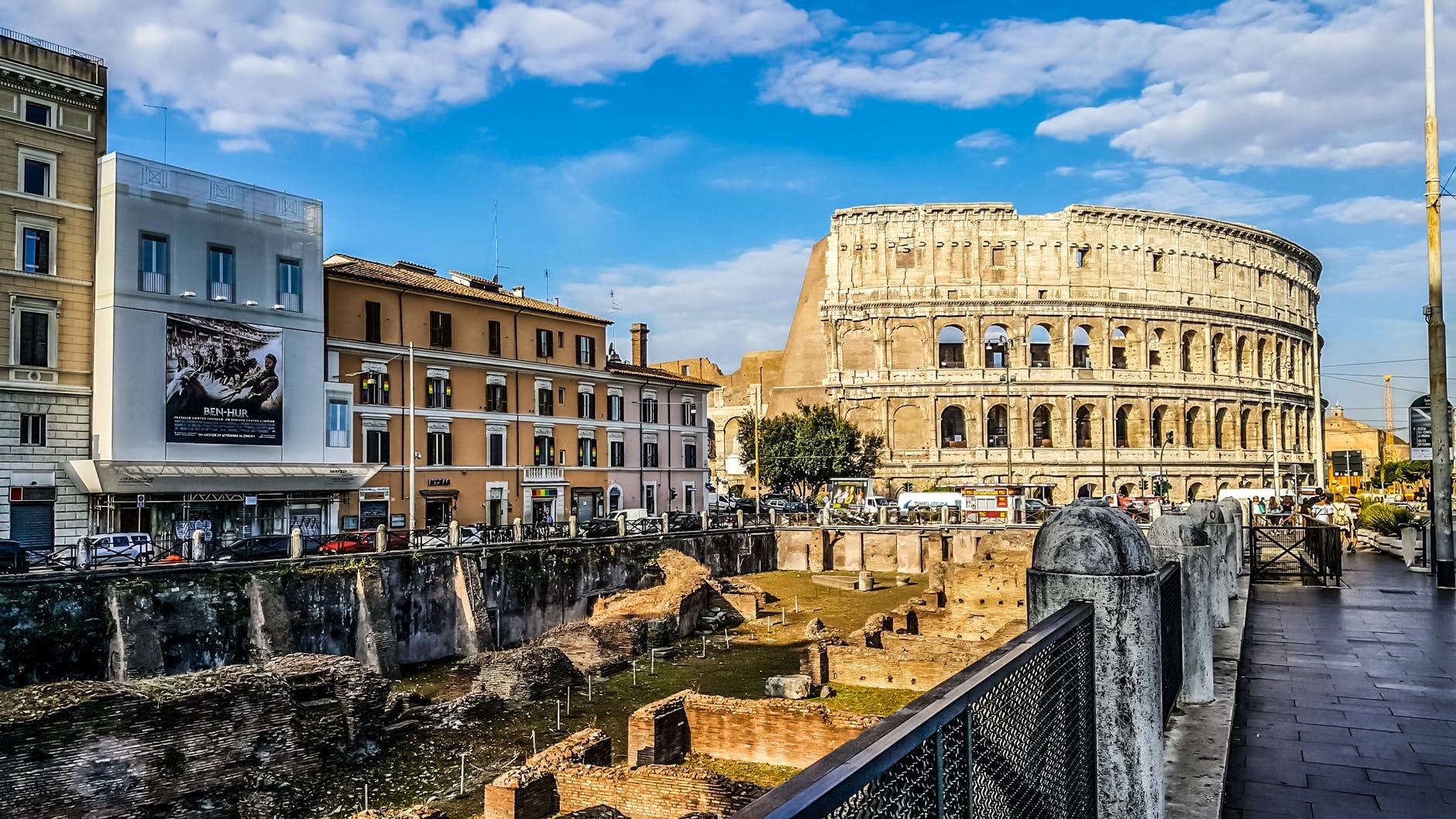
From the ancient holdfast of Rome to the bastion of Syracuse on the isle of Sicily, Italy has always been famous for its classics; many of its cities have stood for millennia, with grand monuments such as the Colosseum and the ruins of Pompeii standing tall thousands of years after the fall of the original Roman empire.

Tourists come from far and wide to visit such sites, and rarely leave disappointed.

Within the capital city itself sits the Vatican, the living heart of the Catholic faith. It welcomes visitors from all over the world into its halls, an independent state in its own right decorated from floor to grand ceiling with beautiful artistry and architecture.

In Florence, the 600 year old Cathedral of Santa Maria del Fiore stands tall and majestic.

In Pisa, Galileo’s leaning tower leans, a living testament to science and history.

Up and down the country the remains of ancient aqueducts can be seen, and in Rome the 18th century Trevi Fountain is carved glorious, especially beautiful on bright sunny days. The remnants of the Romans are one thing – the remnants of the renaissance can often be even more astounding.

The Culture

If there’s one thing above all that attracts the tourist crowd to Europe’s boot however, it’s the culture of the people living there. An on the ground experience in Italy is proof enough – there’s character on every corner, from local restaurants to the railway system to coffee snobbery. Even Italy’s lottery is bombastic; the SuperEnalotto at Lottoland sees three weekly draws with no cap on rollovers, meaning giant, exciting, enthusiastic national wins

The Sun and the Sports

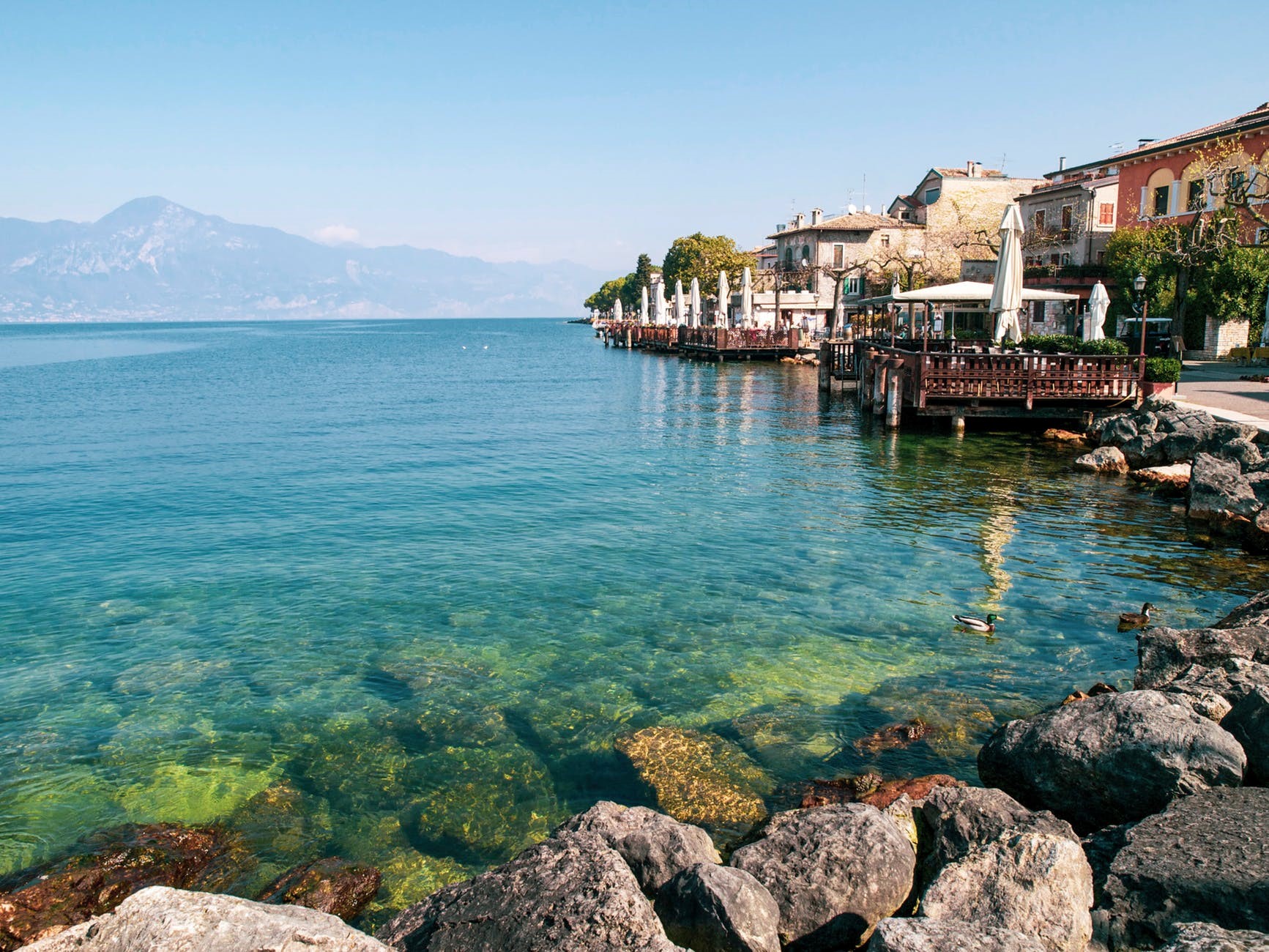
It’s not all museums and monuments in Italy, however – far from it. The country is just as famous for its mountains, skiing, football and water sports. With long, balmy summers and beautiful beaches many tourists come to the country solely for the weather alone relative to the time of year.

Image: Pexels

385 Italian beaches were awarded the prestigious ‘blue flag,’ award for clean waters in 2019 – meaning the country holds 10% of all flags in the world.

Compared to nearby neighbouring countries Russia and France, Italy has 349 separate skiing locations, whereas France only has 325, and Russia only 321.

Wine tours are available up, down and throughout the countryside and family resorts and villas draw guests in by the thousands every year. Without a doubt, Italy is just as good for a relaxing holiday as a learned one.

From pizza to pasta to the upbeat tune of the Italian language, Italy’s culture is beloved the whole world over for its energy and warmth. Combined with the grandeur of ancient history, and it’s easy to understand why the country remains one of the best to visit in the world.

Windsor Castle will host an amazing exhibition of the main clothes used in the Royal Wedding

London (Giulia Faloia) – Some time passed since 19th May 2018, the day of the Royal Wedding. Despite Meghan Markle and Prince Harry got married several months ago, they are still giving the chance to talk about the ceremony. 

In fact some objects used for that occasion will be available in an exhibition at Windsor Castle this October.

Meghan Markle’s stunning Givenchy wedding dress will be exposed as well as Queen Mary’s 1932 diamond and platinum bandeau tiara that was lent to the Duchess of Sussex by the Queen for the first time.

Meghan’s breathtaking wedding dress that was designed by British designer Claire Waight Keller will on display at exhibition titled A Royal Wedding: The Duke And Duchess Of Sussex.

nytimes.com

Every lover of fashion and weddings in general will have the chance to admire the details of the silk gown, five-metre long train.

It will be possible to see also the stunning veil that is embroidered with the flowers of all 53 Commonwealth countries and Wintersweet and a California Poppy.

Clare revealed that Meghan told her from the start exactly how she wanted to look at her Royal Wedding and that it took no less than eight fittings to create the final dress.

She added: “We very quickly agreed on the perfect dress. I wanted a modern and fresh silhouette while respecting her style” and, talking about the entire job, she said that it was “an immense honour to have worked closely with Meghan”.

Clare herself also revealed that the Duke of Sussex congratulated her after the wedding saying: “Oh my God. Thank you. She is absolutely magnificent”.

The Royal Collection Trust told Express.co.uk that Meghan’s second stunning dress of the evening that was designed by Stella McCartney will not be part of the exhibition.

thebusywomanproject.com

A copy of the Duke of Sussex’s Savile Row-tailored uniform will be on display.

Prince Harry’s outfit was a specially commissioned frockcoat uniform of the Blues and Royals was made by Dege & Skinner. Plus the uniform will be paid with trousers made of blue and black wool barathea.

The exhibition will start at the wedding site of Windsor Castle before making its way to Holyrood Palace.

It will be at Windsor Castle from October 26 to January 6, and at Holyrood Palace from June 14 to October 6 next year.

Training vessel Amerigo Vespucci comes back to UK

London (Giulia Faloia) – The Italian Training Vessel Amerigo Vespucci will be back in Portsmouth from the 24th to the 27th of August. During the 26th of the same month people will have the possibility to visit the ship.

The Amerigo Vespucci is  “the most beautiful in the world”. She earned this title thanks to the American aircraft carrier USS Independence that sailed the Mediterranean in 1962. The Independence was traveling the sea when the Amerigo appeared on the American radar. The Italians told their identity – as usual when two military vessels meet – and the Independence crew answered: “You are the most beautiful ship in the world”.

spiccandoilvolo.com

Amerigo Vespucci is also the most ancient vessel of the Italian Navy: she was built in 1931 and she turned 87 this year. She’s now working as a school ship for the young students who have to learn the art of sailing. In particular they practice in seamanship, navigation, operation of drive systems and auxiliaries, management of logistics, administrative and medical issues. 

As any other Italian ship, Amerigo Vespucci has her own motto that values the vessel and encourages the crew: “Non chi comincia ma quel che persevera”. This sentence is attributed to Leonardo Da Vinci and it is referred to the strict formation of the future sailors. The motto means that the point isn’t starting the route but completing it successfully.

spiccandoilvolo.com

Amerigo Vespucci carries out two kinds of activity: training campaigns for Naval Academy cadets and showing-the-flag in support of national diplomacy. She began her career as Training Ship for the Naval Academy cadets a short time after her creation. 

From 1931 to 2005 – in addition to many short cruises around Italy – she has carried out 71 training campaigns in the Mediterranean Sea, Northern Europe and Atlantic Ocean. Furthermore in 2002 and 2003 she sailed around the world, spending several months in New Zealand for the America’s Cup. 

spiccandoilvolo.com

Therefore if you are in Portsmouth or nearby you can’t miss the opportunity to visit this awesome, beautiful vessel. From 1 p.m. to 4 p.m. you will have the chance to try the experience of getting in a real Navy’s ship, “the most beautiful in the world”.

Is Internet taking our free time off?

(London, Gruppo Federico II – Marzia Gravante, Ylenia Gravante, Sara Gravante, Paolo Di Puorto) – During the last month we have been in London asking more than 2100 people how much time they spend online. We discovered that the majority of them use internet in their free time and that the majority of them cannot live without any tech devices.

The public survey carried out by our team reveals currently some Londoners spend almost an entire day per week online. Both Netflix – with more than 7 hours per day – and social media with at least 6 hours. The reason? They want to  keep up with their friends’ lives as well as curious to discover what is happening across the world.

The results are not so that diverse to the latest researches, according to which the UK adults spend more time online than asleep, with an average of 9 hours per day online and only 8 hours sleeping.

The most alarming news concern children though, who are now spending more than 24 hours a week on tech devices. In fact a lot of parents are worried that it may cause problems by affecting them also psychologically.


The chart above depicts all people interviewed, divided according to their ages, in order to identify which generation is the top online consumer. As we can see, people between 14-25 years old are the ones who use the Internet the most (50%), compared to those between  26 to 40 years old who don’t use internet as much as them. Still, we can apply the stereotype that older people are more conservative and traditional to their habits, as they are not very integrated in such online trend.

However, we need to consider that many people use internet to work, but as our public survey reveals,  the same people spend 2 or 3 hours more on social media in their free time instead of going out and spending time with their friends. 

Walking and commuting across London we notice that many people are nowadays busy on their smartphones, by avoiding eye contact or conversations with people. Such behaviour is very common in the tube, the place where we started asking why. 

The first answer that came up to our minds was that people are becoming addicted so much to their smartphones, or any other tech devices, that they’re unable to live without them. 

In fact when we asked if they could live without any tech devices many looked at us oddly. Why? Most of them were surprised and excited at the idea that they would like to try such experience.

Why is this such habit became so popular? Tech devices, especially in a city like London, are much more convenient as they instantly find you a solution to your needs. 

So,  in a world made mostly by apps, are people are aware of how much time they usually spend online?  Having asked our questions people started to think about the time they spend online doing nothing productive and realized that probably their free time has decreased since they started using the internet. 

An interesting interview is the one we did to a researcher who  said that he usually spends about 6 hours online per day. He also said that he couldn’t live without technology because – once again – he needs it for work and to make his researches easily. So of course not everyone spends too much time online doing nothing and not everyone thinks that the internet is ruining our life. We have to admit that it really helps us doing things in a much a faster way.

What we learned from this experience is that, fortunately, very few people use internet in an excessive way. It happens that sometimes they use it even when they don’t really need it. However  for somebody checking their phones has became an habit and they forgot that they can live perfectly without them.

Morganti Caffè Bar opened in London bringing the taste of Italy in UK

London (Giulia Faloia) – Morganti Caffè Bar and patisserie A. Tornatora are now offering a piece of Italy in the center of London.

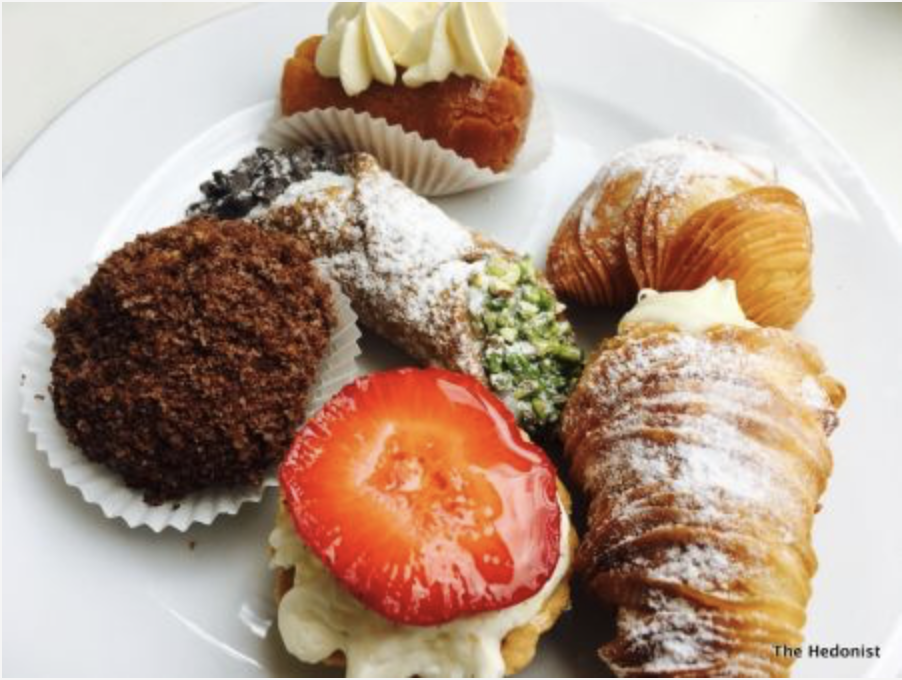
You can sit in the middle of Tottenham Court Road and taste the flavors of Rome thanks to coffee,  cornetti, snack on tramezzini, drink aperitivo, feast on gelato and dine on home-made food.

You can find the fragrance of the Italian bakery at 187 Tottenham Court Road, Fitzrovia, W1T 7PQ, getting the opportunity to try the Italian cornetto, that is a croissant very light and crumbly and made with very little sugar.

The opening in London is just the beginning of an international expansion programme and it keeps on increasing the reputation of an historical brand.

brdconsulting.it

In fact Morganti Caffé Bar was founded in Rome in 1890 and it has been hosting very famous consumers during the years. The Vatican for example – in particular Pope John Paul II – is one of Morganti’s greatest fan.

The family patisserie and bakery A. Tornatora is an historical brand too and it offers the very best in sweet and savoury artisanal gastronomy and home-made gelato of the highest quality.

Everything is handmade daily, using fresh, quality ingredients with the artisanal touch. Quality creations, including gluten-free, include mignons, classic pastries, cakes, ice-cream cakes, and custom made cakes. The deli counter offers light, tasty dishes, carpaccio, seafood and spelt salads, seasonal salads, savoury croissants, mini pizza and much more.  Ice creams are a feature, strictly home-made, with seasonal fruit and wholesome, high quality ingredients. 

Coffe and cakes in the centre of London that bring you on the shores of the Tiber. Everything you can ask for whether you prefer the Italian or the English taste.

brdconsulting.it

Morganti Caffè Bar loves the planet too. With the motto ‘greener every day’, they have been recycling everyday waste since 1985, they use roasting equipment which uses less fuel thus producing less emission and their coffee machines use less than half the energy than other machines.

You can have the opportunity to taste their creations at any time, since the Caffè is open seven days a week from 7 am to 10 pm for coffee, breakfast, brunch, express lunch and supper, including takeaway service. 

The lovers of the happy hour will be happy to try the Aperitivo Italiano, served every day from 6 pm for a fixed price of £9.50, to include a choice of Aperol Spritz, a glass of prosecco, a glass or wine or beer, with a generous selection of bite-size deli foods, prepared daily.

The very best choice for every kind of palate, try to believe. 

“It’s personal, hidden and quick”: the experience of self-injury in LGBT people

by Mirianna la Grasta

Forget the simplistic expression “cutting”, which now stands for all self-harm. Because self-injury (SI) is a lot more than that.

It’s winter and it’s freezing cold. The rain is falling heavily but Malin keeps running in it, careless. She runs and runs, wet and cold from head to foot, until she stops and thinks: “I’ve punished me enough.”

SI is a set of unhealthy actions you do to deliberately hurt yourself. It can include damaging your skin, embedding objects in your body, pulling your hair, head-banging, bulimia, drug abuse, binging, over exercising, drinking and attempting suicide.
“It’s doing things that make you feel awful,” says Malin Therese Mathisen, a 27-year-old Swedish student. “You have a voice in your head trying to convince you that you need to do that.”

No matter the method, self-harm is becoming very popular. It is more common in young adults and in people who identify as LGBT. The Mental Health Foundation estimates that the UK has the highest self-injury rate of any country in the EU, with 400 in 100,000 people self-harming. In the case of LGBT identities, the LGBT Foundation suggests that they are twice as likely as heterosexual people to have suicidal thoughts or attempt suicide, and three times more likely to suffer from depression.

Saya Karavadra – trainee counselling psychologist at City, University of London – explains that today, despite a certain open-mindedness in understanding homosexuality and bisexuality, the sexual orientation of these people is still “widely stigmatised” by society. And this “social pressure”, as she describes it, may cause self-injurious acts, consciously or not, in a subject who identifies as LGBT.

Self-injury comes after an accumulation of bad feelings, such as anger, depression, anxiety and fear. General psychotherapist Phil De Soissons uses the word “turmoil” to describe this state of emotional overwhelming. “Self-harm is a coping mechanism, that is to say a way people react to their turmoil,” he explains.

“It’s personal, hidden and quick.” Zack Xenon, member of the LGBT+ community, thinks of his experience with self-harm as an “internal way” of dealing with sadness, anger and rage: “I find it very difficult to verbalise my negative emotions, so I use self harm as a means of expressing them.”

The alarming aspect of SI is that people who experience it would not immediately realise how dangerous it can be for both their mental and physical health. “People end up inflicting to themselves the pain they would like to inflict to other people, treating the injury as something external to their body,” Ms Karavadra argues.

Even though it helps people to cope with a distress, self-injury has an addictive nature. The calming effect that follows the harm is just temporary and, eventually, the person will face his repressed feelings again. This is why Zack Xenon describes it as a “destructive and sometimes life-threatening method”.

Toby Daniell, a bisexual Psychology student who started self-harming at the age of 11, compares self-injury to smoking addiction. “If you try to prevent a smoker from smoking cigarettes,” he says, “that person will not stop.” Instead, he will “desperately” start looking for other ways to satisfy his desire, and will ultimately find one. “Self-harm was my addiction,” says Toby, “and when I finished I sat there, proud of having found another way to hurt myself.”

“You can’t simply tell people to stop, it will not work,” he concludes.

As Phil De Soissons explains, when helping a person that has self-harmed it is important not to concentrate on the action itself, but to normalise it. “As a therapist,” he says, “I tend to look at the essence of a person, and to identify with him in order to understand what his feelings are.” Psychotherapists, in fact, are less diagnostic and empirical than GPs: by cooperating with their patient they teach him to find healthy coping mechanisms.

Ms Karavadra as well thinks that it is vital to identify with a patient experiencing self-harm. She says that through clinical work therapists, psychologists and counsellors introduce the patient to the “ability of staying present”. This means trying to face their negative emotions, and delay for some minutes the urge to self-harm. “We don’t ask them to stop,” she explains, “but to delay their need, as we know that in 10 minutes the urge they felt before will diminish.” Ms Karavadra adds that, over time, therapy helps people to explore what triggers their urge to self-harm, “and once they know where it comes from, they are in a better position to face the feeling.”

It is important not to force someone into counselling or therapy. It should be up to the person to seek advice and to share their story with someone. The best way to do that is addressing people you trust, counsellors within the education system or social and healthcare communities such as Pink Therapy, Samaritans, Harmless and Elefriends.

“If you realise a friend of yours does self-injury please take action,” says Toby Daniell. Toby, in fact, after dealing with his own problem had to help one of his loved ones, “and for someone who has self-harmed, it’s extremely horrible to see other people going through that.”

“Don’t pity people, don’t freak out like their parents would do. Just stay calm, normalise it and help them find a different way to cope with negative feelings.”

image credit: http://mountpleasantcounsellingcentre.com.au/self-harm/