CIAO MAGAZINE INTERNATIONAL YOUNG AUTHORS AWARD – Winners of the first edition announced

The first edition of the International Young Authors Award organised by Ciao Magazine, ended with the designation of the winners.

The event, reserved for students of secondary schools of less than 18 years of age and located outside the Italian territory, was aimed at promoting the Italian language in the world, especially among young people, through the enhancement of linguistic skills of the participants and took place with the auspices of AIM – Associazione per l’Italia nel Mondo.

The vote was carried out by a jury chaired by Stefania Del Monte, Director of Ciao Magazine, and made up of five experts: Maria Iacuzio, president of the Italian British Association, journalist and teacher; Antonello Caponera, journalist, teacher and national secretary of A.I.M. in Colombia; Tommaso Avati, writer and screenwriter; Luca Vullo, author, director, producer, coach, as well as expert on Italian language and gestures; Michele Pilla, journalist, writer and presenter of Patrimonio Italiano TV.

For this first edition, Ciao Magazine received contributions from Argentina, the United States and Spain. For each of the articles published in the Giovani Autori section on the magazine’s website, jurors voted with a number ranging from 1 for the lowest score to 10 for the highest one. At the end, the following students were declared winners: 

First prize

Chiara Bussotti (16 years old, Madrid) with ASPETTANDO GODOT

Wins an Amazon voucher of €150 and an internship at Ciao Magazine


Second prize

Francesca Romana Val Bagli (16 years old, Madrid/New York) with LA KEATS SHELLEY HOUSE

Wins an Amazon voucher of €100


Third prize (equal merit)

Sandra Valentina Dallazuana (16 years old, Colón-Entre Ríos/Argentina) with L’HOTEL DEGLI IMMIGRANTI

Wins an Amazon voucher of €25


Claribel Cabrera (16 years old, Colón-Entre Ríos / Argentina) with MARIA ELENA WALSH

Wins an Amazon voucher of €25


Out of competition, a special jury prize was also awarded to Sara Del Monte (11 years old, residing in Italy) for the story SUGO. Il gatto invisibile ed altre avventure, written at the age of 7 and for which the young author wins an Amazon voucher of €30.

Design © Francesco Caponera

Click here to read this article in Italian

ERIKA BEZZO – A coach for expats

by Stefania Del Monte

Erika Bezzo, owner of ChangeXperience, is a strategic and intercultural coach with ICF (International Coach Federation) certification, specialised in helping those who leave their home country to start a new adventure abroad. Her thirteen years of experience as manager in marketing and communication led her to live and work in Italy, Germany, France and Spain. She holds coaching sessions in Italian, Spanish, French, German and English and has just launched a new version of her website, now available in English, Spanish and Italian. We met her to learn more about her role and understand how she can help expats in their transition.

Erika, what is, exactly, the role of a coach?

Imagine having a nightmare while sleeping. You are trapped in a reality from which you cannot get out, you are sick, you are looking for a solution but you cannot find it. The malaise grows, you run, you struggle in an attempt to put an end to that anguished situation, but nothing, you cannot do it. Suddenly someone wakes you up and you are in a new reality, which allows you to observe from the outside, from a new perspective, the “nightmare reality” that seemed to you to be dead end. The Coach is the one who “wakes you up”, leading you to explore reality from a new perspective, from which you discover paths and solutions that were previously not visible. And it accompanies you on this journey of discovery until you reach the goal.

How do you carry out your business?

With my private customers, who live almost everywhere in the world: the sessions are mainly online. With companies, I generally go to the client, for individual and group training and/or coaching.

How much did your previous work experience help you to become a coach and professional trainer?

My experience in the company has been fundamental. When your customers are managers, entrepreneurs, freelancers or employees who every day have to deal with an organisational structure, hierarchical relationships, power games … having lived the company life allows you to understand closely what they are talking about.

Did the fact of having lived in different countries help you?

Moving on average every three years leads you to experience continuous and constant change exponentially. Expatriation is the only event in life that leads you to face so many challenges and changes simultaneously: work, language, country, culture, friends, colleagues. In my case, the first transfer also coincided with my wedding. Expat life is an experience as exciting as it is destabilising: when I help my customers in the transition, I know exactly what they are experiencing because I have tried it on my skin, several times. And they feel it. Once, a French manager of a large German multinational said to me: “I chose you as a coach because you are a woman, a foreigner; you know what it means to work in this country (ed. Germany) and you speak my language”.

How did you deal with the inevitable changes that accompany every move?

The first time, with the blissful unconsciousness of a 27-year-old girl. Later, with greater awareness, great curiosity, desire to discover and learn new languages ​​and new cultures, but also with organisation, determination and stubbornness.

What did you take with you from the places where you lived?

From Germany the essentiality of the content, from France the value of the form, from Spain the value of lightness, in the positive sense of the term. The Spaniards have the great advantage of knowing how to smile even in difficulties; it is a great force.

And what about Italy?

I lived in Italy till the age of 27. This is the place where I developed my core identity. From my home country I take a lot of cultural peculiarities, but probably the most distinctive one is the art of getting by.

One of the most important aspects of your work is the intercultural one. What pushed you in this direction?

As soon as you arrive in a new country, you don’t know its culture, values, customs. You therefore continue to behave as you would in your country of origin. Misunderstandings arise that generate anger and frustration. If someone gives you the keys to interpret the behaviour of others in the host country, your ability to adapt to the new cultural context is much faster. The desire to help people feel comfortable and quickly find their new balance is what prompted me to put at the service of others what I have learned in recent years as an expat, in addition to my intercultural studies.

In 2014 you founded Italia Altrove. What is the purpose of the association?

I could no longer hear: “Ah, are you Italian? Pizza, mafia and mandolin …”. Pride and the desire to promote the best of the country had me started, to communicate a different image of Italy. The Association, through art, literature, music, theatre and Italian talent in general, aims to export one of the best versions of our country.

What kind of activities do you organise?

Among things, we invite contemporary Italian authors to present their books, organise musical and theatrical events, have a reading club that meets monthly to discuss a book by a contemporary Italian author.

Can you reconcile all these commitments and get some space for your free time? What are your interests?

Well, family is a priority. After the birth of my second daughter, I left the corporate world and moved on to the freelance profession in order to manage my time in a more flexible way. Like everyone, I am constantly looking for the right balance between private and professional life: I apply the techniques I use with my clients first of all to myself. When I am travelling, I am away even for a whole week, but when I am at home I try to be very present. Much of my free time is dedicated to volunteering through Italia Altrove. The rest I dedicate to reading (I am a compulsive reader) and to sport. My two hours of pilates a week are essential. When I was in Germany, in addition to pilates, I was jogging in the woods near my home. Since I am in Madrid I have not yet managed to resume this routine in a stable way, I miss both the woods and my jogging companions, but I am working on it. This is also part of the constant adaptation of expat life!

Click here to read the Italian version
Libiamo, the online club of the best Italian wines & spirits in UK

London (Francesco Pappaleo)  – Are you in the UK but you miss your winery weekend? Libiamo is your answer: the online wine club that specialises in high-quality Italian wines & spirits.

Libiamo was born in 2014 owing to a collaboration between Italian and British partners who share a passion for the Made in Italy. Since that time Libiamo aims at establishing a community of Italian wine and food enthusiasts in the United Kingdom, taking inspiration from the famous toast in Giuseppe Verdi’s renowned opera La Traviata: “Libiamo nei lieti calici!” (“Let’s drink from the joyful cups”).

Everyone can have access to it and can be part of a new community to meet new friends by sharing the same interests.

By visiting the website you can discover a wide range selection of wines and Italian spirits that you can try by buying it online.

However, Libiamo is more than an online wine store: the club proposes a new approach to the Italian wine and food tradition by telling the cheerful stories hiding behind the wines and their producers, by suggesting the best food and recipes to pair the wines with.

Also, the club is promoting new tours through the most suggestive Italian vineyards and by organizing the most innovative wine tastings. So Libiamo gives you the chance to live the Made in Italy in total, by discovering more about the Italian culture and lifestyle. 

For this reason, Libiamo is a gastronomic philosophy, an innovative approach to wine enjoyment with friends, a journey through the history of Italian wine-making and a chance to visit Italy and her amazing landscapes.

Regarding the spirits, Libiamo features an outstanding selection of premium quality artisanal spirits from legendary Italian producers: grappa, vermouth, gin, nocino and limoncello. The secrets of mixology are revealed to all our friends.

To discover more visit the website libiamowines.co.uk and enjoy the true Italian lifestyle!

Discovering Eton College

London, Maria Vittoria Bognetti

Eton College was born in 1440 from by King Henry VI who desired to found an institution that would shape and educate the next british ruling class in the English Language, aiming at creating a natural ‘bridge’ between high school and university education level. It started as a charity school which provided free education for seventy poor boys in Windsor, Berkshire, who then continued their scholastic career in the exclusive 70 colleges between Oxford and Cambridge, leading universities in the world.

For the first time, Eton College opened his doors to an Italian production team, London One Radio, allowing us to perceive the unicity and the peculiarities of this institution in its whole beauty. Dr. Marco Liviero has been the voice who guided such tour in the numerous rooms of the college, by providing insights on what distinguishes them from other boarding schools. He explains that Eton College was love at first sight: he visited the school during an academic trip, and already passionate about the British culture, theatre and Shakespeare, he pictured himself in this institution. A dream that came reality as, for the past 19 years, he has been the Professor of English Literature at Eton College.


Eton is not like any other boarding schools, students are developed in toto. As Dr. Marco Liviero explains, “Excelling in school is not enough. Being passionate is an essential quality, and what is mot important is to be willing to invest effort and time in these”. The academic part is indeed just a small component of the education that student receive from Eton: they develop their passions, initiative spirit, and sense of responsibility through the many extracurricular activities from sport, to music and theatre.

The Farrer theatre, the creative heart of Eton College, is one of the most magical places in the boarding school. And the very essence of theatre allows Eton students to grow as human beings, touching the many spheres of an inclusive development: it allows to “understand who you are and who you can become”, key elements in the receipt to disclose the full potential of each student. It is not surprise that many brilliant actors passed from here, from Hugh Laurie, the Dr. House protagonist, to Eddie Radmayne, who recently won the oscar for his interpretation of Stephen Hawking in the Theory of Everything.

Eton’s traditions have been lasting for more than six centuries, and it is the combination of such solid and extraordinary background, academic excellence and a constant innovation that allows this school to be the most prestigious boarding school in the United Kingdom, if not the world.

“The school master’s skill is understanding the different talents of each pupils”, a quote by Quasiliano, found in a fresco in the Head Master Chamber, the office of the Head Master in XIII century, well embraces and expresses the spirit of this brilliant institution.

CINEMA MADE IN ITALY will make a welcome return to London’s Ciné Lumière

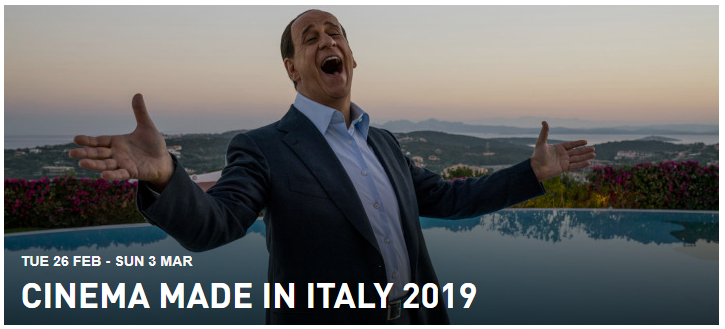
London – Continuing to showcase the best of contemporary Italian cinema, the ninth edition of London’s favourite Italian film festival promises another alluring and diverse programme. This year’s six-day event will kick off with LORO, from the director of The Great Beauty, and centres on Silvio Berlusconi and his entourage. The film stars Paolo Sorrentino’s long-standing collaborator Toni Sevillo as the controversial and larger-than-life former Italian prime minister. It will be distributed in the UK by Curzon Artificial Eye.

Ielena sofia ricci
Elena sofia Ricci

Another highlight is Valeria Golino’s EUPHORIA (Euforia), with Riccardo Scamarcio in the lead role, and Alba Rohrwacher once again shines in Gianni Zanasi’s comedy LUCIA’S GRACE (Troppa Grazia). Both films screened at the 2018 Cannes International Film Festival, in Un Certain Regard and Directors’ Fortnight respectively. Two films in the line-up were in the Venice Days and International Critics’ Week sections at last year’s Venice International Film Festival. Valerio Mieli’s long-awaited REMEMBER? (Ricordi?) starring Luca Marinelli, and WE’LL BE YOUNG AND BEAUTIFUL (Saremo Giovani e Bellissimi) by talented first-time director Letizia Lamartire. Bonifacio Angius, who won the Junior Jury Award at the 2014 Locarno International Film Festival with Perfidia, will present his compelling second feature WHEREVER YOU ARE (Ovunque Proteggemi).

Valeria Golino
Valeria Golino

Festivalgoers can look forward to seeing Duccio Chiarini’s THE GUEST (L’Ospite), the entertaining follow-up to his Venice Biennale College debutShort Skin, and Paolo Virzì brings us a darker kind of comedy with MAGICAL NIGHTS (Notti Magiche), which was the closing night film at last year’s Rome International Film Festival. Paolo Zucca, who was in London with The Referee in 2013, this time delivers an absurdist farce with THE MAN WHO BOUGHT THE MOON (L’Uomo che compró la Luna). This year’s classic title will be the 1970 expressionist masterpiece THE CONFORMIST (Il Conformista), in memory of the late Bernardo Bertolucci.

Regista Virzi
Regista Virzi

As in previous years, film-makers will be attending the festival to introduce their films and participate in audience Q&As. The six-day annual event is organised by Istituto Luce-Cinecittà’s promotional department in Rome (Filmitalia), with the support of the Italian Cultural Institute in London, the official agency for the promotion of Italian language and culture in England and Wales. The films were selected by Adrian Wootton, CEO of Film London.

Loro + Q&A

LORO + Q&A

Tue 26 Feb

Cinema Made in Italy 2019

Festivals & Series, Special Screenings

Euphoria + Q&A

EUPHORIA + Q&A

Wed 27 Feb

Cinema Made in Italy 2019

Festivals & Series, Special Screenings

Lucia’s Grace + Q&A

LUCIA’S GRACE + Q&A

Thu 28 Feb

Cinema Made in Italy 2019

Festivals & Series, Special Screenings

Ricordi? + Q&A

RICORDI? + Q&A

Thu 28 Feb

Cinema Made in Italy 2019

Festivals & Series, Special Screenings

The Guest + Q&A

THE GUEST + Q&A

Fri 1 Mar

Cinema Made in Italy 2019

Festivals & Series, Special Screenings

The Man Who Bought the Moon + Q&A

THE MAN WHO BOUGHT THE MOON + Q&A

Fri 1 Mar

Cinema Made in Italy 2019

Festivals & Series, Special Screenings

Notti Magiche + Q&A

NOTTI MAGICHE + Q&A

Sat 2 Mar

Cinema Made in Italy 2019

Festivals & Series, Special Screenings

Wherever You Are + Q&A

WHEREVER YOU ARE + Q&A

Sat 2 Mar

Cinema Made in Italy 2019

Festivals & Series, Special Screenings

The Conformist

THE CONFORMIST

Sun 3 Mar

Cinema Made in Italy 2019European Classics

Classics, Festivals & Series

We’ll Be Young and Beautiful + Q&A

WE’LL BE YOUNG AND BEAUTIFUL + Q&A

Sun 3 Mar

Cinema Made in Italy 2019

Festivals & Series, Special Screenings

Share

CINEMA MADE IN ITALY 2019

EUPHORIA (Euforia), directed by Valeria Golino

LORO, directed by Paolo Sorrentino (opening night film)

LUCIA’S GRACE (Troppa Grazia), directed by Gianni Zanasi

MAGICAL NIGHTS (Notti Magiche), directed by by Paolo Virzì

REMEMBER? (Ricordi?), directed by Valerio Mieli

THE CONFORMIST (Il Conformista), directed by Bernardo Bertolucci

THE GUEST (L’Ospite), directed by Duccio Chiarini

THE MAN WHO BOUGHT THE MOON (L’Uomo che compró la Luna), directed by Paolo Zucca

WE’LL BE YOUNG AND BEAUTIFUL (Saremo Giovani e Bellissimi), directed by Letizia Lamartire

WHEREVER YOU ARE (Ovunque Proteggemi), directed by Bonifacio Angius

Famous freak wave recreated in laboratory mirrors Hokusai’s ‘Great Wave’

A team of researchers based at the Universities of Oxford and Edinburgh have recreated for the first time the famous Draupner freak wave measured in the North Sea in 1995.

The Draupner wave was one of the first confirmed observations of a freak wave in the ocean; it was observed on the 1st of January 1995 in the North Sea by measurements made on the Draupner Oil Platform. Freak waves are unexpectedly large in comparison to surrounding waves. They are difficult to predict, often appearing suddenly without warning, and are commonly attributed as probable causes for maritime catastrophes such as the sinking of large ships.

The team of researchers set out to reproduce the Draupner wave under laboratory conditions to understand how this freak wave was formed in the ocean. They successfully achieved this reconstruction by creating the wave using two smaller wave groups and varying the crossing angle – the angle at which the two groups travel.

Watch the video here: Recreated freak wave mirrors Hokusai’s Great Wave.

Dr Mark McAllister at the University of Oxford’s Department of Engineering Science said: ‘The measurement of the Draupner wave in 1995 was a seminal observation initiating many years of research into the physics of freak waves and shifting their standing from mere folklore to a credible real-world phenomenon. By recreating the Draupner wave in the lab we have moved one step closer to understanding the potential mechanisms of this phenomenon.’

It was the crossing angle between the two smaller groups that proved critical to the successful reconstruction. The researchers found it was only possible to reproduce the freak wave when the crossing angle between the two groups was approximately 120 degrees.

When waves are not crossing, wave breaking limits the height that a wave can achieve. However, when waves cross at large angles, wave breaking behaviour changes and no longer limits the height a wave can achieve in the same manner.

Prof Ton van den Bremer at the University of Oxford said: ‘Not only does this laboratory observation shed light on how the famous Draupner wave may have occurred, it also highlights the nature and significance of wave breaking in crossing sea conditions. The latter of these two findings has broad implications, illustrating previously unobserved wave breaking behaviour, which differs significantly from current state-of-the-art understanding of ocean wave breaking.’

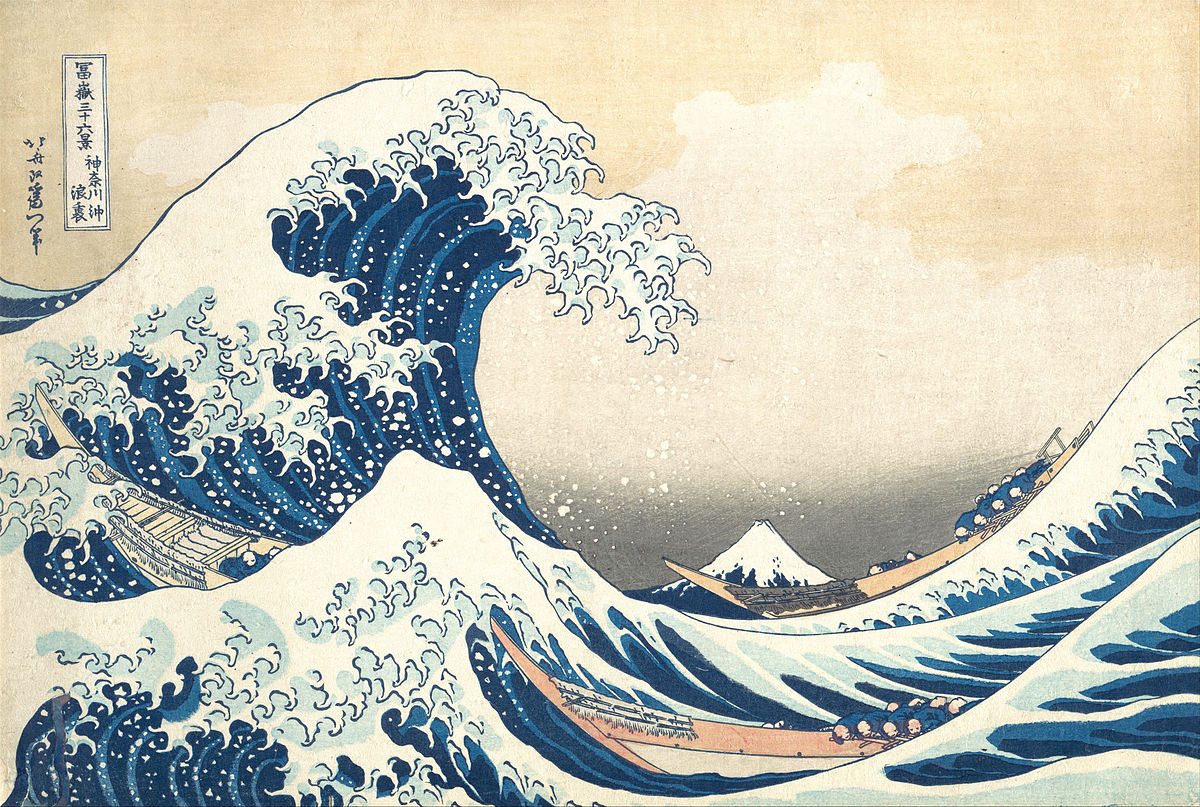
To the researchers’ amazement, the wave they created bore an uncanny resemblance to ‘The Great Wave off Kanagawa’ – also known as ‘The Great Wave’ – a woodblock print published in the early 1800s by the Japanese artist Katsushika Hokusai. Hokusai’s image depicts an enormous wave threatening three fishing boats and towers over Mount Fuji which appears in the background. Hokusai’s wave is believed to depict a freak, or ‘rogue’, wave.

The laboratory-created freak wave also bears strong resemblances with photographs of freak waves in the ocean.

The researchers hope that this study will lay the groundwork for being able to predict these potentially catastrophic and hugely damaging waves that occur suddenly in the ocean without warning.

Experiments were carried out in the FloWave Ocean Energy Research facility at the University Of Edinburgh.

Dr Sam Draycott at the University of Edinburgh said: ‘The FloWave Ocean Energy Research Facility is a circular combined wave-current basin with wavemakers fitted around the entire circumference. This unique capability enables waves to be generated from any direction, which has allowed us to experimentally recreate the complex directional wave conditions we believe to be associated with the Draupner wave event.’

The research was led by Dr Mark McAllister and Prof Ton van den Bremer at the University of Oxford, in collaboration with Dr Sam Draycott at the University of Edinburgh. This project builds upon work previously carried out at the University of Oxford by Professors Thomas Adcock and Paul Taylor.


Oxford University has been placed number 1 in the Times Higher Education World University Rankings for the third year running, and at the heart of this success is our ground-breaking research and innovation.

Oxford is world-famous for research excellence and home to some of the most talented people from across the globe. Our work helps the lives of millions, solving real-world problems through a huge network of partnerships and collaborations. The breadth and interdisciplinary nature of our research sparks imaginative and inventive insights and solutions.

Through its research commercialisation arm, Oxford University Innovation, Oxford is the highest university patent filer in the UK and is ranked first in the UK for university spinouts, having created more than 170 new companies since 1988. Over a third of these companies have been created in the past three years.

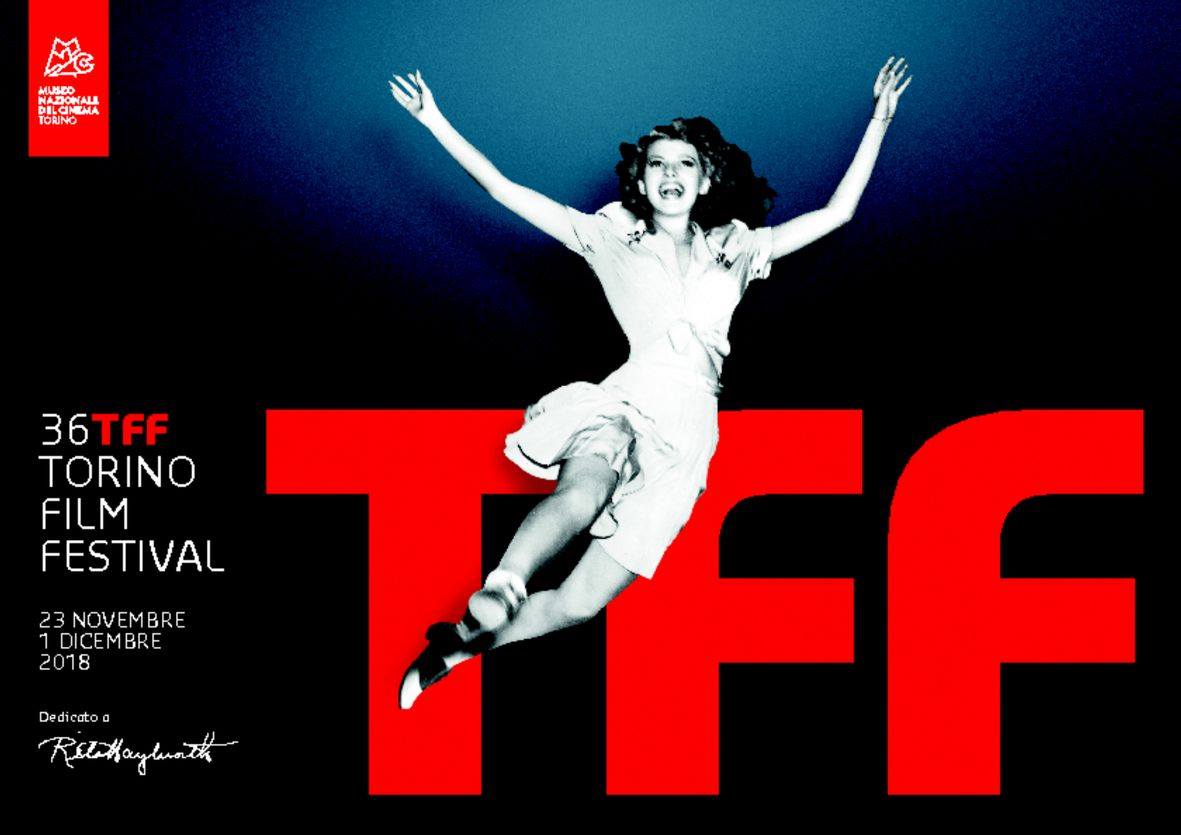
It’s TORINO FILM FESTIVAL time: from November 23rd to December 1st

TORINO FILM FESTIVAL time: from November 23rd to December 1stWe are waiting Torino Film Festival (TFF), one of the main Italian film festivals.

Countdown to the big show begins: from November 23 to December 1, Torino will welcome a lot of professionals and cinema lovers.

It was born in 1982 as International Youth Cinema Festival and from the beginning it’s devoted to independent cinema.

Just to start with a few numbers: 133 feature films, 23 medium-length films and 22 short films presented among more than 4000 films viewed (including shorts, medi and feature films).

This year there will be 6 absolute premieres: 3 in world preview and 3 in national preview.

The three world premieres are three Italian films presented:  I nomi del signor Sulcic, directed by Elisabetta Sgarbi, which tells the story of a researcher looking for news on a woman buried in the Jewish cemetery of Trieste; Ovunque proteggimi directed by Bonifacio Angius tells a journey of a fifty-year-old folk singer, and a woman, looking for a last chance; and Ragazzi di stadio, quarant’anni dopo directed by Daniele Segre, a docu-film on the world of ultrà of the italian team Juventus.

And the films presented as national premieres are Colette directed by Wash Westmoreland with Keira Knightley in the role of one of the most revolutionary female figures of the 20th century; Can you forgive me directed by Marielle Heller, a story inspired by the writer Lee Israel; and the horror Mandy directed by Panos Cosmatos with Nicolas Cage.

The official awards of this 36th edition will be divided in TORINO 36 (best film, best actress, best actor, best screenplay, audience award), TFFdoc dedicated to documentaries (best international film, special prize of the international jury, best Italian film, special prize of the Italian jury), ITALIANA.CORTI dedicated to short films (the best film, special prize of the jury), FIPRESCI (best film Torino 36), CIPPUTI AWARD (best film about work).

For this edition, the CIPPUTI AWARD reaches its 23rd edition and Cosimo Torlo, with the Pastis

The GRAN PREMIO TORINO goes to Jean-Pierre Léaud, the unforgettable Antoine of Les Quatre Cents Coups. The award will be presented on Thursday 29 November at 8.15 pm at Cinema Massimo 3, before the screening of the film directed by Jean Eustache, La maman et la putain (France, 1973, 35mm, 217 ‘).

Saturday 24 November at the Cinema Reposi, there will be “All You Need is Short”, a selection of international shorts promoted by Torino Short Film Market. The same evening, at the cinema Massimo starting at midnight, the unmissable Notte Horror. This year entirely dedicated to the Maniacs.

The opening ceremony will begin with the film The Front Runner by Jason Reitman with Hugh Jackman, Vera Farmiga, the Oscar winner J.K. Simmons and with Alfred Molina.

And the Festival will close with Santiago, Italia directed by Nanni Moretti, which focuses in particular on the role played by the Italian Embassy in Santiago after the end of the democratic government of Salvator Allend and with the General Pinochet’s regime.

For more information, visit torinofilmfest.org

Better ways to measure the economy than GDP  

London – Creative accounting is a euphemism referring to accounting practices that may follow the letter of the rules of standard accounting practices, but deviate from the spirit of those rules.

The practice of overstating income and understating expenditure is usually associated with large corporation falsifying their financial statements. Enron, Wordcom and Parmalat are the most extreme examples of companies that cooked their books.

Sovereign states are also no stranger to accounting controversies.

In the late 1990s Greece falsified data about its public finances and deliberately obstructed the collection of accurate statistics to fulfil the Maastricht criteria and join the Eurozone.

In 2016 Ireland was criticised for its accounting practices as the country’s Central Statistics Office claimed that the Irish economy grew by 26 percent in 2015.

More recently, attention turned to China. Many analysts are sceptical about the official statistics released by the Chinese government.

In a recent bulletin published by the Federal Reverse Bank of St. Louis, issues with official Chinese government statistics have fostered attempts to obtain better estimates of Chinese GDP, using a wide range of alternative methods.

Change in energy consumption

A method looks at variations in energy consumption. As an emerging economy with a large manufacturing sector, China consumes a lot of energy. Changes in energy consumption may be a good proxy for changes in economic output. Energy usage typically correlates with output and can be verified by third-party data.

According to economist Thomas Rawski, between 1997 and 2000 official figures reported that Chinese real GDP grew 24.7 percent whilst energy consumption decreased 12.8 percent during the same period.

Energy consumption is an imperfect proxy of economic growth. A country’s energy usage could be impacted by several factors external to economic output such as increased efficiency or a shift from an industrial to a service economy.

For this reason, alternative measures have been developed to measure GDP.

Multi-index approach

Most multi-index measures look at a wide array of indicators, including freight volume, passenger travel, electricity output, construction indicators, purchasing managers indices, financial indicators like money supply and the stock market.

Unsurprisingly, all leading multi-index approaches suggest China’s GDP growth is lower than the official estimates.

Li’s index

Perhaps the most popular index for Chinese GDP is the one suggested by and named after Li Keqiang, then China’s vice premier and now premier.

In 2007 Li Keqiang claimed that “Chinese GDP figures are man-made” and unreliable. The Chinese prime minister suggested using electricity production, rail cargo shipments and loan disbursements to estimate China’s true economic performance.

Luminosity index

Another alternative method uses satellite data to measure the intensity of man-made night lights.

Unlike most economic indices, these data are immune to falsification or misinterpretation.

The night-lights data are gathered by Air Force satellites circling the earth 14 times a day. The satellites measure the light intensity emanating from specific geographic pixels, which can be aggregated to subnational, national and supranational levels.

In 2012, economists J. Vernon Henderson, Adam Storeygard and David N. Weil created a dataset using information from night-lights satellites and applied it to estimate GDP growth in countries with low-quality data. Their assessment suggests that between 1992 and 2006 the Chinese economy expanded by 57 percent whilst the official growth rate over the same period is about 122 percent.


London, the upcoming world’s smart city according to Sadiq Khan

(Boerio, N. and Guida, B) – London is moving towards future faster than ever by becoming in few years time a real smart city. The Major, Sadiq Khan, announced it last January claiming his aim to make his city “the world’s leading smart city” by making it:

“[…] the global home of the data economy, to seize the benefits of new artificial intelligence, and inspire a new generation of inventors and developers to make our city even better” – he added. 

According to the latest tech conferences, tech and data will make Londoners’ lives easier. Being intelligent or being fast and quick are the keys to access to a different and ‘better’ world, where people have a direct connection with their public services and it opens the doors at what it has been recently defined as the “age of cities”.

However, what would this city’s mutation practically mean?

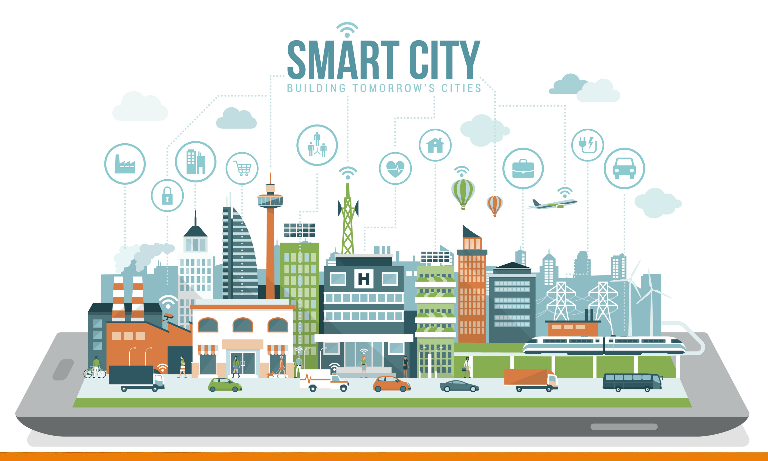
By looking at cities such as New York, Helsinki or Seul, getting smart means improving networking and connectivity by using internet and tech tools. The cities mentioned above are applying theirselves  to specific plans that aim at making better, mainly, their strategic sectors that for years have represented their strengths.

The areas generally recognised at the moment are:

Economy: trying to position the city as a capital of the new economy increasing city’s competitiveness in global marketing to improve productivity;

People: investing in education; trying to improve citizens participation; reducing social divisions regarding education, gender, sexual orientation, health conditions and religion;

Living: achieving a high quality of life investing in health, safety and wellbeing;

Environment: increasing the use of sustainable, recyclable energy sources;

Mobility: making safer movements using connected cars, vehicle detection, traffic control, smart parking and payments.

London is focusing itself on the mobility area launching already the ” Smart London Plan“, developed under the leadership of the capital’s first Chief Digital Officer, Theo Blackwell.

The plan will be also in partnership with Bloomberg Associates and backed by a group of London councils. The goals to reach are focused on a digital collaboration across London’s boroughs and public services, improving connectivity and digital skills, in order to ensure that technology is designed around Londoners’ needs.

Most importantly the major’s will is increasing TFL (Trasport for London) to tackle not-spots – areas of poor internet provision – and provide better digital connectivity for Londoners. If successful the founding will be also invested in fibre-optic connectivity on the underground network to public buildings near to tube stations.

“The real thing that’s going to help cities is management use access to public data. There’s sort of innovation that we don’t even know of that will arise from that and so an important part of our strategy is not just traditional smart cities and smart traffic lights and things like that. But it’s actually built in the digital capability of our public institutions so that when we bring together these vast data sets that we can actually use them ” said Blackwell.

Using open data, would mean, for example, helping the National Health Service in providing services for citizens “So when we talk about serving the citizen we’re also talking about how we integrate the data that we can get around health and adult social care into the mix” he added.

Other examples of benefits coming from this smarter use of data are concerning bus routes able to track the changing way people move around London, as well as crowdsourcing pollution data to update Londoners about their local air quality in real time.

In such urban mutation, politics plays an important role too. One of the questions most asked is if Brexit could stall the tech growth of London. Most of the investments in tech and jobs are part of the EU project “Horizon 2020”.

It is the biggest EU Research and Innovation programme ever with nearly €80 billion of funding available over 7 years (2014 to 2020) that aims to drive economic growth and create jobs among cities member.

Horizon is not the only source of founding there are other bigger amounts of foundig available that now are under threat from Brexit.

The vision in not clear yet, but the UK government assures that these changes will not affect negatively the city’s growth and that a favorable agreement is going to be made.

Nevertheless such important economic and tech growth, 62% out of 4000 interviewed during our public survey said they are not aware of such city’s mutatuation. Having explained to them what being a smart city mean, 29% asserted that they do not like what is happening because it could meand undermining their privacy more than it is undermined at the moment.

The other 71%, instead, are positive about such London improvement. Just in few years time we will see the results an determining who was right or not, but what is clear is that a huge tech  development is currently undergoing.

Celebrity photographer Nick Wall about film industry: Take the punches, it’s rarely personal

Nick Wall made his way to the top and has produced portraits of famous artists such as David Bowie, Colin Firth, Glenn Close, Jude Law, Pierce Brosnan and many many more. His amazing TV work includes photography on Game of Thrones, McMafia and Downton Abbey.
Nick’s film stills include movies such as The Duchess, Dom Hemingway and The Woman in
Black.

He often does both the onset photography as well as the poster shoots, such as in
Florence Foster Jenkins.

He shared some lessons he learned in the TV and Film business as a photographer and film director.
How to become a celebrity photographer Like most photographers starting out, one does all sorts of different photography; fashion, beauty, food, portraiture etc.

Then see which ones stick. The demise of magazine publishing in the digital age makes it more difficult, but getting in with one of the photo agencies can be way in.
Specialising in movie or TV is another way, doing stills for shorts and student films to build a portfolio, edit and delete ruthlessly before you deliver.
Lessons learned in the film industry Always be polite; take the punches, it’s rarely personal; always engage with the trainees and assistants, they are the future; it’s not a glamorous working environment; invest in good cold & wet
weather wear.
Few ways of making an excellent portrait Use the environment around you to make a good setting, there’s always somewhere good to use; gain the celebrities trust and collaborate; know how to use light, don’t be afraid of experimenting; fit the style to the subject and project, rather than your own ego.
Advice for actors Know your angles, don’t be afraid of going over the top, enjoy yourself you’re a performer, work with the photographer suggested ideas, constantly change body shape to find that one good shot, keep moving.


Nick Wall is an international photographer based in London. He primarily works in the film and TV industries, capturing filmmakers and actors at work on set, as well as achieving a diverse and highly refined range of work behind the scenes and in the studio. He has worked with some of the biggest names in the industry.

Nick travels the world fulfilling his photographic assignments. Clients include 20thCentury Fox, BBC, BFI; BSkyB, Channel4, Entertainment One, Focus, HBO, Kudos, Lionsgate Entertainment, Eon, Pathe, SND Films, Starz and Vertigo.

Nick is passionate about his craft and of those around him, always striving for excellence. Clients often comment on his down to earth and flexible approach, and his ability to work quickly and efficiently, capturing a brief within even the tightest of schedules. Even after many years and countless shoots, Nick still feels that photography is a little bit of magic.