Better ways to measure the economy than GDP  

London – Creative accounting is a euphemism referring to accounting practices that may follow the letter of the rules of standard accounting practices, but deviate from the spirit of those rules.

The practice of overstating income and understating expenditure is usually associated with large corporation falsifying their financial statements. Enron, Wordcom and Parmalat are the most extreme examples of companies that cooked their books.

Sovereign states are also no stranger to accounting controversies.

In the late 1990s Greece falsified data about its public finances and deliberately obstructed the collection of accurate statistics to fulfil the Maastricht criteria and join the Eurozone.

In 2016 Ireland was criticised for its accounting practices as the country’s Central Statistics Office claimed that the Irish economy grew by 26 percent in 2015.

More recently, attention turned to China. Many analysts are sceptical about the official statistics released by the Chinese government.

In a recent bulletin published by the Federal Reverse Bank of St. Louis, issues with official Chinese government statistics have fostered attempts to obtain better estimates of Chinese GDP, using a wide range of alternative methods.

Change in energy consumption

A method looks at variations in energy consumption. As an emerging economy with a large manufacturing sector, China consumes a lot of energy. Changes in energy consumption may be a good proxy for changes in economic output. Energy usage typically correlates with output and can be verified by third-party data.

According to economist Thomas Rawski, between 1997 and 2000 official figures reported that Chinese real GDP grew 24.7 percent whilst energy consumption decreased 12.8 percent during the same period.

Energy consumption is an imperfect proxy of economic growth. A country’s energy usage could be impacted by several factors external to economic output such as increased efficiency or a shift from an industrial to a service economy.

For this reason, alternative measures have been developed to measure GDP.

Multi-index approach

Most multi-index measures look at a wide array of indicators, including freight volume, passenger travel, electricity output, construction indicators, purchasing managers indices, financial indicators like money supply and the stock market.

Unsurprisingly, all leading multi-index approaches suggest China’s GDP growth is lower than the official estimates.

Li’s index

Perhaps the most popular index for Chinese GDP is the one suggested by and named after Li Keqiang, then China’s vice premier and now premier.

In 2007 Li Keqiang claimed that “Chinese GDP figures are man-made” and unreliable. The Chinese prime minister suggested using electricity production, rail cargo shipments and loan disbursements to estimate China’s true economic performance.

Luminosity index

Another alternative method uses satellite data to measure the intensity of man-made night lights.

Unlike most economic indices, these data are immune to falsification or misinterpretation.

The night-lights data are gathered by Air Force satellites circling the earth 14 times a day. The satellites measure the light intensity emanating from specific geographic pixels, which can be aggregated to subnational, national and supranational levels.

In 2012, economists J. Vernon Henderson, Adam Storeygard and David N. Weil created a dataset using information from night-lights satellites and applied it to estimate GDP growth in countries with low-quality data. Their assessment suggests that between 1992 and 2006 the Chinese economy expanded by 57 percent whilst the official growth rate over the same period is about 122 percent.
 

Brexodus is real: many banks are leaving United Kingdom because of Brexit

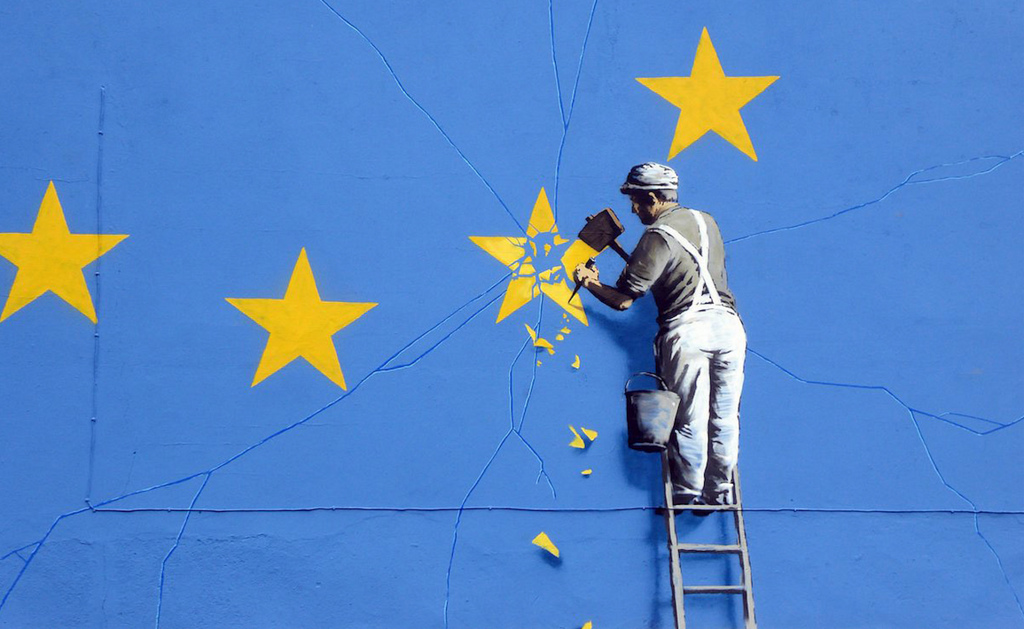
London (Giulia Faloia) – Brexit brings Brexodus. More and more banks are now leaving UK due to the abandonment of European Union.

According to the Financial Times, Treasury and Bank of England are “at loggerheads” over City of London regulation after Brexit.

Chancellor Philip Hammond said he wants to keep Britain closely aligned with the EU’s rules to ensure maximum access to the European market. However the Bank is fearful of any compromise that would leave it as “a rule taker”.

There are different opinions about the kind of relationship between the two sides. According to the Daily Telegraph, they are “very, very bad”, while an unnamed Treasury source tells the Times that the department has a “very good” working relationship with the Bank.

It’s pretty clear that the situation of banks and their employees – as much as their clients – is quite critical, especially if there will be an Hard Brexit.

The Minister Dominic Raab has recently warned people about the possible scenario after a no-deal. In fact according to him customers could be faced with increased rates and major precessing times for euro transactions. He also added that payment costs by credit card between United Kingdom and European Union could increase.

ilsole24ore.com

According to the Minister, there could be problems for British citizens living in countries belonging to European Union. In fact, in case of an Hard Brexit the same customers could loose the possibility of accessing  deposit and loan services and insurance contracts.

British banks have already started to leave Great Britain and probably more and more will follow.

One of the greatest and latest blow to the British economy was the one by Hsbc. In fact the bank has announced that its activities will be transferred to Europe, in France. The seat in London will loose the control on seven European branches: Belgium, Czech Republic, Ireland, Italy, Luxembourg, Netherlands and Spain.

The list of the banks that will leave United Kingdom is destined to get longer. The destinations will mainly be Germany, France, Spain, Ireland and Denmark.

The match between London and Bruxelles is still opened and the possibility to end it with a no-deal is more and more close. Meanwhile Brexodus is real.

Philip Hammond announces his “first (and last)” Spring Budget

London – by Chiara Fiorillo

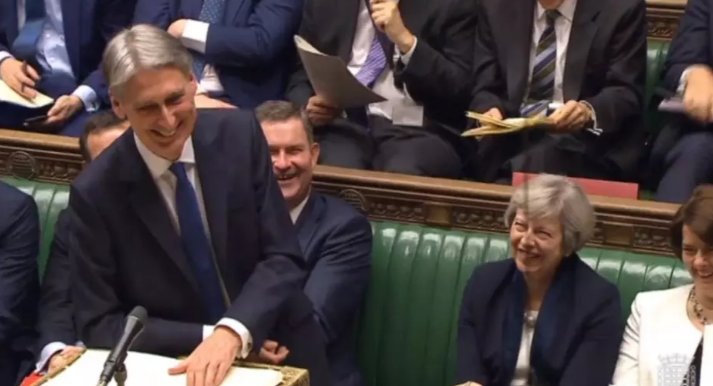
After the vote to leave the European Union, the British government is dealing with a lot of important decisions, especially regarding economy. Philip Hammond, Chancellor of the Exchequer since last July, has just published what he called his “first (and last)” Spring Budget.

The changes to National Insurance the Chancellor did are expected to hit 2.5 million people, especially low paid earners. According to critics, this budget plan will mainly hit cabbies and fast-food delivery drivers.

Presenting the budget for 2017, Mr Hammond said this plan will prepare Britain for a “brighter future”, by extending opportunities to young people and delivering further investments in public services. “We are building the foundations of a stronger, fairer, more global Britain,” he said.

The main expenses include, The Independent reports, a £435m package of help for firms to play business rates, £2bn for social care, £330m for hospitals, a £120m fund to ease pressure in A & E departments, more than £1bn for new free schools and £260m to repair existing schools.

Mr Hammond also announced a reduction in the amount of dividends for business owners (from £5000 to £2000) that they can receive from their firms before tax. There has also been an increase in VAT for people making calls from the EU. Some critics warned of a potential tax rise for diesel car drivers.

According to some forecasts released by the Office for Budget Responsibility, Brexit will contribute to a lower growth in 2018-19, 2019-20 and 2020-21. According to official documents, the current growth forecasts are based on a policy that will not push immigration down as Theresa May has declared she wants to do.

This Spring Budget comes after an announcement, made by the Institute for Fiscal Studies, which warned that the amount of tax paid in the UK may soon reach the highest level in 30 years. However, the new rates will take effect in April, so there are still some weeks left to understand and forecast what will happen in a relatively short time.