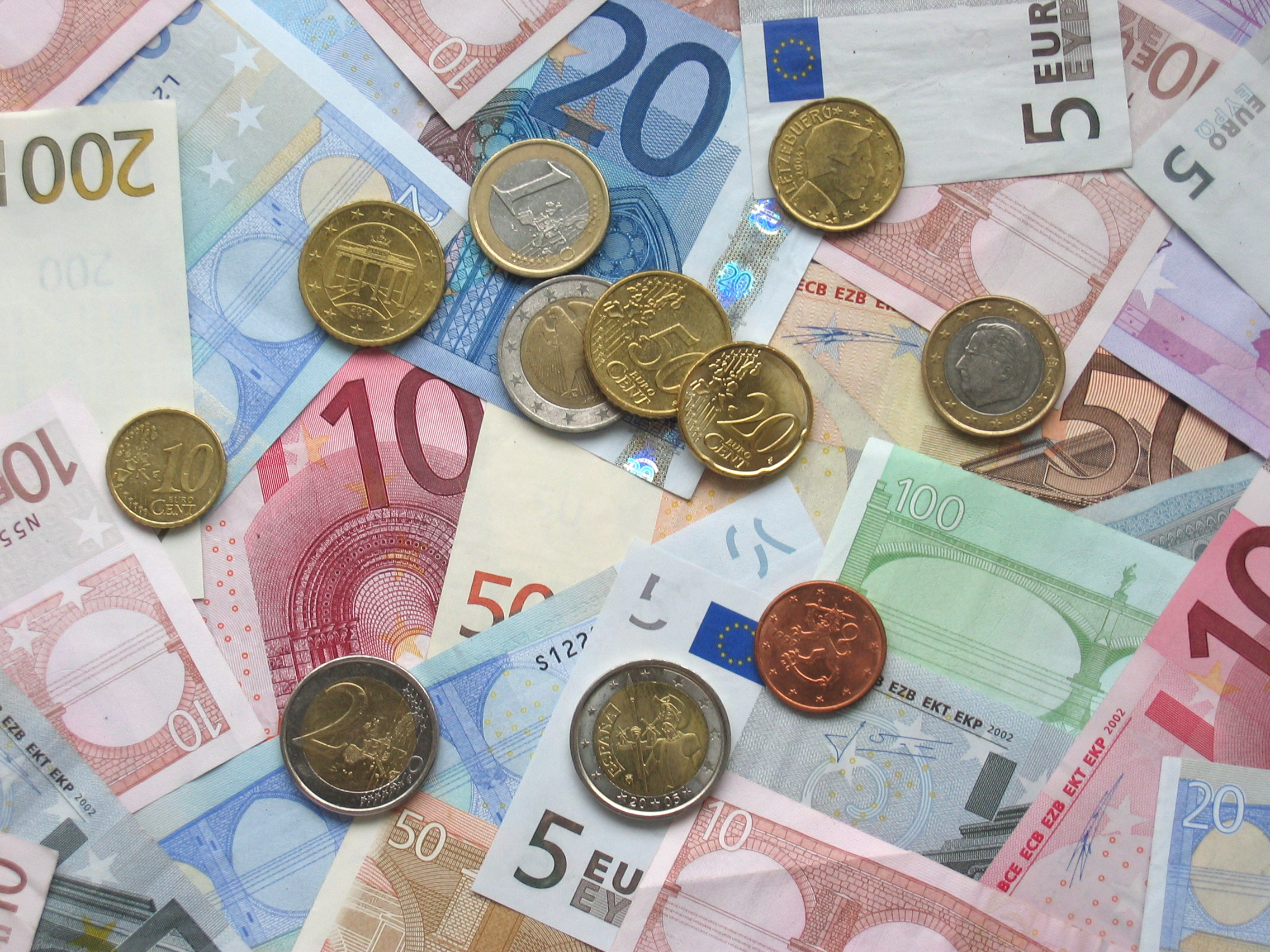
Italy sets budget deficit goal at 2.4 pct of GDP

LONDON (Caterina Moser) – Italian government targeted the budget deficit at 2.4 pct of GDP, gross domestic product, from 2019-2021. For the next three years, these will be the provisions.

This targets would flout European Union rules calling for Italy to progressively lower its deficit and marking a victory for party chiefs over Economy Minister Giovanni Tria.

Tria had to surrender to the requests of Movimento 5 Stelle e Lega, although he had initially wanted a deficit set as low as 1.6 percent next year, in order to respect European Union demands.

Great satisfaction by the coalition government of the Movimento 5 Stelle e Lega, which took power in June. They had been pushing for a deficit around 2.4 percent of GDP to fund costly policy pledges.

“Today is a historical day! Italy has changed today!” Has wrote Luigi Di Maio on Facebook.

The agreement was approved after an informal summit at Palazzo Chigi which lasted about 4 hours with Prime Minister Giuseppe Conte, Vice-Presidents of the Council Matteo Salvini and Luigi Di Maio, Minister of Economy and Finance Giovanni Tria and Minister for European Affairs Paolo Savona.

Then, the Council of Ministers held the approval of the Def update note, the document with which the government indicates its three-year economic plans.

The Def, the document of Economics and Finance, contains all the economic and financial policies. It allows the government to establish how to spend public money.

It have been released 27 billion for the maneuver.

Prime Minister Giuseppe Conte said on Facebook that the budget goals were “considered, reasonable and courageous” and would “ensure more robust economic growth and significant social progress for our country”.

He added the budget plan included “the biggest programme of public investments ever carried out in Italy.”

Salvini said the budget would also allow people to retire earlier, freeing up about 400,000 jobs for the young, and cut tax rates for a million self-employed workers.

He called the expansionary fiscal plan “a revolution of common sense”. According to the government, the Budget Law will affect about 6.5 million people below the poverty line.

“With pension and income of citizenship that we introduce with this Budget Law, we will have abolished poverty” Di Maio had said in an Italian tv programme few days ago.

It will be up to M5S and Lega to demonstrate that such a potentially dangerous maneuver can find market and European Union approval.

The European Commission will evaluate the maneuver on October 16th. With these numbers it will be difficult to approve it.

Meanwhile, financial markets have been nervous since the government took office due to fears its spending plans will boost Italy’s debt.
Eu Leaders rejected Chequers Plan

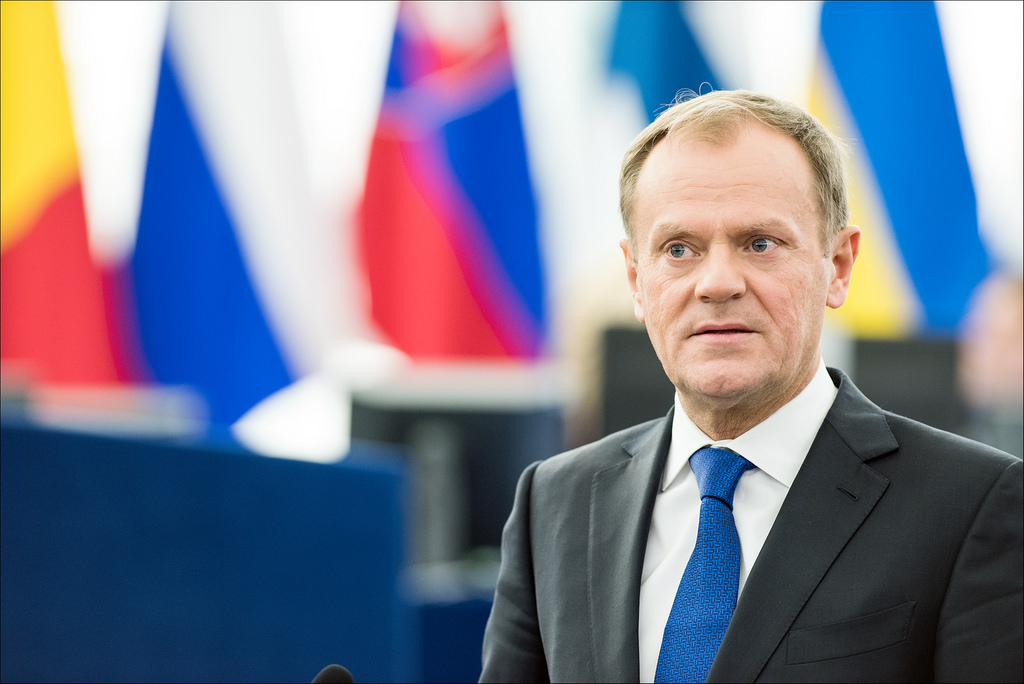
London (Caterina Moser) – “Theresa May’s Brexit trade plan won’t work” the President of the EU Council Donald Tusk has said at the end of the EU summit in Salzburg.

The Prime Minister showed her “Chequers plan” to the leaders of the 27 remaining member states.
In these last days, she repeated several times that her proposals were “the only serious credible” ways to avoid a hard border in Northern Ireland.

After her speech, the 27 leaders held a meeting discussing the May’s purpose. They agreed on the unacceptability of the “Chequers plan”.

“It was a good and brave step by the prime minister” said French President Emmanuel Macron. “But we all agreed on this today, the proposals in their current state are not acceptable, especially on the economic side of it” he added.

At the press conference, the President of the EU Council Donald Tusk said that there were some “positive elements”, but “the suggested framework for economic cooperation will not work” he added.

The plan signs up to a common rule book for trade in goods and a combined customs territory. Nevertheless, according to European leaders, it will undermine the single market by giving British companies a competitive edge.

President Tusk motivated the rejection of the proposal: there should be more transparency on future commercial relations. “It must be clear that there are some issues where we are not ready to compromise and first of all this is our fundamental freedoms and single market and this is why we remain sceptical and critical when it comes to this part of the Chequers proposals,” he said.

In addition to the criticism expressed by the EU, May’s proposal is also unpopular in her country, and even inside her party.
MP Tory Jacob Rees-Mogg said that Tusk’s remarks signaled the end of the Checkers proposal.

There was a “lot of hard work to be done” Theresa May said. She has ready to meet EU reserves on his plan for a cartel announcing “soon new proposals” on the future of the borders between Ireland and Northern Ireland.

Mr Tusk gave an ultimatum: October would be the “moment of truth” for reaching a deal. It is the only condition to held the summit in November to formalise the deal. The Brexit summit will be held on 17 and 18 November.

The October EU Council will be the “moment of truth” for Brexit.
“Without an October grand finale, in a positive sense of this word, there is no reason to organise a special meeting in November” stressed Tusk.

“Brexit and The Rights of European Citizen”

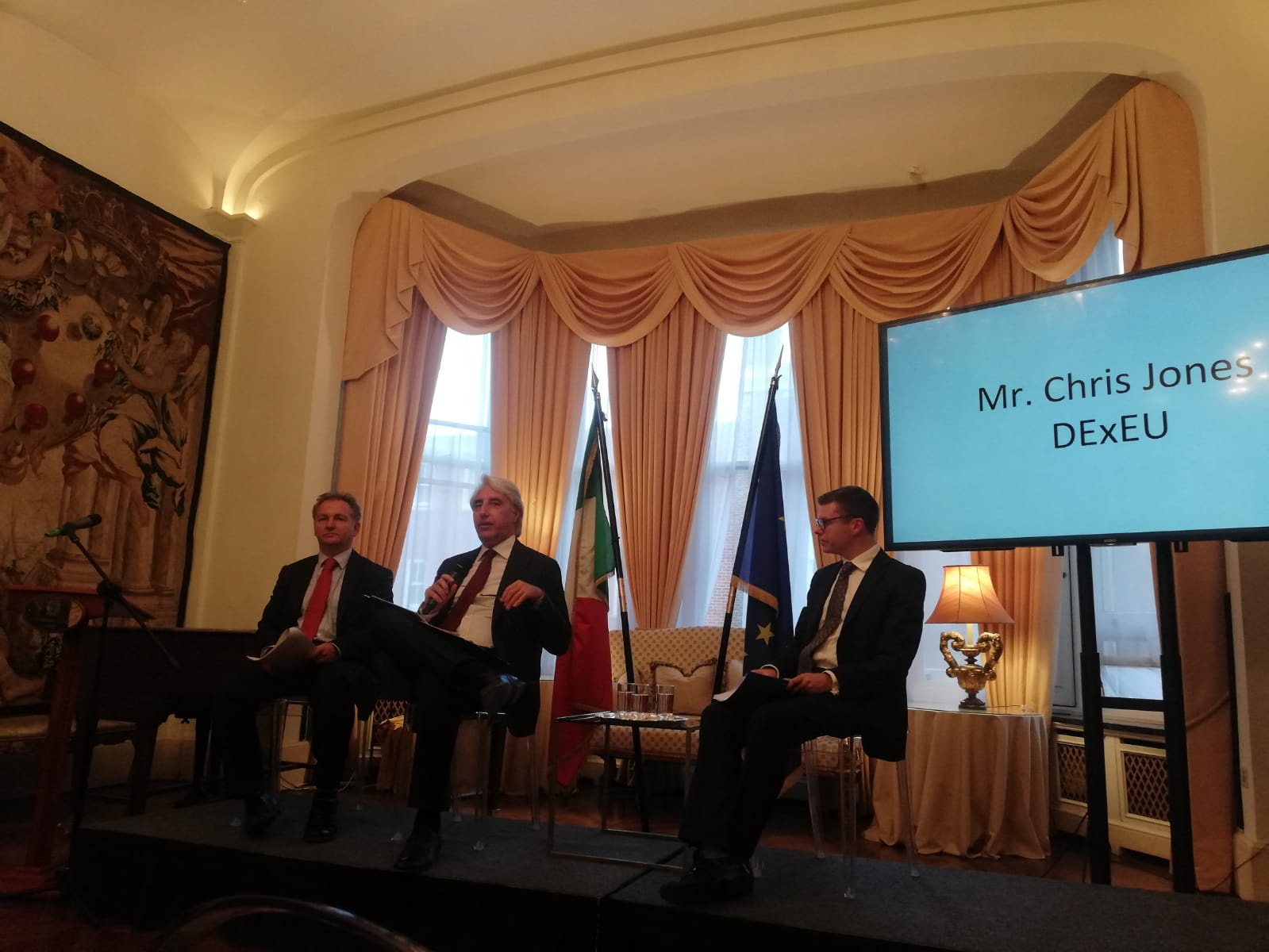
London (Caterina Moser) – Italian Embassy in London held a meeting and a Q&A session on 12th September with the aim of informing Italians in Uk about the impact on their citizens’ rights. 

Several important authorities of the British government were there to answer all the questions: Minister Suella Braverman, Parliamentary Under-Secretary of State at Department for Exiting the European Union, Mr Chris Jones, director of Justice, Security and Migration, Mr Mark Doran, deputy director of EU Exit Immigration strategy and Jill Morris, British Ambassador to Italy. 

On the opening, the Italian Ambassador Raffaele Trombetta recalled how large the Italian community is. For this reason, it’s important to understand which the changes for every Italian student and worker living in United Kingdom will be. 

Jill Morris, British Ambassador to Italy, began her speech by thanking Italians. She wanted “to pay tribute to Italians for your contribution to our culture, economy and society”. The British Ambassador knows that it is a concerning and uncertain time, but it is important for Uk and Italy to work together to get the relation stronger and deeper. 

There is a talk of agreements and negotiation, but we can’t forget that there are 700.000 Italians in Uk and everyone of them have a different story. Jill Morris presented a new podcast #Migrantsbritish and invited everyone to tell their story. 

Suella Braverman took the floor. The Parliamentary Under-Secretary began reinforcing the thanks to all Italians that contribute for years in Uk. She said she loves Italy for its culture, food, fashion, design. (Moreover, she is going to visit Amalfi Coast in a few days for her Honeymoon and she doesn’t looking forward). 

It is a long story of link between Italy and Uk. Historically, Italians have always moved from Italy to study and work and, as well, British have moved to Italy to learn architecture, culture, literature. Italian culture can be seen an inspiration for British. The Minister Suella Braverman recalled the experience of Shakespeare. 

“3 millions of Italian people visit Uk every year. We will preserve that”, because although Uk is leaving European Unione, “we are not leaving Europe”. 

“We want you to stay” has been repeated several times. The Minister said that meeting is important. British government wants moment like these “to inform you, to assist you, to help you”. 

Chris Jones, director of Justice, Security and Migration, focused on the Draft withdrawal agreement and he underlined that this negotiation of citizen rights is unique and “we know that is a particular uncertain period”. It is possibile to read it on the site of the British government. 

In December, British government reached agreement on citizens’ right and in march it extended to cover who arrived in the implementation period. 

If you are an Italian citizen – or European Union citizen – living in the Uk, you need to apply the EU Settlement Scheme.

Mark Doran, deputy director of EU Exit Immigration strategy, explained how it will works and why it is important. 

The EU Settlement Scheme will allow Italians to continue to live and work in the Uk after 31st December 2020. Italians living in Uk will need to apply a simple digital system to secure their rights. “We will be looking for reasons to grant, not to refuse” said Mr Doran. 

It is necessary to complete three steps to check the employment and benefits. 

  1. Demonstrate the identity. This must be valid a EU passport or national identity card;
  2. Proof of residence. It will need to provide a National Insurance number or provide evidence to show the residence.  
  3. Declare any criminals convinctions. 

The fee to apply will be £65. For children under 16, the fee will be £32.50. But, it will be free if the applicant has already a valid indefinite leave to remain or a valid permanent residence document and if he or she is applying to move from pre-settles status to settled status. 

There will be also support for any kinds of need, such as translation, assisted digital, policy provisor.
For more information, visit the website eucitizensrights.campaign.gov.uk

In closing, the Ambassador Raffaele Trombetta spoke again. He underlined some concerns emerged in Q&A session moderated by Alessandro Motta, Deputy Head of Mission.
It is important to understand well what would happen if someone will not apply the scheme. We must also consider those who will not register and will not be informed about it.

Italians and Europeans need more details about the eventuality of a no-deal, because people are talking about it but there aren’t enough informations. 

What about the future after Brexit? “This event shown the strength of Italian Community. And we, both Uk and Italy, make sure that links and connection between us will not be affected” said Mr Trombetta. 

Brexodus is real: many banks are leaving United Kingdom because of Brexit

London (Giulia Faloia) – Brexit brings Brexodus. More and more banks are now leaving UK due to the abandonment of European Union.

According to the Financial Times, Treasury and Bank of England are “at loggerheads” over City of London regulation after Brexit.

Chancellor Philip Hammond said he wants to keep Britain closely aligned with the EU’s rules to ensure maximum access to the European market. However the Bank is fearful of any compromise that would leave it as “a rule taker”.

There are different opinions about the kind of relationship between the two sides. According to the Daily Telegraph, they are “very, very bad”, while an unnamed Treasury source tells the Times that the department has a “very good” working relationship with the Bank.

It’s pretty clear that the situation of banks and their employees – as much as their clients – is quite critical, especially if there will be an Hard Brexit.

The Minister Dominic Raab has recently warned people about the possible scenario after a no-deal. In fact according to him customers could be faced with increased rates and major precessing times for euro transactions. He also added that payment costs by credit card between United Kingdom and European Union could increase.

ilsole24ore.com

According to the Minister, there could be problems for British citizens living in countries belonging to European Union. In fact, in case of an Hard Brexit the same customers could loose the possibility of accessing  deposit and loan services and insurance contracts.

British banks have already started to leave Great Britain and probably more and more will follow.

One of the greatest and latest blow to the British economy was the one by Hsbc. In fact the bank has announced that its activities will be transferred to Europe, in France. The seat in London will loose the control on seven European branches: Belgium, Czech Republic, Ireland, Italy, Luxembourg, Netherlands and Spain.

The list of the banks that will leave United Kingdom is destined to get longer. The destinations will mainly be Germany, France, Spain, Ireland and Denmark.

The match between London and Bruxelles is still opened and the possibility to end it with a no-deal is more and more close. Meanwhile Brexodus is real.

A draft bill for Italians abroad

London (Valeria Piccioni) – The new draft of the Italian Government deal takes into consideration the matter of Italians abroad’s.

“Regarding the Italian communities situated abroad, it is necessary to highlight knowledge and experience heritage in order to support Made in Italy, the Italian culture  and the Italian language all over the world. Furthermore, the election procedures in the foreign jurisdiction and the rappresentative institutions of the General Consulate (CGIE and COMITES) must be reformed. These measures will make these organisations more efficient, more transparent and less subjected to vote misrepresentations. Moreover,  concerning the COMITES and the CGIE, it is necessary to specifically reform the purposes of these institutions in order to blend them with the parliamentary representation. Finally, the diplomatic and consular net must be reformed in order to grant adequate services to the growing Italian communities that are settling permanently abroad” declares the final draft officially published on Friday.

Until now there has been a real negligence towards this matters: apparently, only the Italian citizens living in Italy seem to be considered whereas instead 4.2 millions of Italians abroad seem to be neglected.

Meanwhile, on Tuesday, the 18 Parliament members elected abroad from over 1 million and 100 thousand voters met for the first time during this legislation in the Chamber of Deputies. Are they conscious about the current lack of attention towards the Italians abroad? In the meantime, this meeting has highlighted some of the main issues of the Italian communities abroad which are:

  • Foundation of a “Bicameral Commission for the issues of Italians abroad”
  • Reform of voting procedures
  • The strengthening of Consular resources

It is important to remember the controversial relationship between the unborn Italian Government and Bruxelles. The faces of this new Government are still unknown, therefore Europe fears an Italian economical collapse. Recently, Salvini and Di Maio against Manfred Weber, exponent of the German CSU and president of the popular European party at the Europarliament who stated “Irrationals or populists actions could cause a new euro crisis” he said to them. “You are joking with fire because Italy is heavily indebted.”.

“Italians are tired of taking orders from Brussels and Berlin!” replies Mara Bizzotto, leader of the Lega in the European Parliament “Merkel and her proconsuls in Brussels always assembled and disassembled Italian governments according to German and their banks’ interests “.

“We will not pass any law negating the rights of Italian and European citizens”: MP Alberto Costa explains

London – by Chiara Fiorillo

Brexit is still making people discuss and it is creating some confusion. Alberto Costa, Conservative MP, explained what could happen after the exit from the European Union. He spoke to London One Radio, the official Italian radio in London.

The outcome of the EU referendum changed the political scenario. What will happen to Italian people living in the UK?

There should be no panic. Last 23rd June, I and my colleagues gave people the power to decide whether remaining in or leaving an institution called European Union. The community decided to leave it: Great Britain is still part of Europe, but it is leaving the formal institution called EU. We have many Italian residents and students here: things will not change drastically, but we will have a new relationship with the European Union. Great Britain has always been a very open country: before joining the EU in 1972, we accepted many people from all over the world.

When article 50 is triggered, will European citizens have problems in entering and exiting the country?

When article 50 is triggered, there will be many negotiations and the whole process will take up to 24 months. During that period, we will still be part of the EU: people will be able to enter and leave the country normally. After Brexit, European laws will be absorbed into English law and they will be the same until the government decides to change them. There is no reason to panic: nobody will be sent away, because we will not pass any law negating the rights of Italian and European citizens, but only laws changing the future.

MP Alberto Costa

Are you not worried about the negotiations with the EU?

The process will be difficult, but I am sure there will be an agreement in the end, otherwise both our economies would suffer. We want to be clear: even though we are leaving the EU, we still want to see a strong union, because this is very important for the safety of the world.

What about the increase in prices?

The value of sterling decreased by 10% after 23rd June, but this can be a positive sign for tourism. The reality is that Brexit has not begun yet, but we are in a phase of “calm before the storm”. During the storm, we will have to be strong and resist.

 You can listen back to the whole podcast here: