OCEAN CAY, MSC Cruises’ Caribbean island

Ocean Cay is a private paradise in the heart of the Bahamas. This pearl of the Atlantic Ocean owned by MSC was obtained from a former industrial site and, after being completely restored, has become a real dream destination.

Not only tourist offer characterize this tropical paradise.  MSC Cruises has in fact, in line with its sustainable philosophy, developed a project to create a positive and long-term impact  on the environment and on the Bahamas community, using materials and local suppliers and hiring local staff.

Ocean Cay MSC Marine Reserve was a unique project that required three years of work to reclaim and transform the island, making it today possible to offer the best possible experience to cruise passengers.

During the reclamation process 7,500 tons of metal waste were removed and a team of expert and marine biologists carefully removed individual colonies of hard coral from the debris at sea, transferring them to more suitable and uncontaminated seabed.

An innovative naturalistic program involved the island, having taken actions to promote an environment with high biodiversity and sustainable impact, and having planted more than 75,000 plants and shrubs throughout the island. is to offer its customers a complete tourist offer in full contact with nature.

Once arrived on this exclusive paradise on earth, guests can admire breathtaking views, infinite blue shades of the sea, white beaches and unspoiled nature.


Also available to guests is a planning of exceptional activities: from snorkeling to the vision of great timeless classic movies on maxi screens under the starry Caribbean sky, from paddle boarding or kayaking in the crystal clear sea to naturalistic excursions. Those who want can also enjoy a magnificent spa treatment or relax in a private cabana on the beach.

The island has seven white sand beaches for a total of two kilometers; each with its own particular characteristics will allow guests to try all the experiences of seaside tourism. Around the island there are 64 square miles of protected waters along which a coral nursery is being created.

The iconic 30-meter lighthouse host a bar and a terrace, and among the dining options there are the Sneakers Food Court, a rich buffet restaurant with international dishes, or the Ice Cream Parlor, a few steps from the beach.

Discovering Eton College

London, Maria Vittoria Bognetti

Eton College was born in 1440 from by King Henry VI who desired to found an institution that would shape and educate the next british ruling class in the English Language, aiming at creating a natural ‘bridge’ between high school and university education level. It started as a charity school which provided free education for seventy poor boys in Windsor, Berkshire, who then continued their scholastic career in the exclusive 70 colleges between Oxford and Cambridge, leading universities in the world.

For the first time, Eton College opened his doors to an Italian production team, London One Radio, allowing us to perceive the unicity and the peculiarities of this institution in its whole beauty. Dr. Marco Liviero has been the voice who guided such tour in the numerous rooms of the college, by providing insights on what distinguishes them from other boarding schools. He explains that Eton College was love at first sight: he visited the school during an academic trip, and already passionate about the British culture, theatre and Shakespeare, he pictured himself in this institution. A dream that came reality as, for the past 19 years, he has been the Professor of English Literature at Eton College.


Eton is not like any other boarding schools, students are developed in toto. As Dr. Marco Liviero explains, “Excelling in school is not enough. Being passionate is an essential quality, and what is mot important is to be willing to invest effort and time in these”. The academic part is indeed just a small component of the education that student receive from Eton: they develop their passions, initiative spirit, and sense of responsibility through the many extracurricular activities from sport, to music and theatre.

The Farrer theatre, the creative heart of Eton College, is one of the most magical places in the boarding school. And the very essence of theatre allows Eton students to grow as human beings, touching the many spheres of an inclusive development: it allows to “understand who you are and who you can become”, key elements in the receipt to disclose the full potential of each student. It is not surprise that many brilliant actors passed from here, from Hugh Laurie, the Dr. House protagonist, to Eddie Radmayne, who recently won the oscar for his interpretation of Stephen Hawking in the Theory of Everything.

Eton’s traditions have been lasting for more than six centuries, and it is the combination of such solid and extraordinary background, academic excellence and a constant innovation that allows this school to be the most prestigious boarding school in the United Kingdom, if not the world.

“The school master’s skill is understanding the different talents of each pupils”, a quote by Quasiliano, found in a fresco in the Head Master Chamber, the office of the Head Master in XIII century, well embraces and expresses the spirit of this brilliant institution.

A draft bill for Italians abroad

London (Valeria Piccioni) – The new draft of the Italian Government deal takes into consideration the matter of Italians abroad’s.

“Regarding the Italian communities situated abroad, it is necessary to highlight knowledge and experience heritage in order to support Made in Italy, the Italian culture  and the Italian language all over the world. Furthermore, the election procedures in the foreign jurisdiction and the rappresentative institutions of the General Consulate (CGIE and COMITES) must be reformed. These measures will make these organisations more efficient, more transparent and less subjected to vote misrepresentations. Moreover,  concerning the COMITES and the CGIE, it is necessary to specifically reform the purposes of these institutions in order to blend them with the parliamentary representation. Finally, the diplomatic and consular net must be reformed in order to grant adequate services to the growing Italian communities that are settling permanently abroad” declares the final draft officially published on Friday.

Until now there has been a real negligence towards this matters: apparently, only the Italian citizens living in Italy seem to be considered whereas instead 4.2 millions of Italians abroad seem to be neglected.

Meanwhile, on Tuesday, the 18 Parliament members elected abroad from over 1 million and 100 thousand voters met for the first time during this legislation in the Chamber of Deputies. Are they conscious about the current lack of attention towards the Italians abroad? In the meantime, this meeting has highlighted some of the main issues of the Italian communities abroad which are:

  • Foundation of a “Bicameral Commission for the issues of Italians abroad”
  • Reform of voting procedures
  • The strengthening of Consular resources

It is important to remember the controversial relationship between the unborn Italian Government and Bruxelles. The faces of this new Government are still unknown, therefore Europe fears an Italian economical collapse. Recently, Salvini and Di Maio against Manfred Weber, exponent of the German CSU and president of the popular European party at the Europarliament who stated “Irrationals or populists actions could cause a new euro crisis” he said to them. “You are joking with fire because Italy is heavily indebted.”.

“Italians are tired of taking orders from Brussels and Berlin!” replies Mara Bizzotto, leader of the Lega in the European Parliament “Merkel and her proconsuls in Brussels always assembled and disassembled Italian governments according to German and their banks’ interests “.

Outrage caused by a Chinese airline’s magazine

LONDON/BEIJINGAir China, Asia’s third largest arline, published in his magazine a piece of advice for tourists traveling to London that outraged Londoners. Said advice warned visitors that, though London is generally a safe place to travel, it would be safer to avoid areas mainly populated by Indians, Pakistanis and black people.

The “racist” message was written in both Mandarin and English and it advised tourists not to go out alone at night and “females” to be accompanied by another person when travelling.

Of course it was an insult to the categories involved, but it was also outrageous for all Londoners. In the words of Dr Rosena Allin-Khan: “We pride ourselves on having a wonderfully diverse community, and this may mean people come here with a different idea, it is worrying that some may arrive concerned.

eveningstandard.co.uk
standard.co.uk

One of the things London can be proud about is its diversity of cultures so if airlines have a problem with that, they’re clearly not welcome in London at all. Dr Allin-Khan would love to offer Chinese visitors a tour of some of the most diverse areas of London, like Peckham, Brixton and Newham, “where they would be welcomed with open arms by our diverse communities“, she concluded.

Despite the numerous requests coming from many people to remove said “piece of advice” from the magazine offered by the company, which travels between London and Beijing twice a day, it failed to respond to requests for comment and no apology was released as well.

Brexit Briefing: No EU superstate leap on horizon

by: Tony Barber.

There is at best thin public support among member states for any far-reaching unifying steps.

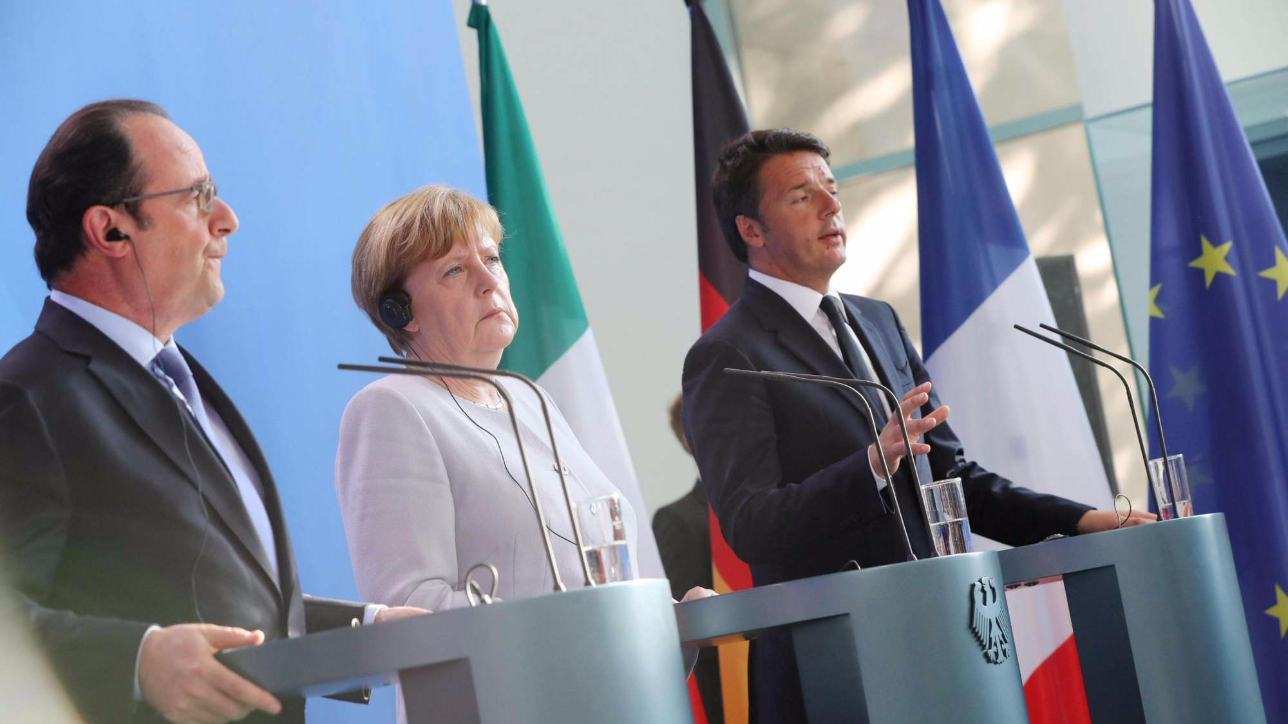
For the EU, life after Brexit goes on. Matteo Renzi, Italy’s prime minister, will play host on Monday to François Hollande and Angela Merkel, the French president and German chancellor, on Ventotene, an island near Naples.

There will be much for them to discuss: Europe’s uncertain economic outlook, terrorism, relations with Russia, Turkey and the tide of refugees and migrants flowing across the Mediterranean into Italy. But the overriding issue is how to protect and strengthen the EU after Britain’s vote on June 23 to leave the 28-nation bloc.

corriere.it
corriere.it

It is no accident that the Italian government selected Ventotene for the meeting. For in 1941 Ernesto Rossi and Altiero Spinelli, two Italian intellectuals imprisoned on the island under Benito Mussolini’s fascist regime, wrote the so-called “Ventotene Manifesto”, a document known to historians as an early clarion call for the political unification of Europe.

The key sentence of the Ventotene Manifesto reads as follows: “The question which must be resolved first, failing which progress is no more than mere appearance, is the definitive abolition of the division of Europe into national, sovereign states.”

Such grand sentiments played into the hands of anti-EU forces in the UK referendum campaign. They contended that Europe was turning into a superstate that would throttle British identity and self-rule.

Yet the reality is very different. Neither the Ventotene meeting nor a summit of 27 EU states — minus Britain — which will take place on September 16 in Bratislava, Slovakia’s capital, is likely to agree on any measures resembling a leap towards a superstate.

Broadly speaking, there are three explanations for this. The first is that in most EU states there is at best thin public support for such far-reaching steps. As Donald Tusk, the Polish president of the European Council, which groups EU heads of government, said before the UK referendum: “We failed to notice that ordinary people, the citizens of Europe, do not share our Euro-enthusiasm.”

The second explanation is that many governments do not want such a leap, either. For example, the Netherlands adamantly opposes changes to the EU’s basic treaties of the kind necessary to make big strides towards closer integration. As for Poland, the fifth-largest EU state now that the UK is on the way out, it is pushing for the opposite: the repatriation of certain EU powers to memberstates.

theguardian.com
theguardian.com

The final reason is that Germany, Europe’s pivotal power, takes the view that the EU — and especially the 19-nation eurozone — has enough to contend with at the moment without setting itself unrealistically ambitious goals on European unification. In particular, the Germans think France and Italy have much to do to put their own economic houses in order.

None of this means that the EU, as a 27-nation group, is paralysed or drifting towards a break-up, as some British commentators predict. Some modest steps forwards, notably on defence and security co-operation, are conceivable over coming months.

But the political unification of Europe, as set out in the Ventotene Manifesto, is a very remote prospect indeed.


New anti-terror plan to be announced tomorrow for Germany

GERMANY – Germany’s Interior Minister, Thomas de Maiziere, will be announcing new anti-terror measures tomorrow, following the two attacks – claimed by the so-called Islamic group – that happened in the country recently: one, an ax attack on a crowded train in Wuerzburg, and the other a suicide bombing in Ansbach.

According to local media reports and as reported by the BBC as well, there are plans to ban and deport migrants for being a “threat to public security”, to increase the use of video surveillance, to speed up the process of deporting migrants who are convicted of crimes, forbid the public usage of burka (full veil), to forbid radical Islamist funding of mosques and to allow doctors to break their confidentiality agreement if they think one of their patients could be planning a terrorist attack. A possible ban on dual citizenship is also in the talks.

In addition to these bans, it is planned that 15,000 more police units will be added nationwide to surveille urban areas and crowded places like train stations and airports – their weapons and equipment will also be improved -, a special police cyber defence unit will be created as well as powers to investigate suspects as young as 14.


China – The long-awaited Elevated Bus is finally here

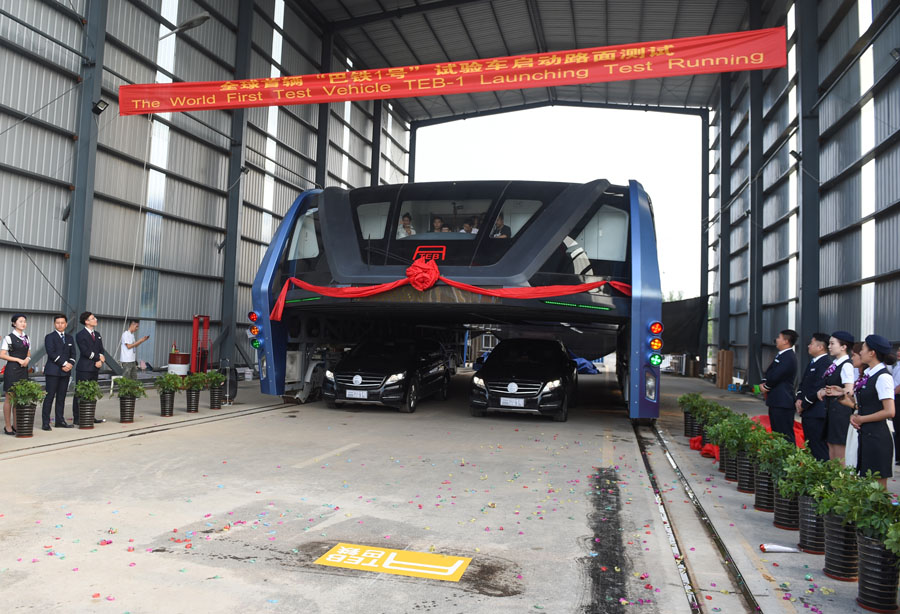
Qinhuangdao, ChinaThis port city in the North East of the Hebei province was the place where the 300m-long trial run of the Transport Elevated Bus (TED) was conducted.

But what is this TEB? This is literally a vehicle, a bus, 2m-high, powered by electricity, capable of carrying up to 300 passengers at once which straddles the cars below, allowing them to pass through. This revolutionary concept was designed by Shenzhen Hashi Future Parking Equipment Company and was unveiled at the 13th Beijing International High-tech Expo in May 2010. Last May, a digital video of it was released, which made everyone on Weibo – and on social media around the world – excited for this pioneer of future public transportation.

https://youtube.com/watch?v=xzpU4RjjJ8k
This vehicle will be able to reach 60km per hour and it will travel on rails laid along ordinary roads: this bus, which could replace 40 conventional buses, has the same functions as the subway, but the cost is less than one fifth of it, says an engineer, and it will also save a lot of road space, adds the chief engineer, Song Youzhou.


It is still uncertain when the vehicle will be widely used in Chinese cities, but the simple fact one of them is real and functioning – this is the TEB-1 but, according to engineers, up to four TEBs could be build/connected in the future – was enough to unleash the excitement of people all over the world.

Iraq: Up to one million people could be forced to flee their homes as fighting intensifies

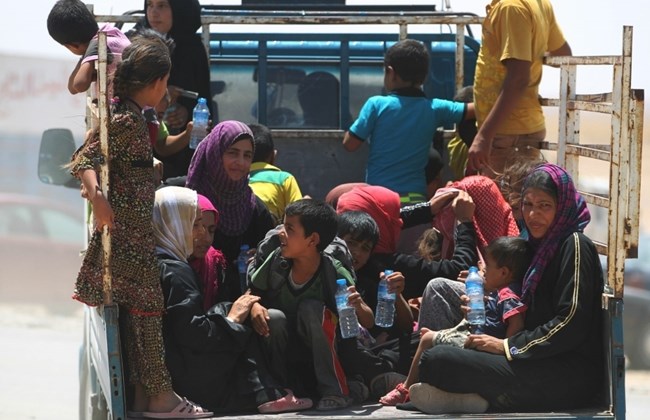
The International Committee of the Red Cross believes that up to a million more people could be forced to flee their homes in Iraq in the coming weeks and months, posing a massive humanitarian problem for the country. As fighting intensifies in different areas, including near Iraq’s second city of Mosul, the ICRC is calling for additional funds from donors to replenish aid supplies.

More than ten million people are already in need of assistance in the country. More than three million people are already internally displaced. If there is the predicted upsurge in violence, then the figure of internally displaced could dramatically increase.

The situation is unpredictable but we must prepare for the worst. There’s the likelihood that fighting will intensify, particularly in the Mosul area. Hundreds of thousands of people may very well be on the move in the coming weeks and months, seeking shelter and assistance. We need to be ready,” said the ICRC’s Regional Director for the Near and Middle East, Robert Mardini.

On Friday 29 July, the ICRC is asking for an additional 17 million Swiss francs ($17.1m, €15.6m) to its current budget for Iraq. The funds will be used to provide water, food, medical supplies and other assistance for those people caught up in the fighting. The ICRC will also focus efforts on promoting respect for international humanitarian law with parties involved in the conflict, and on visiting detainees. The money will allow the ICRC to step up its response throughout the country, reaching those most in need of help, as and when they need it.