CIAO MAGAZINE INTERNATIONAL YOUNG AUTHORS AWARD – Winners of the first edition announced

The first edition of the International Young Authors Award organised by Ciao Magazine, ended with the designation of the winners.

The event, reserved for students of secondary schools of less than 18 years of age and located outside the Italian territory, was aimed at promoting the Italian language in the world, especially among young people, through the enhancement of linguistic skills of the participants and took place with the auspices of AIM – Associazione per l’Italia nel Mondo.

The vote was carried out by a jury chaired by Stefania Del Monte, Director of Ciao Magazine, and made up of five experts: Maria Iacuzio, president of the Italian British Association, journalist and teacher; Antonello Caponera, journalist, teacher and national secretary of A.I.M. in Colombia; Tommaso Avati, writer and screenwriter; Luca Vullo, author, director, producer, coach, as well as expert on Italian language and gestures; Michele Pilla, journalist, writer and presenter of Patrimonio Italiano TV.

For this first edition, Ciao Magazine received contributions from Argentina, the United States and Spain. For each of the articles published in the Giovani Autori section on the magazine’s website, jurors voted with a number ranging from 1 for the lowest score to 10 for the highest one. At the end, the following students were declared winners: 

First prize

Chiara Bussotti (16 years old, Madrid) with ASPETTANDO GODOT

Wins an Amazon voucher of €150 and an internship at Ciao Magazine


Second prize

Francesca Romana Val Bagli (16 years old, Madrid/New York) with LA KEATS SHELLEY HOUSE

Wins an Amazon voucher of €100


Third prize (equal merit)

Sandra Valentina Dallazuana (16 years old, Colón-Entre Ríos/Argentina) with L’HOTEL DEGLI IMMIGRANTI

Wins an Amazon voucher of €25


Claribel Cabrera (16 years old, Colón-Entre Ríos / Argentina) with MARIA ELENA WALSH

Wins an Amazon voucher of €25


Out of competition, a special jury prize was also awarded to Sara Del Monte (11 years old, residing in Italy) for the story SUGO. Il gatto invisibile ed altre avventure, written at the age of 7 and for which the young author wins an Amazon voucher of €30.

Design © Francesco Caponera

Click here to read this article in Italian

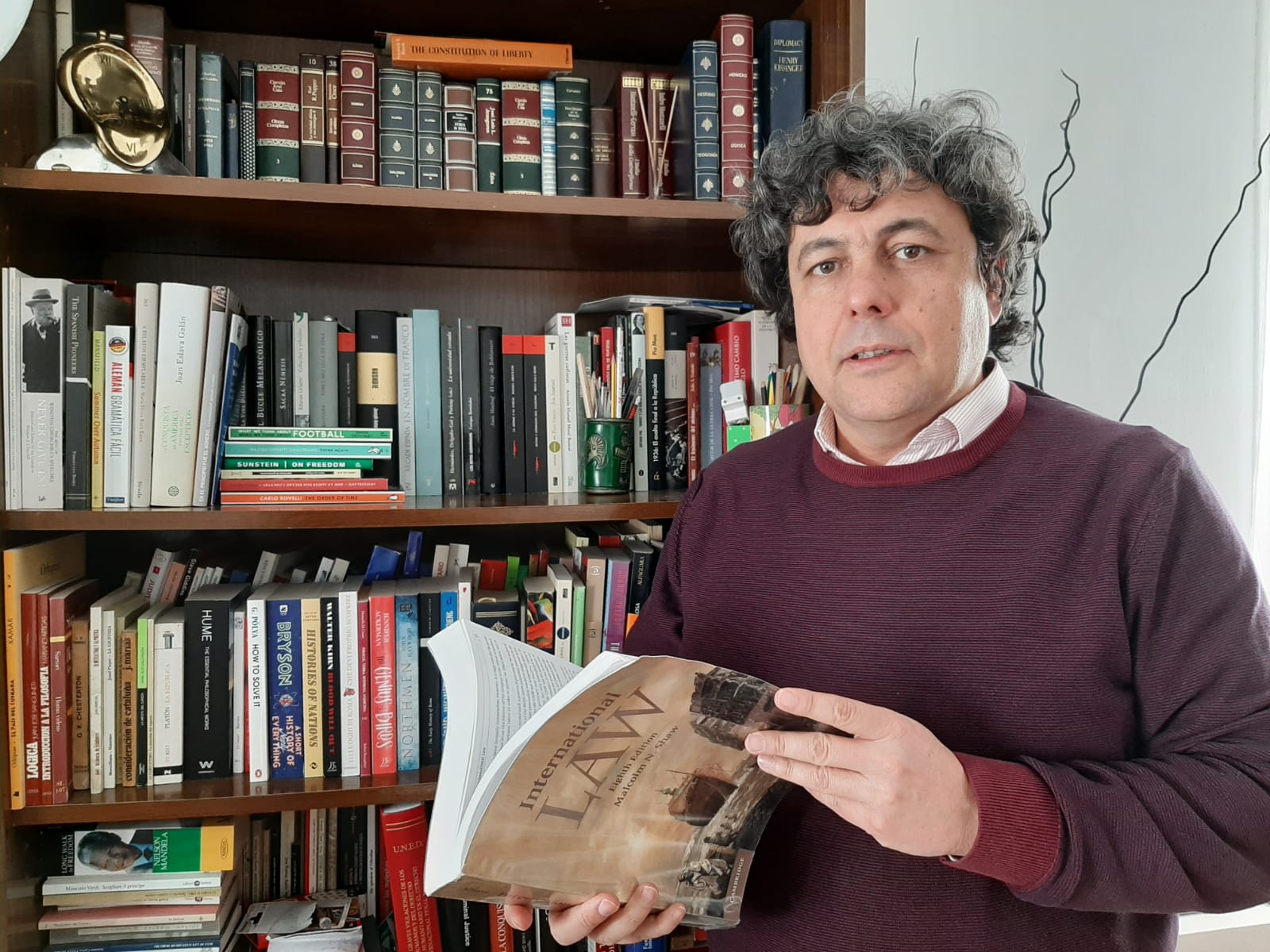
FERNANDO VAL GARIJO – A talk on Brexit

(by Stefania Del Monte)

Fernando Val Garijo is Associate Professor at the Public International Law Department of UNED (Faculty of Law). He received a PhD in Law from UNED, and a Master’s degree in EU Studies from Universidad Politécnica de Madrid. He has taught courses on International Law and EU Law at UNED, the Spanish Diplomatic School, FRONTEX and CEPOL, as well as International Law seminars at La Sapienza and East London University. His research has focused on International Criminal Law, International Humanitarian Law, Human Rights and International Organizations, with special regard to European Union issues. He has served as external legal counsel for the Spanish Ministry of Foreign Affairs and Cooperation (2008-2011), and as legal assistant of one of the Special Rapporteurs of the International Law Commission of the United Nations in Geneva (2015, 2016, 2017 and 2019). He is also author of The Impact of Brexit on the Spanish and European Health Care Systems (2017, in Spanish).

We have met him to talk about Brexit.

Professor Val, as an expert of International Law and especially of EU issues, what is your personal opinion on Brexit and what is the most realistic scenario we can expect, five years from now?

Five years is a long time in politics and international relations. Many scenarios are possible in this time frame, and I tend to avoid either worst-case or best-case scenarios. I would say that it is reasonable to expect that the EU and the UK will have agreed on a stable relation focused on trade and, hopefully, on some security issues. However, neither the EU nor the UK will be better off after this agreement. Membership was better than any future agreement, especially for the UK, but also for the EU. In this regard, I see Brexit as a lose-lose situation.

This is why, in my opinion, Brexit is a bad idea, whose supposed benefits have never been credibly explained. The UK, of all member states, had no need to leave the EU. It was one of the big, influential member states. It benefited greatly in areas such as services trade or the funding of scientific research. It had used the opportunities given by the flexibility of EU integration: opt-out regimes in areas such as the euro and social policy. In a way, when it was a member state, the UK could “have its cake and eat it” in certain respects. It will no longer be the case; it will be either no cake or no eating, contrary to what some brexiteers still say. One of the absurdities of Brexit is that it wasn’t necessary at all, even from a Eurosceptic perspective, Of course, it was from a Europhobic perspective, but then phobias are very powerful forms of irrationality. Brexit seems to me like a self-inflicted blow.

However, although the impact on the EU-27 will be less, I also think that in the long run the EU will be worse off without the UK. In spite of being reluctant EU members, the British made valuable contributions to European integration, providing an alternative to Franco-German views and advocating a flexibility in the EU integration process that is one of its strengths. Brexit is everyone´s loss, even if the loss will be greater for one side. It still fills me with sadness.

While Wales has voted in favour of Brexit, Scotland, Northern Ireland, and even London have never hidden their disagreement on the subject. Should they decide to pursue a different path, would they really have any space for manoeuvre?

This is more a question for a British constitutionalist lawyer, or for British political commentators. But it seems to be the case that Brexit weakens the unity of the United Kingdom, and that EU membership was a source of internal stability. EU membership has that effect in other member states, Spain being a case in point. If a second referendum of independence took place in Scotland now, independence from the UK would probably win, and Scotland could become a new EU Member State. But that referendum is very unlikely to be held in the near future. The new British government has some time to try and win over sufficient Scottish voters for the UK not to lose Scotland. At the same time, the prospect of a united Ireland has never been as credible as now, as the issues relating to the border between Northern Ireland and the Republic of Ireland are showing. British political leaders do not really know how to solve the Irish conundrum, at least not yet. Having said this, a break-up of the United Kingdom is not to be expected soon. One should not underestimate the strength of a union like the United Kingdom. The political bond between the four nations cannot be broken as easily as some think, although Brexit will, in my modest opinion, weaken that bond. Seeds of dismemberment have been planted during the Brexit process but that kind of fruit is far from ripe today.

Officially, there are over 1.2 million British nationals currently living in the EU, including over 300,000 in Spain (actual figures might be well over 2 million). How do you think Brexit affects them?

At the moment, there is a transition period set out in the Withdrawal Agreement, which lasts until 31 December 2020. Until that date, most things will remain the same as they were before 31 January 2020 (official Brexit date). A positive development is that the Withdrawal Agreement guarantees UK citizens who have registered as residents in a EU member state broadly the same rights as they enjoy now in terms of living, working and travelling. These rights will cease after a leave of absence of more than five years. Even during the transition period UK citizens can move to the EU and consolidate these rights. For example, UK citizens living in Spain or moving here permanently before 31 December 2020, will have life-long healthcare rights in Spain, provided they continue to be residents. Of course, with UK citizens who are not residents before that date the situation will be different.

Do you expect any other of the EU countries to follow the example of the UK, any time soon?

I do not, mainly because the benefits of leaving are still not obvious to anyone. The British case is an example of how difficult it is to withdraw, especially after more than forty years of membership and integration. EU leaders are determined that the EU-UK agreement on their future relationship does not leave the UK in a better position than when it was a member. In this regard, EU member states have so far shown a remarkable unity and resolve. At best, some member states may be adopting an attitude of “wait and see” regarding Brexit. The EU is imperfect, at times, irritatingly so, but for Member States it still solves more problems than it creates. The same cannot be said of Brexit, an option that still has to prove its alleged blessings.

Do you believe there is still a future for the European Union?

I am strongly pro-EU integration. I believe the EU enhances the possibilities of Member States and of the citizens of Member States in areas like trade, protection of the environment, defence and security, influence in foreign policy. It also consolidates common standards in areas like fundamental rights (including employees’ rights), consumer protection, food safety, health regulations, and several other topics.

EU citizens would benefit from more education on EU issues and the EU system. When I teach EU law and EU integration I perceive the average level of knowledge on the EU is very low and surprisingly inaccurate among undergraduates. It is at times even worse with the media. EU leaders, EU institutions, schools, academics and the media have a responsibility in bringing the real EU closer to EU citizens, so that they can decide whether they want it or not. I think this is, in times of populism and fake news, a crucial challenge. But it is a beautiful challenge too, one that can shed a positive light on the European realities of today.

In the cover: Prof. Fernando Val Garijo
image courtesy of Elisabetta Bagli

COP26 Pontignano 2020: Italy and UK new bilateral relations on climate change

London (Rosita Dagh) Italy and UK established a new bilateral relationship on climate change during the Pontignano Conference.

The event took place in London on February 25th.

The Italian and English governments came together to find new solutions to the issues that affect our planet.

Climate change remains one core subjects of global debate to which everyone is called to do something on the matter. In fact, world leaders will join COP26 (Conference of the Parties) in Glasgow next November 2020.

Now the goal of the United Kingdom and Italy is to apply the “Pontignano” method to bring new ideas and projects at the COP26 wich are aimed at reducing CO2 emissions.

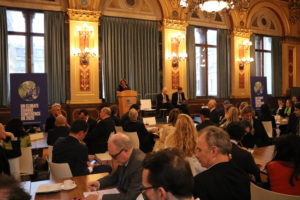
Today The Pontignano Co-President, Carlo Calenda and Lord Willetts, hosted 100 people from the local journalists, politicians and experts at the Foreign and Commonwealth Office in London,  to discuss how to overcome current obstacles related to the climate change.

Zac Goldsmiths, Minister for the Enviroment; Lord David Willetts

The event was also attended by the Minister for the Enviroment, Food and Rural Affairs, Zac Goldsmith, who insisted on the fact that in UK, since 2014, we have assisted to very high temperatures never seen before but, at the same time, he highlighted how the British citizens have always been activeto propose new solutions to the government.

The population has immediately shown interest and willingness to stop this problem” – he said.

Therefore, the Minister concluded that the success of COP26 is not about convinceing people to do something on climate change, but convinceing them of leaders’ capability to take serious measures to protect our planet.

https://www.youtube.com/watch?v=KEthbvbPAUE

BIC: “Brexit and the Law: What may come next?”

At the Palace of Westminster In Committee Room 10 on 12th February 2020 the British Italian Conservative have organised an event aimed to try to put some lights in to what can happen with the future legislations between EU and UK.

The conference was chaired by Maurizio Bragagni and Simon Blagden (BIC Chairman and Deputy Chairman respectively) at the kind invitation of Alberto Costa MP (BIC Honorary President), he proposed the Amendment to the Brexit Deal that leaded to his forced resignation from a Government position, the amendment however was later positively voted by the government. Alberto said: “the rights of EU citizens and UK citizens will be guaranteed perpetually underpinned by international law, my job will be to monitor the technicalities of how the Government will set those guaranties in laws”

The special guest was Simon Davis, President of the Law Society England and Wales, who talked about how the profession was organising to cope with the aftermath of Brexit and what it might mean for the legal profession mentioning that “What’s happens next depends on a great extent on you and those like you outside this room, for you I mean Politicians Lawyers Business Representatives and Activists”.

Followed by Maria Memoli, Law Society Council Member, ” “This is a very tense time for the citizen, businesses and member states and is worried about the divergence of views between UK and EU. Time is short. The transition finishes at the end of the year. In large parts of the economy, people rely on advice and support of solicitors”.

She was followed by Alessandro Belluzzo, President of the Italian Chamber of Commerce, who talked about the impact of Brexit and the hope that future negotiations would allow more rather than less opportunities for UK industries for trade, and then Gerardo Aprovitolo, a partner in the London law firm of ADL Solicitors, who talked about the problems facing European SMEs post-Brexit, the various free trade models that had been proposed, and how he hoped negotiations might be concluded in the best possible way to allow companies based either in the UK or Europe to continue to trade with its partners after Brexit. He was followed by Angela McFarlane, Market Development Director and Chair of Brexit Task Force, IQVIA, who gave a very interesting talk about how the UK leads the world in clinical trials and the importance of this industry, how the European Medicines Agency had been removed from the UK to the Netherlands over Brexit (and the problems that had ensued), and how the industry in the UK might remain able to continue to provide services (which mainly relied on free flow of data) within the EU. Sara Alessandrini, a criminal defence solicitor and partner at O’Keeffe Solicitors, then talked about how changes to do with the European Arrest Warrant had already occurred, and the challenges that lay ahead to continue to provide security with cross-border co-operation on law enforcement. The last speaker, Professor Mark Watson-Gandy, a Barrister at Three Stone Chambers, talked about insolvency laws and how these might change and evolve outside the EU. There was then a short question and answer section, followed by closing remarks by Maurizio Bragagni. Many speakers commented on the particular needs for continuation of trade in services with the EU, noting that most public interest seemed to be in trade in goods, which have much less influence on our balance of trade with the EU, and the hope that the British Government would recognise how important the service sector was to the UK economy.

Ideated and organised by Christian Vinante Giovannini, Gerardo Aprovitolo, Maria Memoli and Eleonara Gorla the event was extremely well-attended, with over one hundred guests, with a very relaxed atmosphere despite the high calibre of both speakers and invitees.

MARTA SIMONETTI – Everything we need to know about climate change

(by Stefania Del Monte)

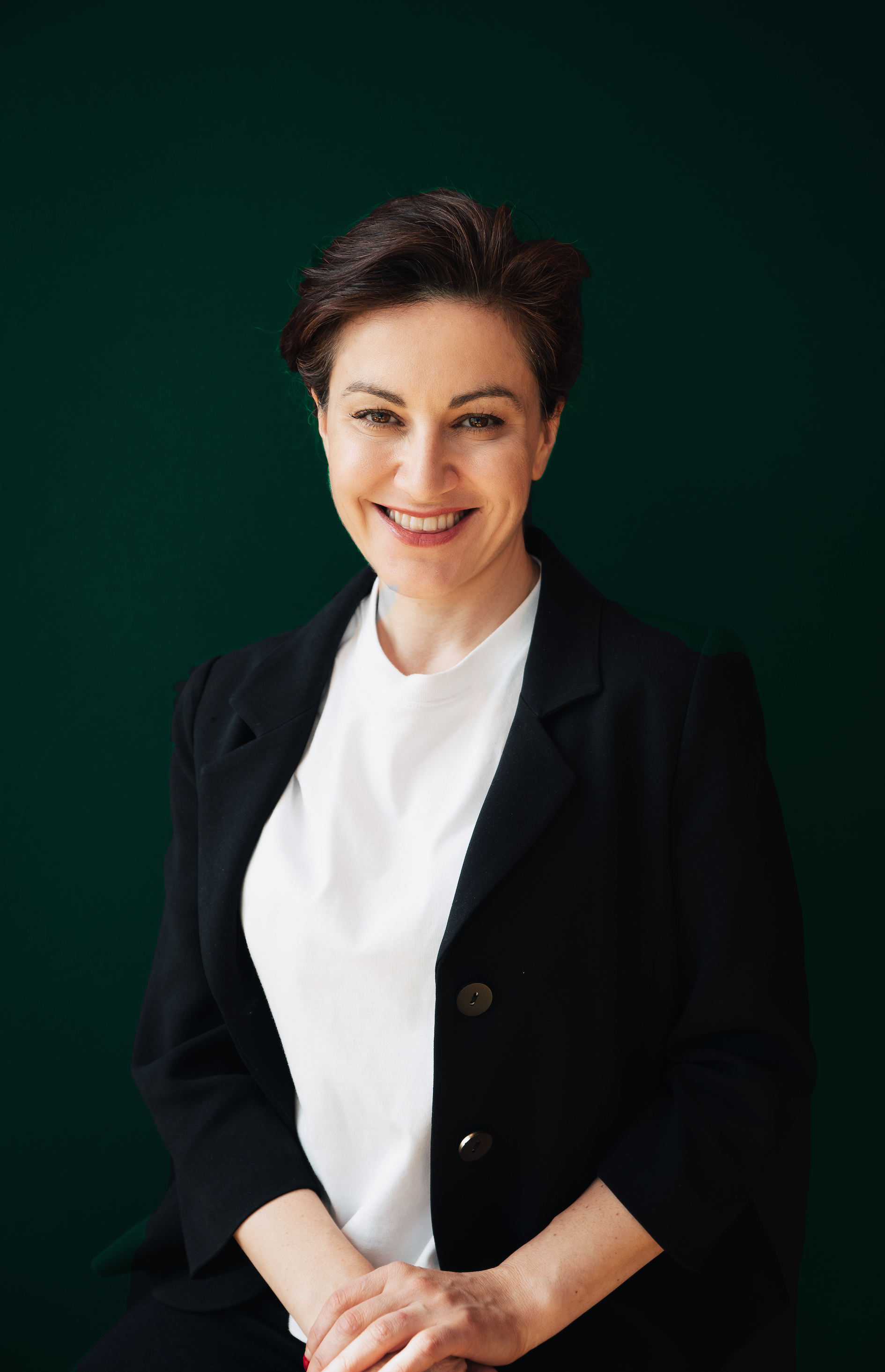
Marta Simonetti is an experienced green finance director based in London. She worked in the City of London, initially in marketing and then in development and transition banking for the European Bank for Reconstruction and Development. In 2017 she set up her consultancy, Globalfields Ltd, which specializes in green finance and sustainable leadership.

From August 2017 to date she has carried out several assignments at senior level for the Green Climate Fund, WWF-US, GIZ, IPC GmbH, Absolute Energy Capital, as well as for private equity companies and governments. She is now focusing on the green transformation of financial markets, working with governments, financial institutions and the consultancy sector in Europe, Africa, Central Asia and south-east Asia.

In her work thus far she has been leading bilateral and multilateral structuring and negotiations in climate and conservation finance, including with the Green Climate Fund, the Global Environment Facility, the NAMA Facility, the German bilateral cooperation agency (GIZ) and multilateral banks, as well as for private companies. Her main skills are in fund management (legal and institutional structuring), blended finance structuring (mixed participation equity and loans; revolving funds; guarantee funds), resource mobilization, programme structuring in climate and environmental finance. She also offers pro-bono work for the delivery of presentations and leadership training programmes specific in the areas of green finance, climate change and environmental degradation, in particular for schools and in careers events at universities in London.

We have met her to try and get a better understanding of this very complex matter.

Marta, your academic and professional experience in the climate and environment field is impressive but we would like to start with a very basic question. We often hear the expressions global warming and climate change. What exactly are they and what’s causing them to happen?

Many thanks for this question, which is not that simple at all! Climate science is an important aspect of our work in green finance as it gives us the evidence of the anthropogenic factors (i.e. the man-made role) in temperature warming vis-à-vis normal patterns of change. It reinforces the fact that we can make a concrete impact in our work with clients.

Specifically, global warming refers to the long-term rising of the average temperatures of Earth’s climate system observed since the pre-industrial period (i.e. the period between 1850 and 1900) due to human activities, primarily fossil fuel burning, rapid urbanization and loss of ecosystems. With time, those have increased heat-trapping greenhouse gas levels in the Earth’s atmosphere.

When we look at historical temperature changes, we see a succession of warm patterns followed by ice ages over the earth’s geological history. Thanks to the analysis of Antarctic ice-cores carbon dioxide (CO2) concentration alongside the study of temperature changes, we know that warm periods, with some exceptions, are periods of high atmospheric CO2, and cold periods, geologically, have been periods of low atmospheric CO2.

After the industrial revolution we see a 40 per cent rise in CO2 atmospheric concentrations during the 20th and 21st centuries. When we look at temperatures between 1880 and now, the ten warmest years ever recorded are within the last 17 years. The hottest temperatures ever recorded were in 2016, 2019, and 2015. There is a lot of convergence on these data among major research organization, including NASA, the Hadley Centre for Climate Science, British Antarctic Survey and the Oceanic National Oceanic and Atmospheric Administration.

(data from ossfoundation.org)

Because of this pattern change in temperatures and CO2 concentrations, we are also experiencing new weather patterns that have remained in place for an extended period of time and cannot any longer be considered as isolated occurrences. This change in the Earth’s climate system is climate change. For example, we are now experiencing an increasing number of extreme weather events, such as violent storms, heavy or irregular precipitation patterns, unprecedented floodings, more frequent and longer-lasting heatwaves, droughts.

In 2020, and with all the research available on the subject, we are still faced with a large number of deniers. How is that possible? Do we have to believe Greta Thunberg or Donald Trump?

I find Greta’s message very powerful because it is really seeking to achieve what we (the older generation) haven’t done fast enough: i.e. bringing about systemic change across all sectors. A crisis such as that we are witnessing now is indeed unprecedented. Think about the bush fires in Australia, the snow-free Christmas day in Moscow, or the current above-average temperatures in England followed by three weekends of storms and torrential rains. Those occurrences used to be abnormal, rare events. Now it is the new normal. Greta would say: Your house is on fire. And rightly so, because we cannot any longer think that those are remote problems that will not affect us. Yet…every crisis brings fundamental questioning, and the way we answer those questions, the motivations we bring behind our answers are the real catalysts for change. I think we are now at the right juncture to substantially speed up climate and environmental action. Our awareness and knowledge of the issue have increased, because the problem is so in our face that we cannot turn away from it.

Climate deniers thrive on instilling doubt and misinformation. We need to remain very aware that the most prominent deniers out there receive significant financial backing from (predominantly) the oil and coal industries, and then also from farming and heavy industries. What I find dangerous in this rhetoric is their effort to disenfranchise and disengage people from the actual conversation. If we are not responsible for climate change, then it follows that we shouldn’t worry so much about what we do because nothing we do actually matters. This is an abdication of responsibility! This is an abdication of our true human nature and our ability to bring change and meaning, in our own lives, as well as for the environments and communities we live in.

The real conversation has another focus. We have the technology to move away from fossil fuels. This is happening faster in some countries and not so fast in others. In a way we can say that it is important to remain mindful of the complex socio-economic transitions that are needed to decrease reliance on coal, oil and gas, as those have a price, expressed in the affordability of clean energy. Yet this transition needs to happen, globally. At the moment, while technology costs are coming down, we still have entry barriers, for example in mismatches between policies on the one hand, and regulation on the other; or political uncertainties which then translate in higher insurance costs or may act as deterrent to investment.

We have two major paradoxes here. Short-termism is now pervasive, in politics and in business. For many politicians it is impossible to think past the next election. This jeopardizes the ability to accept short-term costs for longer-term gains. In business, we want to see quick returns on investments and short pay-back times. When we work in climate action or in sustainability, the work is fundamentally long-term. We seek long-lasting impacts.

The second paradox is that while we seek to reduce emissions through clean energy generation and resource efficiency practices, we have rapidly become a more electrified, digitalized society. Think about how many tasks we now do digitally that were previously done without electricity: paying bills, writing letters, studying, billboards. Who goes now to the post office to pay, say, the water bills? Or when was the last time we sent a friend an actual letter written by hand, using pen and paper? While we may still have books, online content is now so efficient that it can really save us time and energy. And what about money? Here in London, where I live, there are shops that do not accept cash any longer. Now we have smart houses, big data, machine learning, predictive technologies. This is all very useful. It all needs electricity. So, as the population grows, any efficiency gain in carbon mitigation, water efficiency, or resource efficiency that we may achieve through new technology is eroded by the growing rate of consumption of that resource. This is the Jevons paradox, very much used in environmental economics. Before we start thinking though that any efficiency improvements in climate action is futile, let’s add another perspective here: i.e. the growing role of environmental conservation and stewardship of the planet. This is why now more than ever we need to find and implement applicable solutions.

So, when I look at Greta I really see progressive politics fighting against regressive government. In Greta I see the spark for systemic change rather than clinging to the status quo. For our future, the future of our children and humankind, for the health and preservation of the earth systems, we need to choose climate action!

It is too late to prevent climate change?

Climate change is already happening. What we can do now is to make sure that we decrease emissions, and fast. GHG emissions in fact increased in 2017 and 2018, and stabilized in 2019, according to the International Energy Agency. An important concept here is the planetary boundaries of the earth systems. In some instances, we have made useful progress, for example in the reduction of chlorofluorocarbons to slow down stratospheric ozone depletion thanks to the Montreal protocol and more recently the Kigali Amendment.

But in other areas – namely climate change and biosphere integrity – we may have already gone beyond the boundary. What does this mean? That we are fast approaching a tipping point, beyond which certain changes may become irreversible, such as loss of ice cover in polar regions, with subsequent sea level rises; or loss of ecosystems. Some people may find the extinction of some species irrelevant, or may be unmoved by an emergency thousands of miles away from home. Those events, though, are neither unrelated nor irrelevant, because ecosystems are interconnected, planetary boundaries are interconnected and ultimately, we are also connected (to ourselves, to others, to the contexts we live in). Do you remember John Donne’s poem ‘No man is an island entire of itself…’? The balance is in humankind’s approach to become aware that we are all part of a whole system, and that this interconnection is not a new concept or new-age mumbo-jumbo. It is real.

What do you think are the most important priorities, in order to tackle the climate crisis?

There are four key areas of priority where I believe we can bring substantial changes and impacts.

  • Financial support. For many countries, there is still a need to bridge the gap between the technical and impact potential of a project, and its commercial viability. This is where I see still a steady role for public interventions given as blended finance in the form of concessional lending, guarantee instruments and subordinated positions in financial instruments (e.g. first loss and tiered funds). We definitely need a little bit more risk-taking in order to bring new technologies on the market, which can be achieved through concessional equity in incubators and accelerators funds, as well as for venture capital. Supporting the supply of viable projects can strengthen the arguments for the business case of investing in green and SDG-linked products, which is paramount to speed up divestment away from fossil fuels.
  • Technology solutions. There are two ways to look at this: a solution as a new product, design or process (e.g. gravitational technologies for energy storage); and as a system change, i.e. green connectivity, circular economy and cradle-to-grave solutions, ‘green-digital’ urban designs and urban adaptation practices. To name a few…
  • Nature-based solutions. This would include conservation efforts, resource preservation and management, re-building of ecosystem. In this area we have solutions at hand, for example in carbon sequestration through reforestation and afforestation practices. Those solutions need to be implemented at a faster pace that the on-going destructions of those same ecosystem, which is very challenging.
  • Applicable awareness. I hear too often people feeling disempowered: how can one person make a difference? Well, let’s bring awareness to this issue and see what we can do, as individual, as part of a community, and in the bigger political arena, then we are not anymore acting as one but as humankind. As we prepare for next Conference of the Parties (COP26), co-organized by the UK and Italy and taking place in Glasgow in November 2020, we can take the opportunity to learn more about what’s happening and empower ourselves to bring change.

For example, what are some key changes we can bring into our lives?

I would like to give some suggestions… Switch energy supplier to full renewable energy; reduce meat consumption; join a vegan / vegetarian group for inspiration and recipes; reduce food waste; seek bulk or unpacked shops where you can use and reuse your own containers; increase energy efficiency by, for instance, switching all lights off, as well as through efficient lighting, windows and walls; join a clothes swapping group or sales apps; use sharing services rather than owning a product (e.g. car sharing); vote with your wallet by deliberately choosing which product and company you want to support and which you don’t; participate in tree-planting exercises and other sustainability activities organized by your council; use public transport to move around; vote for those candidates who have a clear pro-climate and sustainability agenda.

How can your expertise make a difference?

At Globalfields we look at climate change and sustainability practices in businesses from a variety of angles. We are interested in the interconnectedness of the issues and therefore we are able to offer holistic approaches. As I was mentioning earlier on, clean energy generation and efficiency gains cannot be taken in isolation from conservation efforts and stewardship of the planet. We need to think about energy and resource efficiency solutions alongside their wider impacts. We need to align corporate efforts with the sustainable development goals and with international agreements such as the Paris Agreement.

Globalfields was incorporated almost two years ago, and in this relatively brief time we have worked very closely with a number of governments, public and private-sector institutions to create processes or policies to implement green finance practices.

In particular, our work includes supporting organizations in drafting green finance strategies and roadmaps for their implementation; in designing framework for a company’s alignment with the SDGs; supporting the work around frameworks for green loans and SDG loan certifications; advising on financial instruments in green finance, with specific use of concessional and blended products for developing countries; fund-raising and structuring of funds.

More recently we have also worked on green finance training and made our first investment in small-scale hydropower. Two additional investments are under consideration as we speak.

Most of our work is targeted at corporate level, but we have also designed frameworks for coaching for transformational ‘green’ leadership, delivered individually or in small groups. This is where we aim to empower people to not only understanding the subject matter but also to design the most appropriate pathways for them to become transformational leaders in their organization. Working at corporate and individual levels is in my opinion a necessary undertaking in order to bridge the gap between science, policy and action.

Cover image: Marta Simonetti
 

ERIKA BEZZO – A coach for expats

by Stefania Del Monte

Erika Bezzo, owner of ChangeXperience, is a strategic and intercultural coach with ICF (International Coach Federation) certification, specialised in helping those who leave their home country to start a new adventure abroad. Her thirteen years of experience as manager in marketing and communication led her to live and work in Italy, Germany, France and Spain. She holds coaching sessions in Italian, Spanish, French, German and English and has just launched a new version of her website, now available in English, Spanish and Italian. We met her to learn more about her role and understand how she can help expats in their transition.

Erika, what is, exactly, the role of a coach?

Imagine having a nightmare while sleeping. You are trapped in a reality from which you cannot get out, you are sick, you are looking for a solution but you cannot find it. The malaise grows, you run, you struggle in an attempt to put an end to that anguished situation, but nothing, you cannot do it. Suddenly someone wakes you up and you are in a new reality, which allows you to observe from the outside, from a new perspective, the “nightmare reality” that seemed to you to be dead end. The Coach is the one who “wakes you up”, leading you to explore reality from a new perspective, from which you discover paths and solutions that were previously not visible. And it accompanies you on this journey of discovery until you reach the goal.

How do you carry out your business?

With my private customers, who live almost everywhere in the world: the sessions are mainly online. With companies, I generally go to the client, for individual and group training and/or coaching.

How much did your previous work experience help you to become a coach and professional trainer?

My experience in the company has been fundamental. When your customers are managers, entrepreneurs, freelancers or employees who every day have to deal with an organisational structure, hierarchical relationships, power games … having lived the company life allows you to understand closely what they are talking about.

Did the fact of having lived in different countries help you?

Moving on average every three years leads you to experience continuous and constant change exponentially. Expatriation is the only event in life that leads you to face so many challenges and changes simultaneously: work, language, country, culture, friends, colleagues. In my case, the first transfer also coincided with my wedding. Expat life is an experience as exciting as it is destabilising: when I help my customers in the transition, I know exactly what they are experiencing because I have tried it on my skin, several times. And they feel it. Once, a French manager of a large German multinational said to me: “I chose you as a coach because you are a woman, a foreigner; you know what it means to work in this country (ed. Germany) and you speak my language”.

How did you deal with the inevitable changes that accompany every move?

The first time, with the blissful unconsciousness of a 27-year-old girl. Later, with greater awareness, great curiosity, desire to discover and learn new languages ​​and new cultures, but also with organisation, determination and stubbornness.

What did you take with you from the places where you lived?

From Germany the essentiality of the content, from France the value of the form, from Spain the value of lightness, in the positive sense of the term. The Spaniards have the great advantage of knowing how to smile even in difficulties; it is a great force.

And what about Italy?

I lived in Italy till the age of 27. This is the place where I developed my core identity. From my home country I take a lot of cultural peculiarities, but probably the most distinctive one is the art of getting by.

One of the most important aspects of your work is the intercultural one. What pushed you in this direction?

As soon as you arrive in a new country, you don’t know its culture, values, customs. You therefore continue to behave as you would in your country of origin. Misunderstandings arise that generate anger and frustration. If someone gives you the keys to interpret the behaviour of others in the host country, your ability to adapt to the new cultural context is much faster. The desire to help people feel comfortable and quickly find their new balance is what prompted me to put at the service of others what I have learned in recent years as an expat, in addition to my intercultural studies.

In 2014 you founded Italia Altrove. What is the purpose of the association?

I could no longer hear: “Ah, are you Italian? Pizza, mafia and mandolin …”. Pride and the desire to promote the best of the country had me started, to communicate a different image of Italy. The Association, through art, literature, music, theatre and Italian talent in general, aims to export one of the best versions of our country.

What kind of activities do you organise?

Among things, we invite contemporary Italian authors to present their books, organise musical and theatrical events, have a reading club that meets monthly to discuss a book by a contemporary Italian author.

Can you reconcile all these commitments and get some space for your free time? What are your interests?

Well, family is a priority. After the birth of my second daughter, I left the corporate world and moved on to the freelance profession in order to manage my time in a more flexible way. Like everyone, I am constantly looking for the right balance between private and professional life: I apply the techniques I use with my clients first of all to myself. When I am travelling, I am away even for a whole week, but when I am at home I try to be very present. Much of my free time is dedicated to volunteering through Italia Altrove. The rest I dedicate to reading (I am a compulsive reader) and to sport. My two hours of pilates a week are essential. When I was in Germany, in addition to pilates, I was jogging in the woods near my home. Since I am in Madrid I have not yet managed to resume this routine in a stable way, I miss both the woods and my jogging companions, but I am working on it. This is also part of the constant adaptation of expat life!

Click here to read the Italian version

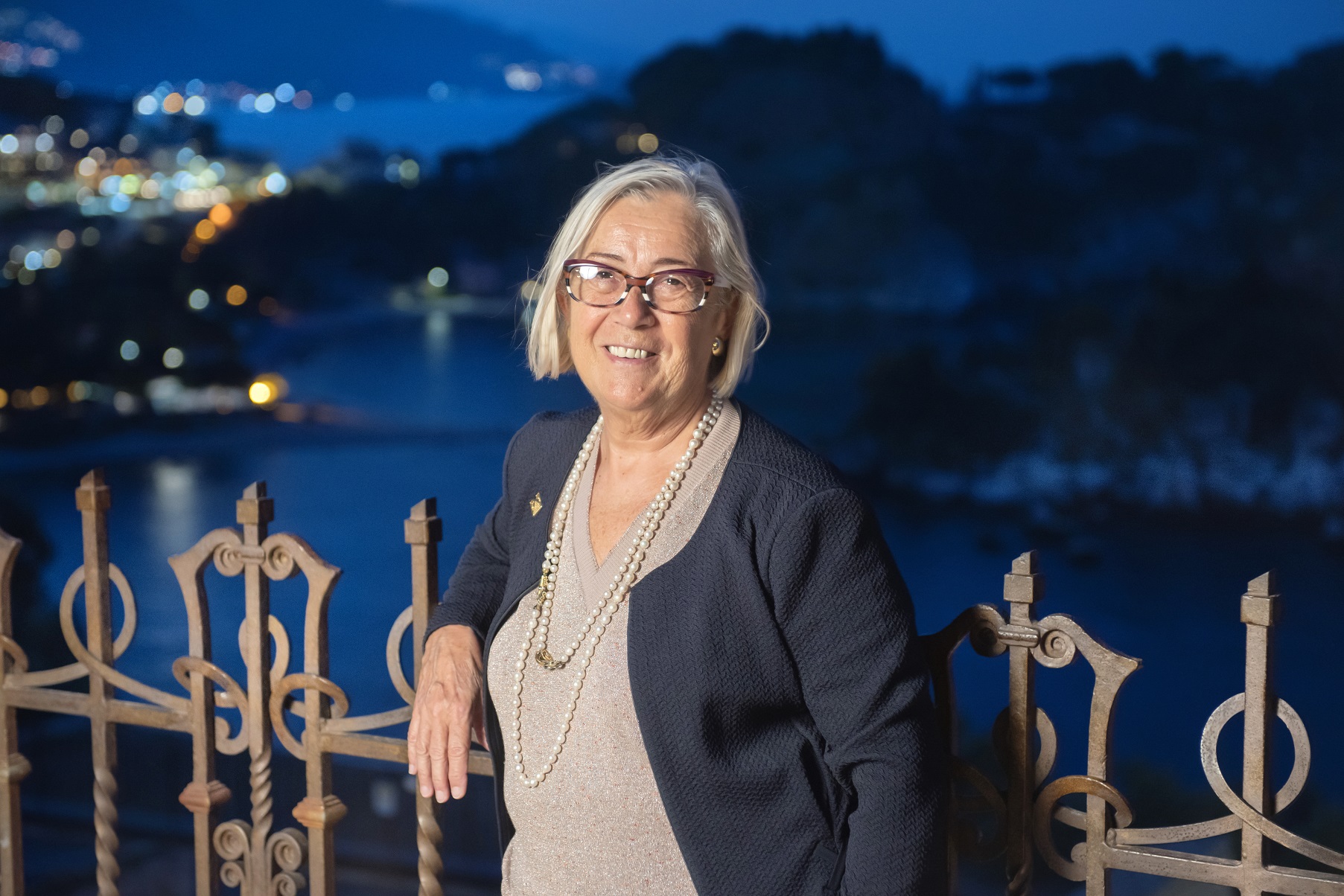
DONATELLA CINELLI COLOMBINI – The Lady of Brunello

by Stefania Del Monte

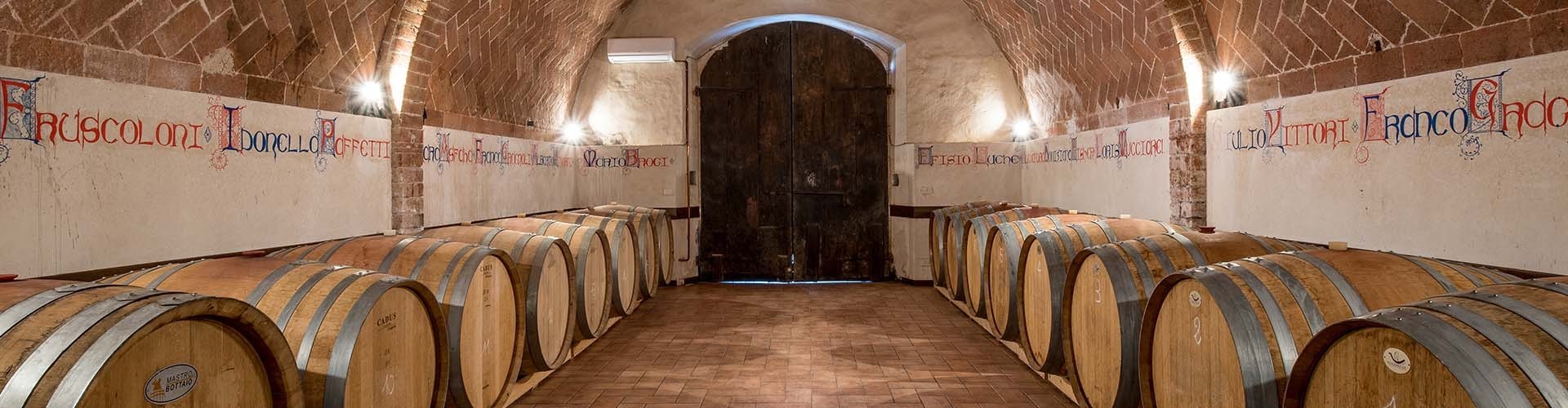
That of Brunello di Montalcino is a centuries-old history. Among the oldest wineries in the Sienese hills is Fattoria del Colle, where the lives of heretics, jurists, churchmen and winemakers were intertwined. Great characters, great passions and great wines in one of the most beautiful areas of the world, which keeps its traditions alive. The underground cave of Fattoria del Colle is described in the “Decimari” of the XII and XIV century as “Ermitorium S.Egidii de Querciola”. Today, that cave contains a very precious collection: the antique Brunello di Montalcino bottles by Donatella Cinelli Colombini.

Born in 1953, Donatella graduated in History of Medieval Art. In 1993 she founded the “Wine Tourism Movement” and invented “Open Cellars”, the day that in a few years brought wine tourism to Italy. Today she teaches wine tourism in the post-graduate Masters of three universities. In 1998 she created her own company, consisting of Fattoria del Colle in Trequanda and Casato Prime Donne in Montalcino. In 2003 she won the Oscar for best Italian producer awarded by AIS Bibenda and published the Wine Tourism Manual followed, in 2007, by the book Marketing of wine tourism. From 2001 to 2011 she was Tourism Councilor of the Municipality of Siena. Among her achievements the “urban trekking”, a new type of sports tourism that, from Siena, was exported throughout Italy. In 2012, she received the Vinitaly International Award and the following year was elected President of the Orcia Wine Consortium. In 2014 she was named a Knight of the Italian Republic and in 2016 she was elected National President of Women of Wine.

In short, the name of Donatella Cinelli Colombini is synonymous with excellence in the production of one of the finest wines in the world: not surprisingly, she is considered “La Signora del Brunello”. So let’s try to find out more about her story by talking to her directly.

Born from a family of Brunello producers, Montalcino has always been your home. What makes this wine, and these places, so appreciated in the world?

Montalcino was the last “city state” with an independent government until 1559. It has a noble and courageous history and we are proud of being from Montalcino. It is the place in the world where the Sangiovese grape is best expressed and – a unique and extraordinary characteristic – it is able to give young, satisfying and harmonious wines, and wines of great aging, of extraordinary finesse.

Who drinks Brunello di Montalcino and in which countries?

The first market is the United States but the highest per capita consumption in the world is in Switzerland. More than half of the wine goes abroad and a 20% slice is bought and consumed on the spot by predominantly foreign wine lovers.

In 1993 you founded the Wine Tourism Movement and the “Open Cellars”, making a decisive contribution to the success of wine tourism in Italy. How important is this resource for the Italian economy?

Very very much! Tourism is a fundamental driving force of the Italian economy also in terms of currency revenues. Food and wine tourism contributes to the GDP for about 12 billion euros of annual business, and wine tourism alone for around 3 billion. It must be remembered that the agri-food delicacies are the first magnet of foreign tourists and even beat the artistic heritage in terms of destination Italy attractiveness. Moreover, for years they have been leading the list of things most appreciated by foreign visitors returning from our country. At this point we must ask ourselves how much the food & wine combination can give to the Italian tourism economy, and stop wondering what tourism can bring to our cellars.

In your opinion, what are the steps still to be taken to further develop national food and wine tourism?

I would talk about wine tourism, which is the sector I know best. There are three things to do. First of all, diversify the tourist offer in the cellars: those who continue to offer only guided tours, with an explanation of their name, bore. There are about 25 thousand wineries open to the public, 8 thousand of which are appreciated for their hospitality. In this panorama, it is essential that each company works to offer something unique and exciting. Second, the communication of the Italian wine tourism offer must be organized with a portal and national marketing actions, as for example France does. Third, it is necessary to have trained staff for wine hospitality, which must come from hospitality and tourism institutes: currently, wineries are paying for staff preparation, but that’s not good.

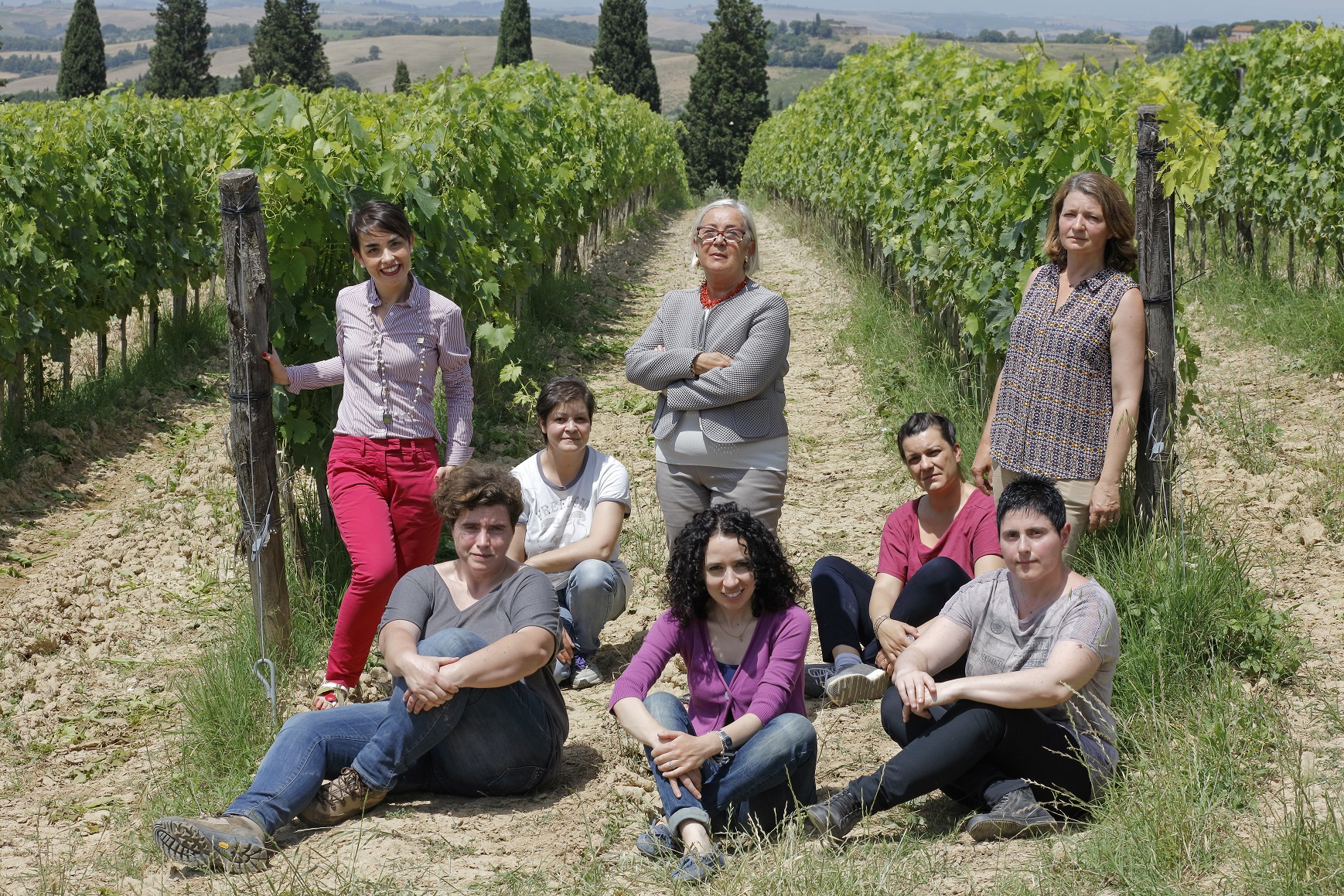
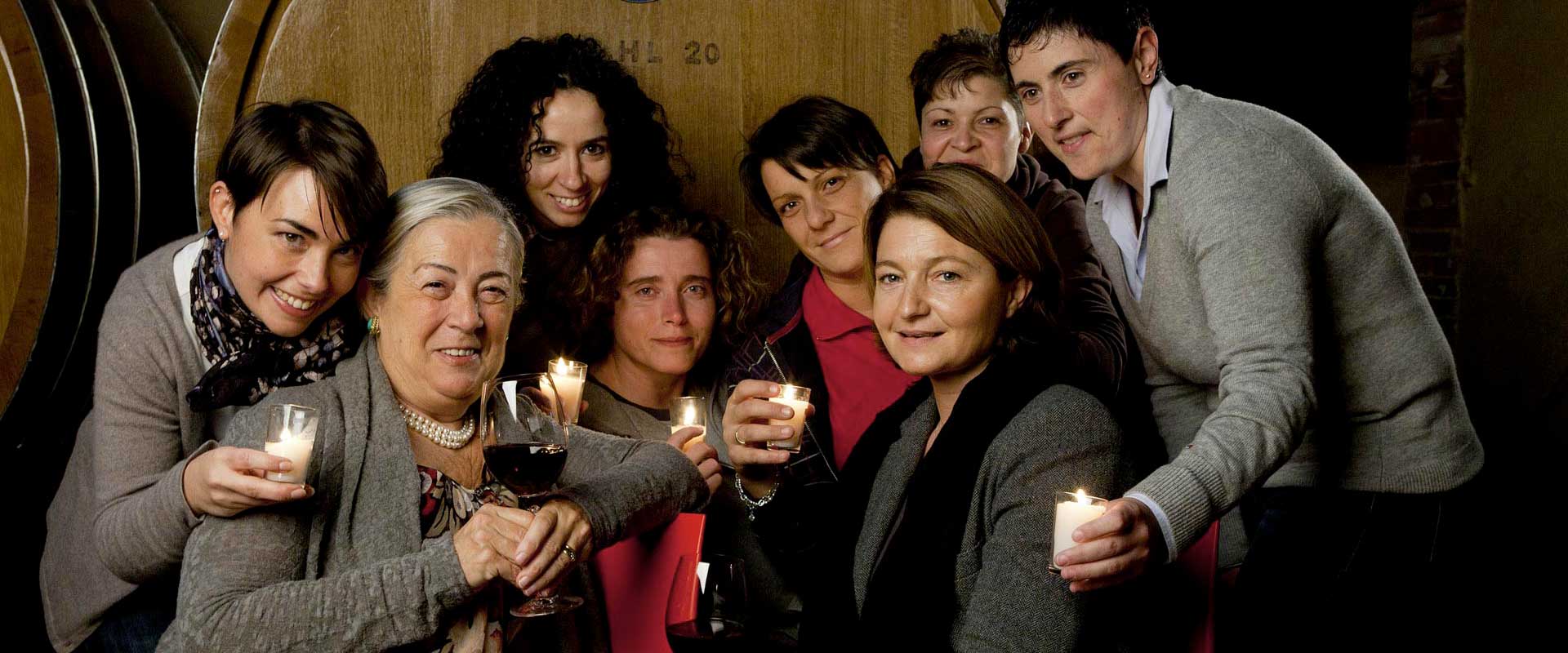
In 1998 you founded – in addition to Fattoria del Colle in Trequanda –Casato Prime Donne in Montalcino, the first Italian winery with women-only staff. How was the idea born?

When, in 1998, I left the family business, my parents gave me two estates to renovate and a small amount of Brunello, still in the barrel, to help me pay the first investments and start creating a commercial network. I needed a cantiniere to follow the maturation of this wine and I asked to the Siena oenology school, where the vice-principal told me: “it takes years of booking, they are very much in demand”. When, on the other hand, I asked for a woman winemaker, the answer was different: “we have a whole list, they are excellent students but the good cellars don’t want them”. I became aware of the existence of such profound discrimination as to be invisible and decided to do something to show that great wines need talent and passion, not muscles. From here, the “Prime Donne” project began with a winery managed by a staff of women only. The project was successful because, in 20 years, after replanting the vineyards and building two cellars, we now export to 39 countries around the world and the judgments of the international press about our wines are excellent.

Is it true that you have also launched a Brunello “barricaded for ladies”. Is the production of Casato addressed to a purely female market?

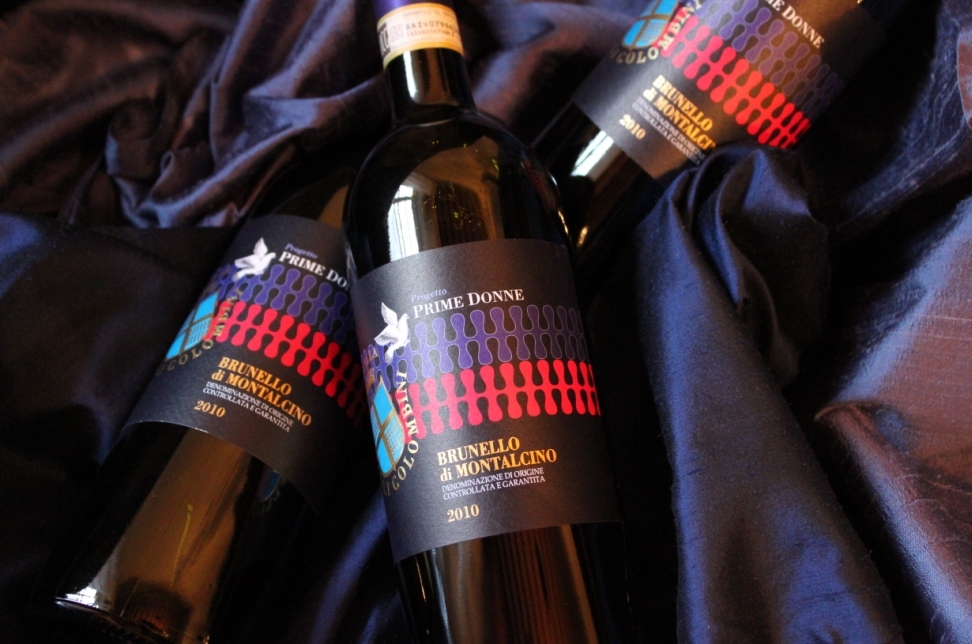
Actually, the Brunello Prime Donne does not mature in barrique, indeed it is a decidedly traditional Brunello, which often ages in large oak barrels or in 5-7 hectoliters tonneaux. It almost always comes from the same vineyard that is called Ardita and is at the highest point of the Casato Prime Donne. During the five years it spends in the cellar, there is a panel of 4 tasters who decide the barrel in which to make it mature and, finally, the blend between the various barrels. It consists of about 6 thousand bottles, produced only in the best years. The tasting panel is international and is composed of the Master of Wine Rosemary George, the German wine expert Astrid Schwarz, one of the best Italian sommeliers, Daniela Scrobogna, and the Master of Wine Madeleine Stenwreth, who has joined the group only lately. Brunello Prime Donne is very popular with female consumers, for its harmonious character and its silky tannins, but it has above all male admirers.

For over twenty years there has also been the Casato Prime Donne International Award. Who is it for?

The prize is divided into two parts. There are journalistic and photographic sections that aim to enhance those who divulge, with commitment, the territory of Montalcino and its wines. In addition, the award each year designates a “first woman” who is an example or a help to the female world. In recent editions, Sara Gama, captain of the women’s national football team, has won, and also Alessandra Ghisleri, a political scientist and pollster in a country like Italy, where politics gives little room to women. In short, these are women who break the mold and show the advantage of giving more space to women.

What was the best wine produced in your cellars over the years?

I believe that the last harvest, the 2019, is superior to any other previous one, but it will take five years to have this Brunello in the glass. Among the wines already on the market, my heart beats for 2010.

What food would you combine it with?

A chianino beef steak: a beautiful fiorentina cooked on the grill.

What do you like most about your job and what drives you to throw yourself headlong into ever new challenges?

I like the wine people, the courage with which they challenge the adversity of the climate, the creativity with which they invent new styles, the passion that they transmit to those who knock on the doors of the cellars … They are characteristics that I find in producers all over the world and that create vineyard friendships.

Are you working on any new ideas or projects?

Challenges are the spice of life and the engine of entrepreneurship. In a couple of days, construction will begin on the enlargement of the Fattoria del Colle cellars: 500 square meters in which to refine the bottles of still and sparkling wines, new vats in bare cement with fulling, to make the Cenerentola Doc Orcia as we vinify the Brunello. In addition, an “immersive” tasting room that will be a real surprise.

What interests do you cultivate in your spare time?

I studied History of Medieval Art and I have an irresistible attraction for the works of the 13th and 14th centuries. But my dream is to create a new type of religious, indeed spiritual, tourism where men and women of whatever creed can live participated experiences, which help them find serenity and a desire to build a better world. We are ahead in the study of the prototype and I hope that it will have the same success as my other achievements: open cellars and urban trekking.

Read the Italian version on Ciao Magazine
Images courtesy of Donatella Cinelli Colombini

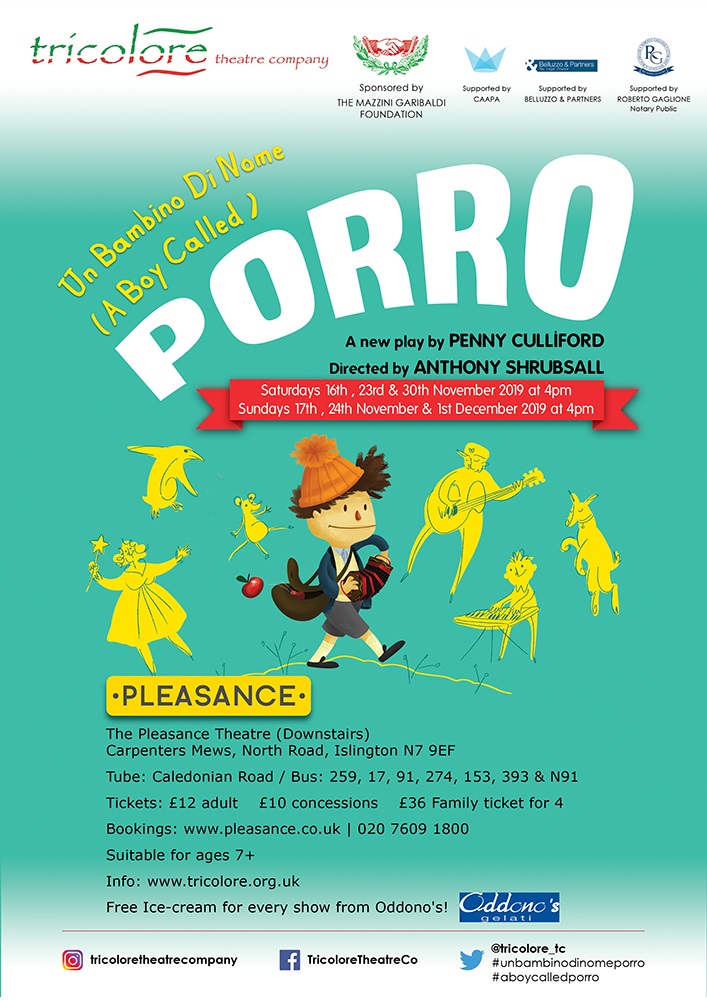
A Boy Called Porro, each child is special, each child is loved

London – Un Bambino Di Nome (A Boy Called) Porro is Tricolore Theatre Company’s new magical bilingual play for children from 7-11 which premieres in London this autumn at Pleasance Theatre (Downstairs), Carpenters Mews, North Road, Islington N7 9EF.

On Saturdays 16th, 23rd, and 30th November at 4pm and Sundays 17th, 24th November and 1st December at 4pm.

The play, in English and Italian, features a life-sized puppet and live actors and tells a heart-warming story of a young boy’s journey from underdog to top dog as he travels through an enchanted world.  On the way, he meets a drowsy dormouse, a petulant penguin, a daring dog and a band of musicians who see the potential in the little boy whose hair is too vertical, whose ears are too small and who is always late.

Written by Penny Culliford and directed by Anthony Shrubsall, with original score by Stefan Potiuk, and with a cast of professional Italian and English actors, the play combines Tricolore’s expertise in appealing to English and Italian audiences, young and old, with captivating storytelling, energetic performances and innovative staging. Designed by Offie Nominated Alys Whitehead and Sound & Lighting by Offie Commended Chuma Emembolu.

Tricolore’s previous productions, all written by Penny Culliford, include Saffron Hill (also directed by Anthony Shrubsall), La Catena d’Oro (The Golden Chain) and The Gingerbread Man (L’Ometto di Pan Pepato) a bilingual play for younger children that toured to Rome.

Tickets are available from www.pleasance.co.uk 020 7609 1800

Price £12 adults, £10 children and concessions plus £36 for a Family ticket for 4 – includes FREE ice cream at every show from Oddono’s Gelati www.oddonos.com/

Libiamo, the online club of the best Italian wines & spirits in UK

London (Francesco Pappaleo)  – Are you in the UK but you miss your winery weekend? Libiamo is your answer: the online wine club that specialises in high-quality Italian wines & spirits.

Libiamo was born in 2014 owing to a collaboration between Italian and British partners who share a passion for the Made in Italy. Since that time Libiamo aims at establishing a community of Italian wine and food enthusiasts in the United Kingdom, taking inspiration from the famous toast in Giuseppe Verdi’s renowned opera La Traviata: “Libiamo nei lieti calici!” (“Let’s drink from the joyful cups”).

Everyone can have access to it and can be part of a new community to meet new friends by sharing the same interests.

By visiting the website you can discover a wide range selection of wines and Italian spirits that you can try by buying it online.

However, Libiamo is more than an online wine store: the club proposes a new approach to the Italian wine and food tradition by telling the cheerful stories hiding behind the wines and their producers, by suggesting the best food and recipes to pair the wines with.

Also, the club is promoting new tours through the most suggestive Italian vineyards and by organizing the most innovative wine tastings. So Libiamo gives you the chance to live the Made in Italy in total, by discovering more about the Italian culture and lifestyle. 

For this reason, Libiamo is a gastronomic philosophy, an innovative approach to wine enjoyment with friends, a journey through the history of Italian wine-making and a chance to visit Italy and her amazing landscapes.

Regarding the spirits, Libiamo features an outstanding selection of premium quality artisanal spirits from legendary Italian producers: grappa, vermouth, gin, nocino and limoncello. The secrets of mixology are revealed to all our friends.

To discover more visit the website libiamowines.co.uk and enjoy the true Italian lifestyle!

No more deadlines. Is it really the end? The final goodbye is near for the UK

London – the final date for the UK to leave the EU – is here within two months! The Hungarian composer and entrepreneur’s Brexit-inspired music has never been more actual then now!

The British exit if the European Union is the most significant economic agreement between major economies since the Second World War and much about the forthcoming process of transitioning out of the EU has no precedent. Both the UK and the EU will be significantly changed by what is about to unfold economically, socially and in every aspect of our life.

It is no wonder that this historical event urges many battels of opinion, emotional turmoil and even inspire artists who feel the urgent need to express the opinion of hundred thousand of people through their art! Mr Joseph Felföldi Hungarian composer and entrepreneur mogul, the founder of a Hungarian food company was one of the first artist who responded to this life changing significant act of the UK.


In the immediate wake of the 2016 shock UK decision to leave the European Union, Hungarian film and music producer Joseph Felföldi felt moved to compose a musical response entitled “Brexit Ballet”.


The composer has strong business links to the UK so he wanted to express the mixed feelings of Europeans that he felt were missing from the discussion. Felföldi’s music video was uploaded to YouTube 2 years ago and gained almost a million views. More than half of the views came from English-speaking countries, with most of the rest from European Union countries.


Mr Felföldi feels the near-one-million views and countless comments have vindicated his video project and he hope it will continue to draw attention to the importance of international political awareness as the world enters an ever more turbulent period of change.


No-deal Brexit has never loomed larger than in the current moment. Boris Johnson has said that Britain will leave the European Union on 31st of October. His entire political strategy is based on the credibility of his threat to follow through, regardless of whether he has come to an agreement with the remaining 27 members.


A no-deal Brexit means the UK would leave the European Union immediately on 31stOctober 2019, and there would be no agreements in place about what the relationship between the UK and the EU will be like in future.This includes special agreements about how UK and EU companies could work and do trade with each other. A lot of companies have said they are worried about not knowing exactly how their businesses will work if there is a no-deal Brexit at the end of October.


“ I sympathise with the people of the UK, I respect their their decision to leave the EU”  Mr Felföldi says, “ I would even go further and say that I don’t think the British people’s vote to leave was a mistake, but that the leaders have made a mess of it since.”


Joseph Felföldi’s song is inspired by the English ballad tradition, with the lyrics identifying themes that Europeans associate with Britain: A misty island, at once nearby and distant; a proud seafaring nation with a long history; and a complex destiny intertwined with that of Europe. Out of respect, Felfoldi sings the lyrics in English, himself.


The choreography is arranged by Zsuzsa Laczó of the Csokonai Theater in Debrecen, with dancer Kitti Gall playing Britannia on a bare stage. The narrative evokes a combination of admiration, beauty, trauma, and sorrow.


“With our eyes on Britain now, it creates an opportunity for self-reflection and wider reflection, too: Where we come from, where we are now and where we are heading to politically, physically and spiritually. These are significant questions we should contemplate and we should act if we don’t like the picture.” – explains Felföldi.”


Felföldi is a Hungarian businessman and founder of a candy company which exports across Europe and the world, with the U.K. representing one of its strongest partners. He also writes and produces songs and poetry. He lost one of his eyes in an accident when he was 14 years old. “At this time, his sister gave him his first guitar; his affinity and commitment to music, literature and arts has accompanied his every waking moment since,” the statement says.