FERNANDO VAL GARIJO – A talk on Brexit

(by Stefania Del Monte)

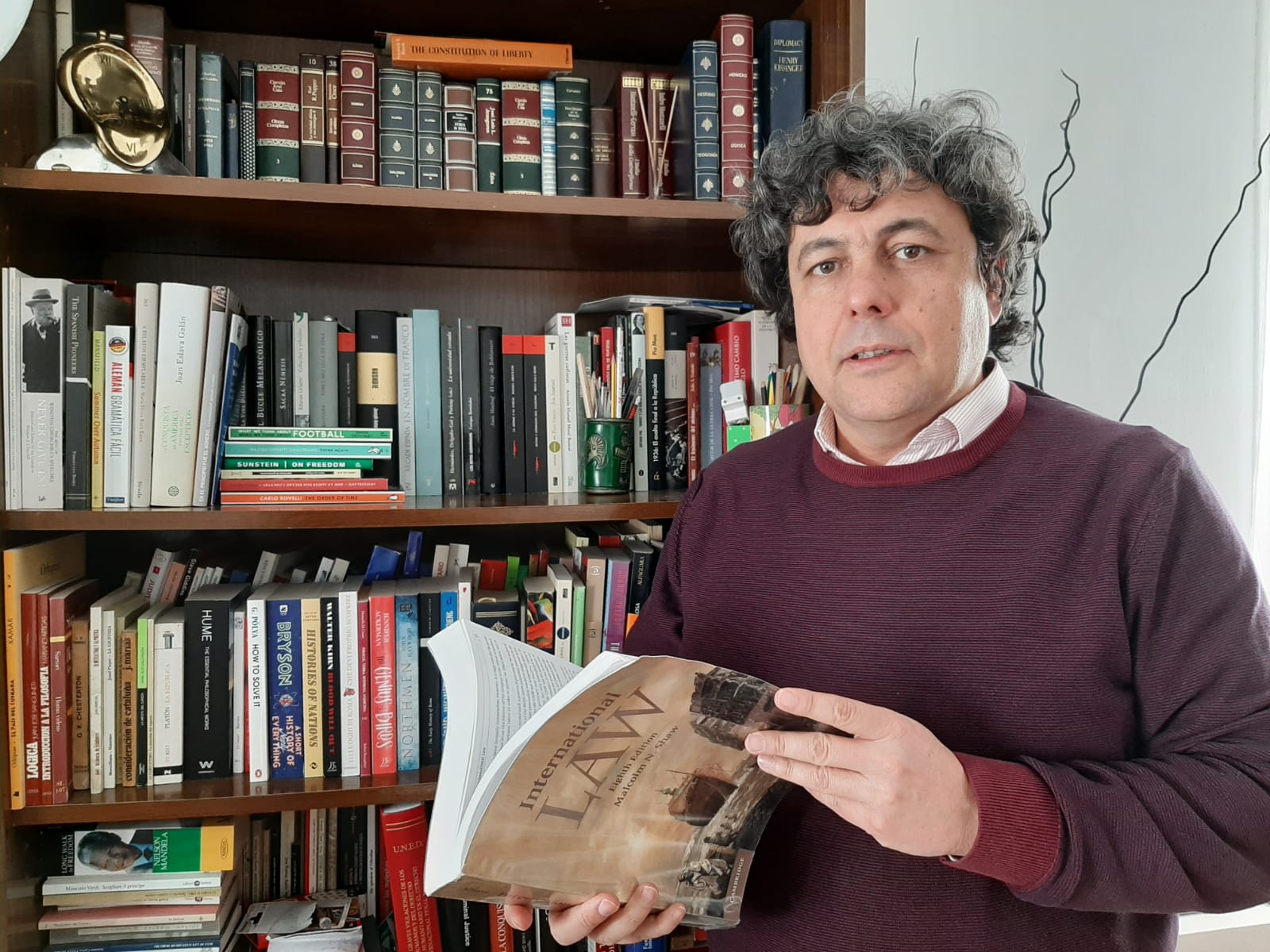
Fernando Val Garijo is Associate Professor at the Public International Law Department of UNED (Faculty of Law). He received a PhD in Law from UNED, and a Master’s degree in EU Studies from Universidad Politécnica de Madrid. He has taught courses on International Law and EU Law at UNED, the Spanish Diplomatic School, FRONTEX and CEPOL, as well as International Law seminars at La Sapienza and East London University. His research has focused on International Criminal Law, International Humanitarian Law, Human Rights and International Organizations, with special regard to European Union issues. He has served as external legal counsel for the Spanish Ministry of Foreign Affairs and Cooperation (2008-2011), and as legal assistant of one of the Special Rapporteurs of the International Law Commission of the United Nations in Geneva (2015, 2016, 2017 and 2019). He is also author of The Impact of Brexit on the Spanish and European Health Care Systems (2017, in Spanish).

We have met him to talk about Brexit.

Professor Val, as an expert of International Law and especially of EU issues, what is your personal opinion on Brexit and what is the most realistic scenario we can expect, five years from now?

Five years is a long time in politics and international relations. Many scenarios are possible in this time frame, and I tend to avoid either worst-case or best-case scenarios. I would say that it is reasonable to expect that the EU and the UK will have agreed on a stable relation focused on trade and, hopefully, on some security issues. However, neither the EU nor the UK will be better off after this agreement. Membership was better than any future agreement, especially for the UK, but also for the EU. In this regard, I see Brexit as a lose-lose situation.

This is why, in my opinion, Brexit is a bad idea, whose supposed benefits have never been credibly explained. The UK, of all member states, had no need to leave the EU. It was one of the big, influential member states. It benefited greatly in areas such as services trade or the funding of scientific research. It had used the opportunities given by the flexibility of EU integration: opt-out regimes in areas such as the euro and social policy. In a way, when it was a member state, the UK could “have its cake and eat it” in certain respects. It will no longer be the case; it will be either no cake or no eating, contrary to what some brexiteers still say. One of the absurdities of Brexit is that it wasn’t necessary at all, even from a Eurosceptic perspective, Of course, it was from a Europhobic perspective, but then phobias are very powerful forms of irrationality. Brexit seems to me like a self-inflicted blow.

However, although the impact on the EU-27 will be less, I also think that in the long run the EU will be worse off without the UK. In spite of being reluctant EU members, the British made valuable contributions to European integration, providing an alternative to Franco-German views and advocating a flexibility in the EU integration process that is one of its strengths. Brexit is everyone´s loss, even if the loss will be greater for one side. It still fills me with sadness.

While Wales has voted in favour of Brexit, Scotland, Northern Ireland, and even London have never hidden their disagreement on the subject. Should they decide to pursue a different path, would they really have any space for manoeuvre?

This is more a question for a British constitutionalist lawyer, or for British political commentators. But it seems to be the case that Brexit weakens the unity of the United Kingdom, and that EU membership was a source of internal stability. EU membership has that effect in other member states, Spain being a case in point. If a second referendum of independence took place in Scotland now, independence from the UK would probably win, and Scotland could become a new EU Member State. But that referendum is very unlikely to be held in the near future. The new British government has some time to try and win over sufficient Scottish voters for the UK not to lose Scotland. At the same time, the prospect of a united Ireland has never been as credible as now, as the issues relating to the border between Northern Ireland and the Republic of Ireland are showing. British political leaders do not really know how to solve the Irish conundrum, at least not yet. Having said this, a break-up of the United Kingdom is not to be expected soon. One should not underestimate the strength of a union like the United Kingdom. The political bond between the four nations cannot be broken as easily as some think, although Brexit will, in my modest opinion, weaken that bond. Seeds of dismemberment have been planted during the Brexit process but that kind of fruit is far from ripe today.

Officially, there are over 1.2 million British nationals currently living in the EU, including over 300,000 in Spain (actual figures might be well over 2 million). How do you think Brexit affects them?

At the moment, there is a transition period set out in the Withdrawal Agreement, which lasts until 31 December 2020. Until that date, most things will remain the same as they were before 31 January 2020 (official Brexit date). A positive development is that the Withdrawal Agreement guarantees UK citizens who have registered as residents in a EU member state broadly the same rights as they enjoy now in terms of living, working and travelling. These rights will cease after a leave of absence of more than five years. Even during the transition period UK citizens can move to the EU and consolidate these rights. For example, UK citizens living in Spain or moving here permanently before 31 December 2020, will have life-long healthcare rights in Spain, provided they continue to be residents. Of course, with UK citizens who are not residents before that date the situation will be different.

Do you expect any other of the EU countries to follow the example of the UK, any time soon?

I do not, mainly because the benefits of leaving are still not obvious to anyone. The British case is an example of how difficult it is to withdraw, especially after more than forty years of membership and integration. EU leaders are determined that the EU-UK agreement on their future relationship does not leave the UK in a better position than when it was a member. In this regard, EU member states have so far shown a remarkable unity and resolve. At best, some member states may be adopting an attitude of “wait and see” regarding Brexit. The EU is imperfect, at times, irritatingly so, but for Member States it still solves more problems than it creates. The same cannot be said of Brexit, an option that still has to prove its alleged blessings.

Do you believe there is still a future for the European Union?

I am strongly pro-EU integration. I believe the EU enhances the possibilities of Member States and of the citizens of Member States in areas like trade, protection of the environment, defence and security, influence in foreign policy. It also consolidates common standards in areas like fundamental rights (including employees’ rights), consumer protection, food safety, health regulations, and several other topics.

EU citizens would benefit from more education on EU issues and the EU system. When I teach EU law and EU integration I perceive the average level of knowledge on the EU is very low and surprisingly inaccurate among undergraduates. It is at times even worse with the media. EU leaders, EU institutions, schools, academics and the media have a responsibility in bringing the real EU closer to EU citizens, so that they can decide whether they want it or not. I think this is, in times of populism and fake news, a crucial challenge. But it is a beautiful challenge too, one that can shed a positive light on the European realities of today.

In the cover: Prof. Fernando Val Garijo
image courtesy of Elisabetta Bagli
No more deadlines. Is it really the end? The final goodbye is near for the UK

London – the final date for the UK to leave the EU – is here within two months! The Hungarian composer and entrepreneur’s Brexit-inspired music has never been more actual then now!

The British exit if the European Union is the most significant economic agreement between major economies since the Second World War and much about the forthcoming process of transitioning out of the EU has no precedent. Both the UK and the EU will be significantly changed by what is about to unfold economically, socially and in every aspect of our life.

It is no wonder that this historical event urges many battels of opinion, emotional turmoil and even inspire artists who feel the urgent need to express the opinion of hundred thousand of people through their art! Mr Joseph Felföldi Hungarian composer and entrepreneur mogul, the founder of a Hungarian food company was one of the first artist who responded to this life changing significant act of the UK.


In the immediate wake of the 2016 shock UK decision to leave the European Union, Hungarian film and music producer Joseph Felföldi felt moved to compose a musical response entitled “Brexit Ballet”.


The composer has strong business links to the UK so he wanted to express the mixed feelings of Europeans that he felt were missing from the discussion. Felföldi’s music video was uploaded to YouTube 2 years ago and gained almost a million views. More than half of the views came from English-speaking countries, with most of the rest from European Union countries.


Mr Felföldi feels the near-one-million views and countless comments have vindicated his video project and he hope it will continue to draw attention to the importance of international political awareness as the world enters an ever more turbulent period of change.


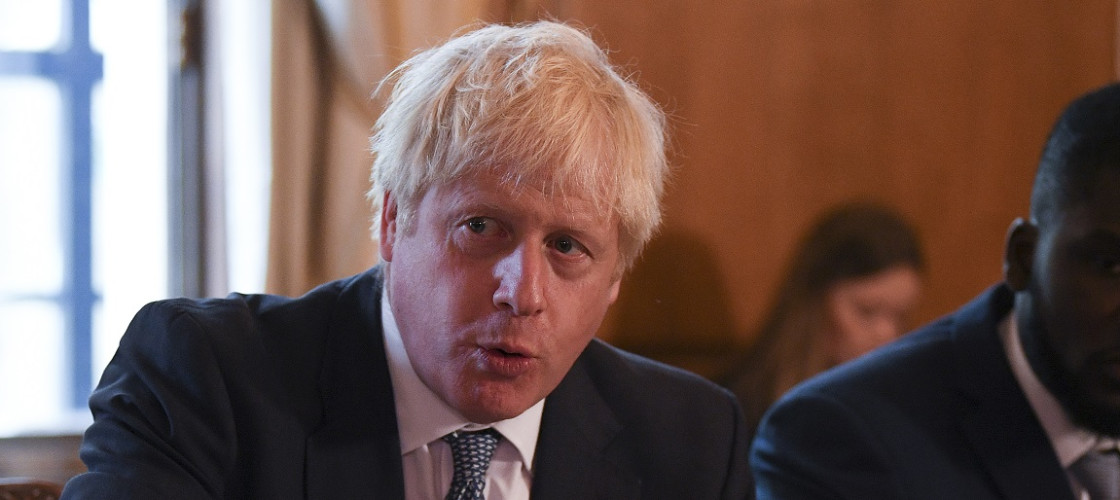
No-deal Brexit has never loomed larger than in the current moment. Boris Johnson has said that Britain will leave the European Union on 31st of October. His entire political strategy is based on the credibility of his threat to follow through, regardless of whether he has come to an agreement with the remaining 27 members.


A no-deal Brexit means the UK would leave the European Union immediately on 31stOctober 2019, and there would be no agreements in place about what the relationship between the UK and the EU will be like in future.This includes special agreements about how UK and EU companies could work and do trade with each other. A lot of companies have said they are worried about not knowing exactly how their businesses will work if there is a no-deal Brexit at the end of October.


“ I sympathise with the people of the UK, I respect their their decision to leave the EU”  Mr Felföldi says, “ I would even go further and say that I don’t think the British people’s vote to leave was a mistake, but that the leaders have made a mess of it since.”


Joseph Felföldi’s song is inspired by the English ballad tradition, with the lyrics identifying themes that Europeans associate with Britain: A misty island, at once nearby and distant; a proud seafaring nation with a long history; and a complex destiny intertwined with that of Europe. Out of respect, Felfoldi sings the lyrics in English, himself.


The choreography is arranged by Zsuzsa Laczó of the Csokonai Theater in Debrecen, with dancer Kitti Gall playing Britannia on a bare stage. The narrative evokes a combination of admiration, beauty, trauma, and sorrow.


“With our eyes on Britain now, it creates an opportunity for self-reflection and wider reflection, too: Where we come from, where we are now and where we are heading to politically, physically and spiritually. These are significant questions we should contemplate and we should act if we don’t like the picture.” – explains Felföldi.”


Felföldi is a Hungarian businessman and founder of a candy company which exports across Europe and the world, with the U.K. representing one of its strongest partners. He also writes and produces songs and poetry. He lost one of his eyes in an accident when he was 14 years old. “At this time, his sister gave him his first guitar; his affinity and commitment to music, literature and arts has accompanied his every waking moment since,” the statement says.

“Brexit and The Rights of European Citizen”

London (Caterina Moser) – Italian Embassy in London held a meeting and a Q&A session on 12th September with the aim of informing Italians in Uk about the impact on their citizens’ rights. 

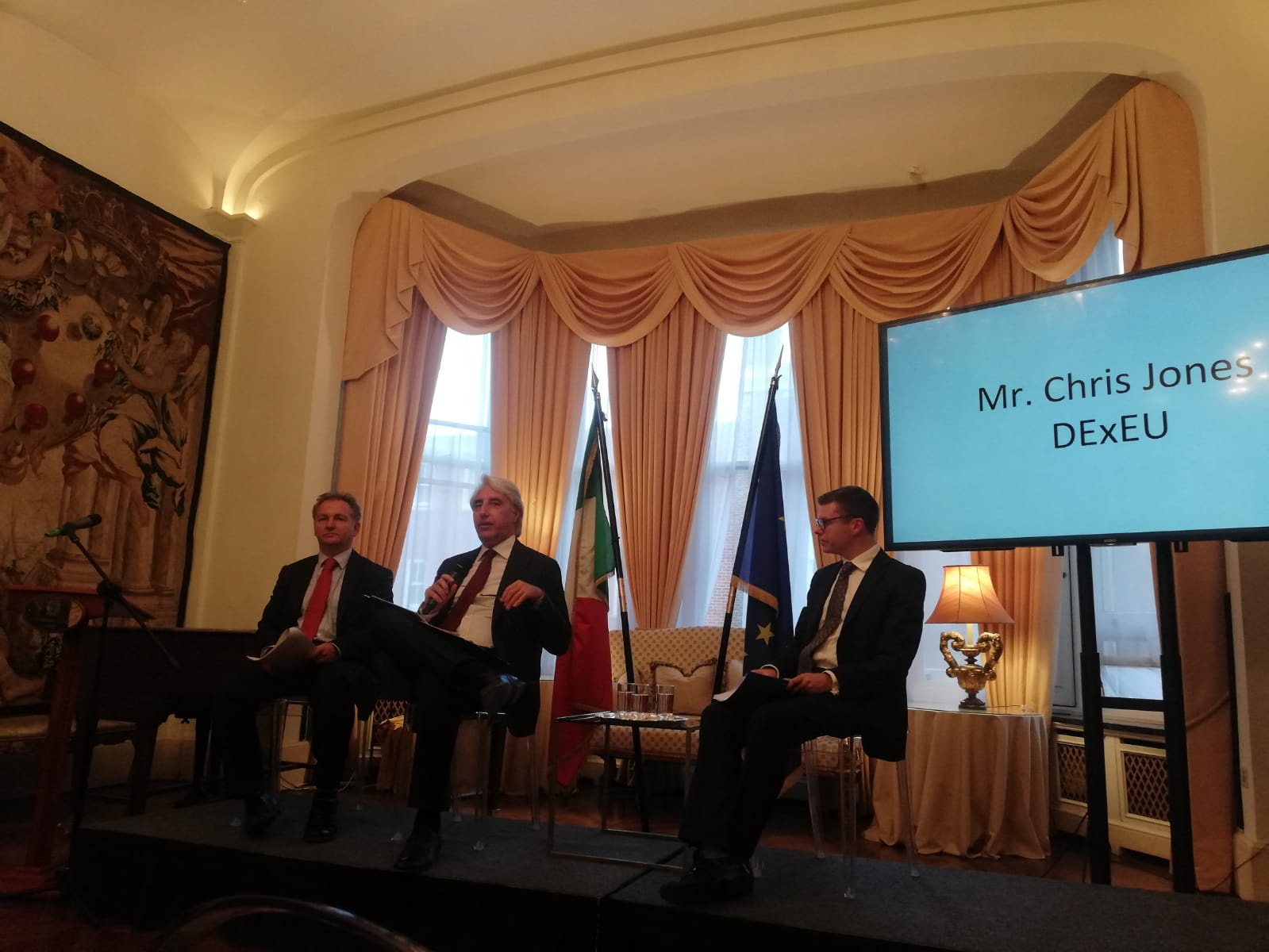
Several important authorities of the British government were there to answer all the questions: Minister Suella Braverman, Parliamentary Under-Secretary of State at Department for Exiting the European Union, Mr Chris Jones, director of Justice, Security and Migration, Mr Mark Doran, deputy director of EU Exit Immigration strategy and Jill Morris, British Ambassador to Italy. 

On the opening, the Italian Ambassador Raffaele Trombetta recalled how large the Italian community is. For this reason, it’s important to understand which the changes for every Italian student and worker living in United Kingdom will be. 

Jill Morris, British Ambassador to Italy, began her speech by thanking Italians. She wanted “to pay tribute to Italians for your contribution to our culture, economy and society”. The British Ambassador knows that it is a concerning and uncertain time, but it is important for Uk and Italy to work together to get the relation stronger and deeper. 

There is a talk of agreements and negotiation, but we can’t forget that there are 700.000 Italians in Uk and everyone of them have a different story. Jill Morris presented a new podcast #Migrantsbritish and invited everyone to tell their story. 

Suella Braverman took the floor. The Parliamentary Under-Secretary began reinforcing the thanks to all Italians that contribute for years in Uk. She said she loves Italy for its culture, food, fashion, design. (Moreover, she is going to visit Amalfi Coast in a few days for her Honeymoon and she doesn’t looking forward). 

It is a long story of link between Italy and Uk. Historically, Italians have always moved from Italy to study and work and, as well, British have moved to Italy to learn architecture, culture, literature. Italian culture can be seen an inspiration for British. The Minister Suella Braverman recalled the experience of Shakespeare. 

“3 millions of Italian people visit Uk every year. We will preserve that”, because although Uk is leaving European Unione, “we are not leaving Europe”. 

“We want you to stay” has been repeated several times. The Minister said that meeting is important. British government wants moment like these “to inform you, to assist you, to help you”. 

Chris Jones, director of Justice, Security and Migration, focused on the Draft withdrawal agreement and he underlined that this negotiation of citizen rights is unique and “we know that is a particular uncertain period”. It is possibile to read it on the site of the British government. 

In December, British government reached agreement on citizens’ right and in march it extended to cover who arrived in the implementation period. 

If you are an Italian citizen – or European Union citizen – living in the Uk, you need to apply the EU Settlement Scheme.

Mark Doran, deputy director of EU Exit Immigration strategy, explained how it will works and why it is important. 

The EU Settlement Scheme will allow Italians to continue to live and work in the Uk after 31st December 2020. Italians living in Uk will need to apply a simple digital system to secure their rights. “We will be looking for reasons to grant, not to refuse” said Mr Doran. 

It is necessary to complete three steps to check the employment and benefits. 

  1. Demonstrate the identity. This must be valid a EU passport or national identity card;
  2. Proof of residence. It will need to provide a National Insurance number or provide evidence to show the residence.  
  3. Declare any criminals convinctions. 

The fee to apply will be £65. For children under 16, the fee will be £32.50. But, it will be free if the applicant has already a valid indefinite leave to remain or a valid permanent residence document and if he or she is applying to move from pre-settles status to settled status. 

There will be also support for any kinds of need, such as translation, assisted digital, policy provisor.
For more information, visit the website eucitizensrights.campaign.gov.uk

In closing, the Ambassador Raffaele Trombetta spoke again. He underlined some concerns emerged in Q&A session moderated by Alessandro Motta, Deputy Head of Mission.
It is important to understand well what would happen if someone will not apply the scheme. We must also consider those who will not register and will not be informed about it.

Italians and Europeans need more details about the eventuality of a no-deal, because people are talking about it but there aren’t enough informations. 

What about the future after Brexit? “This event shown the strength of Italian Community. And we, both Uk and Italy, make sure that links and connection between us will not be affected” said Mr Trombetta. 

Brexodus is real: many banks are leaving United Kingdom because of Brexit

London (Giulia Faloia) – Brexit brings Brexodus. More and more banks are now leaving UK due to the abandonment of European Union.

According to the Financial Times, Treasury and Bank of England are “at loggerheads” over City of London regulation after Brexit.

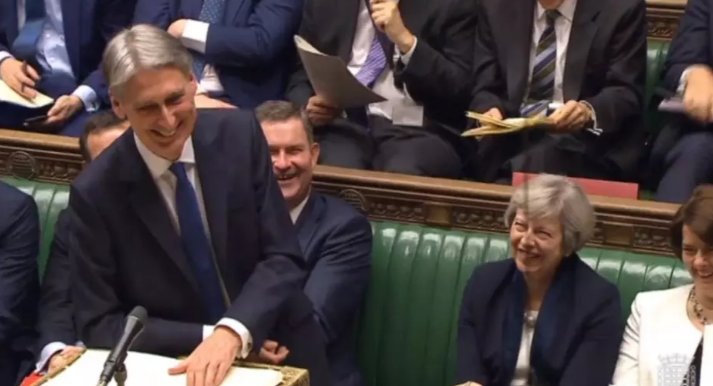
Chancellor Philip Hammond said he wants to keep Britain closely aligned with the EU’s rules to ensure maximum access to the European market. However the Bank is fearful of any compromise that would leave it as “a rule taker”.

There are different opinions about the kind of relationship between the two sides. According to the Daily Telegraph, they are “very, very bad”, while an unnamed Treasury source tells the Times that the department has a “very good” working relationship with the Bank.

It’s pretty clear that the situation of banks and their employees – as much as their clients – is quite critical, especially if there will be an Hard Brexit.

The Minister Dominic Raab has recently warned people about the possible scenario after a no-deal. In fact according to him customers could be faced with increased rates and major precessing times for euro transactions. He also added that payment costs by credit card between United Kingdom and European Union could increase.

ilsole24ore.com

According to the Minister, there could be problems for British citizens living in countries belonging to European Union. In fact, in case of an Hard Brexit the same customers could loose the possibility of accessing  deposit and loan services and insurance contracts.

British banks have already started to leave Great Britain and probably more and more will follow.

One of the greatest and latest blow to the British economy was the one by Hsbc. In fact the bank has announced that its activities will be transferred to Europe, in France. The seat in London will loose the control on seven European branches: Belgium, Czech Republic, Ireland, Italy, Luxembourg, Netherlands and Spain.

The list of the banks that will leave United Kingdom is destined to get longer. The destinations will mainly be Germany, France, Spain, Ireland and Denmark.

The match between London and Bruxelles is still opened and the possibility to end it with a no-deal is more and more close. Meanwhile Brexodus is real.

Brexit seen by another point of view

London (Valeria Piccioni) – The phenomenon of the Brexit will have an impact on the future of the European Union: the difficult situation of the UK will affect the trade marketsboth internally and externally. However it is important not to fall in hasty conclusions. Infact, as soon as the UK leaves the EU, many changes will arguably be implemented in the trade with EU and with the Commonwealth countries.

The Commonwealth is an intergovernmental organisation made of 53 member states that are mostly former territories of the British Empire. Leaving the EU, the UK will exit the customs union and the bloc’s external commercial policy. This political phenomenon could put EU in a better position for possible trade market deals with Australia and New Zealand after Brexit. Indeed, New Zealand’s trade minister, David Parker, said that the UK’s withdrawal did not diminish the potential gains for his own country which would come from breaking down trade barriers with the remaining 27 member states.

Moreover also Australia has been currently under the spotlight. As a matter of fact UK is the big country’s eighth largest two-way trading partner. Australia’s Commonwealth Bank currently declared a doubling in costumers.

Australian government is now negotiating a deal with the EU. Nevertheless, according to experts, Brexit could be a new opportunity for the Australia and New Zealand to sell in a tariff-free market in the UK.

By establishing a Free Trade Agreement (FTA), Australia could achieve a new deal between its and UK’s enterprises. This recent treaty will also consider theregulations for the relocations of the enterprises allocated in both of the Countries.

In order to dislocate Australian and New Zealand companies to London, the businesses would require real estate services to stay in UK. For this reason, it is important  to focus on Stonelink International, London’s Real Estate Broker.

“International firms, especially from Australia and New Zeland who have a lot moving parts in terms of relocating staff and family, logistics & transportation of vital equipment want to ensure the commercial space and property they will move into, is ready for them, well ahead of time” said Nicholas Tsiougos, Managing Director of Stonelink International.

It has always been argued that several business and investments will experience  numerous difficulties after  2019. However this hypothesis could possibly not be accurate. As a matter of fact, a considerable amount of businesses has not been affected by Brexit. On the contrary, these enterprises have experience and unexpected growth. Therefore Brexit is likely to offer Britain different opportunities which are neither better nor worse than the previous ones.

My research activity after Brexit

Interview with Gianmaria Matrone, ricercatore italiano presso l’Imperial College di Londra


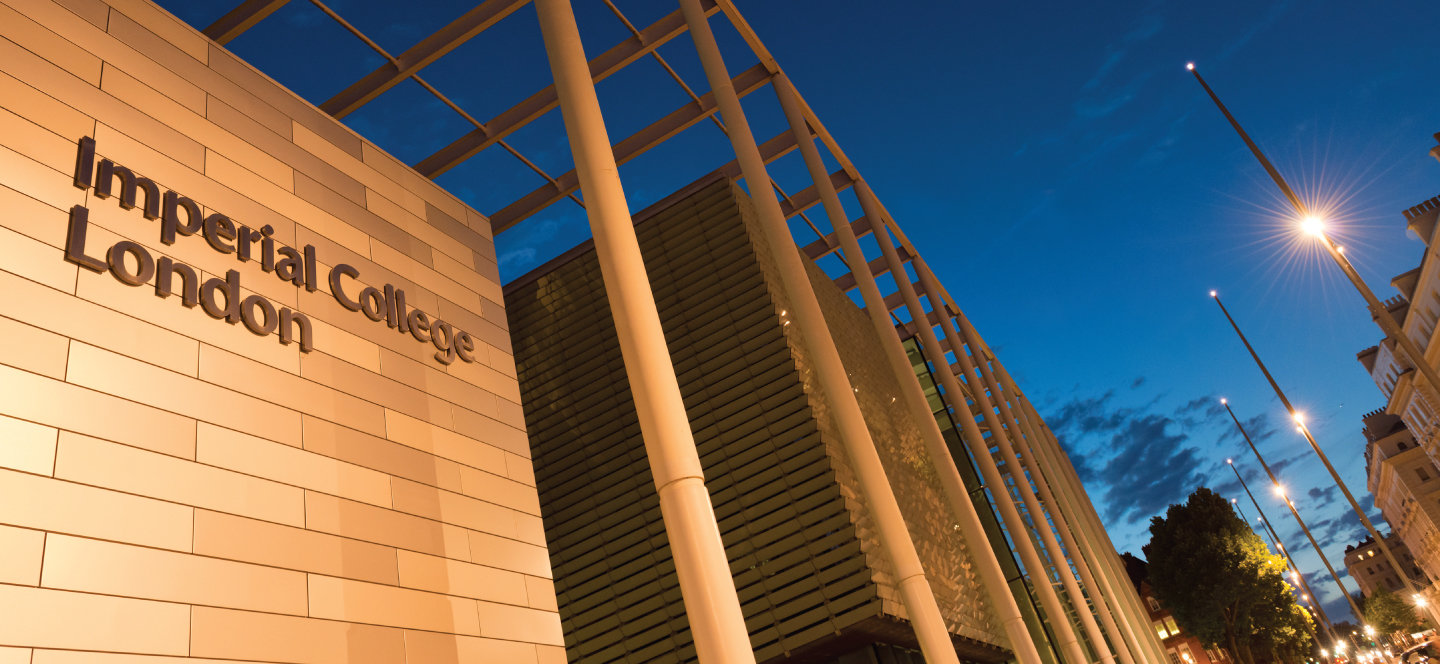
Gianmaria Matrone was born in Pompeii, Italy; he is graduated in Naples University ‘’Federico II’’, and he studied materials engineering and nanotechnology at Milan Polytechnic and he continued his studies in London at Imperial College. His research is supported by the EU and is based on substitution of Silicon (the major source of silicon are the Australian beaches) with polymers, that are cheaper and eco-friendly; for example, polymers are used for building solar panels.

What would you want to do after your studies?

‘’Founds of the EU ends on 2019, for my future I have two possibilities:  go on whit the studies in America or work for a start up in Milan. We would regain the energy covering the substrate like paints, chairs, chandelier etc… and the start up will sell the items such us brushes, paints and substrates. It’s important to a start up, how you sell an idea to carry on the company.’’

Are you going to continue your studies in Italy?

‘’No, it’s complicated because I should convert my English doctorate into Italian one, and I would need a support by lawyer.’’

Does a degree taken in England have the same value in Italy?

‘’Now the degree has an European value; but the problem ,maybe, is that it isn’t recognized with the same title in Italy. In England the magistral degree takes one year while Italian one takes two years, so the problem is about credits.’’

What will happen if the UK came out from the EU?

‘’In this case the UK should revalue her academic mechanisms, that now aren’t tied up entirely to the European dynamics yet.’’

What about the funds of the research?

‘’In my opinion the UK did a wrong choice, because many funds won’t be available neither for the English students noir for the Italian students.’’

According to you, how will this problem be dealt?

‘’The funds that were used for the EU will be spent on research. The private agency will continue to finance researches but are bonded to European projects, so they will lose the 50% of their power.’’

Students of “Elena di Savoia- Piero Calamandrei”

*Interview done by the boys of “Elena di  Savoia- Piero Calamandrei” in the context of the journalistic project on Brexit.

Philip Hammond announces his “first (and last)” Spring Budget

London – by Chiara Fiorillo

After the vote to leave the European Union, the British government is dealing with a lot of important decisions, especially regarding economy. Philip Hammond, Chancellor of the Exchequer since last July, has just published what he called his “first (and last)” Spring Budget.

The changes to National Insurance the Chancellor did are expected to hit 2.5 million people, especially low paid earners. According to critics, this budget plan will mainly hit cabbies and fast-food delivery drivers.

Presenting the budget for 2017, Mr Hammond said this plan will prepare Britain for a “brighter future”, by extending opportunities to young people and delivering further investments in public services. “We are building the foundations of a stronger, fairer, more global Britain,” he said.

The main expenses include, The Independent reports, a £435m package of help for firms to play business rates, £2bn for social care, £330m for hospitals, a £120m fund to ease pressure in A & E departments, more than £1bn for new free schools and £260m to repair existing schools.

Mr Hammond also announced a reduction in the amount of dividends for business owners (from £5000 to £2000) that they can receive from their firms before tax. There has also been an increase in VAT for people making calls from the EU. Some critics warned of a potential tax rise for diesel car drivers.

According to some forecasts released by the Office for Budget Responsibility, Brexit will contribute to a lower growth in 2018-19, 2019-20 and 2020-21. According to official documents, the current growth forecasts are based on a policy that will not push immigration down as Theresa May has declared she wants to do.

This Spring Budget comes after an announcement, made by the Institute for Fiscal Studies, which warned that the amount of tax paid in the UK may soon reach the highest level in 30 years. However, the new rates will take effect in April, so there are still some weeks left to understand and forecast what will happen in a relatively short time.


“We will not pass any law negating the rights of Italian and European citizens”: MP Alberto Costa explains

London – by Chiara Fiorillo

Brexit is still making people discuss and it is creating some confusion. Alberto Costa, Conservative MP, explained what could happen after the exit from the European Union. He spoke to London One Radio, the official Italian radio in London.

The outcome of the EU referendum changed the political scenario. What will happen to Italian people living in the UK?

There should be no panic. Last 23rd June, I and my colleagues gave people the power to decide whether remaining in or leaving an institution called European Union. The community decided to leave it: Great Britain is still part of Europe, but it is leaving the formal institution called EU. We have many Italian residents and students here: things will not change drastically, but we will have a new relationship with the European Union. Great Britain has always been a very open country: before joining the EU in 1972, we accepted many people from all over the world.

When article 50 is triggered, will European citizens have problems in entering and exiting the country?

When article 50 is triggered, there will be many negotiations and the whole process will take up to 24 months. During that period, we will still be part of the EU: people will be able to enter and leave the country normally. After Brexit, European laws will be absorbed into English law and they will be the same until the government decides to change them. There is no reason to panic: nobody will be sent away, because we will not pass any law negating the rights of Italian and European citizens, but only laws changing the future.

MP Alberto Costa

Are you not worried about the negotiations with the EU?

The process will be difficult, but I am sure there will be an agreement in the end, otherwise both our economies would suffer. We want to be clear: even though we are leaving the EU, we still want to see a strong union, because this is very important for the safety of the world.

What about the increase in prices?

The value of sterling decreased by 10% after 23rd June, but this can be a positive sign for tourism. The reality is that Brexit has not begun yet, but we are in a phase of “calm before the storm”. During the storm, we will have to be strong and resist.

 You can listen back to the whole podcast here: 


MPs approve Bill: Brexit begins

London – by Chiara Fiorillo

Yesterday night, 8th February, MPs in Westminster discussed the Brexit Bill. With 494 votes against 122, the Bill allowing Brexit to begin has been approved by the House of Commons. It will now pass on to the House of Lords, entitled to make the final decision. Since the majority of votes has been overwhelming, the Bill can be passed to the House of Lords without any amendment.

Clive Lewis, Shadow Business Secretary, has been one of the 52 Labour MPs who decided not to follow their party’s orders and vote for the Bill instead. As soon as he voted, he resigned as Shadow Secretary, declaring that he could not vote against something he thinks can benefit the country.

If the Bill is approved by the House of Lords, the PM Theresa May will try and trigger the negotiations to take the UK outside of the EU by the end of March.

Moreover, MPs have rejected a Bill to guarantee EU citizens living in the UK permanent residency. With 332 against 290 votes, the Bill did not pass. Among the MPs who voted for it to pass, three (Ken Clarke, Andrew Tyrie and Tania Matthias) are Tories.

Dick Newby, Leader of Liberal Democrats in the House of Lords, said respecting and protecting the rights of EU citizens is among the priorities of his party. He said he is sure Labour Party MPs will support his party when the House of Lords will have to vote for the final Bill.

During the debate, before the vote, the former Culture Secretary Ed Vaizey said the Home Secreary, Amber Rudd, has reassured the Conservative MPs about the status of EU citizens after Brexit. In a letter, he has indeed written that it can change only once the UK leaves the EU. He also said that there will be a new immigration bill: nothing can change for both EU citizens already living in the UK and for those moving now without parliament’s approval.

A spokesman of the prime minister, however, has added that defending the rights of EU citizens living in the UK will also be one of the priorities Theresa May wants to keep in mind while negotiating the exit.

According to Vaizey, who backed Remain during the EU referendum, negotiations will be tough and, he said, MPs who backed Brexit need to reassure EU citizens that their rights will be respected.

Caroline Lucas, Green Party MP, who voted for the amendment, said the refusal of Theresa May to guarantee EU citizens’ rights already now is “immoral”. “What we are talking about are people’s lives. People’s lives are not to be traded as part of some wider deal,” she said.

David Jones, Brexit Minister, said the status of EU citizens will be central in discussing Brexit’s terms, but that it will be wholly defined only once the negotiations to take the UK outside of the EU actually start.

APPROACHING THE FUTURE

Giacomo Borri

Londra


As long as the Brexit goes on, more and more questions arise out. The last one regarding the UK residence rights of EU citizens, as been asked to the Prime Minister Mrs Theresa May by the MP Alberto Costa. He asked her an assurance that would allow him not be involved or vote upon a legislation that would remove these rights. She replied that her interest is to protect these rights. She said that she consider herself able to guarantee the aforementioned rights. Not only, she also wants to provide some sort of warranty even for the rights of UK citizens in the EU. That’s what she hopes for.


The changes that Brexit is bringing with it are constantly evolving, everyone is getting nervous and anxious about his rights and those of his fellow citizens, but the PM seems pretty confident about her capabilities and about the future. Many of the negative aspects of the Brexit are expected to disappear in the long run, that’s why it is recommended to stay calm and bite the bullet in this period of transition.