Better ways to measure the economy than GDP  

London – Creative accounting is a euphemism referring to accounting practices that may follow the letter of the rules of standard accounting practices, but deviate from the spirit of those rules.

The practice of overstating income and understating expenditure is usually associated with large corporation falsifying their financial statements. Enron, Wordcom and Parmalat are the most extreme examples of companies that cooked their books.

Sovereign states are also no stranger to accounting controversies.

In the late 1990s Greece falsified data about its public finances and deliberately obstructed the collection of accurate statistics to fulfil the Maastricht criteria and join the Eurozone.

In 2016 Ireland was criticised for its accounting practices as the country’s Central Statistics Office claimed that the Irish economy grew by 26 percent in 2015.

More recently, attention turned to China. Many analysts are sceptical about the official statistics released by the Chinese government.

In a recent bulletin published by the Federal Reverse Bank of St. Louis, issues with official Chinese government statistics have fostered attempts to obtain better estimates of Chinese GDP, using a wide range of alternative methods.

Change in energy consumption

A method looks at variations in energy consumption. As an emerging economy with a large manufacturing sector, China consumes a lot of energy. Changes in energy consumption may be a good proxy for changes in economic output. Energy usage typically correlates with output and can be verified by third-party data.

According to economist Thomas Rawski, between 1997 and 2000 official figures reported that Chinese real GDP grew 24.7 percent whilst energy consumption decreased 12.8 percent during the same period.

Energy consumption is an imperfect proxy of economic growth. A country’s energy usage could be impacted by several factors external to economic output such as increased efficiency or a shift from an industrial to a service economy.

For this reason, alternative measures have been developed to measure GDP.

Multi-index approach

Most multi-index measures look at a wide array of indicators, including freight volume, passenger travel, electricity output, construction indicators, purchasing managers indices, financial indicators like money supply and the stock market.

Unsurprisingly, all leading multi-index approaches suggest China’s GDP growth is lower than the official estimates.

Li’s index

Perhaps the most popular index for Chinese GDP is the one suggested by and named after Li Keqiang, then China’s vice premier and now premier.

In 2007 Li Keqiang claimed that “Chinese GDP figures are man-made” and unreliable. The Chinese prime minister suggested using electricity production, rail cargo shipments and loan disbursements to estimate China’s true economic performance.

Luminosity index

Another alternative method uses satellite data to measure the intensity of man-made night lights.

Unlike most economic indices, these data are immune to falsification or misinterpretation.

The night-lights data are gathered by Air Force satellites circling the earth 14 times a day. The satellites measure the light intensity emanating from specific geographic pixels, which can be aggregated to subnational, national and supranational levels.

In 2012, economists J. Vernon Henderson, Adam Storeygard and David N. Weil created a dataset using information from night-lights satellites and applied it to estimate GDP growth in countries with low-quality data. Their assessment suggests that between 1992 and 2006 the Chinese economy expanded by 57 percent whilst the official growth rate over the same period is about 122 percent.
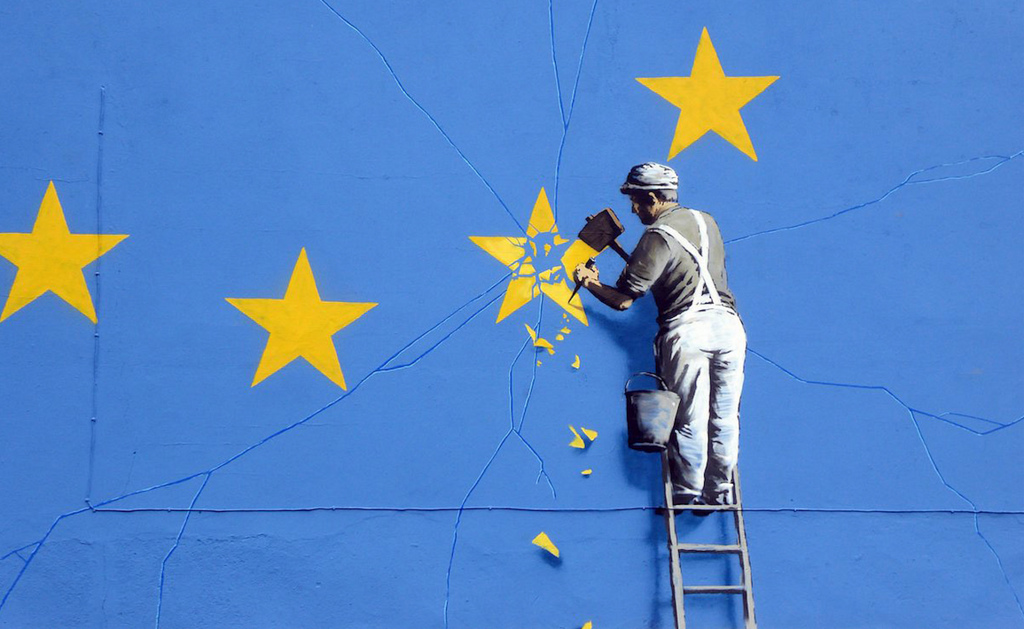
 

Brexodus is real: many banks are leaving United Kingdom because of Brexit

London (Giulia Faloia) – Brexit brings Brexodus. More and more banks are now leaving UK due to the abandonment of European Union.

According to the Financial Times, Treasury and Bank of England are “at loggerheads” over City of London regulation after Brexit.

Chancellor Philip Hammond said he wants to keep Britain closely aligned with the EU’s rules to ensure maximum access to the European market. However the Bank is fearful of any compromise that would leave it as “a rule taker”.

There are different opinions about the kind of relationship between the two sides. According to the Daily Telegraph, they are “very, very bad”, while an unnamed Treasury source tells the Times that the department has a “very good” working relationship with the Bank.

It’s pretty clear that the situation of banks and their employees – as much as their clients – is quite critical, especially if there will be an Hard Brexit.

The Minister Dominic Raab has recently warned people about the possible scenario after a no-deal. In fact according to him customers could be faced with increased rates and major precessing times for euro transactions. He also added that payment costs by credit card between United Kingdom and European Union could increase.

ilsole24ore.com

According to the Minister, there could be problems for British citizens living in countries belonging to European Union. In fact, in case of an Hard Brexit the same customers could loose the possibility of accessing  deposit and loan services and insurance contracts.

British banks have already started to leave Great Britain and probably more and more will follow.

One of the greatest and latest blow to the British economy was the one by Hsbc. In fact the bank has announced that its activities will be transferred to Europe, in France. The seat in London will loose the control on seven European branches: Belgium, Czech Republic, Ireland, Italy, Luxembourg, Netherlands and Spain.

The list of the banks that will leave United Kingdom is destined to get longer. The destinations will mainly be Germany, France, Spain, Ireland and Denmark.

The match between London and Bruxelles is still opened and the possibility to end it with a no-deal is more and more close. Meanwhile Brexodus is real.

Boom post Brexit

Luisa Liu
LONDON- Tourists are taking advantage of the aggressive devaluation in the British currency, the Pound, while Local stores are taking advantage of the money came from tourist: they are ready to rake £9 billion this year, a record. This is just after the Brexit, which is leading the UK into a phenomenal boom.
Just last month, in August, the sales to tourist from US and China have actually increased by 74% and 65%, according to New West End Company, which represents Oxford Street, Bond Street and Regent Street.
Jace Tyrelly, CEO of the Lobby’s Group, said that Brexit was almost good for economy: shopping centres received a lot of great benefits, since more than half of buyers are tourists.
City A. M. asserts that this summer was better than any previous year because of Brexit: it is the first time ever that stores have peaked over £ 9 billion of sales.
The luxury brands are been particularly successful, leading to an hyperbolic growth of the economy. Hope that the growth will go on at this rate. We will see soon what will happen at Christmas.
Definitely incomes from tourists have contributed £52 billion to the British economy.
However, other challenges await us in 2017.
Let us see.

New plastic pound notes

Luisa Liu

LONDON – Just yesterday it was launched 440 million new plastic -£5- notes, which are defined indestructible -even in the washing machine; they have already succeeded in the durability test on a trial run, due to their quality of a flexible thin plastic called polymer. Therefore these notes are resistant to dirt, durable and secure. In fact they mainly aim at preventing the -made in Italy- counterfeit pounds.

Actually the first reaction is that the new note seems fake, but it is not. The new plastic notes are smaller and lighter.
Thanks to some traditional features it is possible to assume if a note is counterfeit or not.
Here are some:
a clear plastic window: a see-through window featuring the Queen’s portrait, the border of which changes from purple to green;
the Elizabeth Tower (Big Ben) shown in gold foil on the front of the note and silver on the back;
a hologram that contains the word “Five” and changes to “Pounds” when the note is tilted;
a hologram of the coronation crown which appears 3D and multi-coloured when the note is tilted;
a green foil hologram of the maze at Blenheim Palace, Churchill’s birthplace and ancestral home;
micro-lettering beneath the Queen’s portrait with tiny letters and numbers that are visible under a microscope;
the words of Bank of England printed in intaglio (raised ink) along the top of the note.
Image result for sterline di carta e di plastica
The new plastic note contributes the recycling process: no more tree cuts and so more environmentally friendly.
Moreover, although the plastic note is more expensive to print than paper one, it is much more durable so that, in the long round, it does worth more and last on average two and and half times longer.
Anyway a big fault still remains: being made of plastic, they could keep sticking one to another, so buyers have to pay attention not to buy £5 and pay £10, instead of many promotional slogans of “buy two and pay one”.
Current paper -£5- notes will be gradually withdrawn from circulation and can be spent as until May 2017, after that you will need to exchange paper -£5- notes at the Bank of England.
More new plastic notes are coming: the £10 note from 2017 (with the face of the Novelist Jane Austen) and the £20 note by 2020 (with the face of the artist JMW Turner), while no decision have been taken yet about the £50 note.
So thanks to these new plastic notes (pounds), there are less counterfeit, less three cuts and more value.
But do not forget to pay attention when you pay: do not pay £10 or £15 instead of £5.

Is Germany’s slowing economy affecting Italy?


No country’s economy is truly independent. International factors are always at play, and trade ensures that states are often reliant on one another. This is particularly true for members of the Eurozone. With one currency uniting most member states, and the European Central Bank, Europe’s economies work as parts of a whole. If one part is sick, then so is every other part. Which is why an economic slowdown in Germany can hurt Italy – badly.

Germany has the biggest economy in Europe and accounts for the creation of a large proportion of European wealth. Germany has long been dragging the Eurozone ahead, even as the Italian, Spanish and Greek economies have struggled.

Without Germany’s help, the Eurozone would probably not have survived its recent debt crisis. And when European consumers are out of pocket, German shoppers fill the void.

A German economic meltdown could be disastrous for the rest of Europe. It would pull many other economies down with it.

Unfortunately, 2016 has not been a strong year for the leading economy.

Germany’s economic slowdown

Germany’s economic woes are closely linked to China’s slowdown. Germany relies on trade of important goods and technology. Machinery, cars, and high-tech energy equipment have been bringing in billions, filling the needs of emerging countries.

But the emerging markets have struggled lately. Middle Eastern countries usually kept afloat by oil money are no longer riding the waves. Russia, facing Western sanctions, is unable to buy expensive equipment.

Germany’s industrial production at the start of the year was at 0%, with customer confidence plummeting. France, one of Germany’s closest trading partners, is struggling economically. The German economy is being weighed down from all sides.

Italy’s debt crisis

Italy has still been unable to rebound from the sovereign debt crisis. This is in large part due to challenging economic conditions and a lack of fiscal stimulus measures, but there are also signs that aspects of the debt crisis remain intact, including nonperforming loans and high unemployment.

Stimulus from the European Central Bank increased optimism, but failed to have the impact hoped for. It is a particularly vulnerable time for Italy’s economy. Headline consumer inflation is currently printing at -0.30%, with falling prices a strong indication of weak demand. Unemployment is at 11.5%, which detracts heavily from GDP growth, as well as consumption.


The German effect

In this context, Germany’s economic slowdown is particularly harmful for Italy. The vulnerable Italian economy is relying on its usual helping hand to pull it forward until it can get back on its own feet. But Germany needs its own help.

Germany’s troubles have a chain reaction. The rest of the Eurozone panics in response with consumer confidence plummeting, leading to more problems for Germany. Already struggling economies confront further unfulfilled expectations, creating a heavier burden for Germany to carry.

It remains to be seen how Germany will recover from this slowdown. Italy’s economy will have to carry itself in the meantime, a feat that will not be straightforward.

ABC ECONOMICS held its first Understanding Brexit conference

 London – on Saturday 20 February at the University of Westminster, ABC ECONOMICS held its first Understanding Brexit conference.

Approximately 70 people attended the event, comprising working professionals, entrepreneurs, academics, students and members of MIE (Movimento Italiano in Europa) and the London European Club.

The event – moderated by Paola De Pascali – was also broadcasted live by LondonOneRadio, with an average of 100 people tuned in at all times.

The conference featured a number of keynote speakers.

Luigi Jacopo Borrello, an academic lecturer, outlined the reasons for a in-out referendum, analysing the political scenarios and how the EU-UK relationship is likely to change in case of Brexit.

Giulia Carnà, a contract lawyer, described the framework around Article 50 of the Lisbon Treaty, explaining the procedures the EU members need to adhere to in order to terminate their membership.

After the coffee break (courtesy of Luadan Future Trade), Stefano Francesco Fugazzi (founder of ABC Economics and author of the bestseller ‘Brexit?’) spoke on the impacts of immigration on occupational wages, presenting the conclusions of a recent Bank of England research paper. Mr Fugazzi observed that “if the UK were to leave the EU, the costs arising from EU regulations would not disappear at all as actually much would depend on what path Britain took outside the EU.

If the UK were to leave the EU to join the European Economic Area (the EEA), it is believed that approximately 93 per cent of the EU’s key regulations would continue to apply.”

Claudio Calogiuri (Solicitor, Partner of Mentor Legal LLP Solicitors) illustrated how immigration law and policies may change under a Brexit scenario. Additionally, Mr Calogiuri remarked on the role of EU nationals in supporting the UK economy.

Conference contents will be published by ABC Economics in due course.

ABOUT ABC ECONOMICS

ABC Economics has been cited on several occasions by the media, making a splash on the front pages of Il

Sole 24 Ore and Il Giornale, mentioned by Otto e Mezzo (a TV programme) and by a handful of Italian blogs,

in addition to Wikipedia and a number of US news portals e.g. Zero Hedge, TV channels and UK radio

stations. Additionally, some of our ABC Economics work was translated into and reported by French and

Russian news portals.


abceconomics.com

IS THERE A PERFECT STORM ON THE HORIZON?

2015 ended with the Federal Reserve (Fed) raising rates for the first time in nearly a decade, a move which intended to signal the end of the so-called “zero lower  bound era”.

My belief is that the US rate hike came too early. True. The economy is expanding; however, inflation is still significantly below the 2% target. Additionally, the remaining US macroeconomic indicators have behaved quite erratically over the past year.

Maybe I am turning into a younger version Dr. Doom – American economist Nouriel Roubini – but I am not optimist at all for 2016.

If things turn nasty, then Fed Governor Janet Yellen may indeed be forced to roll back the rate increase just like former Ecb governor Trichet did in 2011 when he mistakenly thought that a hike would have sustained economic growth.


Here are three patterns to watch out for.

THE CHINESE ECONOMY CONTINUES TO SLOW DOWN. If China slows down, the US economy will slow down and play a knock-on impact on the World Economy. With the eurozone growth being already fragile, it would take very little to wipe out any (small) progress.


A BANKING CRISIS ERUPTS IN THE EUROZONE.

2016 could expose some weaknesses in the European banking sector as higher Basel III capital and liquidity requirements continue to be implemented. Watch-out for the Italian regional and cooperative banks. They are under pressure and could crack like German landesbanks did few years ago.

RUSSIA, MIDDLE EAST AND COMMODITIES. The third element to be wary of arises from geopolitical uncertainties. Brent oil, historically a geopolitical thermometer, and other energy commodities are currently (and many believe ‘artificially’) kept low.

Many countries that rely massively on natural resources could begin to struggle and implode if commodity prices do not return to mid-2014 levels. I am not a meteorologist. However I can see storm clouds gathering. Can’t you?
 [foto businessinsider.com – sputniknews.com 

THE GOLD UNDER OUR OWN FEET

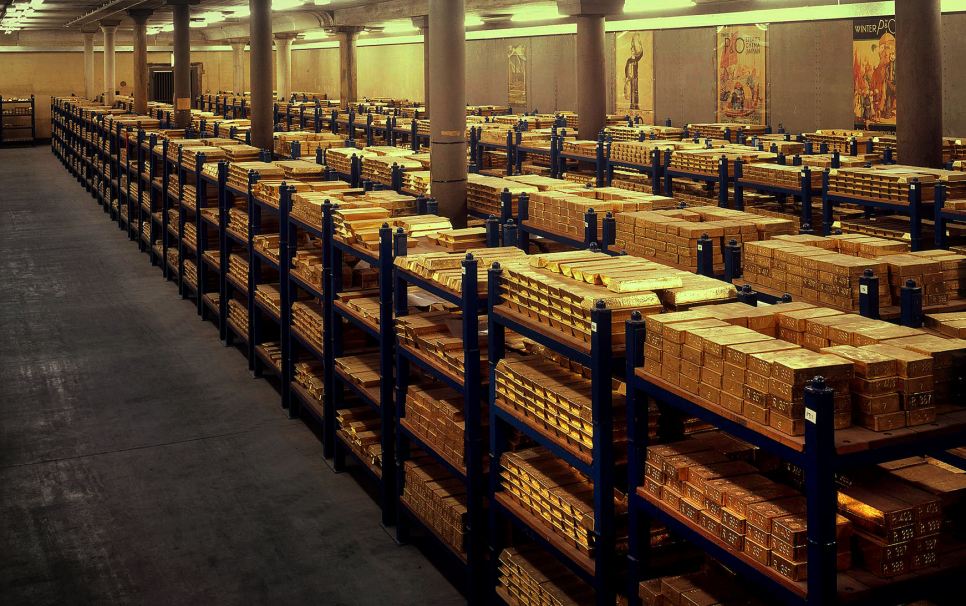
Under the streets of London is hidden one of the bigger gold reserve of the world.
We are talking about the wealth of the English empire which amount at lots of billions. It is contained in the dungeon of the Bank of England, in a rich zone of London: Bank.

This gold is used as guarantee of the moneys in circulation, so the sum of the banknotes values corresponds to the gold value.
During the worst period of the English economy the queen Elizabeth II showed her people the wealth of the reign reassuring them about the situation.

There is also a museum behind the main office of the bank where there is a collection of all the banknotes that have been ever used in Britain included the “ one pound banknote ” existed till 1984. Thanks to this collection one can follow step by step the story of the National Bank of England.


There is also one of the several ingots that appertain at the British gold reserve and you can touch it: a piece of gold which weighs more than thirteen Kilos… but no, you can not stole it.

Chief Customer Officer showcases importance of hospitality and service at global travel conference.

Chief Customer Officer showcases importance of hospitality and service at global travel conference. Rome, 22 September 2015 – Alitalia Chief Customer Officer, Aubrey Tiedt, has given travel industry professionals at the Future Travel Experience conference in the United States an insight into how the Italian carrier intends to transform its guest experience.

During her presentation at the event in Las Vegas, Nevada, Ms Tiedt explained to delegates how the new Alitalia onboard experience is being redefined and how the airline’s cabin crew are being empowered to realise this vision. Ms Tiedt spoke about Alitalia’s guest-centric vision where hospitality is the winner. She also explained about Alitalia’s clear strategy and direction to introduce real and lasting change.

Ms Tiedt said that the key differentiator for Alitalia is the passion of the airline’s workforce. Aubrey Tiedt said: “The transformation taking place at Alitalia is unprecedented with a complete restructuring of the business which is aimed at making us one of the world’s leading airlines.

At the heart of this change are our employees. “The goals of the new Alitalia are achievable because we are giving our people, especially cabin crew and ground service agents, the tools they need to shine and the response so from our guests is extremely positive.” Ms Tiedt told delegates in Las Vegas that cabin crew in the new Alitalia are the “style and image “of the airline’s brand and that everyone will be trained to think of themselves as a marketing expert and talented innovator, to be business oriented and hospitality focused.

Alitalia has introduced specialised hospitality-focused training programs as part of its drive to empower cabin crew and the airline continues to work closely with its strategic partner Etihad Airways. This training includes customer excellence workshops, leadership workshops, and business awareness workshops. By end of year 3,600 cabin crew will have completed customer excellence training and 160 senior cabin managers have already completed their leadership training.

The Alitalia brand continues to evolve and the airline launched a new livery earlier this year as well as elegant new inflight product, which includes Poltrona Frau leather seats in Business and First Class. Alitalia will also launch a new range of cabin crew uniforms.

The new interiors, décor, and furnishings incorporate modern Italian design and embody innovation and sophisticated service. There is also a new ‘Dine, Relax, Retire’ concept that gives premium guests greater choice and control about how they spend their time during the flight.

Premium economy on Alitalia flights has also been significantly upgraded with an enhanced menu and service delivery that includes the introduction of limoncello as a ‘signature moment’ as well as espresso coffee and herbal teas.

There are also new meal choices and contemporary tray presentation, fine wines and warm bakery items in the Economy cabin as well as a caffè service on long haul flights, including freshly brewed Lavazza coffee.


Alitalia – Società Aerea Italiana (alitalia.com) is Italy’s largest airline and commenced operations on January 1, 2015 after acquiring the operational activities of Alitalia – Compagnia Aerea Italiana, now named CAI. CAI has a 51% controlling stake in Alitalia and the remaining 49% of shares are owned by Etihad Airways, the national airline of the United Arab Emirates. As part of its 2015 summer schedule, Alitalia flies to 102 destinations, including 27 Italian and 75 international destinations, with a total of 164 routes and about 4,500 weekly flights. Alitalia boasts one of the most modern and efficient fleets in the world with an average age of eight years. It is a member of the SkyTeam alliance and is part of the Transatlantic Joint Venture alongside Air France-KLM and Delta Air Lines. Alitalia also collaborates with the other Etihad Airways Partners – airberlin, Air Serbia, Air Seychelles, Etihad Airways, Etihad Regional operated by Darwin Airline, Jet Airways and NIKI – in order to offer customers more choice through improved networks and schedules and enhanced frequent flyer benefits. Alitalia and Etihad Airways have been named Official Global Airline Carriers of Expo Milano 2015.

Summer Budget edition of News for Small Business.

George Osborne, today delivered his first Budget from the new Conservative majority Government.


 8th July 2015Personal Allowance to be increased to £11,000 in April 2016

Chancellor, George Osborne has moved quicker than expected to increase the tax-free Personal Allowance from £10,600 in 2015-16 to £11,000 in April 2016.

Previous forecasts were that the allowance would be raised from the current £10,600 to just £10,800 but an additional £200 of tax free income has now been formally granted.

During his Summer Budget 2015, Mr Osborne reaffirmed his commitment to raising the tax-free Personal Allowance to £12,500 by the end of the Parliament, whilst also pledging to increase the allowance in line with inflation during the next five years.

The Chancellor labelled the move as “a down payment for a country on the up”.

“Our priority is not to raise taxes for working people but to cut them,” said Osborne.

“These were our priorities at the election and they are the priorities of this Budget. Rates of income tax in this Budget remain unchanged but the thresholds do not.”

Increases to the main rates of income tax have been ruled out by the Chancellor, but the higher rate tax threshold will rise from £42,385 in 2015-16 to £43,000 in 2016-17 and to £43,600 in 2017-18.

The move in itself could save £1,300 a year for workers earning between £50,000 and £100,000, according to reports.


Mortgage interest tax relief limited for buy-to-let landlords8th July 2015Mortgage interest tax relief limited for buy-to-let landlords

Buy-to-let landlords will only be able to offset mortgage interest at the basic rate of tax by 2020, Chancellor, George Osborne has announced at today’s Summer Budget 2015.

At present, landlords pay income tax on the rent they recoup by declaring the amount they earn on a Self-Assessment tax return.

The tax is charged in line with their normal income tax banding – which stands at 20 per cent for basic-rate taxpayers, 40 per cent for higher rate taxpayers and 45 per cent for additional-rate payers.

The wealthiest landlords receive tax relief at 40 per cent and 45 per cent but the Chancellor’s rule change means tax relief will be capped at 20 per cent for all landlords.

Mr Osborne says the move has been made to create a “level playing field” between prospective landlords and those buying their homes to live in.

“Buy-to-let landlords have a huge advantage in the market as they can offset their mortgage interest payments against their income, whereas homebuyers cannot,” said Osborne.

“And the better off the landlords, the more tax relief they get.”

The Chancellor said this had contributed to the rapid growth in buy-to-let properties across the country, which reportedly accounted for 15 per cent of all mortgages taken out this year.

“So we will act – but we will act in a proportionate and gradual way, because I know that many hardworking people who’ve saved and invested in property depend on the rental income they get,” added Osborne.

Osborne also confirmed that from April 2016, the existing ‘wear and tear’ allowance will also be replaced. The allowance lets landlords reduce the tax they pay whether or not they replace furnishings in their property.

A new system will be implemented in its place to only allow tax relief for landlords when they actually replace furnishings.