Brexit: EU students’ status fee should be clarified for 2019, as Mr McClellan said from University of Westminster

London (Rosita Pirulli) – Jim McClellan, course leader of BA Journalism degree at  University of Westminster, said they are hoping ‘that the Government clarifies what the fee situation will be for EU students’.  

Brexit keeps affecting the education environment, by undermining uncertainty among foreign students who would like to study in London.

The ‘global city’, as Mr McClellan called it, even though is still attracting people thanks to its wide range of universities and working experiences, has changed the atmosphere for some of them since Brexit happened.

The referendum has, in fact, left some students worried until now. The forecasts for 2019, when the UK will definitely leave the EU in March, are still undefined, whereas a small inflation has already affected their fees.

From £9000,00 to £9250,00 per year, was the increase perceived within less than a year since Brexit, an amount that the Government assured will be capped for the 2018 entry cycle.

‘That is an increase based on inflation, so it is a small increase’ said Mr McClellan on LondonOne radio in occasion of Brexit Special show.

Nevertheless it hits home/EU pupils’ pockets as well as London’s universities that could get a loss of applications from Europeans in the future.

University of Westminster is included in that list, an environment valued as an interacting place that attracts talents from around the world.

Ranked as one of the pioneering universities in media and communication, it always distinguished itself by being the first Polytechnic born in the UK in 1838 and well known in all Europe for its first photographic portrait studio opened in 1841.

Since it also engaged people currently famous, such as Nick Mason and Roger Waters, the Pink Floyd’s founders, its image rose up that now is divided in 4 campuses: Regent, Marylebone, Cavendish and Harrow, where Jim McCclluen gives his lectures at Journalism course.

By speaking on London One Radio, Mr McCcullen explained that Westminster University still remains opened to both EU and International students, but he recognises the worries shown by Europeans as well as by the University itself.

So the real matter, according to Mr McClellan is not just about the inflation seen this year, but is regarded to:

‘Whether EU students will be seen as the same as overseas students, so students from outside the EU or whether there will be a new rate for EU students’ – he said.

The fees reckoned for internationals in London are variable depending on the courses and universities they choose. For example, a standard degree course, at the moment, got a range between £11,500 and £ 15,340 or they can also reach a target of £35,000, if they study medicine.

Will Europeans be seen as overseas students once the UK will be out of the EU?

The Government should clarified this position, the lecturer said, because if that happens and ‘the fees go up, then maybe they won’t be able to make that journey and that will be so sad for them and also for us’.

Europeans have always been a good opportunity to get more and new ideas that helped this University to enlarge their capabilities and faculties’ offers, if that happens ‘will affect if they people want to come’.

While their questions have no answers at the moment, University of Westminster keeps its welcoming status as its core value, hoping that from 2019 onwards the future EU students will get the chance to study in London easily, as many others are currently doing.
Brexit: Theresa May’s updates about EU citizens’ rights

London – Breaking News

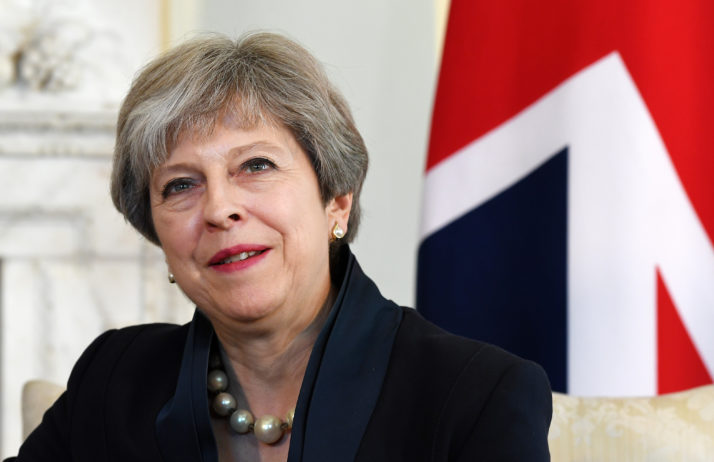
Theresa May gives updates about EU citizens’ rights, her priority in Brexit negotiations. She appeals direct to the three million EU nationals living in the UK: I want you and your families to stay.  

Prime Minister Theresa May will today promise to make it as easy as possible for EU citizens to obtain settled status in the UK. She will do it via  an open letter to EU citizens living in Britain, through which the PM will say the Government and Brussels are in ‘touching distance’ of reaching an agreement on citizens’ rights.

And she will promise that the process for the EU nationals to register to stay in the UK will be ‘streamlined’ – with EU citizens having a direct say over how it will work.

They will be invited to sit on a new User Group that will ‘meet regularly, ensuring the process is transparent and responds properly to users’ needs.’

Before having a deeper look at the new project that involve europeans to obtain their settled status after Brexit, let’s discover what The PM says   ahead of the October European Council:

‘As I travel to Brussels today, I know that many people will be looking to us – the leaders of the 28 nations in the European Union – to demonstrate we are putting people first.

‘I have been clear throughout this process that citizens’ rights are my first priority. And I know my fellow leaders have the same objective: to safeguard the rights of EU nationals living in the UK and UK nationals living in the EU.

‘I want to give reassurance that this issue remains a priority, that we are united on the key principles, and that the focus over the weeks to come will be delivering an agreement that works for people here in the UK, and people in the EU.

‘When we started this process, some accused us of treating EU nationals as bargaining chips. Nothing could have been further from the truth.

‘EU citizens who have made their lives in the UK have made a huge contribution to our country . And we want them and their families to stay. I couldn’t be clearer: EU citizens living lawfully in the UK today will be able to stay.’,

In a message posted on the PM’s Facebook page, and sent direct to 100,000 EU nationals who have asked to receive updates on Citizens’ Rights, she will add: ‘We are in touching distance of agreement. I know both sides will consider each other’s proposals for finalising the agreement with an open mind And with flexibility and creativity on both sides, I am confident that we can conclude discussions on citizens’ rights in the coming weeks.

‘I know there is real anxiety about how the agreement will be implemented. People are concerned that the process will be complicated and bureaucratic, and will put up hurdles that are difficult to overcome. I want to provide reassurance here too.

‘We are developing a streamlined digital process for those applying for settled status in the UK in the future. This process will be designed with users in mind, and we will engage with them every step of the way.’

Furthermore, the PM commits to:

• No longer requiring EU citizens settling here to have to demonstrate Comprehensive Sickness Insurance, as they currently have to under EU rules.

• Keeping the cost of the settlement process as ‘low as possible’

• Establishing a simple process to allow people who already have Permanent Residence to swap this for the new settled status

Then she will turn to EU citizens again, adding and concluding via her direct message:

‘To keep development of the system on track, the Government is also setting up a User Group that will include representatives of EU citizens in the UK, and digital, technical and legal experts.

‘This group will meet regularly, ensuring the process is transparent and responds properly to users’ needs. And we recognise that British nationals living in the EU27 will be similarly concerned about potential changes to processes after the UK leaves the EU. We have repeatedly flagged these issues during the negotiations. And we are keen to work closely with EU Member States to ensure their processes are equally streamlined.

‘We want people to stay and we want families to stay together. We hugely value the contributions that EU nationals make to the economic, social and cultural fabric of the UK. And I know that Member States value equally UK nationals living in their communities.

‘I hope that these reassurances, alongside those made by both the UK and the European Commission last week, will provide further helpful certainty to the four million people who were understandably anxious about what Brexit would mean for their futures.’

Patrick Stewart, speaks about the importance of the EU and how it has been an integral part of his life.

Patrick Stewart supporting the pro-EU cause in an exclusive video message for the People’s March for Europe in Central London.
Renowned actor Patrick Stewart is supporting the pro-EU cause and encouraging the public to get behind the Remain movement.
People’s March for Europe, which will take place in central London on the 9th September 2017, released an exclusive video of Patrick talking about the importance of the EU and ‘project Europe’.  The video with Patrick’s message has gone viral on Facebook and started a heated online debate on the subject of Brexit.

‘As the Brexit negotiations reveal the complexity of the divorce proceedings the public is becoming more aware of the dire effects this momentous decision will have on the UK economy and standard of living. We believe the tide of public opinion is turning against Brexit as people realise the benefits of ‘project Europe. Having Patrick’s support for the pro-EU cause is very encouraging and important.’’  – said Graham ‘Anti-Farage’ Hughes, the spokesperson for the People’s March for Europe.

The People’s March for Europe, is an independent body that supports and facilitates marches and direct activism against Brexit through unifying local grass root activist groups. The march is wholly crowdfunded by the public, non-partisan and independent. They are currently raising the funds for the event through GoFundMe – https://www.gofundme.com/peoplesmarch4eu

There are a number of planned Pro-EU marches taking place across UK in September and October, under the banner of The Autumn of Discontent.  ‘The will of the people is changing and the amount of protest activity reflects this. We need the government to stand up and listen instead of taking us down this path of madness and destruction.’ – Graham ‘Anti-Farage’ Hughes.

“We will not pass any law negating the rights of Italian and European citizens”: MP Alberto Costa explains

London – by Chiara Fiorillo

Brexit is still making people discuss and it is creating some confusion. Alberto Costa, Conservative MP, explained what could happen after the exit from the European Union. He spoke to London One Radio, the official Italian radio in London.

The outcome of the EU referendum changed the political scenario. What will happen to Italian people living in the UK?

There should be no panic. Last 23rd June, I and my colleagues gave people the power to decide whether remaining in or leaving an institution called European Union. The community decided to leave it: Great Britain is still part of Europe, but it is leaving the formal institution called EU. We have many Italian residents and students here: things will not change drastically, but we will have a new relationship with the European Union. Great Britain has always been a very open country: before joining the EU in 1972, we accepted many people from all over the world.

When article 50 is triggered, will European citizens have problems in entering and exiting the country?

When article 50 is triggered, there will be many negotiations and the whole process will take up to 24 months. During that period, we will still be part of the EU: people will be able to enter and leave the country normally. After Brexit, European laws will be absorbed into English law and they will be the same until the government decides to change them. There is no reason to panic: nobody will be sent away, because we will not pass any law negating the rights of Italian and European citizens, but only laws changing the future.

MP Alberto Costa

Are you not worried about the negotiations with the EU?

The process will be difficult, but I am sure there will be an agreement in the end, otherwise both our economies would suffer. We want to be clear: even though we are leaving the EU, we still want to see a strong union, because this is very important for the safety of the world.

What about the increase in prices?

The value of sterling decreased by 10% after 23rd June, but this can be a positive sign for tourism. The reality is that Brexit has not begun yet, but we are in a phase of “calm before the storm”. During the storm, we will have to be strong and resist.

 You can listen back to the whole podcast here: 


MPs approve Bill: Brexit begins

London – by Chiara Fiorillo

Yesterday night, 8th February, MPs in Westminster discussed the Brexit Bill. With 494 votes against 122, the Bill allowing Brexit to begin has been approved by the House of Commons. It will now pass on to the House of Lords, entitled to make the final decision. Since the majority of votes has been overwhelming, the Bill can be passed to the House of Lords without any amendment.

Clive Lewis, Shadow Business Secretary, has been one of the 52 Labour MPs who decided not to follow their party’s orders and vote for the Bill instead. As soon as he voted, he resigned as Shadow Secretary, declaring that he could not vote against something he thinks can benefit the country.

If the Bill is approved by the House of Lords, the PM Theresa May will try and trigger the negotiations to take the UK outside of the EU by the end of March.

Moreover, MPs have rejected a Bill to guarantee EU citizens living in the UK permanent residency. With 332 against 290 votes, the Bill did not pass. Among the MPs who voted for it to pass, three (Ken Clarke, Andrew Tyrie and Tania Matthias) are Tories.

Dick Newby, Leader of Liberal Democrats in the House of Lords, said respecting and protecting the rights of EU citizens is among the priorities of his party. He said he is sure Labour Party MPs will support his party when the House of Lords will have to vote for the final Bill.

During the debate, before the vote, the former Culture Secretary Ed Vaizey said the Home Secreary, Amber Rudd, has reassured the Conservative MPs about the status of EU citizens after Brexit. In a letter, he has indeed written that it can change only once the UK leaves the EU. He also said that there will be a new immigration bill: nothing can change for both EU citizens already living in the UK and for those moving now without parliament’s approval.

A spokesman of the prime minister, however, has added that defending the rights of EU citizens living in the UK will also be one of the priorities Theresa May wants to keep in mind while negotiating the exit.

According to Vaizey, who backed Remain during the EU referendum, negotiations will be tough and, he said, MPs who backed Brexit need to reassure EU citizens that their rights will be respected.

Caroline Lucas, Green Party MP, who voted for the amendment, said the refusal of Theresa May to guarantee EU citizens’ rights already now is “immoral”. “What we are talking about are people’s lives. People’s lives are not to be traded as part of some wider deal,” she said.

David Jones, Brexit Minister, said the status of EU citizens will be central in discussing Brexit’s terms, but that it will be wholly defined only once the negotiations to take the UK outside of the EU actually start.

UK’s ambassador to the EU has announced his early resignation

London – by Rosita Pirulli

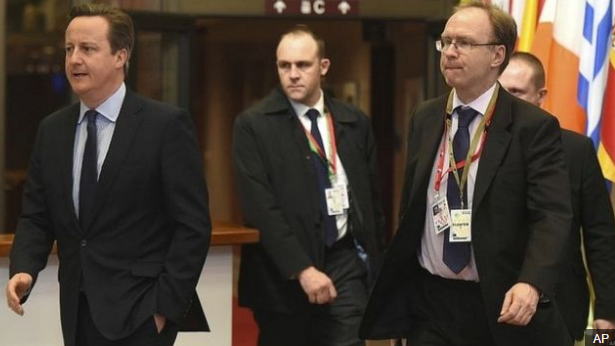
Sir Ivan Rogers, UK’s ambassador to the EU, has stepped down amid Brexit procedures.

He announced the news on Tuesday, blowing up critiques and celebrations in the House of Parliament.

Lord Mandelson, the former EU trade commissioner, and Nicholas Macpherson, the former treasury chief, considered his resignation as a “serious loss” for the UK, especially during the beginning of negotiations with Europe. Sir Rogers conducted, under David Cameron’s government, the renegotiation with EU before Brexit and he is described as the most experienced diplomat in the Whitehall. As a result, for most of the MPs and senior officials his departure is not a good thing.

On the other hand, this news has highlighted new and positive intentions for the pro-Brexit political side: the former ambassador was seen as a pessimistic image by the pro-Brexiteers. In fact, Nigel Farage recommended: “I think it would be appropriate if a lot more people in that position, British ambassadors, left. The world has changed. The political establishment in this country and the diplomatic service just doesn’t accept the vote.”

When the ambassador revealed the 10 years process to negotiate a free-trade deal with Europe, he received critiques by the Eurosceptics, who are now willing to welcome an optimistic image capable to lead the UK towards a great future.

Regarding Rogers’ discharge and replacement, Nigel Farage added: “She (Theresa May) should welcome it with open arms and put a firm Brexiteer in the position. Somebody who recognises that the world has changed, somebody tough, so we can get on with Brexit.”

In the meantime, concerns have affected both political sides: if the triggering of the article 50 starts by the end of March, as it wishes, the next ambassador should be elected as soon as possible. However a source from the Whitehall declared that: “It (Rogers’ departure) won’t affect any of the article 50 timetable at all.”

At the moment, comments and concerns are the only sources covering the English press; recommendations and news about the new ambassador have not been revealed yet.