BARBARA PANETTA – Chloe’s Promise

(by Stefania Del Monte)

Barbara Panetta is the author of Chloe’s Promise, an alluring new children’s book and video initially raising funds in favour of the NHS and now supporting Momentum Children’s Charity.

Originally from Italy, Barbara is currently based in Richmond, Surrey, where she lives with her husband, two children and a golden retriever. This is not her first book: her language studies and interest in psychology drew her to write her first novel Ricordi in movimento (2015). She also curated several publications.

We are eager to find out how the idea of Chloe’s Promise was born:

It was all very sudden! – reveals Barbara – One day I was in my garden listening to one of my daughters practising the piano, when I noticed a column of ants struggling to collect a biscuit crumb that had fallen to the ground. This set my thoughts in motion and the idea for Chloe’s Promise germinated”.

Author Barbara Panetta

Once the story had been outlined, Barbara worked together with children’s psychologist Giovanna Campolo to ensure that the words used and the morals were appropriate for children of three years and above. The result is a charming, illustrative work that is sure to engage any child.

The story – she explains – is about a little ant named Chloe and her brothers and sisters. The main focus is the relationship between adults and young children, and especially the ways in which they both learn to trust and respect each other and the choices they make”.

The book is enriched by beautiful illustrations sketched by Barbara, who is not an illustrator but used her passion to produce some pretty drawings. She has used watercolour rather than digital processing, to keep it as simple as possible.

Later, graphic designer Aurelio Scalabroni intentionally added spots of colour in most of the pages, giving the impression of an unfinished work and sharing with readers the idea that nothing is perfect.

Through such illustrations and the use of simple language, children can therefore identify with the main characters, comparing themselves to hard working, determined and disciplined ants.

Chloe’s Promise aims to raise charity funds:

“Since the beginning – affirms Barbara – my intention was to support storytelling at home between parents and children during the COVID-19 crisis. I believe that at difficult times we can all contribute, in different ways. I also really wanted to help children in need, therefore all profits generated from the book are donated to a local registered charity called Momentum Children’s Charity, who is supporting children with cancer or life challenging conditions. I wish my book could bring a big smile to all those unfortunate children”.

This is both a print and a video book benefiting from the collaboration of Ben Shephard, presenter of ITV’s Good Morning Britain and Tipping Point, who proudly agreed to narrate the story, and musician Alessandro Viale, author of the soundtrack.

Viale talks enthusiastically of this special project:

It has been a lot of fun! – he says – This involved composing, selecting and performing. Because of the lockdown, I had to find creative ways to work without moving from home. This is why I ended up recording on a very ancient English Broadwood square piano made in 1815. I tended to play different pieces according to my mood and, when inspiration struck, compose something new. Therefore, I identified with the little ant Chloe and with all the feelings emerging from the story. She loves Chopin (and Tchaikovsky) but, sometimes, she just reacts to what happens by putting her hands on the piano and improvising”.

Barbara, whose daughters both play the piano and the cello since they were three years old, agrees with Viale in believing that it is very important for children to familiarise with music from an early age:

“I think music can help to express the vast amount of new emotions that a child undergoes while growing. I am very happy that little Chloe decided to spend her day relaxing and playing the piano: no surprise that the day after she was able to work even harder!”.

Featured image:
The illustrated cover of Chloe’s Promise
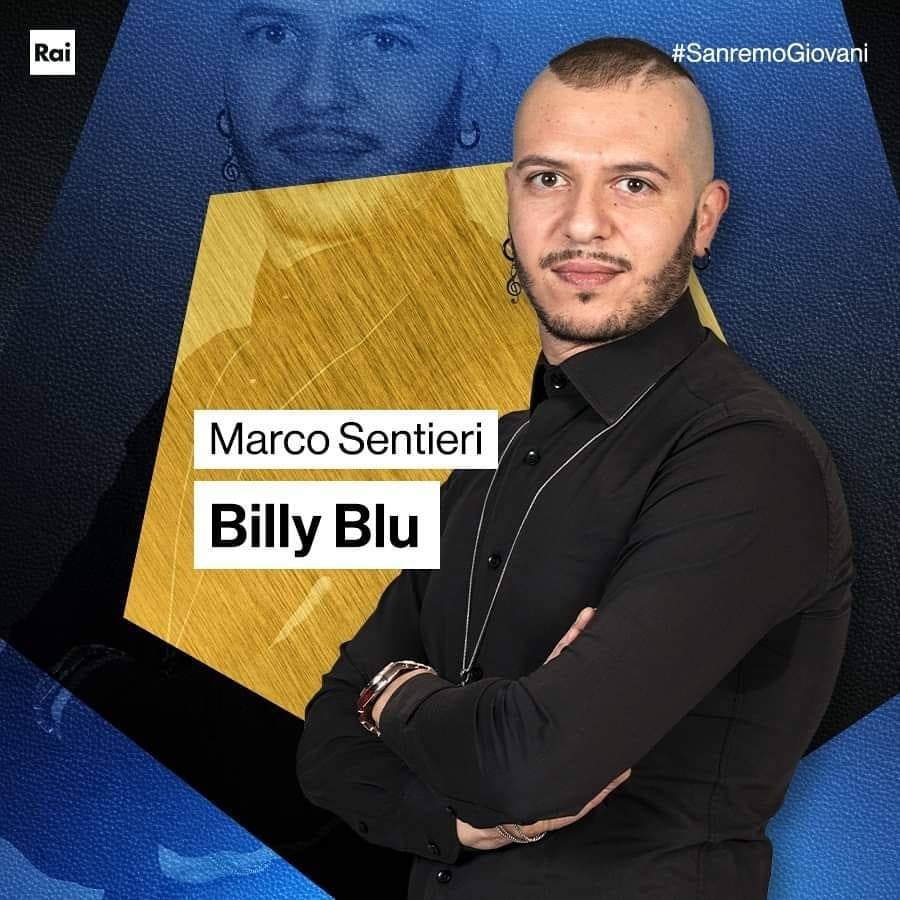
 

MARCO SENTIERI – Billy Blu, from Sanremo to school desks

(by Stefania Del Monte)

Among the undisputed protagonists of the last Sanremo festival, with the song Billy Blu, there is Marco Sentieri. Married with two children, his real name is Pasquale Mennillo. The choice of the stage name is due to a combination of factors:

“This pseudonym – reveals Marco – was born around the year 2000, when I decided to pursue a solo career. My name seemed too common and therefore from the union of Marco, a name that I had always liked since I was a child, and Sentieri, inspired by the soap opera of the 90s that I watched together with my mother, ‘Marco Sentieri’ was born”.

Born in Casal di Principe, in the province of Caserta, on 11 June 1985, Marco joined the music scene at a very young age: at only 16 he left his native land and moved to Rome. His career officially begins precisely in this period, with the establishment of the Quarto Senso group and the subsequent participation in Sanremo Rock Giovani:

“Let’s say – he confirms – that with Quarto Senso we started doing more national and important things, compared to the previous 3 or 4 years, in which I was already making music anyway. Quarto Senso was the first band I formed and with which, in fact, we reached the finals of Sanremo Rock in 2002”.

After a great wealth of experience accumulated in the music field, in 2016 the participation in Romania, in the bootcamp of X-Factor, arrives. Here Marco’s career undergoes a surge:

“In Romania I received a lot of affection! – he declares, enthusiastically – There, they love Italians very much and I am still being followed assiduously, through my social pages. On a personal level, working in that context did not represent major differences compared to Italy, mainly because the X-Factor format is the same throughout Europe, but the warmth of people has been truly unforgettable”.

Upon returning to Italy, Sentieri starts a series of collaborations with artists of the same genre and opens concerts for names like Rocco Hunt, Clementino and the Gemelli Diversi group. Someone called his music a mixture of rap and trap, a genre that definitely meets the tastes of the new generations. Marco, however, is keen to specify:

“I think my music is more of a pop-rap. I don’t think I’m getting closer to the trap world. Among the various definitions, I was particularly struck by the one in which I was considered ‘the glue between the old and the new generation’, capable of arousing emotions in both age groups: I really like this way of being seen by the public”.

At the last Sanremo festival, Marco Sentieri competed in the New Proposals category against names such as Eugenio in Via Di Gioia, Fadi, Fasma, Gabriella Martinelli and Lula, Leo Gassmann (later winner), Matteo Faustini and Tecla Insolia. His song Billy Blu bears the signature of a great author, Giampiero Artegiani, who passed away in 2019, and addresses the topic of bullying. We are curious to understand Marco’s link with Artegiani:

“Unfortunately – he reveals – I have never known him personally. One of his best friends, Maestro Adelmo Musso, asked me to listen to the song and I immediately felt a strong emotion. I still didn’t know who the author was, but I decided at once to try my hand at the project, making Billy Blu become ‘a song of mine’, sewing it on me, and I think this thing was noticed. The song – he continues – was welcomed into the world of music as I never expected. First among young people on Spotify, in the week after the festival; then, with thousands of reviews on social media. I was defined by the press as the moral winner of the festival. In short, I would say that better than that it could not go!”.

Among other things, the song emphasizes that the phenomenon of bullying is the mirror of an increasingly life frantic, which diverts the attention of parents away from their children.

“I think one of the major causes is precisely this” – reiterates Marco.

And exactly with the aim of bringing young people closer to this theme, immediately after the Sanremo festival Billy Blu became a traveling project for Italian schools, unfortunately temporarily blocked due to the Coronavirus emergency.

“We had already started planning the tour for primary and secondary schools – confirms Sentieri – bringing Billy Blu on school desks to try and sensitize the kids. Now schools are closed, but as soon as possible we will continue what we started. We need to talk a little bit more about this phenomenon, because it can be a really ruthless form of violence.

In the meantime, not even isolation stops Marco Sentieri:

“I’m working on my new album – he reveals – and I hope it can be released later this year!”.

Images courtesy of Marco Sentieri

CLAUDIO GUERRINI – Once upon a (first) time

by Stefania Del Monte

RDS radio presenter, correspondent for La Prova del Cuoco on Rai1, presenter and commentator on TV programs,  collaborator of the weekly magazine Vero, animator and deejay of musical and cultural events and, recently, also author with the book C’era una prima volta (Once upon a first time): Claudio Guerrini, one of the most well-known and appreciated voices on the Italian national radio scene, is a polyhedric and versatile figure. We met him to talk about his professional career, mirror of a multifaceted and unstoppable personality.

Claudio, you made your professional radio debut, quickly joining national radio networks. Is that what you always wanted to do or did you have other dreams as a child?

I had many, maybe too many dreams. In a few years I cherished the dream of being a tennis player, commentator, journalist, deejay, radio and television presenter. I was a little confused, I admit it. I tried to do everything, some things I did well, some others I didn’t. But it could have been worse…

Your program within the RDS program is very popular. Can you tell us more about it?

It’s a program born when I started conducting early afternoon, first alone, then with Rosaria Renna. Over time, the first imitations, the first squabbles, the first columns were born almost by chance. We immediately had an excellent response from the public and so, when Rosaria abandoned me to go to RMC, I asked the management to continue the journey with Roberta Lanfranchi: she and the company accepted and for three years we have been on the air with the Guerrini & Lanfranchi Show.

This year marks your twenty years of collaboration with RDS. What has changed in the way of doing radio, from 2000 to today?

Really??? So many! I didn’t know, thanks for the news! The main difference is the increasing interaction with the web and now with social networks. Once when I played music I rested, now I take pictures, stories, manage Facebook or Instagram both for the radio profiles and for my personal. Practically a double job!

In 2006 you made your television debut. What attracted you to the small screen?

The ability to express myself in different ways. The radio is always fascinating but more repetitive, it is based precisely on the familiarity and affection of listeners. On TV you can happen to do completely different things, sometimes opposite. I acted in the candid camera, I was a columnist, a judge, I recited poems, I conducted a program on cinema, a sportsman, I worked for La prova del cuoco and Buono a sapersi on Rai1. .. I like to express myself in different ways, I believe that versatility is one of my (few?) strengths.

Besides doing radio and television, you also do a lot of other things. Can you tell us about them?

Well, to be able to speak directly with many people, first of all you need to get informed, so I read everything, I get daily information from the websites of the main Italian and international newspapers. Then books, films (especially from the 60s and 70s), sports and, of course, I keep my social profiles updated.

Your first book was recently released, entitled C’era una (prima) volta/Once upon a (first) time. What is it about?

It is an almost educational book. Thanks to the direct testimonies of the protagonists, I have told the professional beginnings of many successful characters, from Enrico Mentana to Giuliano Malagò, Noemi, Sandra Milo, Paolo Genovese, Michele Guardì, Dario Ballantini, Paolo Rossi and many others. Funny, moving stories came out, all very interesting.

How was the idea born?

From the questions of many listeners and followers, who often ask me how you can start making radio or TV. Instead of responding individually to each of them, I came up with the idea of ​​writing a book, telling not only my story, but also that of many personalities who have been successful in their respective professional fields.

Of all the characters interviewed in your career, is there anyone who has impressed you more than others?

The story of my friend Francesca Stella, the least known but the strongest of all! Her battle against a terrible disease, first discovered a year ago, is a wonderful example for all of us.

Can you share with us some curious anecdote?

One of many is that of Paolo Genovese, who won his first short film competition thanks to a sensational mistake by a technician. So he went from the deepest discomfort to the first big success of his life. From which his great career started. So never give up!

Are there any new projects on the horizon?

Many, but this mandatory quarantine must first pass. I am taking advantage of it to write, plan, imagine. Meanwhile, I conduct the radio program from home and every night at 9 pm I interview many characters live on my Instagram profile. A big good luck to all of us to start again as soon as possible.

(Images courtesy of the interviewee)

Click here for the interview in Italian


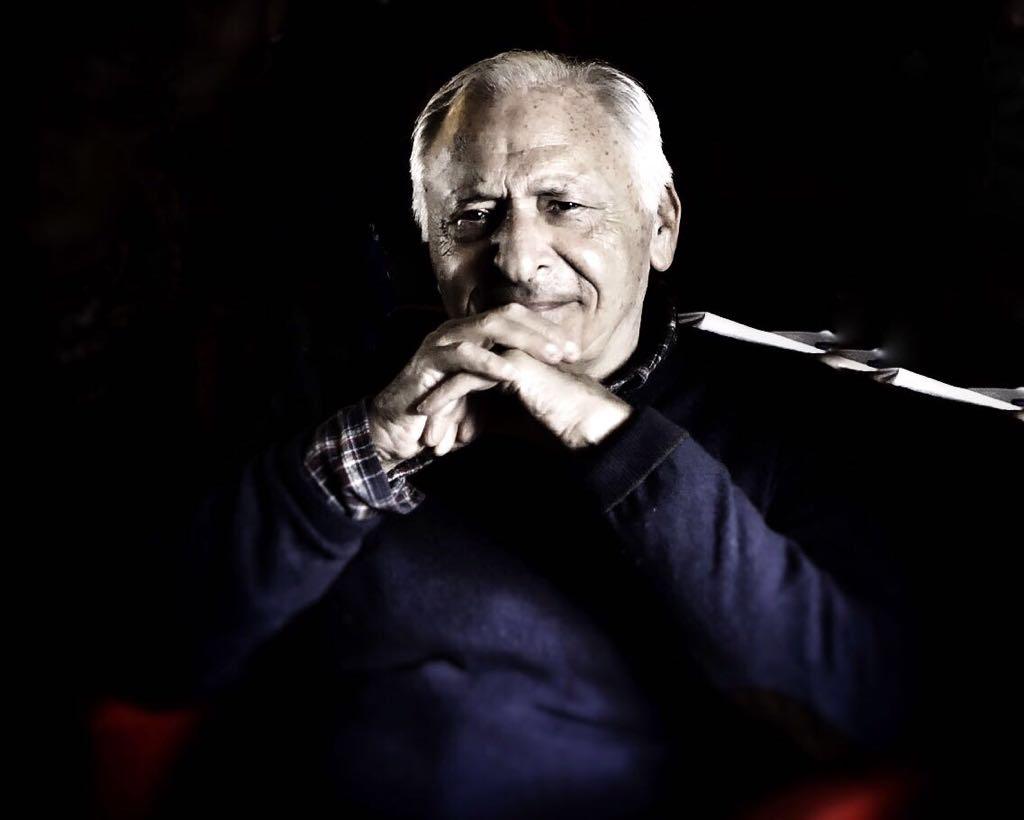
MOGOL – “Emozioni” on stage

by Stefania Del Monte

With over 1,500 songs published and a myriad of collaborations of great international prestige under his belt, Giulio Rapetti Mogol is one of the most prolific and by far the most successful author on the Italian music scene.

Known by everyone simply as Mogol, at the age of 83 – including over sixty of artistic career – he is a man who has always known how to live his life in depth and then tell it in his texts as a friend, revealing human truths and intimate thoughts.

Calling him a lyricist would be an understatement. The world of this great character is in fact dotted with social commitment, family loves, sports (football and horse riding above all), travel, mentoring, entertainment and much more.

His songs, however, are the ones that more than anything else define him and – even after fifty years – continue to arouse the same, identical emotions as ever in the general public. And it is no coincidence that his new theatrical performance is called just like this: Emotions (Emozioni in Italian, ndr).

Turin, Macerata and the Ancient Theater of Taormina will be just some of the stages touched by the tour. We talked about it directly with him: the legendary Mogol.

On 26 March Emotions will be staged at the Colosseo Theatre in Milan. Can you tell us about it?

It is a theatrical performance in which, together with the interpreter Gianmarco Carroccia, we make a journey through my songs with Battisti. A 16-piece orchestra will perform a real musical biography, while Carroccia will interpret the songs and I, present on stage with him, will tell anecdotes and curiosities about the birth of some of those songs. There will also be three songs by Gianni Bella: Il profumo del mare, Il patto and Quello che non ti ho mai detto.

Why did you prefer a theatrical performance to a concert? What does theatre offer compared to other forms of entertainment?

The show alternates parts of the concert – with lyrics projected in the background and an audience that actively participates, singing with passion – and my more discursive interventions, where I tell a little bit about the circumstances in which certain songs were born. It is a type of representation that offers great interaction with the spectators.

This year marks the 50th anniversary of the release of the Emotions album and the songs it contains continue to be very popular. Why do you think these songs are so loved by the public?

These are songs that have remained in people’s hearts and memories. My lyrics are often autobiographical but many Italians recognize and identify themselves in the thoughts, words and, above all, in the emotions told in these passages.

Speaking of emotions, one cannot help but think of your artistic collaboration and, above all, of your long friendship with Lucio Battisti. How do you remember him?

Between us there was a relationship of great friendship and mutual esteem. He called me the poet and for me he was the best musician I had known. I remember that we had established a habitual way of working, almost a routine: Lucio came to my house after composing the music of 10-12 songs. We started around 9 in the morning: he played the guitar, singing in macaronic English and I, lying on the carpet, composed the lyrics. In less than two weeks the job was ready. Many of the songs were born within an hour.

Gianmarco Carroccia, your co-protagonist in the theatrical show, is an artist who trained within the CET Centro Europeo di Toscolano. Can you tell us more about this academic project of yours?

CET is a non-profit association that I founded in 1992 with the aim of enhancing and qualifying mainly new pop music professionals, people sensitized to the importance of popular culture and the ethical needs of communication. The centre is located in a complex of over 120 hectares in the heart of Umbria. CET, however, is first of all an academy that has prepared and prepares artists of the highest international level. Last year I taught courses in the United States, Berkeley and Harvard, and there they gave us a lot of compliments for our teaching methods.

Gianmarco Carroccia, in fact, was a pupil of CET between 2010 and 2011 but to tell the truth I didn’t remember him. Then one day I heard him sing in one of his concerts, in front of an enthusiastic audience and, from there, planning a show together was almost inevitable. He is a great showman and knows how to involve the public. But not only that: he is also an incredible performer and his shows are always sold-out.

Looking back on your first steps into the world of music, what did it mean to be an author in the Sixties? How have musical tastes evolved and what is the public looking for today compared to that period?

Look, I am lucky enough to have sold over 523 million records worldwide, with 151 hits that placed in the top ten of the charts and of which, more than half, are songs composed with Battisti. These are incredible numbers and I myself, when I first heard them, found it hard to believe it. I think this success is due to the fact that I write for myself and not following the tastes of the public.

How do your songs come about?

My characteristic is that I never have a prepared subject: I listen to the music and recognize what it is telling me.

Your repertoire is vast. Of all the songs published, is there one that has a special meaning for you?

Yes: it’s the song Anche per te. It is a text that, I believe, everyone would have liked to write. It was inspired by three lonely women, whom I would have liked to help.

During your career you have collaborated with many world-famous artists: from Mina and Celentano to Bob Dylan and David Bowie. Among today’s names, is there an artist you admire more than others?

I would say Cristicchi: a great artist, both musician and theatre, with whom I also had the opportunity to collaborate.

Cover: Mogol
Audiovisual material courtesy of Mogol

Click here to read the interview in Italian


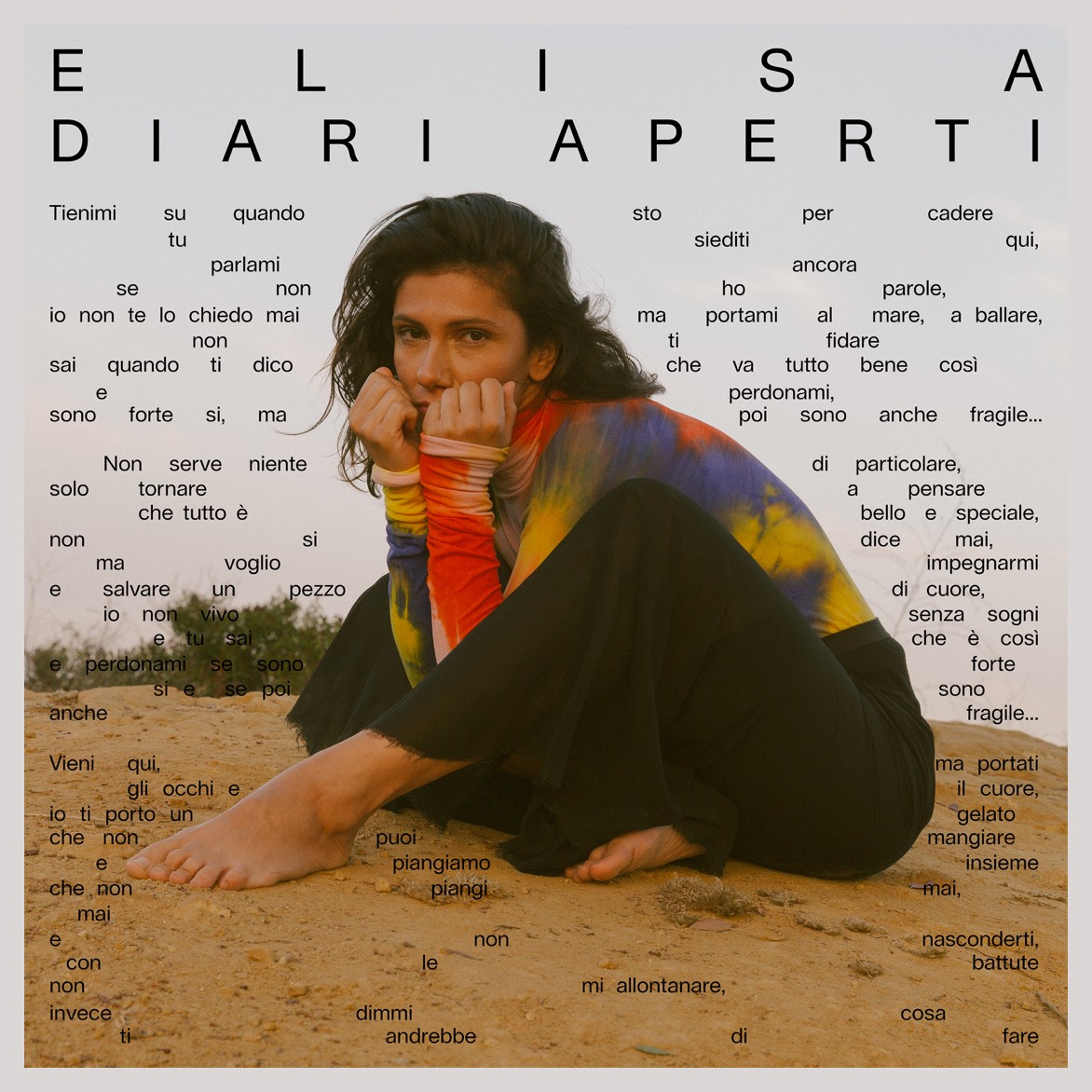
Elisa is Back to London for her new Tour!

London, Maria Vittoria Bognetti

The great Italian singer and songwriter, Elisa, lands in the UK to perform during her 2019 European tour here in the capital city on the 30th of July and on the 2nd of August in Edinburgh. We will also see the artist performing in other major European cities, around Germany, Switzerland and Norway.

Her music genre can be categorized as alternative rock, influenced by her idols Dolores O’Riordan, Björk, Tori Amos, Alanis Morissette and Aretha Franklin.

Her background in the USA allowed her to expand her audience outside Italy by recording and writing her songs mainly in English, one of the few Italian songwriters that has made such a decision. Come Speak to Me, Dancing, So You Think You Can Dance are few of her most famous tracks in the international scene, and part of a discography composed by nine studio albums, 5 compilations and 51 singles. Her talent has been awarded with 1 diamond disc, 1 multi platinum disc, and 13 platinum discs.


Throughout her career, she performed with prestigious artists from Eros Ramazzotti, Zucchero, Francesco de Gregori, to Luciano Pavarotti. Worth mentioning that her song Ancora Qui, in collaboration with Ennio Morricone, was featured in a Quentin Tarantino’s film, and was nominated for a Grammy Award for Best Compilation Soundtrack for Visual Media.
Her tour will start in Germany, in Cologne on the 20th of July at Luxor and in Hannover on 21st of July at Musikzentrum, moving successively to Norway, Oslo on 23rd July at Blaa. She will go back to Germany, Hamburg on the 25th of July at Fabrik before performing in Switzerland, in Bellinzona on the 26th of July at the Castle on Air. The tour will end in the UK, first performing in the capital city at the Union Chapel, and successively in Edinburgh at the Liquid Room.

https://www.elisatoffoli.com/

EUROFESTIVAL – ITALY, WITH FRANCESCO GABBANI, IS FAVOURITE

According to bookmakers, Francesco Gabbani, with his song Occidentali’s Karma, is the favourite singer of Eurovision Song Contest 2017.

At the moment, many people are gambling and Italy is quoted at 2.37 by bet365.

It is impossible not to dance or sing when listening to Gabbani’s song: it has more than 50 million views on Youtube only in Italy, but also in Europe people sympathize with the dancing monkey.

But why is he so successful?
Probably because his song is cool, direct, straightforward. Coming from Carrara, Gabbani grew up with his music and his passion, always determined to experience more.

His previous success Amen was already different from common songs, but Occidentali’s Karma will make the history of music for sure.

In Kiev, Ukraine, people are waiting for Gabbani. But the race will not be easy, as the Italian singer will have to compete with international artists, such as Robin Bengtsson, Salvador Sobral and Blanche.

Gabbani’s music is engaging, it makes you happy. Occidentali’s Karma is indeed appreciated even though its text is not in English.

If Gabbani wins, the Eurofestival will take place in Italy next year, according to tradition, in order to honour the winner.

It is true that the favourite singers are not always the winners though. The whirlwind Conchita Wurst, for example, who had been undererrated before the competition, in the end has become one of the most famous stars not only in Europe, but all over the world.

Vinyl sales overtake digital purchases for first time in the UK

Written by Chiara Fiorillo

The Entertainment Retailers Association has released some unexpected data: last week, for the first time in the UK, the sales of vinyl record (£2.4 mln) have passed those of digital music (£2.1 mln).

Kim Bayley, chief executive of the ERA, said the success of vinyl can be partly attributed to Christmas shopping. Also, being old-fashioned, vinyl seems to be a more attractive alternative than digital music. In the UK several supermarkets, such as Tesco and Sainsbury’s, as well as high street brands such as Tiger, are starting to stock records, making the product more accessible to everyone.

“The vast majority of releases are coming out in vinyl now,” said Bayley. Nowadays, indeed, not only popular albums, but also pop music, compilations and film soundtracks are coming out as a record. Among the best-selling records of this week, indeed, there are Kate Bush, Amy Winehouse, Busted, the “Guardian of the Galaxy” film soundtrack and “Now That’s What I Call Christmas” compilation album.

Vinyl sales are growing not only in the UK, but also in the USA and in Italy, where in the first six months of 2016 there has been a growth of 43% compared to the same period of 2015.

Another surprising element, according to Bayley, is the age of people buying vinyls: teenagers and people under 25 buy records in order to have something more tangible. Bayley pointed out, indeed, that it is difficult “to demonstrate your love for an artist if you don’t have something to hold on to”.

Sean Forbes, manager of the record shop Rough Trade West in London, said there has been a massive increase in people buying vinyl. Even though some customers buy vinyls only as a memento, he said, others are so passionate about music that they enter the shop just to buy “The Clash London Calling” or “Pink Floyd Dark Side of the Moon”.

No matter the technological developments, people will always want to buy vinyls, even when we’ve all been dead a hundred years, he added.

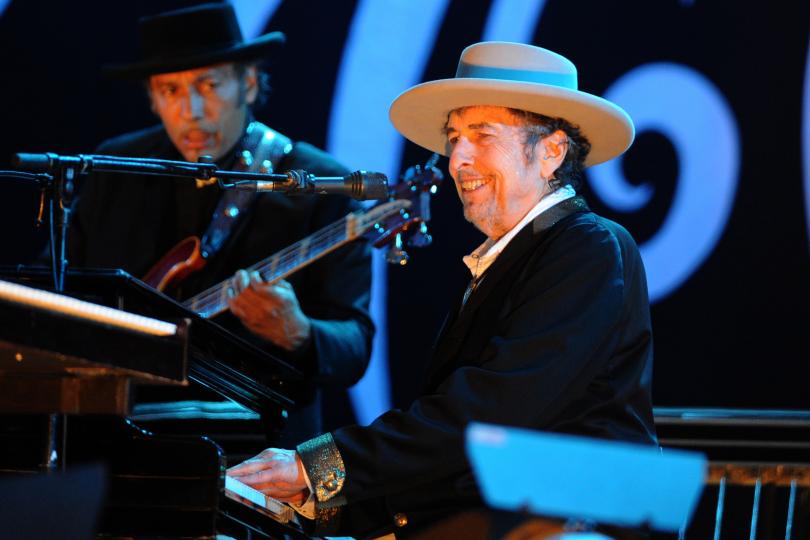
The times are a-changing: Dylan wins the Nobel Prize.

London – by Ilaria Gallo

“Come writers and critics who prophesy with your pen

And keep your eyes wide the chance won’t come again

And don’t speak too soon for the wheel’s still in spin

And there’s no tellin’ who that it’s namin’

For the loser now will be later to win

For the times they are a’ changin’!”

The singer and songwriter Bob Dylan, born Robert Allan Zimmerman 75 years ago, won the 2016 Noble prize in literature “for having created new poetic expressions within the great American song tradition.”

bob-dylan-0

Times are really a-changing: an american musician winning the well-known Swedish award, that’s something we have never witnessed before.

It is undeniable to say that Dylan has revolutionised the music world thanks to songs like “Blowin’ in the Wind”, “Knocking’ on Heaven’s door”, “Like a Rolling Stone”, and albums like “Blonde on Blonde”. We have become familiar, during the past 50 years and so, with his political, social, philosophical, and literary lyrics and his mystical folk sound: he is, without any doubt, the most influential artist of this era.

Music has the unique power to inspire the masses, to make them think; Bob Dylan’s music, in particular his lyrics, has affected many generations behind and it will inspire many future ones due.

Listening to one of his songs (old or more recent) can make us think about our personal situation as much as the worldwide problems we are facing in this controversial historical period, even though we are born 34 years after his first album was released. He influenced the modern song-writing combining his songs’ words in unusual and interesting ways making a whole generation of artists realise that lyrics do not have to follow the rules of everyday speech.

The permanent secretary of the Swedish Academy, Sara Danius, said “I came to realise that we still read Homer and Sappho from ancient Greece, and they were writing 2,500 years ago. They were meant to be performed, often together with instruments, but they have survived, and survived incredibly well, on the book page. We enjoy [their] poetry, and I think Bob Dylan deserves to be read as a poet.”

“The frontiers of literature keep widening, and it’s exciting that the Nobel prize recognises that,” the author Salman Rushdie said.

bobdylan_ta_gettyimages-85002478

It’s obvious that this award would have given rise to criticism.

The Slate critic Stephen Metcalf wrote: “ You shouldn’t give the library prize to an economist or a political saint. You shouldn’t give it to Bob Dylan. The distinctive thing about literature is that it involves reading silently to oneself. Silence and solitude are inextricably a part of reading, and reading is the exclusive vehicle for literature.”

“My only caveat about the award is that it cheapens Dylan to be associated at all with a prize founded on an explosives and armaments fortune, and more often awarded to a buggins whose turn it is than a world-class creative artist. Really, it’s a bit like when Sartre was awarded the Nobel – he was primarily a philosopher, and had the nous to refuse it. Hopefully Bob will follow his lead,” said the writer Will Self calling the example of Jean Paul Sartre.

All said and done, Dylan award opens a new path as he did with his songs year after year widening the literature boundaries and combining them with music.

Are we finally entering in a new era in which music is recognised as a form of poetry?

“The answer, my friend, is blowin’ in the wind, The answer is blowin’ in the wind”

Turing: Maths & Music …the seven musical notes

Luisa Liu
LONDON– Where is nowadays’ elettronic music from? And where is the synthesizer from?
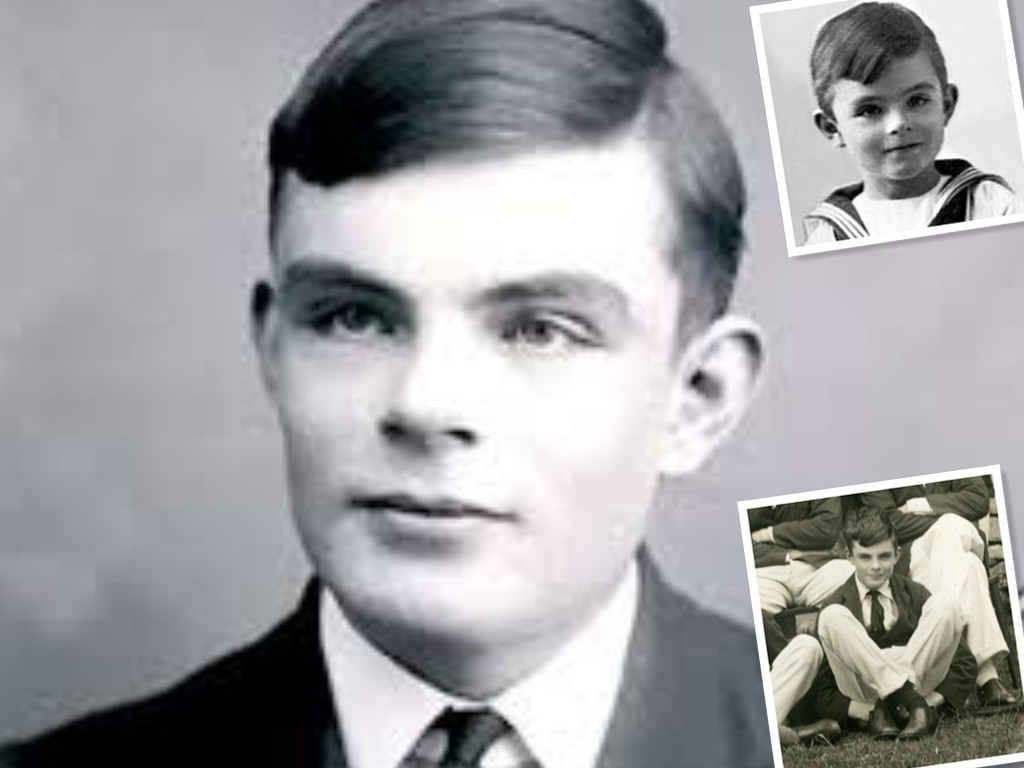
It was Alan Turing -an English scientist, mathematician, logician, cryptanalyst and biologistas, as well as the father of theoretical computer science and artificial intelligence- who created the first artificial music in 1951, 65 years ago.
Actually, Turing highly influences the development of theoretical computer science, providing a diagnosis of the concepts of algorithm and computation with the Turing machine, which is wide considered a model of a general purpose computer.
Turing contributes a lot to innovate the tecnology and the music, revolutionizing the computer so that it becomes a musical instrument. Nobody has ever thought about it.
During the Second World War, Turing did a lot against the Nazis. He played a crucial role in cracking intercepted coded messages that enable the Allies to defeat the Nazis in many critical engagements, including the Battle of the Atlantic. It has been estimated that thanks to his work the war in Europe was shortensed by as many as four years. That’s incredible, just admirable.
After the war, Turing designed the Automatic Computing Engine, an early eletronic stored-program computer design. He also helped Max Newman to develop the Manchester computers. He predicted oscillating chemical reactions, he discover this, he created that, he did so much for the UK, for the Allies, for all the world; …nevertheless, Turing was prosecuted in 1952 for homosexual acts. Such behaviour was still a criminal act in the UK. He accepted treatment with the chemical castration as an alternative to prison. Turing died in 1954 from cyanide poisoning, noboby does really know whether it is a suicide or an accidental poisoning.
Only 55 years after his death, British Prime Minister Gordon Brown made an official public apology on behalf of the British government for his treatment. Queen Elizabeth II granted him a posthumous pardon in 2013.

The Oscar winning movie “The imitation game” told his story, but the link between the matematician Turing and the music had not been highlighted yet.
Canterbury university’s Researchers found the original record, made 65 years ago in Bbc’s study, which contains only three piece:
God Save the King“, the british national anthem;
Baa, baa, black sheep“, a song for children;
In the mood“, a famous song of the American Gleen Miller.
But the professor John Copeland e the composer Jason Long found out that the tape was seriously damaged. Therefore, only after a long time of hard working, the tape was restorated. During the break of “In the mood”, you can hear an ironic comment “In this piece, he was certainly in no mood”.
Thanks also to Christopher Stracey, who remind the name of Turing, today even we can hear the elettronic-music-tape once again, even we can live it once again.

People of Punk bring the year of celebration to an end

Punk.London, the year-long festival commemorating forty years of the enduring influence of punk across London is drawing to a close but it’s not going quietly.

Following a summer that has seen a punk themed closing weekender at the Design Museum, Don Letts’ curated film season at the BFI and even provoked Viv Albertine to graffiti in the British Library, there’s still more to come. A new exhibition and a high-profile debate mark the beginning of the end of this eventful year.

Ø  Punks – Museum of London – 1 October 2016 – 15 January 2017 (free) 

From handmade mixtape sleeves and DIY fanzines, to the radical clothes sold on the King’s Road, the Museum of London’s new exhibition, Punks, will tell the stories of ordinary punks of the late 1970s. In 1976 punk crashed into London and changed music, fashion and attitudes forever.  In a move away from the big names of punk, the Museum of London invited people to share their punk tales and lend or donate their memorabilia to be part of this exhibition.

Jen Kavanagh, curator of Punks at the Museum of London, said: “Punk was so much more than just the music. It was a philosophy, a lifestyle, a community. The 17 incredible people who have contributed to this exhibition talk about their punk days with so much passion and affection and we wanted to get this across in the stories we display. Punk touched the lives of teenagers and young people in London in 1976, and for many it changed their lives forever.”

Lesley Edgar had always been interested in fashion, so when punk arrived she embraced the opportunity to push the boundaries with what she wore. Shopping in jumble sales and markets, clothes would be customised with chains and safety pins. Tartan kilts and men’s string vests formed her look. Lesley cut the sleeves off t-shirts to turn them into mini dresses, which she wore with fishnet tights or homemade plastic trousers

Trev and Bev met in 1978. They were both fully immersed in the punk scene, spending their weekends on the King’s Road and at gigs. Buying clothes in second hand shops, or hanging out in the Chelsea Potter, they embraced the sense of community that punk brought. Nearly 40 years later they still go to gigs and hang out with the friends they made in the 1970.

Zoe Neale was introduced to punk by her friend Jane. Bored of the prog rock that dominated the early 1970s, Zoe loved the energy and pace of punk. As she lived in the suburbs, she’d have to travel into London to attend gigs, and was a regular at the Marquee.  Always experimenting with different coloured hair, her parents were appalled by her appearance, but eventually accepted her love of punk

David Black was attending college in Norwich when he first encountered punk. He’d make trips into London to buy clothes, treating himself to a Destroy t-shirt from Seditionaries and a bondage shirt and mesh tie from Boy. Dave treasured his Destroy top and didn’t mind spending a lot to own it. But shopping on the King’s Road meant dodging the teddy boys, who were often looking for a fight

Ø  Punk London debate at the Museum of London – 18 November

A live, no holds barred debate bringing together opposing ideas and arguments about the ideas of punk, its journey over forty years and what it means for the future. High profile line-up to be announced soon.

Further events happening a cross the city

Punkplay at Southwark Playhouse

7 September – 1 October
Gregory S. Moss’s punkplay is a riot of a play told at breakneck pace with a killer soundtrack. It’s a coming-of-age story about subcultures, friendship and not-fitting-in – all on rollerskates. @punkplayLDN for more info.

Sid play at Arts Centre, Soho

19 September – 14 October
A new 50 minute one-man play by Leon Fleming we explore the true nature of hero worship and what it means to be punk.

Punk: Originals at Omnibus, Clapham
7 September – 1 October
Omnibus are holding an exhibition of iconic yet very personal photographs by Erica Echenberg called Punk: Originals. Erica Echenberg was there at the birth of Punk and took pictures of what she saw, documenting this remarkable and influential movement from the inside.

Punk Waltham Forest, various venues in the borough
now until 26 November

In 1975 Pete Stennett opened a shop at 162, Hoe Street in Walthamstow with his wife Mari, the now legendary Small Wonder Records. After seeing The Sex Pistols perform at Walthamstow Assembly Hall on 17 June 1976 he was inspired to start a label and transform the shop into the place to go for the latest new sounds of punk. Punk Waltham Forest 2016 celebrates Small Wonder with a new pop-up exhibition events and talks to mark the 40th anniversary of the Sex Pistols gig and raises awareness of the borough’s local punk heritage.

Rough Trade 40 in-store and venue gigs: 22 October – 6 November 2016

Rough Trade will curate a hugely exciting series of events centred around collaborations between friends and supporters of the label and shops over the last 40 years. Although a full announcement can’t yet be made, suffice to say these events will bring together some of the most original, vital artistic talent out there in some of the capital’s best venues to create genuine once-in-a-lifetime musical magic. Expect an extravaganza at the Barbican, innocence at The Shacklewell Arms, Cabaret and Quiz at The Moth Club and intimacy at Islington Assembly Halls.

Stuart Hobley, Head of Heritage Lottery Fund London, said: “Kicking and screaming, punk quickly established itself as a voice for youth culture. The upcoming exhibition at the Museum of London, and the whole Punk London year, looks at the stories of individuals who embraced the world of punk; from fashion to music and politics – how the power of punk changed their lives.”

Further information about the Punks exhibition: www.museumoflondon.org.uk

Further information about all other events can be found at www.punk.london.

#PunkLondon