“In the world there are places full of energy, where, due to magnetism, people feel connected with their inner soul, granting them a sense of freedom and completeness both within themselves and in connection with nature”
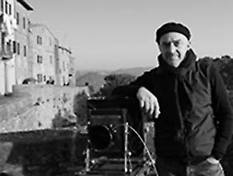
Oliviero Olivieri’s photographs capture observers with strong impressions, giving meanings without explanations.
His pictures are of such high creative quality that they have been published by the prestigious Condé Nast Traveller UK. Recently his works have been selected by Simon Baker, curator of Tate Modern (Photography and International Art) for the forthcoming collective exhibition “Active Witness, an exhibition of photography to celebrate the European Year of volunteering” at the European Union Commission Representation.
The artistic journey drawn by Olivieri diverts our senses from the well trodden tourist path to zoom in on the inner and often unseen parts of Sardinia, where ancient remains survive from prehistoric times, and where the old carnival rite of Carrasecare marks the beating heart of Mediterranean Sea.
 After this inward movement Olivieri zooms out to put these “hidden” parts in their natural boundaries. In so doing the breathtaking views of surrounding beaches are captured from within.
Presenting a more comprehensive picture of the island and generating an image of the “other” Sardinia, without forgetting its well-known natural beauty, is the precise intention of the Italian Cultural Institute in London together with the Councilor’s Office for Tourism, Crafts and Trade of the Sardinian Region. “It has been a privilege to work with Councillor Crisponi of the Sardinian Office for Tourism, Crafts and Trade,” says Carlo Presenti, Director of the Italian Cultural Institute, “Together we have mustered a photographic exhibition that showcases the multi-faceted nature of Sardinia, its ancient beauty and its mystery.”
The exhibition consists of three sections, guiding visitors from the ancient rite of Carrasecare, to the the natural landscape and Nuraghi
 The first section focuses on the masks, the rite, the devil, the victim, the sacrifice, the eternal renewal of a tribal society: the images from the Carrasecare. The ancient name of the Sardinian carnival timelessly captures the mystery of a Dionysian rite.
The Carrasecare or “Festival of Fertility” starts on the 17th of January with the burning of traditional Tuvas – “hollow logs” – in Barbagia, a hilly inland region where the carnival upholds tragedian aspects of the ancient Greek rites of spring and the final liberation from evil. Nature marks the second step of this visual experience, of a land described by English poet and novelist D. H. Lawrence in his Sea and Sardinia. In his words “Sardinia is something else.
Enchanting spaces and distances to travel, nothing finished, nothing definitive… It is like freedom itself.” The third and final destination: the Nuraghi, the prehistoric tower-like structures symbol of Sardinia itself.
These conical monuments with truncated summits maintain their mystery as places “where cosmic forces were in balance; places where it was easy to accumulate strength and where the human body felt positively recharged” stresses the photographer. Twenty thousand Nuraghi were built during the bronze and the iron ages, 8000 of which still survive.
Olivieri’s photographs give back the Nuraghi their mystic and majestic strength.
 Oliviero Olivieri is an internationally recognized photographer, who made Sardinian ancient traditions and unusual landscapes his leading subjects and focus, finding a way of communicating ancestral sensations and mystery in the process. He has been showing his works for the past 20 years.
From 8 July to 4 September 2011 at the Italian Cultural Institute