The London Library Italian collections

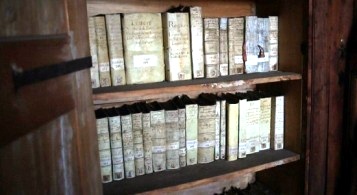
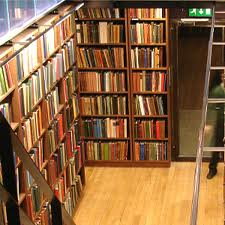
 A true giant cultural fact of prestigious and rare books from around the world: the LondonLibrary, is an archive of historical books, unique in the world.The London Library, founded in 1841, is the UK’s leading literary institution. With more than one million books and periodicals in over 50 languages, the collection includes works from the 16th century to the latest publications. Among the many European collections could not miss the Italian collection.

The London Library’s remarkable Italian Collection represent an extensive resource of research level interest covering a variety of subject a rare collection of historical books and Italian literature, and you can find classic books or science Galileo Galilei’s books also.

Since its inception in 1841, the London Library has actively collected material relevant to Italian studies and its remit. In the past for selection and acquisition purposes, the library relied on the expertise of eminent scholar, many of whom were also member of Library, Italian émigrés and political refugee exiles. Amongst the latter was the political refugee Giuseppe Mazzini (1805-1872), a personal acquaintance of Thomas Carlyle ( 1795-1881) founder of the London Library.

Several book and Italian materials were acquired through the Rolandi Bookshop, based in Berners Street in London., which had became a rendez-vous point for Italian refugees and a centre for cultural activity. A notable example is the Foscolo edition of the Divine Comedy completed by Giuseppe Mazzini and published in London in 1842. The Italian Collection have grown steadily over time-suffering, perhaps inevitably, during the two world war periods.

The Library has continuously maintained an active acquisition policy and benefited from several important donations and bequests. Valuable work have been donated to the Library by Keen collectors of Italian materials and distinguished scholars such ad A.J.P. Taylor, Trevelyan and Toynbee to mention a few. During 2009 in excess of 200 monographs in Italian were added to the Library’s holdings. To capture the full extent of the collections it is necessary to draw attention at the outset to their presence in many section not labelled “Italian”.

There are notable strengths: Art, covering all periods and aspects: Literature, including important critical edition: History, with an emphasis on the renaissance and Risorgimento. In those sections where only a token presence is to be found, such as Italian Philosophy, the library is nevertheless keen to augment the collection further.

Even in those fields, however, the Library holds the representative work of all major authors and a selection of others. Italian material in the social Sciences is acquired more selectively. All influential authors are represented however and the Library holds the work of writers and scholars such as: Gaetano Mosca, Antonio Gramsci, Norberto Bobbio. Works by historical scientists as, Leonardo da Vinci, Galileo Galilei etc) are acquired but collecting is otherwise limited to the history of science and modern developments at a general reader level. With a few exceptions ( e.g. Gianni Rodari) children’s books are not purchased.

The Italian Literature collections include all the major Italian writers, from Dante, Petrarch, Boccaccio, Macchiavelli, Ariosto,Tasso, Foscolo, Leopardi, Manzoni,D’Annunzio, Sciascia and Moravia.

The library maintains a strong collection in all areas of Italian literature and drama form the medieval and renaissance periods onwards, including literary philosophy. The Dante collection merits a mention. A sizeable number of works were donated in 1910 by the Dante scholar Dr. Paget Jackson Toynbee, Fellow of the Oxford Dante Society. In addition to several edition of Dante’complete works and critical commentaries both in italin and English, the library possesses the series Lectura Dantis for the years 1889-193, il Giornale dantesco for the years 1894-1915.

The Library collects and holds various academies and learned societies publications. Amongst publication relevant to Italian studies are: Studi Veneziani, Published by the Cini’s Fondation of Venice, works published by the Accademia dei Lincei and by the Regia deputazione di storia Patria.

In a few words, a little Italian history is preserved within the walls of London Library For the Italian people that live in London or for tourists, is very exciting to go and read the Italian books in the library, they can find all the flavor of the history and Italian roots. THE LONDON LIBRARY – 14 ST JAMES’S SQUARE – LONDON SW1Y 4L

taxiitalouk3

bannerhoteluk2


HOTEL  IN  LONDON
  –  HOSTEL IN LONDON


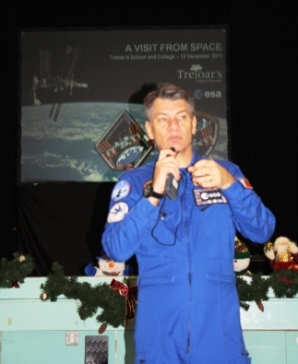
Italian astronaut Paolo Nespoli among disable children of Treloar’s school

 Treloar’s  School students were transported into another dimension this week with Paolo Nespoli, an Italian astronaut. He shared his experiences of space and gave a presentation entitled ‘A View from Space’. The children was excited, everyone was careful during the story of the astronaut in space.

A historic moment for the treloars school, for the first time an astronaut, went to school. The children have dreamed of for two hours, they have flew together with Paolo Nespoli around the Earth and it sure will be unforgettable unforgettable experience for them.

The Treloar is for disabled young people school The mission of the schoo is to provide first-class education, therapy, medical support, and independence training for young people with physical disabilities in a caring and supportive environment. Treloar School is just such a special place. We are a non-maintained special school for 9 to 16-year-old + students with physical disabilities. However, some students with particular learning difficulties may stay with us until the age of 19. Currently 70% of our students have cerebral palsy. However, we welcome young people with a wide range of physical conditions, including those with associated sensory or cognitive difficulties. 

At Treloar’s, we care for, educate and support young people, in partnership with many others. Parents and carers play an important role in helping children achieve their goals. At Treloar’s we involve them as much as possible. Treloar’s is now a Specialist Special School (in the Physical and Sensory strand) which identifies and strengthens our holistic emphasis.

Nespoli_scuola3

[photo italian Astronaut Paolo Nespoli at the Trealor’s School by italoeuropeo] 

There is also trealor ‘s college, and 13 December for the visit and the Italian astronaut was the last day of school for boys, because all classes’s school will be moved in to the College, so to make a single complex. Put together the kids of the Trealor’s school and the children of the Trealor’s college it’s a whole new world of opportunity.


Treloar College prepares our residential and day students for the many challenges of adult life by concentrating on the whole person. We create unique plans for all abilities and dreams – from independent living and personal development, learning skills for life and gaining qualifications.

The gravity force for this children with specific motor diseases is a difficulty. A dream would be to rid their bodies and make them feel lighter, floating in space, just like an astronaut. For now take a disabled space is difficult, it was more easy to carry an astronaut to speak of space in to tthe school, and for a day the boys flew with astronaut Italian Paolo Nespoli . It’s was a special day.

Treloar school for disabled children


London Puglia at its Best event

Puglia at its Best A great evening of Apulian food and wines presented in the beautiful setting of Queen’s Tennis Club, London. Organised by Food & Wine Promotions, Accademia Apulia UK and Meridaunia consortium, the event presented fine food and wine products from the ‘Monti Dauni’’ – an area of Puglia little known, but not for much longer. [ photo –Tommaso Bruccoleri.]

At the event were Journalists, food experts, sommeliers and, most importantly, buyers. Also present were the Accademia Apulia’s creative pool representatives.

Musicians, writers and artists of all kinds joined the Italian Ambassador, H.E. Alain Economides and the Consul General of Italy, Uberto Vanni d’Archirafi in complimenting the Monti Dauni food and wine producers for their delicious products. Guests also had an opportunity to taste homemade breads accompanied by fine extra virgin olive oils, bagels and biscuits made Senatore Cappelli’s wheat (it is named in honor of Senator Raffaele Cappelli, who introduced the first agrarian reform in 1900).

During the event specialised Masterclasses were presented to restaurant owners and more buyers still.

puglia 5.jpg

The Masterclasses revealed to participants not only the organoleptic qualities of products under scrutiny, but also the history and rural tradition linked to each product.

Lucia di Domenico, a most simpatico chef and owner of the Inn Post Guevara (a renowned educational farm in Puglia) introduced the Masterclasses. “We only use locally produced seasonal ingredients, prepared according to ancient traditions, stated the chef.’ Puglia at its Best at the Queen’s Tennis Club saw the participation of 300 visitors who also had the opportunity to taste and buy very special wines (Bombino Nero di Troia, Tuccanese, Falanghina and Negramaro (from the Fujanera estate).

In short, the event was a demonstration of quality and success for the producers from the Monti Dauni “an experience to be repeated as soon as possible,” said Antonio Tomassini, the event organiser, saying good-bye to his guests at the touch of midnight. The Negroamaro had finished.

puglia_50


FAMOUS AUTHORS CREATE NEW IDENTITIES FOR MYSTERY PORTRAITS

For the first time in over 50 years, a group of portraits of mystery figures from the 16th and 17th Centuries will go on display at the National Portrait Gallery. Acclaimed writers Alexander McCall Smith, Joanna Trollope, John Banville, Julian Fellowes, Minette Walters, Sarah Singleton, Terry Pratchett and Tracy Chevalier have contributed short imaginative stories about the portraits to help to bring the sitters to life.Imagined Lives: Portraits of Unknown People opens at the National Portrait Gallery from 3 December 2011 and runs until June 2012.


Purchased by the National Portrait Gallery between 1858 and 1971 the fourteen portraits in Imagined Lives were originally thought to represent famous people, such as Queen Elizabeth I and Mary Queen of Scots. Over time the identity of the sitters has either been lost, disproved or disputed, resulting in the portraits being either removed from display or lent to other collections.

In response to the portraits, eight internationally renowned authors have written imagined lives of the mystery sitters available to read in a new publication. 


The authors have invented imaginary biographies and character sketches exploring who these men and women might have been and why were they painted. With fictional letters, diaries, mini-biographies and memoirs, Imagined Lives creates fictional stories about these sitters from the sixteenth and seventeenth centuries.


Imagined Lives was originally conceived for and shown at Montacute House, Somerset, in 2010 as a collaboration between the National Portrait Gallery, the National Trust and the University of Bristol. The display will now be seen in London at the National Portrait Gallery for the first time accompanied by a new story by Alexander McCall Smith and a new publication. Research undertaken by History of Art MA students at the University of Bristol, working with Dr Tatiana String and supervised by the Gallery’s 16th Century Curator Dr Tarnya Cooper, led to a clearer understanding of the past of these portraits. This research, along with conservation work has meant that more evidence is now available about the possible identity of the sitters.


The character sketches and imaginary biographies by the authors provide new ways of looking at these mystery portraits. The authors have responded to what can be seen in each portrait, picking up on details of the costume and pose in intriguing ways.

Alexander McCall Smith has imagined an alternative life – as a body double for Mary, Queen of Scots – for a beautiful young woman depicted in a portrait once identified as the Scottish queen. In a story entitled Rosy Tracy Chevalier has written about a portrait of a handsome young man with a flushed complexion as the object of homosexual desire.


The crime writer Minette Walters has written a poignant letter from the perspective of the wife of a man shown in a portrait, which brims with despair at her husband’s extravagance. The author and scriptwriter Julian Fellowes has created a subtle biography (written in the style of a traditional biographical entry in a dictionary) about a resourceful woman whose husband was executed in the reign of Henry VIII.


Sarah Singleton has written about the adventures of a spice merchant and amateur musician struggling to make his way in the world despite his illegitimate status. Joanna Trollope has written a touching tale about the offer of a marriage proposal in the form of a letter from the sitter’s intended bride.


In a complete change of tone, the science fiction writer Sir Terry Pratchett has written an amusing tale about an explorer who presented Elizabeth I with a skunk. John Banville has seen in the features of a man laying upon his death bed the face of an admired officer serving with Cromwell’s New Model Army.

A fully-illustrated National Portrait Gallery publication containing information on the portraits on display together with all the stories will be available for £7.99. The 96 page book includes an essay by Dr Tarnya Cooper, Chief Curator at the National Portrait Gallery, exploring the challenges associated with the identification of sitters in Tudor portraits and includes new research on the featured portraits.


A British effect at Rome Film Festival

The sixth edition of the International Rome Film Festival organized in Rome from 27 of October until the 4 of November continues to abide by its priority vocation, nicely summed up by the formula: “Bringing all cinema to all people” though it comes at a very difficult time for the Country’s economy.

The Rome Film Festival presented a varied offer from the traditional section to the special events including the Focus dedicated to the United Kingdom but also the project on the Italian identity to mark the 150th Anniversary of the Italian Unification. A workshop called “ The Industry of Imagination. A british effect” organized by UKTI ,British Consulate, UK Science & Innovation Network and Borsa Italiana has underlined that UK have become the centre of attraction for creative talents from all over.

The documentary, showed during the session, was a journey through success stories experiencing how VFX are now an integral part of not only action and fantasy blockbusters but of every single film. “We all love cinema. It’s amazing what technologies can achieve and though the big Hollywood production, London is becoming the ideal location for cinema industry because the city is a pool of attraction one most vibrant and attractive city in the world” with this word the HM Ambassador Christopher Prentice welcomed the guests and speakers.

ambassad

Peter Comninos professor of Computer Animation at Bournemouth University unveiled the secret of such success for the British Industry. To achieve a quick development of the resources in order to understand the magic formula it’s priority to look inside the university system in Uk and the collaboration between industry and academic world. Therefore the  evidence of the pioneer of special effect, John Richardson, that has been responsible for the effects work on the eight Bond films, Cliffhanger, Starship troopers and alien, for which he won an academy awards, showed as the rapid development of technology has made VFX more and more affordable to production of all sizes.                                                      

A very committed and socially responsible Festival should consider the appeal from the Italian movie producers that explained the difficulties to finance their project and organize their staff with the same Anglo-Saxon efficiency. “We need to collaborate together” said Marco and Antonio Manetti of the Manetti Bros to the English speakers. Regarding the financial aspect, Luca Peyrano from the Borsa Italiana illustred how their task, busting the industry is not only for big company but is mainly with small companies.

festival-cinema-roma-2011

“The Festival management believes in actions for the future, even when times are tricky, which can be achieved by concentrating the efforts of all involved in order to position the Festival to an even greater extent among the great internationally recognized collective cultural events” affirmed Francesca Iva, Managing director of Foundation Cinema for Rome Film Festival, speaking about the international importance of Italy that gave birth to well knows movies and protagonists like Magnani, Antonioni, Fellini.

Auditorium of Rome  Parco della Musica realized by Renzo Piano 

On the picture above HM Ambassador, Christopher Prentice


Accademia Apulia UK launches “Migration, Stories of a Journey” Photography Award 2011


Accademia Apulia UK now welcomes submissions for its online 2011 Photography Award. Migration, Stores of a Journey, is aimed at promoting emerging photographers of all nationalities based in the EU WHOSE WORK EXPLORES THE LIVES AND STRUGGLES OF MIGRANTS IN EUROPE.  Entries Open: 18th Oct Entries Close: 30th Dec Winner Announcement: 10th Feb

The fundamental principle of the Universal Declaration of Human Rights states that “all human beings are born free and equal in dignity and rights”, however whilst for many migration is a positive experience, many others endure human rights violations, exploitation and xenophobia.

The focus of Accademia Apulia Photography Award 2011 aims to highlight Migrants’ struggle and difficulties as well as to show Migrants’ many accomplishments and contributions as successful members and leaders of the new host society in which they now live.

Migration, Stores of a Journey is under the Patronage of Amnesty International, the British Council, The European Commission and the international Organisation for Migration. Entries opened on 18th Oct and are free.

Please visit www.accademiapulia.org The closing date for entries is 30th Dec 2011 Entrants will be assessed by leading figures in the fields of Photography and Journalism: Barbara Roche – Migration Museum Project, Diane Smyth – British Journal of Photography, Jennifer Francis – The Royal Academy of Arts, John Ingledew – University of Gloucestershire, Lucilla and Fabrizio Baribieri – Coppi & Barbieri, Stefano Tura – RAI, Steve Macleod – Metro Imaging, Susan Jenkins – The Art Newspaper. The three finalists will be revealed on 10 January 2012 and the winner on 10 Feb 2012.

Their works will be showcased in a group exhibition at the Royal Horseguards in London where they will be flown in as guests of Accademia Apulia for two nights. The winner will also receive 1,000 Euros cash prize. Editor’s Notes Exploring the concept of Cultural Diversity, the Accademia’s 2010 Photography Award attracted over 600 entrants from countries and communities across Europe.

An international Panel of Judges short-listed 25 photographers, out of which 3 outstanding finalists were selected and subsequently invited to exhibit their work at the Royal Horseguards in Whitehall, London. Over 150 guests attended the event, including international artists and celebrities, as well as radio and television journalists. Launched in October 2008, Accademia Apulia UK is a non-profit organisation based in London, which has been set to foster a cultural and professional exchange and innovation between communities across Europe.

The Accademia Apulia UK comprises established professionals, all with different professional, cultural and national backgrounds. This eclecticism makes the organization a vibrant and exciting arena for those looking to develop their careers or pass on their experience onto the next generation.

Our commitment to nourishing an international artistic dialogue is reflected in the Accademia Apulia Photography Award – an art prize designed specifically to encourage and celebrate emerging artists. Migration, Stores of a Journey has been sponsored by Belluzzo & Associates, Gattarella Resort, Metro Imaging, Publiglobe, The Royal Horseguards, Terra Vergine. Contact Joy Evans +44(0)20 7221 0900 +44(0)78 3334 4410 Info@accademiapulia.org

Across the Bridge

A great arty night at the Fiumano Gallery located in leafy Connaught Street (a stone-throw away from Tony Blair’s ). 18 top Italian artists showed their eclectic works to a most international mix of art lovers. Promoting the event was, once again, the Italian Ambassador in London, Alain Giorgio Maria Economides, who hosted the very same artists at his Grosvenor Square residence in June 2011. Fostering a cultural exchange, the exhibition, entitled ‘Across the Bridge’, symbolises the relation between the outer and inner worlds of artists whose heritage is somewhere between Italy and the UK.

But ‘Across the Bridge’ goes beyond britalian culture. Some of the artists were inspired by far afield scenarios such as Mao’s communist China, the Hungarian Steppe, and the creative residents of Coney Island, NY. The Fiumano Gallery may have been heaving with international guests, but queen of the night was art curator Carola Syz Sarzi-Amade, who put her heart and soul in staging ‘Across the Bridge’.

“I am delighted that this exhibition has generate such a huge turn out, which can only mean that the ‘bridge’ has worked – there are many art patrons here tonight, all eager to discouver new talent,” said Carola Syz Sarzi-Amade sipping a well deserved chilled prosecco.

The Italian Ambassador too, who has taken a keen interest in the future of young artists, seemed most pleased with this event.

Lemistry: A Celebration of Stanislaw Lem

On Friday Sept 9th at 1830pm at the British Library (see link), I’m chairing a SciFi extravaganza with readings, films and talks from leading SciFi writers & directors from the UK and Poland – to celebrate the 9oth anniversary of the birth of Stanislaw Lem, the Polish writer and SciFi Great (Solaris etc), as well as the launch of a new Sci Fi anthology called ‘Lemistry’.

If you’d like to come along, would like a comp ticket, or want to report on it, do contact the British Library or the Polish Cultural Institute –both cc’ed (I’m simply the messenger and the chair!). Or – pass this info onto someone who might be interested.


When: Fri 9 Sep 2011, 18.30 – 20.00

Where: Conference Centre, British Library

Price: £7.50 / £5 concessions

Book now for 09 Sep 2011, 18.30 – 20.00

A truly great European writer, Stanisław Lem (1921-2006) transcends both Polish literature and his chosen genre, science fiction. Best known for his twice-filmed novelSolaris, he was a virtuoso storyteller who packed his writing with philosophy, comedy, and allegory. This evening’s rich celebration features contributions by writers John Gray, Toby Litt, Wojciech Orliński and Adam Roberts and film makers Ari Folman (currently filming Lem’s The Futurological Congress as follow up to Waltz with Bashir) and The Brothers Quay. Chaired by journalist and critic Rosie Goldsmith.

The discussion and film screenings are accompanied by a book launch of Lemistry. A Celebration of the Work of Stanisław Lem (Comma Press 2011) – a collection of essays and short stories inspired by the work of Stanisław Lem featuring a number of new stories written by contemporary Polish and British authors – including Brian Aldiss and Jacek Dukaj – celebrating Lem’s influence. Apart from short stories inspired by Lem, the collection includes three short essays by scientists – a computer engineer, a molecular biologist, and a nanotechnologist – commenting on how accurate and ahead-of-their-time Stanisław Lem’s visions were.

All of it is published alongside some samples of Lem’s work to prove the importance of his shorter work, re-establish his importance as a scientific visionary, and draw more critical attention to his work in general.

Presented in association with the Polish Cultural Institute in London


The secret Vatican Archivs will be open

“Lux in arcane-The Secret Vatican reveals him”, is the title of the exhibition that will be from February 2012 to September 2012 in the Capitolini’s museums in Roma. More than 1,000 years of history on 85 km of shelving, this is the secret Vatican Archivs will be open fro student and research.

The documentary heritage housed in its vast storerooms spans about twelve centuries (13th to 20th centuries). It consists of over 600 archival fonds and is stored on over 85 linear kilometres of shelving, some of which is in the Bunker, a two-storey underground vault below the Cortile della Pigna of the Vatican Museums.

After Pope Leo XIII opened the doors of the Archivio Segreto Vaticano to scholars back in 1881, it has become one of the most famous history research centres in the world. In accordance with a practice established in 1924, the pope grants free access to the documents «grouped into pontificates» currently running up to the end of the papacy of Pope Pius XI (February 1939). Nevertheless, Paul VI departed from this practice and granted scholars access to the Archives of the Second Vatican Council (1962-1965) after the Council came to a close in 1965.

There will be the Actions of the process of Galileo Galilei (1616-1633) the authentic one and complete trial papers that Sant’Uffizio and Index had put together for contesting the heresy of the motion of the earth to the scientist around the sun.

There will be the letter of the members of the Parliament English to Clemente VII on the matrimonial cause of Henry VIII (1530), or the sumptuous parchment, undersigned by 83 signatory and fortified by 81 leaning seals in red wax that contains the petition addressed to the pope by the Lordses of England, so that it annulled as soon as possible the marriage between Henry VIII and Caterina in Aragon. About 1,500 scholars from over 60 nations come to the Archivio Segreto Vaticano every year and 4 reading rooms with power sockets for personal computers are at their disposal.

One room is set aside for consulting original documents, two are for consulting printed matter and viewing digital reproductions of the documents, and one is for consulting inventories and other research tools.

«LEONE XIII» INDEX ROOM The «Leone XIII» Index Rome is the gateway all researchers pass through. It contains the tools used to describe and research the documentary material in the Archivio Segreto Vaticano , including the «Schedario Garampi» that was the first index made available to scholars in 1881.

«PIO XI» DOCUMENT READING ROOM The «Pio XI» Reading Room adjoining the Index Room is used to consult material from the archives ordered at the distribution counter. The room overlooks the hushed and peaceful Cortile della Biblioteca where a refreshment stand can be found.

These two objectives are manifest in the words pronounced by Paul VI in his famous speech of 1963, in which he said that cultivating the archives means providing us and those to come with the history of the transitus Domini in the world.

Titanic: The Ship Magnificent.

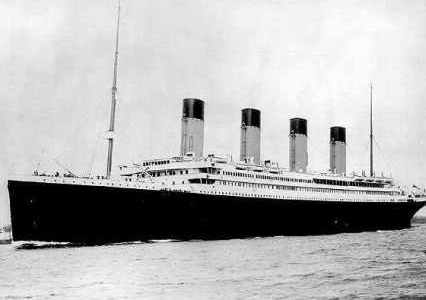
Titanic was the second in a series of three ships built at Harland and Wolff’s Shipyard, Belfast. The Titanic’s sister ships were Olympic and Britannic. The ships were owned by the Oceanic Steam Navigation Company, popularly known as White Star Line. When Titanic was launched 31 May 1911, she was the largest ship in the world. She was commanded by one of White Star Line’s most experienced officers, Captain John Edward Smith. Having successfully completed her sea trials in Belfast Titanic arrived in Southampton on 3 April 1912.

As there were still interior fittings to complete before the maiden voyage, it was decided not to allow members of the public on board while the ship was in port as was otherwise customary.

At 12.15 on 10 April Titanic left Southampton. As she made her way towards Southampton Water, the suction created by her propellers pulled the liner New York, moored in the dock, so hard that the mooring ropes snapped. Only the quick reaction of Captain Smith and the tug crews prevented a collision. Passengers travelled from far and wide to Southampton to travel on RMS Titanic but in April of 1912 she sank taking some of the passengers and crew with her.

Size comparison with the Airbus A380, a bus, a car, and an average-sized human 

Many on board were from Southampton and you can trace their footsteps throughout the city. This heritage is celebrated through our memorials and annual events. At 23.40 on 14 April Titanic collided with an iceberg. Wireless calls for help were sent out after about an hour, the last one was transmitted at 02.10 on 15 April. The ship sank about 02.20. The lifeboats with about 650 survivors were picked up by Carpathia at dawn on 15 April. The ship arrived in New York on the 18th. [photo EJ Smith captain of the Titanic]

Titanic facts and figures

Registered dimensions – Length: 852.5 feet, Length overall: 882.75 feet, Breadth: 92.5 feet, Depth: 59.6 feet,

Registered tonnage – Gross: 46,329, Net 21,831

Passenger capacity – First class: 735, Second class: 674, Third class: 1026,

Number of lifeboats – 20; capacity 1178 persons

Engines – 2 triple-expansion 8 cylinder engines and 1 low pressure turbine, 29 boilers, Registered horsepower: 6906, Total horsepower: 46,000

Speed – Service speed: 21 knots, Estimated top speed: 23/24 knots

Number of decks – 7.

Route and location of RMS Titanic


Today: The Artefact Exhibition at the O2 in London

Now extended due to popular demand, RMS Titanic, Inc.’s Titanic: The Artefact Exhibition at the O2 in London showcases over 300 artefacts conserved from the Ship’s debris field, extensive room recreations and never been seen before footage from the latest ambitious expedition to Titanic – offering visitors a poignant look at this iconic ship. Visitors are drawn back in time to 1912 upon entrance, as each receives a replica boarding pass of an actual passenger aboard Titanic.

They begin their chronological journey through the life of the Titanic, moving through the Ship’s construction, to life on board, to the ill-fated sinking and amazing artefact rescue efforts.

THE EXHIBITION


They will marvel at the re-created cabins and press their palms against an iceberg.

Perfume from a maker who was travelling to New York to sell his samples, china etched with the logo of the elite White Star Line and even a pocket watch belonging to an elite passenger — these and many other authentic objects offer haunting connections to lives abruptly ended or forever altered, including 14 never before seen artefacts that have recently completed conservation

learn-about-our-exhibition

the-exhibitionthe-artifacts