One day with Orient Express The World’s Most Romantic Train

 I was in Victoria station (London) ready to get the train to Brighton. I was waiting because it was early to depart , so I went around the station and I saw the most romantic and beautiful train of the world. I have never seen it before in my life. I was always intentioned to write an article about it and to find the train in front of me was an amazing surprise. Its beauty has abducted me. I decided to understand its history , write about kings’ and Queens ‘ story, illustrious international characters that travelled above the train, so doing I decided to tell the history of the most famous train of the world: the Orient Express.


On June 5, 1883 the first ‘Express d’Orient’ left Paris for Vienna. Vienna remained the terminus until October 4, 1883. The train was officially renamed Orient Express in 1891. Two separate trains are used: the traditional 1920’s and 30’s British Pullman carriages in the UK between London and Folkestone and a magnificent rake of original Wagons-Lits carriages in continental Europe aboard the Venice Simplon-Orient-Express. The Channel crossing is made by luxury motor coach through Eurotunnel. Guests travel in authentic vintage carriages, evoking the glamorous era of European rail travel in the 1920’s and 30s.

The atmosphere onboard is one of pure refinement where guests can socialise in the bar car listening to the gentle sound of the pianist playing the baby grand piano, enjoy the gourmet dishes prepared onboard or simply relax in their private cabins while enjoying the passing scenery from their own supremely privileged “window on the world”.

orient3The art decoration are the best The traditional craftsmanship, modern techniques and exotic materials used by Rene Prou suited the French scene of the 1920’s. He exhibited in the Paris exhibition of 1925, which launched the Art Deco movement and by the 1930’s had an international reputation. Prou was responsible for the design of six VSOE sleeping cars between 1926 – 1929. The breathtaking scenery are very romantic, Europe is a continent of immense variety, offering an infinite range of contrasting experiences. Vibrant modern cities sit alongside ancient towns with glorious pasts and tiny villages untouched by time. Breathtaking mountains, great rivers and forest-lined lakes encircle dynamic urban landscapes.World-renowned examples of history, culture and cutting-edge technology are often located close by wild, open countryside where little has changed for centuries.

Cities to Visit on the VSOE are, London,Venice,Vienna,Rome,Prague,Paris,Krakow,Istanbul,Budapest. The inaugural run made headlines all over the civilised world due to the writings of senior journalist Henri Stefan Opper de Blowitz, Paris Correspondent of the London Times, who sent frequent despatches as the great train journeyed eastwards. He spiced his writings with interviews conducted at the very highest level – with King Charles of Romania (who hosted all the “Orient-Express” travellers while the train waited) and with Sultan Abdul Hamid II, “Shadow of God on Earth”, ruler of Turkey, whom he talked to in Constantinople, the ultimate destination of the passengers. In those days the train could proceed no further than Giurgiu, about 45 miles beyond Bucharest, where the rails reached the Danube.

orient5Passengers had to cross the river by ferry, then board an inferior train for the run to Varna on the Black Sea coast of Bulgaria, where they joined a ship for an uncomfortable overnight voyage to Constantinople.

A few years later railway lines were built incorporating the Romanian Black Sea coast which featured some spectacular bridges. This new line, although slightly lengthening the sea journey, avoided a change of train. By the turn of the century, rails had reached Constantinople by way of Budapest, Belgrade, Nisch, over the scenic Dragoman Pass and through Sofia in Bulgaria. The 1,800 mile journey now took three nights. The rich and famous, the aristocratic and powerful, rode the “Orient-Express” to cities such as Vienna, Budapest, Bucharest and sometimes all the way to Constantinople. It was in the 1890’s that the expression “The Train of Kings, the King of Trains” was coined. [photo filippo baglini italoeuropeo]

orient6But the legends of spying, mystery, murder and intrigue did not begin to grow until the 1920s. Immediately after the First World War there was a massive revival of travel within Europe and also to the Middle East. It was decided to avoid Germany and Austria with the premier train running to Greece and Turkey, resulting in the construction of a magnificent new express which was to take the Simplon Tunnel route as the “Simplon-Orient-Express“.

The route was Paris (Lyon) to Vallorbe, Lausanne, Brigue, the Simplon Tunnel, Milan, Venice, Trieste, Belgrade, Nisch and Crveni Krst (for division), then one section to Sofia and Istanbul (as Constantinople had become), and the other to Thessaloniki and Athens

[photo filippo baglini italoeuropeo]

Starting on 15 April 1919 it only ran as a through train as far as Sofia at first, but in 1921 began operating right through to Istanbul as a genuine express. Taking only 56 hours from Paris (but still with the traditional three nights aboard the train) it was the fastest timing on the route and has never been surpassed.

The “Simplon-Orient-Express” enjoyed 19 years of excellence, its equipment being steadily upgraded until its prestige was paramount. Some of the sleeping cars from the late 1920’s and early 1930’s, which are now refurbished and included in today’s great train, represent the peak of the railway craftsman’s art.

[photo filippo baglini italoeuropeo]

read more about ORIENT EXPRESS  The World’s Most Romantic Train

ILLUMInations: the 54th International Art Exhibition

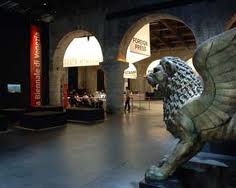
From June 4th to November 27th, 2011, Venice is hosting the Art Biennale, an event that since its foundation in 1895 has been characterized by its prestige and influence in the art world. The 54th International Art Exhibition, presided over by Paolo Baratta and curated by Bice Curiger, a Swiss art historian, critic and publishing director of TATE ETC. magazine, is entitled ILLUMInations, and will be hosted in the Central Pavilion at Giardini di Castello and at the Arsenale.

The exhibition is a platform for over 80 artists from across the world to speak of their culture, their traditions and their history through the language of art. Each with their own style and voice, but with one common denominator: avant-garde research and promotion of new artistic trends.

The title ILLUMInations refers not only to the importance of light, which has been a central theme in art history, but also pays homage to the city of Venice, whose mysticism and splendor is emphasized by the reflecting plays of light from the Grand Canal. This same light illuminates the art works of the great classical, and yet so modern, artist Tintoretto, whose works, such as Last Supper (from San Giorgio Maggiore Basilica) the Stealing of the Dead Body of St. Mark and the Creation of the Animal will be included in the entrance of the exhibition in the Central Pavilion. The renaissance artist is being used by Curiger as an example for artists to always keep searching for artistic inspiration and will be a symbol, a link, between the classical and the contemporary art world

This year the Biennale promises to be dynamic and interactive, a true international affair, a reflection on today’s art, and most of all a reflection on the social aspects of contemporary art and its role in shaping the culture in which we live. To use the words of Paolo Baratta “The Biennale is a great pilgrimage, where, in the works of artists and in the work of curators, the voices of the world meet to talk about their own and our future.

Bice Curiger, the curator, has said that the 54th Biennale offers her the opportunity “to reflect on the highly communicative aspect of today’s art, which strongly engages and commits viewers – drafting a contemporary image of the individual in the broad collective and social context.” In respect to this, the participant artists were asked to answer five questions:

– Is the art community a nation?

– How many nations are inside you?

– Where do you feel at home?

– Which language will the future speak?

– If art were a state, what would the constitution say?

KARL HOLMQVIST UNTITLED

Artists from all over the world – including countries such as Andorra, Saudi Arabia, Bangladesh, Malaysia, Ruanda, Congo and Haiti, which are participating for the first time – will have the opportunity to answer these questions and to express, through art, their cultural heritage and their contemporary circumstance, to find a dialogue between the different traditions, and to demonstrate that, at least in the name of art, we can all live together, despite our differences.

Maybe this coming together with a shared passion, meeting in the name of art, is what makes the Biennale so special, and maybe this is why hundreds of thousands of visitors, those in the art world and outside of it, will congregate in Venice to participate in this uniquely illuminating experience. 

European Literature Night at its Third Edition

The British Library is the stage for this awaited event that groups a selection of European writers translated and published in United Kingdom.

The European Literature Night is the brainchild of EUNIC London that has got under its roof 24 European Cultural Institutes, together with the European Commission, the British Library, the Arts Council and other cultural organizations.

British literature has got a huge cultural heritage and for years foreign literature, apart from the classics has been a bit neglected in favour of local and American literature with a common language. Modern European writers were virtually unknown and the British readers were missing a great part of contemporary authors opening a window to new cultures, histories and points of view.

To be part of this special event it is not enough to be translated in English but it has to be a great book, a read with significance, in few words the Ambassador of Writing for its own country.

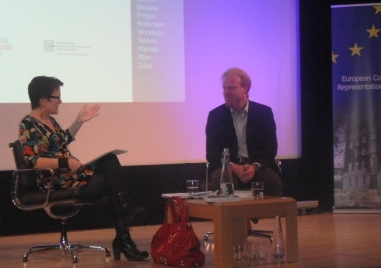
In Czech Republic this event has been going on for the last five years involving a number of venues in Prague, while the mutual event in its third edition has taken place in 18 European cities, each with a selection of authors launching their books in the language of the host city. In London BBC presenter Rosie Goldsmith a veteran now for this event, chaired the evening interviewing the authors and asking to read some passages from the books selected. Ms Goldsmith put all the writers at their ease, asking about life in their countries, the background of some of them clearly recognizable from their works.

With this yearly event, European Literature Night wants to promote European Literature of all genres being available in United Kingdom. The authors in London was a mix between West Europe and East Europe with Anna Kim from Austria and her novel “Frozen Time” a very touching novel about a missing wife in former Yugoslavia and her husband who’s looking for her living like in a limbo or Diego Marani from Italy, with “New Finnish Grammar” published 10 years ago, translated in many languages but English and now available for anyone to read. During the conversation Ms Goldsmith invited him to speak Europanto, a language created by Mr Marani using words from other European languages mixed all together. Europanto is not a proper language but something humoristic which takes after the difficulties of non English speakers, struggling to learn English and adding words from their languages to try and make them understood. Tomas Sedlacek represented Czech Republic instead of Emil Hakl who has been in Stockholm. He is chief macroeconomic strategist at Czech bank CSOB, who wrote the book “The Economics of Good and Evil” and he has shown and written a book which is very readable despite the topic which is quite tough.

Peter Terrin, from the Flemish area in Belgium, has always written in Dutch, a language close to Flemish and he said that it is difficult that a Dutch book has got a translation because it is very difficult. Ms Goldsmith pointed out that translators are generally forgotten when promoting a book, but given their invaluable work, she always mentions them, also the writers are involved with the translations forging a professional relationship with them. Recently, many publishing houses got more interested in translating foreign books and some have an extensive catalogue that grows endlessly given the demand from English speaker readers. Latvian Nora Ikstena has seen another of her books translated in English but with the love story “Misguided Love” she has been invited at this literary event. Ms Ikstena has gathered the thoughts and the childhood memories of Poet Imants Ziedonis, who, for an illness has got difficulties in talking and writing, publishing a biographical work of fiction “The Indefinite Was”, one of the most beautiful biographies ever, with Ms Ikstena been awarded the most prestigious literary award of the Baltic States. And last but not least Bozena Uminska – Keff from Poland with “A Piece on Mother and Fatherland” where it is palpable the conflict towards her mother and her country. It reads like a screenplay in a fascinating style about a Jewish survivor mother, her daughter and their anti Semitic country.

The enthusiasm of discovering and reading European Literature is wide spread and for this reason Ms Rosie Goldsmith has created a network for everyone who care about promoting good quality books from Europe. A hub of journalists, publishing houses, cultural institutes and virtually anyone involved with this topic. A page on Facebook has been created where it is possible to post informations about new books translated in English, literary events, interviews to writers and everything that turns around the world of European Literature.

Harrison the father of GPS navigator

In the era of the satelitis, GPS navigators, google map, to locate a point on the earth or in the sea is become very simple, but and’ thanks to an English if today we can travel sure. He invented the marine chronometer, a long-sought device in solving the problem of establishing the East-West position or longitude. his is the history of John Harrison Up until the middle of the 18th century, navigators had been unable to determine their position at sea with accuracy and they faced the huge attendant risks of shipwreck or running out of supplies before reaching their destination. It was, as Dava Sobel has described it: ‘the greatest scientific problem of the age’.

Knowing one’s position on the earth requires two very simple but essential coordinates; rather like using a street map where one thinks in terms of how far one is up/down (one’s Latitude) and how far side to side (one’s Longitude). The longitude is a measure of how far around the world one has come from home and has no naturally occurring base line like the equator.

A comparison with your local time (easily found by checking the position of the Sun) will then tell you the time difference between you and home, and thus how far round the Earth you are from home. The Earth can be divided up, like the segments of an orange, into 24 one-hour time zones, the 24 hours making up the whole 360 degrees round the earth and each hour’s time difference equivalent to 15 degrees of longitude. The great flaw in this ‘simple’ theory was – how does the sailor know time back home when he is in the middle of an ocean? The obvious, and again simple answer is that he takes an accurate clock with him, which he sets to home time before leaving.

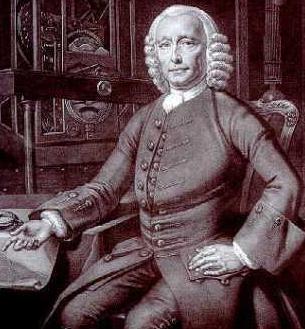
The principle is indeed simple, but the reality was that in the 18th century no one had ever made a clock that could suffer the great rolling and pitching of a ship and the large changes in temperature whilst still keeping time accurately enough to be of any use. Even the great Sir Isaac Newton considered it so. But the stakes were high, especially after 1714 when the British government offered the huge sum of £20,000 (comparable to £2.87 million / €3.65 million / $4.72 million in modern currency) for a solution to the problem, with the prize to be administered by the splendidly titled Board of Longitude. In a Little town Foulby, near Wakefield in West Yorkshire of Yorkshire there was a self-educated English clockmaker John Harrison (24 March 1693 – 24 March 1776). Harrison built his first longcase clock in 1713, at the age of 20. Nobody would have thought that he would  become the father of GPS navigator.

The mechanism was made entirely of wood, which was a natural choice of material for a joiner . History relates that, after a life dedicated to achieving this seemingly impossible goal, resulting in the creation of an extraordinary series of five prototype timekeepers, Harrison succeeded in his goal. With the work of a small band of horological pioneers following in his footsteps, the practical marine chronometer became a reality.

He was a man of many skills and used these to systematically improve the performance of pendulum clocks. He invented the gridiron pendulum, consisting of alternating brass and iron rods assembled so that the different expansions and contractions cancel each other out. Another example of his inventive genius was the grasshopper escapement — a control device for the step-by-step release of a clock’s driving power. In the 1720s Harrison himself was making such clocks, which he claimed were capable of maintaining an accuracy of better than one second in a month, in spite of the fact that they were mostly made of wood. To achieve this high precision, Harrison incorporated several extremely ingenious new ideas, including a mechanism to automatically compensate for the effects of temperature. He also designed his clocks to run without the need for any oil, the ‘Achilles heel’ of clockwork: in the eighteenth century clock oil was derived from animal fat and often quickly deteriorated into a kind of acidic glue.

A longitude describes the location of a place on Earth east or west of a north-south line called the Prime Meridian. Longitude is given as an angular measurement ranging from 0° at the Prime Meridian to +180° eastward and −180° westward. Many solutions were proposed for how to determine longitude at the end of an exploratory sea voyage and hence the longitude of the place that was visited.

The practical methods relied on a comparison of local time with the time at a given place (such as Greenwich). Many of these methods relied on astronomical observations relying on the predictable, “clockwork” nature of motions of heavenly bodies.Harrison instead set out to solve the problem in a direct way: by producing a reliable clock. Harrison built third marine timekeeper.

Harrison’s First Marine Timekeeper H1 Created between 1730 and 1735, Harrison’s first marine timekeeper was intended as a portable version of his precision longcase clock design. It ran without any lubrication, had automatic temperature compensation and was a highly sophisticated but complex mechanism. The second marine timekeeper H2 Built over two years, between 1737 and 1739, H2 was a refined version of H1[ in photo left ], with a remontoir to ensure a uniform drive to the balances. A fault in the design of the balances caused Harrison to reject the clock and start work on H3. H2 stands 66cm high, weighs over 39 kg and is made almost entirely of brass. The only wood he used in this timekeeper is in the lignum vitae parts and pallets. The marine timekeeper H3 Harrison spent nineteen years working on this immensely complex timekeeper. For many years he was convinced it would win him the longitude prize. It is the only timekeeper to retain its original carrying case. was supposed to be Harrison’s final word in timekeeper design and for years he was convinced it would be the prizewinner. Evidently the scientific establishment was too, 

h1

as in 1749 Harrison was awarded the Royal Society’s highest honour, the gold Copley medal, on the strength of his progress, and the Board of Longitude continued to support him with grant money. However, even after 19 years of painstaking labour, H3 was stubbornly refusing to reach the necessary accuracy. We are in the 1759, Harrison built the evolution ,arine timekeeper H4, ‘the most important watch in the world’, alongside Kendall’s copy, K1, 1769. K1 enabled James Cook to navigate with great accuracy during his second and third voyages of discovery and was dubbed by himhis ‘trusty friend’. (NMM ref: B5165).

The oscillating balance, under the beautifully pierced and engraved upper part of the movement, was one of the main keys to the design’s success. Harrison agreed that the copy K1 was even more beautifully made than his original. Harrison’s second watch, H5, completed in 1770, was technically very similar to H4, but with slight improvements to the escapement and compensation, and with a simplified appearance to the movement and dial. By this date Harrison was desperate for the recognition that his watch had solved the longitude problem. Rightfully feeling he deserved the remaining prize money, Harrison sought the support of King George III, himself a keen amateur ‘natural philosopher’ and very interested in advances in watch-making.

This first marine watch (or “Sea watch” as Harrison called it) is a 5.2″ diameter watch in silver pair cases. The King tested H5, with extremely good results, at his own private Observatory in Richmond and then promised the Harrisons his support. This resulted in a Parliamentary debate and the award to Harrison of the remaining prize money, as a bounty from Parliament. Just to remember the first man to achieve all four features in a successful chronometer was the London watchmaker John Arnold (1736–1799). There is considerable evidence that his work was based on Harrison’s ideas.

Harrison died on his eighty-third birthday and is buried in the graveyard of St John’s Church, Hampstead, but he live inside every GPS navigators, and nobody will be lost in sea or in every other place of the earth, thanks to his discoveries.His Clocks and Chronometer are on display in the Royal Observatory, Greenwich in London.


Note: This article is based on extracts from the Jonathan Betts, Senior Specialist, HorologyNational Maritime Museum / Royal Observatory, Greenwich . Time Restored: The Story of the Harrison Timekeepers and R.T. Gould, ‘The Man who Knew (almost) Everything

Mona Lisa and Sant’Orsola Monastery

Sant’Orsola was one of the Florence’s most important monastery; it had extensive buildings and at the start of the XVI century was inhabited by more than sixty nuns, as well as the young girls waiting to their vows.

The convent was not just a place of prayer and the sisters alternated their meditation with different types of work: many produced cloth for household linen, others sacred vestments or gold thread.

Getting a daughter in Sant’Orsola was not easy and, in addition, a costly business: it not only required the girl to come from a good background but also a large sum of money.

Mona Lisa visited the nearby convent of Sant’Orsola from the time of the marriage and supported it through offerings and the purchase of the products made by the nuns.

After her husband’s death she moved to the convent of Sant’Orsola, where she was assisted by her daughter, sour Ludovica, as established by her husband in his will, made in January 1527.

In the will, among the numerous clauses, Francesco asked to be buried in the family tomb, built around 1526, inthe church of the Santissima Annunziata; he asked the monks to pray for his soul… and then he thought to Mona Lisa.

Francesco first defined Lisa ‘eius dilectam uxorem’, his beloved wife, and then ‘mulier ingenua’, a rare expression in Latin language, never found in the notary acts, which does not mean ‘faithfull wife’, but a woman with nobility of spirit, a woman of good principles.

At the end, he charged his daughter sour Ludovica to care for her mother and take all those steps necessary to look after her health.

Francesco del Giocondo died in March 1538 and, after his death, Mona Lisa spent some time with Piero’s family (her first son) in Via della Stufa; then, probably, she fell ill and suor Ludovica convinced her mother to retire into the convent, assisted by her and the other nuns.

Lisa’s death has always been a mystery because it was never registered in the ‘Libri dei Morti’, in the ‘Books of dead’ of the city, neither in the notary acts; luckily, the priests of San Lorenzo church, who knew well Lisa, noted her death in their books with the following words: Mona Lisa wife of Francesco del Giocondo died on 15 July 1542 and was buried in Sant’Orsola.

The funeral happened in solemn form and all the priests of San Lorenzo and all the nuns of Sant’Orsola participated to the funeral procession and the solemn high Mass.

At the end of the burial rite, Lisa’s body was buried in the church of the convent or in the crypt below.

As we know, the convent has been considerably transformed (and in part, destroyed) but the part below the church seems untouched.

Just in this place, under the floor, scholars and archaeologists will carry out researches by ‘geo-radar’, to locate discontinuances in the ground, and then will proceed by excavations.

The inside of the convent is ruined and just now, before beginning great works for a new multifunctional building, it is the moment to research and excavate.

The renovation of Sant’Orsola is a good opportunity to create a memorial to Leonardo and Mona Lisa and a small museum dedicated to the history of this ancient Monastery.


Sant’Orsola: in corso il trasferimento dell’immobile dall’Agenzia del Demanio

[photo Sant’Orsola’convent] 

Mona Lisa’s life: the wedding, the husband, the children

In March 1495, Mona Lisa ( Gioconda) married Francesco del Giocondo, whose first wife, Camilla Rucellai, had died the year before, leaving him a little boy, Bartolomeo. After the wedding Lisa left her family home and moved into Francesco’s house in Via della Stufa, a small and narrow street that leads out of Piazza San Lorenzo. It was a fairly common section of town and in a small building in the same street there several noisy, brazen women of loose morals who usually animated the block. The house was at the end of the street, on the corner with Via Sant’Orsola, facing Palazzo Taddei, where in 1505 lived Raphael and who knows if the young artist knew just then Lisa and Francesco del Giocondo.

By marrying Francesco, Lisa became a rich woman. Her husband was one of the well-known men of the city, a rich and astute merchant and man of public affairs; he was in contact with the most important commercial centres in Italy and Europe and was highly familiar with the money market. Francesco del Giocondo provided merchandise for religious institutions, but also lent money to members of the Church at a high rate of interest, which caused him twice to be charged for usury by the ecclesiastic Court of Florence.

Lisa’s wedding to Francesco and her entry into the new family brought her security and well-being. Her new status meant she took greater care of herself and her appearance, and this new image must have reflected her noble origins and the affluence of her family. She dressed well and even elegantly: with her husband in the silk business, she would have had fine clothes and jewels, as told Francesco in his will. In those days, the woman was the pillar of the household and Lisa was no exception. She directed domestic life and ensured the continuity of customs on which family life was based. As mother she felt deeply responsible for the growth, education and future of her children.

Lisa became pregnant shortly after the wedding and the following year, 1496, she gave birth to a son who was called Piero; the year after, she had Piera, her first daughter. Rich women had more children than their poorer counterparts and, as they did not breast-feed them, the intervals between one birth and another could be shorter. Piera lived only two years: she died in June 1499 and was buried in Santa Maria Novella Church.

In the meanwhile, Lisa was again pregnant and in August 1499 she had another daughter, Camilla, called with the same name of Francesco del Giocondo’s first wife. This small but telling gesture probably reveals the humanity and natural goodness of Lisa, who was not yet twenty years old. A gesture which may have signified respect for her husband’s past life but also a continuity of affection for the young Bartolomeo, the son of Francesco’s first wife.

At the start of the sixteenth century Lisa fell pregnant three more times: in November 1500, when Leonardo da Vinci came to Florence and was hosted at the Santissima Annunziata monastery, was born Marietta, in December 1502 Andrea and in December 1507 Giocondo, who lived only a month. As we will see, the birth of Marietta was providential: she first helped her mother overcome a serious bereavement and later looked after her in her old age.

Bartolomeo, Piero e Andrea went early to work in the shop, learning their father’s trade; Camilla and Marietta were set for a life as nuns, even the second was ordained after early and tragic death of her sister. Camilla took the habit in 1511, became Suor Beatrice in the convent of San Domenico (near San Marco Church) but she fell ill and died in 1518, at the age of eighteen. After Camilla’s death, Lisa began to go to the nearby convent of Sant’Orsola more often and decided to allow her youngest daughter to stay with the nuns. [photo Sant’Orsola’convent]

Marietta took the veil in 1521 as Suor Ludovica in the convent of Sant’Orsola, where Lisa withdrew, after her husband’s death. Unlike her sister, Suor Ludovica lived a long life, became the representative of the institute and died in 1579. 


Sant’Orsola: in corso il trasferimento dell’immobile dall’Agenzia del Demanio

[photo Sant’Orsola’convent] 

Interesting revelations about the story on Mona Lisa’s native town

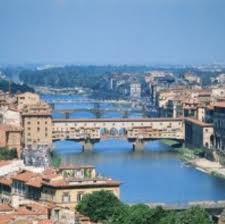
Lisa Gherardini, known as (Mona Lisa or Gioconda) , the future wife of Francesco Del Giocondo, was born in Florence a summer morning, on 15 June 1479, in a house between Via Sguazza and Via Maggio [ see in the photo], which her parents had rented a few years earlier. It stood close to Borgo San Iacopo and the banks of the Arno. Her father, Antonmaria Gherardini, married her mother, Lucrezia Del Caccia, after his first two wives died of childbirth: Gherardini and Del Caccia families were originally from Chianti, where they had many properties.

Sguazza1web_1Sguazza4web_2

Via Sguazza and Via Maggio [ see in the photo]

Lisa was born during wartime and in a critical period for the Republic of Florence. A year earlier, on Sunday 26 April, 1478, the Pazzi Conspiracy had taken place. The conspiracy was an attempted coup d’état by means of the simultaneous murders of Lorenzo and Giuliano de’ Medici: during Mass in the Duomo, Giuliano was stabbed and died on the instant, while Lorenzo was injured but managed to flee.

A few months later the Aragonese army invaded the Chianti (causing great destruction) and in the following year moved to the hills of Florence . Just at the moment in which the city seemed doomed, Lorenzo de’ Medici revealed his diplomatic skills and made a daring move: he went to Naples, met King Ferdinand of Aragon and, unexpectedly, he succeeded in establishing peace and winning a favourable agreement for Florence.

mona-lisaWith the power of the Medici re-established, the city underwent a second artistic flowering and towards the end of the century a new generation of artists achieved the highest point of the Florentine Renaissance. This generation was composed of such artist as Botticelli, Leonardo da Vinci, Michelangelo and Raphael who, at the start of the sixteenth century, were all working in Florence.

In spite of her celebrity, Lisa always lived in the narrow streets of Florence, close to places of ill-fame. Lisa was born in Via Sguazza, a small and dark street which collected the water drain and her home, very modest, was made out of an old wool shop.

As Lisa grew, Antonmaria and Lucrezia had other children: Giovangualberto, Francesco, Ginevra, Noldo and two other daughters, whom Lisa never forgot even when, more fortunate than them, she became a rich lady.

By 1494 the Gherardini family had moved out of the house in Via Sguazza to Via de’ Buonfanti, today Via de’ Pepi, in the district of Santa Croce. They lived in a house together with its owner, an old merchant become a widower, and next to the house of Antonmaria’s father-in-law, and close to that of the notary Ser Piero, father of Leonardo da Vinci. Ser Piero had his office facing the “Bargello”, at the beginning of Via Ghibellina and a few hundred meters from Via de’ Pepi, where the Gherardinis lived.

Who can guess how many times Lisa must have passed by Ser Piero’s office, perhaps also on the day of her wedding. And after too, holding her children by the hand on tha way to her grandparents’ house.

Probably, Ser Piero was invited to the wedding: certainly, he knew Lisa but also her husband Francesco del Giocondo, as archival documents prove, because the rich merchant was his client for a law-suit. 


Florence

File:Del Giocondo-Gherardini-Firenze-map.jpg

Resting place of the Mona Lisa is probably an old rubbish dump in Italy

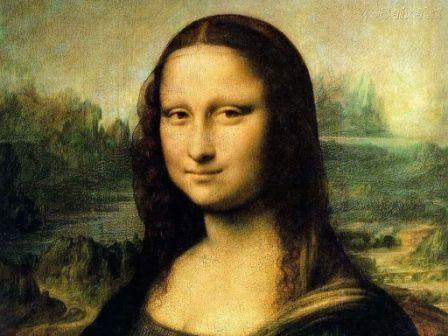
The last resting place of the Mona Lisa is probably an old rubbish dump in Italy, it has been revealed. Mona Lisa is one of the world’s most enduring symbols of feminine allure. Was she the creation of Leonardo’s da Vinci’s imagination? Giuseppe Pallanti[in photo], a teacher from Florence who has spent 25 years researching the city’s archives, has discovered the first clear evidence that da Vinci’s family was closely connected to the silk trader, Ser Francesco del Giocondo, who married Lisa Gherardini in 1495. Pallanti published many researches about Tuscan countries from XV to XVIII centuries.

Giuseppe Pallanti

Mona Lisa Gherardini was born on 15th June 1479, in Florence, in a small house on the corner between via Sguazza and via Maggio, which her father Antonmaria rented by Giovanbattista Corbinelli. In March 1495, Mona Lisa married Francesco del Giocondo, a rich silk merchant of Florence, and moved into his building in via della Stufa, near Sant’Orsola Convent and San Lorenzo Church. Lisa had five children.Giuseppe Pallanti, following Vasari’s lead, bases his work on a meticulous and in-depth review of archival materials in attributing a name to the face of the Mona Lisa: Lisa Gherardini, married to Francesco del Giocondo. Researchers had hoped that they might find the tomb or gravestone of the Mona Lisa when they established her true identity in Florence. Records recently unearthed by author, and Mona Lisa expert Dottore Giuseppe Pallanti show that Lisa was buried in the convent of Sant’Orsola in Florence where she died.

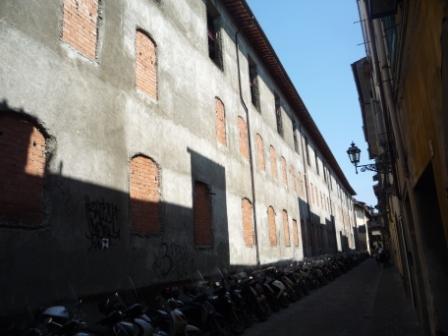
A church funeral record found by Prof. Pallanti shows: “The wife of Francesco del Giocondo, died July 15, 1542 – buried at Sant’Orsola”. The sprawling three-story Sant’Orsola building dates back to the 1309 but ceased to be used as a convent in 1810 and became a tobacco factory until it was uses for university classrooms in the 1940s and 50s. But where is the Monnalisa’s tomb? Prof. Pallanti said: “The tombs have all been lost. Sadly, when the works were carried out in the 1980s no thought was given to the historical importance of the building and its artefacts. We have interviewed Prof. Pallanti describing the Monna Lisa’s history (the interview  is going to be broadcasted by the Oraitalia, Radio in Argentina and in the world). Prof. Pallanti  concluded the interview noticing  “The beauty of her spirit now seems even more radiant than  other beauties that Leonardo had made eternal”.


Share this Article

We are going to write about the  Gioconda life and other mysteries soon.

photo Gioconda o the Monna Lisa fusedfilm


Wer war Mona Lisa?

Translated by Marianne Schneider 
Schirmer-Mosel, Munchen (Germany), 2008
www.schirmer-mosel.com

Mona Lisa del Giocondo
Mona Lisa Revealed. The True Identity of Leonardo’s Model

Translated by Timothy Stroud
SKIRA, Milano (Italy), 2006
www.skira.net/dettaglio.php?back=catalogo.php&page=&lett=&isbn=8876246592

Mona Lisa Revealed
La véritable identité de la Joconde. Un mystère dévoilé

Traduction Béatrice Arnal
SKIRA, Milano (Italie), 2006
www.skira.net/dettaglio.php?back=catalogo.php&page=&lett=&isbn=8876246584

La véritable identité de la Joconde
La vera identità della Gioconda. Un mistero svelato

SKIRA, Milano, 2006
Italy
www.skira.net/dettaglio.php?soggetto=&isbn=8876246576&back=ricerca-normal.php&page=&lett

La vera identità della Gioconda.
Mona Lisa

YILIN PRESS, Nanjing, 2006
China
www.yilin.com

Mona Lisa Yilin Press Nanjing China


Mona Lisa

Translated by Kazuo Harada
Ichigeisha Publishing House, Tokyo, Japan, 2005
www.ichigeisha.co.jp
info@ichigeisha.co.jp

we publish by Via-academy the Top Italian Institutes

 Via Academy,in  Manchester,has been completed the analysis of all Top Italian Scientists (TIS) . We publish the list of Top Italian Institutes normalised by TIS fraction.

Now that the analysis  of all the Top Italian Scientists was completed,we publish the the classific of the Top Italian Institute. We distinguished small and special institute (San Raffaele, Normale, SISSA, Sant’Anna, IIT, IUSS Pavia) from general universities.

Top Italian Institutes normalizzata per TIS fraction

Mission of TIS

  • a “democratic” and “universal” model to give publication opportunities to established scientists, as well as young experts of any field of knowledge
  • a lay, unbiased definition of “scientifically relevant” publication, based on who and how many are interested in reading it
  • an open source of support to sustain the free work of scientists and scholars
  • the re-allocation of merit and copyright to the individuals who really produce the work and not, for example, to the publishers
  • and impact generator  that produces funding too
  • an alternative platform to ‘Open Access’ journals, which make the Authors pay for publications
  • a philosophy different from that of free platforms like arXiv, Ssrc or Indymedia

H INDEX DEFINITION

The h-index is an index that attempts to measure both the productivity and impact of the published work of a scientist or scholar. The index is based on the set of the scientist’s most cited papers and the number of citations that they have received in other people’s publications. The index can also be applied to the productivity and impact of a group of scientists, such as a department or university or country. The index was suggested by Jorge E. Hirsch, a physicist at UCSD, as a tool for determining theoretical physicists’ relative quality and is sometimes called the Hirsch index or Hirsch number.

for more information:

http://en.wikipedia.org/wiki/H-index

World Theatre Day at the Italian Cultural Institute

The Italian Cultural Institute organized an event where World Theatre Day and the Unity of Italy have been celebrated at the same time.

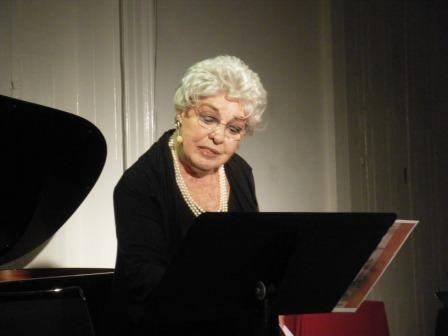
The guest of honour has been Anna Proclemer, one of the greatest Italian actresses of all times, who, in front of an expectant audience, performed a series of poems by Italian poets like Giuseppe Giusti, Giacomo Leopardi, and Gabriele D’Annunzio. Together with her daughter Antonia Brancati, she engaged with the audience with quotations by Dante, Umberto Eco, Shakespeare, and Goethe, all with a common subject: Italy and Italians, remembering the 150th anniversary of the Italian Unity. [photo :Ms Anna Proclemer Cinzia Cerbino italoeuropeo]

World Theatre Day has been established in 1961 and various events are organized all over the world to mark this occasion. Last year in London, for the Italian community, the Italian Cultural Institute invited  Anna Proclemer for a recital and this year the invitation has been repeated celebrating the 50th anniversary of this artistic event and the 150th anniversary of the Italian Unity.

A speech of introduction by the Director Carlo Presenti has been followed by a greeting by  Giuseppe Pietrolucci who represents the Commission for the Artistic and Cultural Events in Italy.

The recital has been accompanied at the piano by Maestro Antonio Sardi de Letto who alternated the poems performed by  Proclemer and  Brancati with music by Giacomo Puccini, Robert Schumann, Gioacchino Rossini and others historical anthems and hymns linked to that period called Risorgimento.

The recital entitled “ Va’ Pensiero…) like Giuseppe Verdi’s “ Nabucco” is a collection of music, poems and quotations, but also tells about characters less known like few women involved in the making of Italy. Anita Garibaldi, the most famous one among the others is remembered together with the Countess of Castiglione.

It has been a special evening for a great event where it has been possible to have in London Anna Proclemer, the Lady of the Italian Theatre. The Unity of Italy and World Theatre Day have been celebrated in perfect unison.