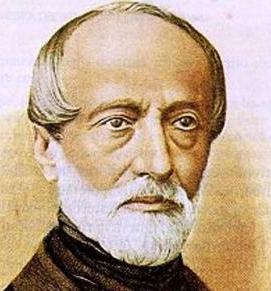
The life of Italian patriot Giuseppe Mazzini during his forced exile in London was yesterday examined in the Ucl (University College London) Italian department. In particular, the lecture held by Andrea del Corno, who is the responsible for the Italian Collections at the London Library , addressed to Italian political journalism in London during the years 1840-1859, primarily focusing on four journals (Apostolato Popolare, Il Pellegrino, L’Educatore and Pensiero ed Azione) run by Giuseppe Mazzini (1805-1872).
Apostolato Popolare had under the title, surmounted by the initials GI, the mottos Dio e il popolo e Lavoro e frutto proporzionato, while the bottom of the first number , named “Agli italiani e specialmente agli Operai Italiani”, exposed the need to form an association for workers. It was a pedagogical journal because it promoted democracy and spirit of unification of Italy. Apostolato popolare cost only 3 pence and had a circulation of around 2000 copies for each number. The journal was displaced in the whole Europe including Italy, France, Malta and even Turkey.
The most important journal run by Mazzini was “Pensiero e Azione” because it was the instrument of circulation of his ideas. The paper was active during the II Independence War and in effect it contained political issue, report about Garibaldi’s military campaign and Mazzini’s commentary, in which he insisted on the necessity to fight in order to affirm the Republican ideals.
“Giuseppe Mazzini’s journals were so successful despite their clandestine circulation because they were linked to the revolutionary message”, said Andrea del Corno. “His publications were the testimony of his political genius. He believed this journals could contribute to spread his political ideas and help the Italian revolution. Mazzini spent a lot of energy in the publication of this journal because he saw it as an instrument to mass educate, so it was not done for profit”.
However, Giuseppe Mazzini wasn’t only engaged in journalism during his period in London. His most important activity was the opening of an Italian school for children in the UK capital. In 1840 around 150 Italian children lived in London in a begging condition. When he moved to London, Mazzini, who believed that the education was absolutely essential for the cultural growth of the working class, managed to open an evening free primary school for them. The Italian activist gave the Italian children for almost 20 years the education that neither the government neither the Church gave them. The lectures were held at Hatton Garden, in the Clerkwell area, named Little Italy for the presence of Italians. The students were taught to read and write, and there were also lessons in Art, Arithmetic, Geography, History and Astronomy.
Giuseppe Mazzini left London in 1868 and died 4 years later, continuing to fight until the end for Republican ideals.