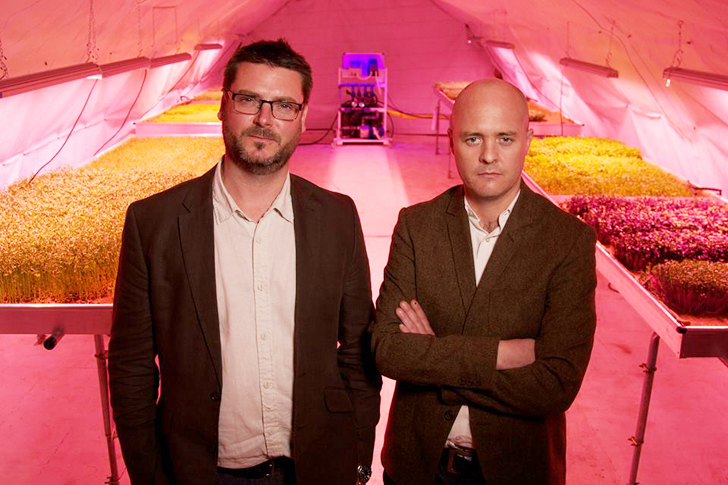
Growing Underground

London – London subsoil has lately become the centre of attention for the numerous innovative projects aiming at putting underground redundant spaces to good use (e.g. bike paths tunnels utilising kinetic energy), or at creating new infrastructures (e.g. the Crossrail).

Perhaps not all of you Londoners know what hides underneath the busy roads of Clapham. Precisely 33 feet under street level, vegetables grow as part of the Growing Underground project started last year, an underground farm using hydroponics and low energy LED lights.

Behind this revolutionary project there are the entrepreneurs Richard Ballard and Steven Dring who had been thinking about the possibility of growing crop vegetables underground for years, and finally leased the space from TfL one year ago, and based their underground farm under Clapham.

As a matter of fact, just 33 feet under Clapham there are huge tunnels built in the 40s as deep air raid shelters which were never converted into an extra run of the Northern Line, as originally planned. These tunnels sat there unused till Ballard and Dring finally obtained the lease for only £1 per square meter, and began building their farm. The idea was to create a farm in a totally controlled environment in order to make it as sustainable as possible by reducing waste and optimising energy consumption. The underground tunnels turned out to be the perfect environment to grow crops as they have a stable temperature of 16°C, which is just about right to grow micro-greens, and they are even spare from pests.

Therefore, neither extra heating energy nor pesticides are used in Ballard and Dring’s underground farm. The farming technique used is called hydroponics, and – as technological as it sounds – it is a soil-free farming technique which was already used in Ancient Greece.

growingunderground1The seeds sit on an inert matrix, and are flooded once or twice a day with nutrient-rich water (in this case collected from the surface rain-water through a special sump), which is then carefully drained away. Above the plants special low energy LED lights are positioned in order to supply the greens with the amount of light they need. 

The advantages of growing vegetables underground are apparent: first of all, the totally controlled environment allows for a year-round production, supporting the low food miles, thus leading to a decrease in vegetables import. Hydroponics uses 70% less water than conventional farming, while the energy required to channel water and to light the LED lights is sourced from green providers; furthermore, new options are discussed to bring the footprint down to zero (e.g. derive the energy needed from the heat generated by the Northern Line trains). These are the perfect conditions for a Zero Carbon farm.

The plants farmed underground include a variety of herbs and micro-greens, but the collection will soon expand. For the moment, the herbs farmed underground are: garlic chive, mizuna, radish, pea-shoots, watercress, rocket, red vein sorrel, coriander, micro rocket, red amaranth, Thai basil and mustard leaf. All of them can be delivered to London M25 restaurants in four hours, numbers conventional farming simply cannot achieve in a city like London.

As a matter of fact, freshness is Growing Underground trade mark. And taste is just as good as that of conventionally grown crops, says television chef Michel Roux Jr, who has joined the company as a director.

Growing Underground is not a fancy ruse, but it inserts itself into a global trend of environmental awareness which is leading to infrastructural and commercial projects aimed at transforming the production cycle.


cibosubundergroundGood resources management, energy efficiency and reduction of waste materials have become the main concerns in production, urban planning and construction, and the results of this eco-sustainable turn can be seen in the innovations in farming techniques as well.

Growing Underground combines the necessity of eco-sustainable farming with the importance of re-discovering a taste for natural and fresh food, in a city which too often has no time to care. Through the use of new technologies, urban growing will not only contribute to a better environment, but it will hopefully also stir Londoners’ sense of nature and well-being.


Pimlico – Nine Elms Bridge 74 Projects Unveiled

London – Looking through the 74 projects released by the Borough of Wandsworth concerning the Bridge which will connect Nine Elms to Pimlico, one has the feeling of having been catapulted into the future, or into a parallel artsy dimension where London looks more like a futurist vision than a concrete city. Brace yourselves: we are still in 2015, in the same old London, and yet one of the 74 projects will be soon realised, presumably even abiding the laws of physics and engineering.

The Bridge will connect Pimlico (Westminster) to the boroughs of Wandsworth and Lambeth, directly affecting the development area spanning from Vauxhall to Battersea, and connecting it directly to the City.

This largely industrial stretch of the South Bank has been somehow ignored by infrastructural development for the past decades, but it is now rapidly changing, and the transformation will most likely be highly visual.

As a matter of fact, not only will it be connected to Westminster by the Nine Elms Bridge, it will also harbour the majestic glass cube of the US Embassy building (expected for 2017); furthermore, more embassies will probably be erected in the area which will offer 18.000 new homes, 25.000 jobs and other attractions and green spaces.

The Nine Elms Bridge is indeed part of a £1 billion infrastructure plan, aiming at the radical transformation of the vast London South Bank stretch, through the enhancement of its infrastructure and of its economic and cultural capital. A further very important specification: it will be a pedestrian and cycle bridge only. No cars.

images 1As Wandsworth council’s Conservative leader Ravi Govindia says “we want not only a functional bridge, but a beautiful bridge”, and the premise seems to have been taken quite seriously by the architects and engineers participating in the contest, to such an extent that at a passively non-engineering eye, functionality really does not look like their first concern.
From disco whirly purple wires to minimalist ethereal razor-blade designs, from gigantic mandolines outlined by waterfalls to see-through suspended frameworks, the 74 projects are surely eye-catching, and all absolutely nail the first point on the official contest requirements list: Be innovative and memorable and challenging previous interpretations of bridge design.
As projecting a majestic bridge in the heart of a metropolis is not exactly child play, the project predictably encountered a fierce opposition from both Westminster’s Labour and Conservative parties, who claim the Nine Elms Bridge would unnecessarily destroy one of the few green spaces left on the riverside, and question its functionality.

Funding is also an issue as the Bridge is expected to cost approximately £40 million, and probably part of it will be covered by sponsorship, thus opening the way for a ‘branded bridge’, an hypothesis scaring everyone who has ever come across the half-empty Emirates Air Line. Another issue is the supposed enhancement of cyclists and pedestrians’ safety. Being a cycle and pedestrian bridge only, the Nine Elms Bridge project aims at creating a secure environment for commuters and tourists, by separating them from cars. This move has been viewed by many as an easy way-out from the pressing urge of public transport renovation.

Only a week after the eco-sustainable construction fair Ecobuild 2015, London asks herself whether the Nine Elms Bridge will have a significant value as an infrastructure, or whether it will turn out to be a mere attraction for tourists.

In any case, London pedestrians and cyclists will soon be able to blithely cross the river from Westminster to visit the futuristic space Wandsworth and Lambeth are turning into, and they surely would not mind commuting on a purple swirly wire. Or would they?

 photo dezeen.com

POLITICAL STATUE ON TRAFALGAR SQUARE’S FOURTH PLINTH

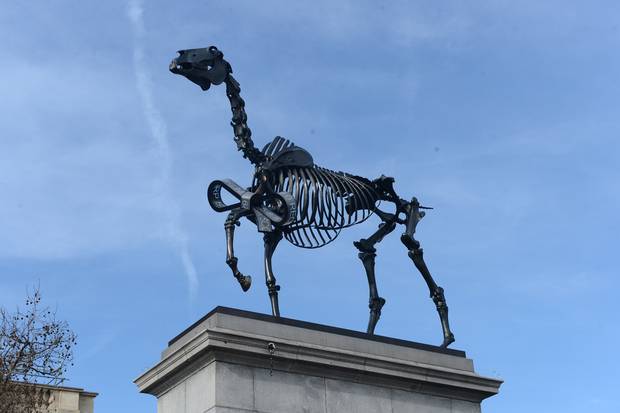
London, March 5 – The most political sculpture Trafalgar Square has ever had has been unveiled: a skeleton of a riderless horse with a London Stock Exchange ticker fixed to its leg as a symbol of City excess and political austerity, has replaced the giant blue cockerel by Katharina Fritsch on central London Square’s Fourth Plinth.

German artist Hans Haacke’s sculpture, as said, “is a contemporary comment on history, power and money”, which refers both to an equestrian statue of William IV destined for the plinth in the 19th century but never installed due to insufficient funds and to an etching by George Stubbs (Anatomy of the Horse, 1766). 

The strength of this statue commissioned by the Mayor of London Boris Johnson is the electronic ticker planned to focus the attention to the gap between rich and poor.

Reminding people that “the less fortunate look to the bare bones of the horseplay of today’s gentry” – as Haacke declared – while traders make their millions, is the main objective of this statue, the 10th installation occupying the Fourth Plinth. An important anti-capitalist signal presented to the public two months before the general election.

Haacke intended that his Gift Horse, despite its emaciated appearance, could fit in with the other traditional sculptures in Trafalgar Square and speak to them about the role of money and power in modern London.
Henceforth, wealth gap can’t pass unnoticed when we’re crossing Trafalgar Square and watching this big horse skeleton.


To learn more…
The Fourth Plinth is the northwest plinth in Trafalgar Square in central London, originally intended to hold an equestrian statue of William IV, in 1842. Remained bare due to insufficient funds, the fate of this plinth was debated for over 150 years until 1998, when the Royal Society for the encouragement of Arts, Manufactures and Commerce (RSA) commissioned three contemporary sculptures to be displayed temporarily on the plinth.

skeleton of a horseShortly afterwards, the then Secretary of State for Culture, Media and Sport Chris Smith commissioned Sir John Mortimer to conduct a public enquiry that sought opinions from public art commissioners, critics and members of the public as to the future of the plinth. The final report recommended that the commissions remain a rolling programme of temporary artworks rather than settling permanently on one figure or idea to commemorate.

In 2003, the ownership of Trafalgar Square was transferred from Westminster City Council to the Mayor of London and this marked the beginning of the Mayor of London’s Fourth Plinth Commission as it is now known. Just yesterday, the chair of the Fourth Plinth Commissioning Group Ekow Eshun said that Haacke’s sculpture “marks the Fourth Plinth programme’s continued commitment to bring the work of leading British and international artists to the heart of the city and into dialogue with the public”.

MP Caroline Lucas to open Europe’s prime vegan lifestyle in Brighton

Brighton Pavilion MP Caroline Lucas to open Europe’s prime vegan lifestyle festival at Brighton Centre

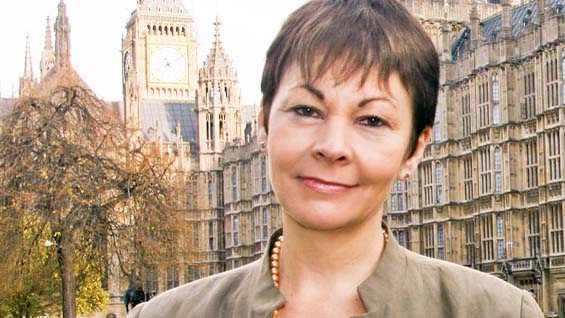
Brighton-based Member of Parliament Caroline Lucas will open one of Europe’s top vegan festivals VegfestUK Brighton on Saturday March 28th at 11am at the Brighton Centre.

Caroline was elected as Member of Parliament for Brighton Pavilion in 2010. She served as leader of the Green Party of England and Wales from 2008 to 2012. In 1999, she was elected as one of the Party’s first MEP’s and represented the South East region until becoming the UK’s first Green MP.

She has been voted the UK’s most ethical politician in 2007, 2009 and 2010 by readers of the Observer, and in 2008 was judged one of the Guardian’s top “eco-heroes.” She received Red magazine’s Woman of the Year Award 2010 in the ethical/eco category and is in the Environment Agency’s Top 100 Eco-Heroes of all time.

The VegfestUK Brighton organisers added, “It is indeed marvellous to have on board such a stellar candidate in the political as well as green and environmental scenes. Caroline has done a huge amount of good work over a number of years in helping green up our country as well as promoting green living and animal welfare. We’re really grateful to Caroline for taking the time to join us and help us open our show.”

For information about Caroline’s work as an MEP please see here: carolinelucas.com

VegfestUK Brighton takes place over the whole weekend of March 28th 29th and features a variety of activities with a veggie/vegan eco-friendly theme. These include: a Party Political Conference on the Saturday, with major political parties giving their manifestos on green issues, a Global Food Sustainability Conference on the Sunday, a Hemp Expo, the UKs first Vegan Comedy Festival, a New Product Showcase, a LifeWell Hub, plus dozens of talks and cookery demos, a Cinema, a Kids Area, live music with more to come!

Tickets to the event are available in advance at £5 per day and £8 for the whole weekend at brighton.vegfest.co.uk/admission Don’t miss the BUY ONE GET ONE FREE offers running until February 28th, and the BUY ONE GET ONE HALF PRICE offers running till March 21st. Kids under 16 can enter for free. Tickets on the gate are £8 for adults and £4 for concessions.

Beyond the appearance

What do you think about the unusual and the different? For some people they are scary elements but for other people they are readily accepted.

These are two different mentalities that I found in my daily life in Italy and in my new experience in London. During this adventure I discovered that Londoners are very open-minded and this is one of their best qualities.

-Look at that!

In my opinion, this is a very popular expression used by a lot of Italians. For example, when a group of guys look at a girl with green hair they may tease her only for that. I believe that in many situations the Italians stop at the first impression especially for the emotional sphere: most of the time they don’t ask the reasons why a person dresses and behaves in a particular way. Sometimes they are carried away by prejudice. I’m convinced that it doesn’t happen in England.
One evening at a tube station there was a group of guys dressed in a very strange way, listening to terrible music. The station was very crowded but nobody commented or scolded the boys for they loud music.

-Fear of what I love

I believe that sometimes in Italy people are afraid to express their passions because they feel fear of being judged.
I think that how society sees you is very important for many people and this stops you from loving something openly.
In Italy I heard about cases of violence against people with different musical tastes especially among teenagers, or people with different opinions.
I am convinced that in the British mentality there is a very settled sense of respect toward others. The prejudices are avoided and the truth is discovered.


***This articles related to projects PON C5 . This Journalism program is Offered by ITALOEUROPEO.com, that for years and ‘involved in European projects.The program is an educational experience for students to Improve Both theoretical and practical aspects of journalism. Project tutor Francesca Marchese,  NUJ Journalist (Italian & English)

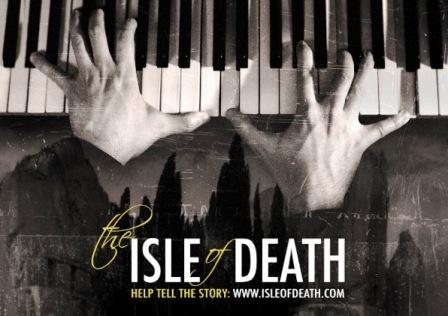
THE ISLE OF DEATH: A MODERN SILENT FILM

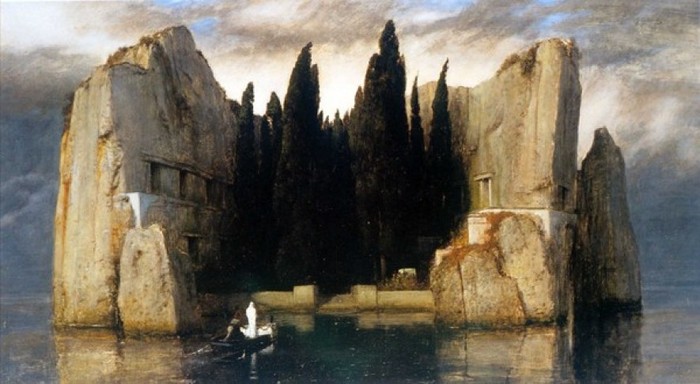
 ‘The Isle of Dead’ is perhaps one of the most well known, loved and enigmatic painting of all

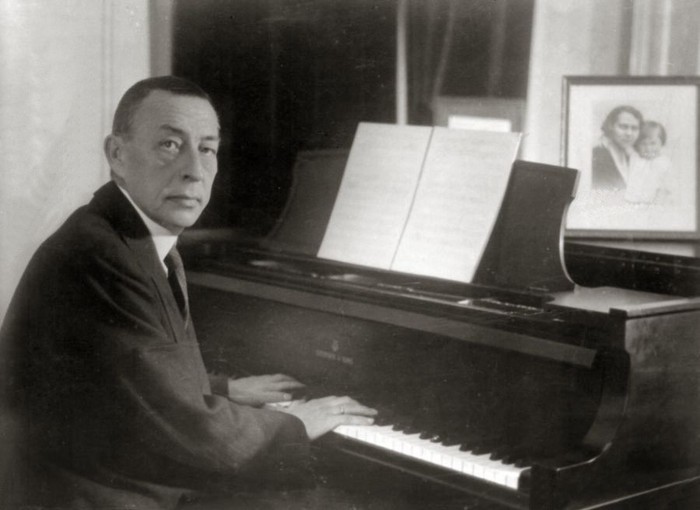
time. It inspired many artists, including legendary Russian musician Sergei Rachmaninoff,
who wrote a symphonic poem based on a reproduction of the canvas. The meaning of the work remains however a mystery until now. An that is why Italian filmmaker Alberto Bona and British silent film accompanist Costas Fotopouolos will create a modern silent film
adaptation, aiming to solve the riddle through a highly creative cross-collaboration. The film
will be an imaginary journey into Rachmaninoff’s mind at the time of the composition of the
music, evoking the sense of dislocation linking the composer’s long depression and the
fixation for the picture.
‘Die Toteninsel’. The original painting is by the underrated Swiss painter Arnold Böcklin, who produced five different versions in the late 19th century. Prints of the work were very popular in central Europe in the early 20th century so that Böcklin exercised an influence on Surrealists, most notably Max Ernst, Giorgio De Chirico and Salvador Dalì, with this latter using the powerful iconography of the cypress trees in many of his works.
Böcklin himself never gave a real explanation on the canvas, so this is the filmmaker’s personal take of the enigma starting with the variation of the title from “The Isle of the Dead” to an even more evocative “The Isle of Death”. Interestingly, Rachmaninoff wrote the music inspired by a black and white print. Perhaps he would have not written the music at all should he have seen the picture in colour: that is why the film will be in black and white, also
to reflect the keys of the piano, but most importantly it will be shot using celluloid.

Celebrating film renaissance. 2014 has seen a surprising return of the film media, with
Disney filming the new Star Wars saga in celluloid – virtually rescuing Kodak from bankruptcy.
To celebrate this film renaissance, ‘The Isle of Death’ will be shot in 16mm.

www.isleofdeath.com  
'The Isle of the Dead' by Arnold BöcklinThe Isle of the Dead‘ by Arnold Böcklin

Seeking crowd funding success. Film is still an expensive business, so the creators of the
project decided to seek funding from the Kickstarter community where ‘together, creators
and backers make projects happen’. Successful stories most notably include those of
filmmakers Zach Braff and Spike Lee. It is still fresh the completion of the funding for Italian
film manufacturers Ferrania, which didn’t simply meet their Kickstarter goal, but soared right
past it. The production of ‘The Isle of Death’ aims to embrace this new wave of analogue
enthusiasm and to start shooting at the beginning of 2015. The campaign begun well as it has
been already inserted amongst Staff Picks and New & Noteworthy projects. Among the first
backers for ‘The Isle of Death’ there is Film Ferrania themselves, who announced their
backing via Twitter. So far, the project has received positive reception for its quality: the
overall feeling is that this is a classic story that needs to be told.

To back and to share the project visit:  https://www.kickstarter.com/projects/arepofilms/the-isle-of-death
To watch the trailer: https://vimeo.com/113375856 


ABOUT THE ARTISTS:
Alberto Bona is a versatile actor/filmmaker who delivers his flamboyant performances all
around Italy and UK. He also collaborated to the staging of several operas by Giampaolo
Zennaro, who eventually directed him in the play Tremamondo. Film credits as an actor
include Norbert, Cat’s Smack, award winning Circumstances by Marco Sanges, Dermo
Sluchaetsa by BFI award nominated director Rob Brown and BIFA award nominated
L’Assenza by Jonathan Romney. Alberto adopted nome de plume Arepo to produce, film
and edit several experimental short films in 16mm including Surrealismo Italiano and
Contemplazione. http://www.imdb.com/name/nm2853747

 
Costas Fotopoulos is based in London and works internationally as a concert and silent film
pianist, and as a composer and arranger for film, the stage and the concert hall. He studied
piano at the Royal Academy of Music, London, and at the Juilliard School, New York. He has
given many solo and chamber performances in this country and across the world. His
acclaimed debut solo piano album, released by JCL Records, features works by
Rachmaninoff as well as his own “Toccata”. He has recorded repertoire for BBC Radio and
the piano solo work by Nicholas Sackman, Cross hands, for the Metier label. Costas won a
Scholarship Award at the International Johannes Brahms Competition.
www.costasfotopoulos.com


Sergei RachmaninoffSergei Rachmaninoff

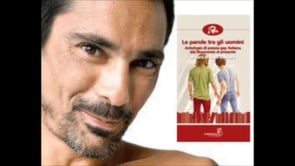
‘Words between men’, the first anthology about Gay Poetry

London. Culture can spread more prejudices than ignorance. In some countries, such as Italy, critics censor works about sexual orientation.

Luca Baldoni – an adjunct Professor of Italian Studies for James Madison University – wrote the first Anthology about Gay Poetry , ‘Words between men’ to reveal a tradition of homosexual poetry in Italy.
He presented his book at the Italian bookshop last week.


You wrote the first Anthology about Gay Poetry in Italy. What do you want to express by this book?

I analysed a range of homosexual authors to gather their works in an anthology. There isn’t gossip in this book about their sexual orientation, but literary profile, only.
By this book I attempted to reveal a tradition of homosexual poetry in Italy. It’s not right this theme is deleted from academic programmes.

What do you think about prejudices toward diversity in Italy?
Beyond old fashioned legislation and mentality, there is a lack of objectivity in the institutional culture. From my literary experience, I can tell poetic works which talk about homosexuality are banned from Italian critics.

How British government did you help to attend gay studies?
I have to thank British government which let me study these arguments, financing totally my doctorate for four years.
I studied at the University College of London a Phd in Gay studies about ‘homosexual eroticism’. I analysed Umberto Saba’s poetic works which have ever been hidden from academic studies in my home country.
I think culture must be spread without ideological barriers and prejudices.

Do you have any plans for the future?
In the last years, I studied gay poets from 19th century to contemporary era, writing articles about Umberto Saba, Pierpaolo Pasolini and Sandro Penna. I published the anthology which can be read by any kind of reader with a high or low cultural profile. Now, I would like to collect them in a critical book.

Terror and Wonder: The Gothic Imagination

London – an unique journey through the dark secrets of British Gothic arts.
Halloween is upon us and the British Library has discovered an alternative way to keep us on the outrageous darkness of imagination.

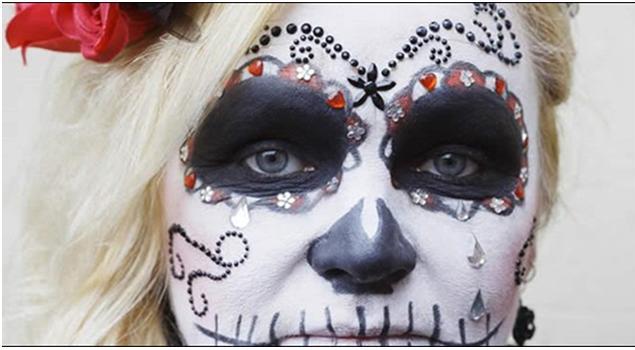
The British Library offers a mystical experience, meandering through Gothic literature and the deepest corners of the macabre and mysterious and shows the influence on the current era of Goth subculture, in an ethereal journey from its genesis in 1794 with Walpole’s masterpiece to the perturbing work of Kubrick, the film-maker.

The exhibition leads us through the different Gothic periods, with a detailed display of paintings, manuscripts, baroque illustrated editions, disturbing films and useful vampire slaying kits, because…you never know.
We are shown the first edition of The Castle of Otranto, now considered the first example of the gothic novel, which is accompanied by a number of drawings of the interior of Walpole’s house, Strawberry Hill, examples of a number of facets of Gothic in XVIII century .

Don’t miss the attempt to transfer Walpole’s novel to the screen and the original editions by Ann Radcliffe whose The Mysteries of Udolpho inspired Nathaniel Grogan in Lady Blanche Crosses the Ravine.

terrore1Virginal heroines, scheming monks, crazed laughter and ruined castles allowed Mary Shelley to create one of the great myths of literature, Frankenstein and we see the first handwritten drafts with an original letter from Lord Byron where he praises Mary Shelley as ‘a wonderful work for a girl of nineteen’.

A curious video-clip from 1935, The Bride of Frankenstein, introduces us to a new landscape of
horror, inspired by novels such as Dickens’ Oliver Twist with the narrow streets and Victorian houses of London and the works of Wilkie Collins, as well as the American, Edgar Allan Poe.
If you feel your interest flagging in the dense detail of manuscripts and drafts, it is soon restored by the plunge into the new era of gothic and horror of the final decades of the 19th century. The moral and physical decay are expressed in the era of decadence and degeneration by Dorian Gray and Dr. Jekyll and Mr. Hyde, but what seems to catch the attention most is the wild and mysterious landscape of Dracula in the ancestral castles of Transylvania.
What is the connection between the bloody vampires’ crosses and the modern Goth culture?
There is no doubt that the crucial push was given by the modern age of visionary film. But the original concept of horror survives in the technological reinterpretation of vampires, witches, monsters which make the Goth appear as a perverse lifestyle symbol of the new era, yet inspired by Bram Stoker’s Dracula, first published in 1897 and realised in film over 200 times. In 1996 Alexander McQueen designed Dante, a whole collection based on the theme of dark and Goth.
terrore2A series of fascinating photographs from April 2014 by Martin Parr provide a greater understanding of modern Goths that adds further interest.
So why is the exhibition unmissable?
Despite first impressions that could lead the visitor to expect a large number of manuscripts and images, the exhibition steps up with a rapid alternation between enchanting film clips, interesting artefacts and scary illustrations, letting visitors feel both interested and scared, exactly how it should be.

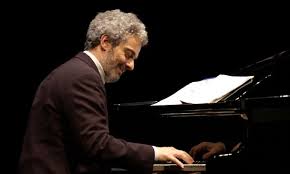
OSCAR-winning film composer Nicola Piovani presents La musica è pericolosa

Thursday 16 October, 6.30pm – Italian Cultural Institute

39 Belgrave Square, London SW1X 8NX The film composer Nicola Piovani comes to the Italian Cultural Institute on Thursday 16  October to present a programme related to his first book entitled La musica è pericolosa.


(music is dangerous) – inspired by a comment Federico Fellini made while they worked on the
film Ginger and Fred. At the piano, Piovani will share stories from his life, including anecdotes
about his encounters with famous directors, musicians and artists. This leçon-concert is part of
Suona Italiano.

Nicola Piovani is mostly known for his OSCAR-winning soundtrack to Life is beautiful. The film
composer has worked with directors such as Fellini, Bellocchio, Monicelli and Tornatore and has
written more than 130 film scores. Recent projects include conducting Brussels Philharmonic
Orchestra performing suites from Piovani’s film scores and two more scores to films that have
recently been presented at the Venice Film Festival: Hungry Hearts of Saverio Costanzo and La
Trattativa of Sabrina Guzzanti.

Suona Italiano is the biggest festival of Italian music in the UK. The festival promotes over 100
events in 33 towns by the best Italian musicians and composers of classical, contemporary, jazz
and folk music. Marking Italy’s current Presidency of the Council of the European Union, the
festival sees the foundation Musica per Roma partnering with UK’s leading music and opera
institutions in an unprecedented collaboration.

The Italian Cultural Institute hosts 11 free  concerts showcasing successful Italian musicians who are less established in the UK. Suona  Italiano also initiated partnerships between the electronic music departments of
conservatoires in the UK and Italy through a rich array of collaborations, workshops and master
classes.

Suona Italiano is conceived and organised by the Fondazione Musica per Roma with the
support of the Italian Cultural Institute in London and other Italian and British institutions
including the Italian Ministry of Foreign Affairs, the Italian Ministry of Cultural Heritage
(Ministero dei Beni e delle Attività Culturali e del Turismo), the Italian Ministry of University

Italian Expo, new format: “Milan in the European vision”

London. Bill Emmott talked about ‘Expo in Città’ with the Italian Culture Councillor, Filippo Del Corno at the Italian Cultural Institute.

Big event and huge cost:  3 million of euros, 1 million from government and other 2 from private sponsor and attendees.  “This investment is useful to promote Italian companies and their products”, Filippo Del Corno said.

Expo is endorsed by Milan Chamber of Commerce. The aim is to give all stakeholders the opportunity to organize and supervise events.

From 1st May to 31st October there will be 138 events and 1 millions of people will be involved. Not only, Italians, but also foreigners. “In the 2015 Expo enters into international visions, leading Cultural Italian Identity around the world”, Del Corno underlined.

He also read the percentages of countries, engaged in many projects: 30 per cent from Asia, 40 per cent from Africa and 24 per cent from America. Indeed a keyword of ‘Expo in Città’ is ‘World City’ without barriers.

“Did you learn from other foreign editions?”, Bill Emmott, journalist and economist, asked. The Councillor compared Shanghai Expo with Italian Exhibition: “Shanghai is more expensive than Milan. Poor areas of Shanghai are isolated, instead Milan involves these places with many plans, such as agricultural traditions”.

Surplus value of Italian Expo 2015 is culture. Milan is the ‘City of Art’  and every month it will be represented by an artistic icon, from Raffaello to Leonardo Da Vinci and many other artists. There will be a lot of art exhibitions, piano performances, free concerts, lessons and seminars.

In this edition there will also be meetings about research and innovation, digital technology, feeding and green energy.

Despite some negative opinions about the energy consume and rural economy,  ‘Expo in Città’ will use, for the first time, a public lighting with led. “I’m very proud because this is an energy revolution”, Del Corno added.

Billy Emmott and Fillippo Del Corno discussed the cohesion between London and Milan, “as two sisters  connected each other for social and cultural development”.