The Dictionary of Medieval Latin from British sources

The Dictionary of Medieval Latin from British sources:

A new success at Oxford University

Oxford University – In an age when children are encouraged to pursue the useful and vocational, it may seem surprising that some researchers chose to join the difficult enterprise of completing a Latin dictionary. 

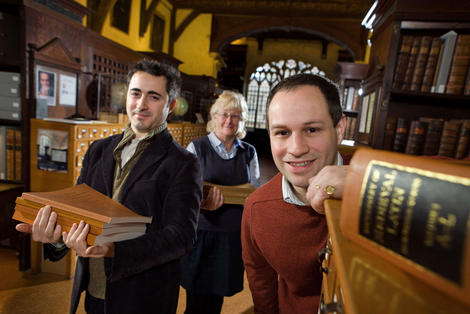
This was the latest challenge of a group of researchers at Oxford University’s classics faculty, where the editor, Richard Ashdowne, and some final assistant editors succeeded into creating a Medieval Latin equivalent of the Oxford English Dictionary. The 17-volume tome, started about a century ago, in 1913 by Oxford historian Robert Whitwell, has been recently finished, drawing on more than 1,400 sources from the sixth to the 16th century, including the Domesday Book, the Magna Carta and the Bayeux tapestry, and researchers reported feeling a “huge satisfaction”. Based entirely on original research, the DMLBS is the most comprehensive dictionary of Medieval Latin to have been produced and the first ever to focus on British Medieval Latin. 

«When I joined – explained the editor – the Dictionary of Medieval Latin from British Sources (DMLBS) team as an assistant editor in 2008, it soon became clear to me that this was no ordinary research project. On my desk I found a box of slips of paper containing medieval Latin quotations, about 2,500 in number, for words sorted alphabetically starting at Scap- and running through to Scip-. There was also a pencil and a pile of further slips of paper, blank for me to complete.» 

“This is the first ever comprehensive description of the vocabulary of the Latin language used in Britain and by Britons between AD 540 to 1600,” Ashdowne said. “For the last 100 years, the project has been systematically scouring the surviving British medieval Latin texts to find evidence for every word and all its meanings and usage. Much of this fundamental work was done in the early years of the project by a small army of volunteers, including historians, clergymen, and even retired soldiers; they provided the project with illustrative example quotations copied out from the original texts onto paper slips – an early form of crowd-sourcing.”

Ashdowne said there is also an aspiration to publish the entire work as a digital, open-access edition next year, adding “we haven’t got the funding yet”. He said: “It’s a difficult question to know how many people are going to use it. Fewer and fewer people know any Latin, but this means that more people will need a dictionary to know how to read it.”

The dictionary is published by the British Academy and its cost is now £600.

For further information, click on  http://www.dmlbs.ox.ac.uk/ and visit  http://dmlbs.wordpress.com/ 


A few words with Richard Ashdowne, editor of the DMLBS

Richard Ashdowne has been editor of the DMLBS since October 2011, succeeding David Howlett. Richard had previously worked for the project (since 2008) as an assistant editor, in which role he had been instrumental in developing the project’s use of technology.

His main research interests are in semantics and pragmatics, particularly with reference to forms of address, and historical linguistics and language change, especially with reference to Latin and the Romance languages.

v  What talked you into joining the hard enterprise of the DMLBS?

I had recently completed my DPhil and needed a job. I saw a post as an assistant editor advertised and applied. I was quite surprised to be offered the job.

v  Which has been the most difficult part of the project?

In recent years finding sufficient funding to ensure that the work of the project could continue to the end of the alphabet has been our greatest challenge. Although much of the early work in the 1920s to the 1940s was done by a large number of volunteers excerpting quotations from original sources to form a base of data from which we could work, the actual work of editing and publishing has naturally required full-time employees, and with that comes a significant financial cost. Supported throughout our history by the British Academy, nevertheless since the late 1990s we have had to compete for research funding with other arts and humanities research projects. It is indeed fortunate that we have received enough funding from the UK AHRC and the Packard Humanities Institute to see us through to the end of the alphabet.

v  As a researcher, I know that passion, hard work and enthusiasm are essential ingredients of a research…but, according to you, what else?

Lexicography demands all sorts of qualities: accuracy and attention to detail, ability to work methodically, decisiveness, curiosity, intellectual flexibility, patience and tenacity tempered with pragmatism, imagination balanced by good sense.

v  Your work can be compared to some important projects, conducted on Latin or classic resources, such as the Thesaurus Linguae Latinae (which I have often consulted), but it stopped at letter O. Do you think it could  be possible to carry on the ThLL? Will it reach the end in the next future?

I believe the ThLL continues its work, though the world is now so very different from the world in which it began so long ago. I would not care to speculate on whether it will reach the end eventually but I have the feeling that that point may not come during my lifetime.

Oxford dictonaryv  Why has the technology been so important for completing the DMLBS?

Quite simply, the project would not have been completed otherwise. When editing of the dictionary began in the 1960s there was little technology that could have been of use, and the methods of compilation were little different from what would have been used a century earlier. However, by the start of the 21st century other major research dictionaries had been using electronic working methods for a decade or more and it was quite clear that we should not continue with a 19th-century method when better (i.e. more accurate, more efficient, and cheaper) ways of working were available. Adopting these improvements was one important way of bolstering the case for continued funding of the project to the end.

v  The Medieval Latin has always been considered too confused, too magmatic to be studied: do you agree with this shared opinion?

No. This is a misguided and ill-informed view — I might even go so far as to say an ignorant view —, typically held by people who have never read more than a few words of the language from the period. Medieval Latin is certainly a complex thing to deal with. It was, after all, used by people in areas across the whole of Europe for everything from accounting to zoology for more than a thousand years after the fall of the Roman empire despite not being their native language, so it should come as no surprise that the language does not retain the apparent simple lack of variation within the heavily standardised classical literary language of Cicero, Caesar, Virgil, Ovid and others of their era. In fact, even in Roman times as a native language Latin exhibited considerable variation across the area over which it was spoken and changed very considerably from its earliest known forms in the first half of the first millennium BC down to the age of Cicero and beyond; indeed people nowadays still speak Latin — we simply call it Italian, French, Spanish, Romanian, etc.  This is to say nothing of how that varying Latin was used differently in different functions and genres in different places at different times by different peope. Seen alongside the true complexity of Latin as a native language, the medieval Latin language emerges as similarly complex in distribution and variable in form. However, since variation is inherent in all languages this is not in itself any greater challenge for medieval Latin, and in fact the sheer volume of surviving evidence means that we are better informed than for many historical languages.

v  In Italy, our relationship with the ancient languages (I don’t like calling them dead, because they aren’t dead at all), such as Latin and Greek is very strong. What about English behavior towards Latin and Greek languages?

In England (but largely not the rest of the UK) both Latin and Greek, but especially Latin, have unfortunately become widely associated with the education system within which their teaching predominantly survives, namely that of fee-paying schools; thus the study and knowledge of both languages is regularly seen as elitist, a view backed up with misguided claims about the supposed irrelevance of both languages (as compared, for instance, with the transparent relevance of English, maths, science, and IT). In fact, the availability of Latin at least is now finally enjoying something of a resurgence in the state education sector and while it remains a battle for us to enable every child who would like the opportunity to learn these languages for whatever reason to do so, there are signs that the tide is turning.

v  Finally, if you were asked to sum your project up in a single word, which one would you choose?

Satisfaction. We have accomplished what our forebears set out to do.

Richard Ashdowne and the researchers involved into the DMLBS project demonstrate that diligence and the desire to succeed can make the difference and lead to very high levels. As Virgil would say: “audentes fortuna iuvat timidosque repellit” – fortune favors the bold and repels the coward.


Interview The Pakistan women and men compare each other

Good or bad is in your heart. The Pakistan women and men compare each other.

London- Schaista, from Pakistan, talked with us about a traditional wear in her country, the Hijad. She also told us about the women’s condition, the relationships between man and woman and about the Qur’an . 

The Qur’an tells nothing about the duty to wear the Hijab for the women, so how did this obligation develop in your country?
It was developed from the necessity to return to be modest, she told us. When someone created the humans and the world all men were naked, they didn’t need a lot of things, but now it’s different, with the society development the people have more things, and more things we have, more things we want. For this reason we search the modesty. The Qur’an doesn’t talk about the duty to cover with a veil our head but it talks about the necessity to be modesty, to return to the origins. The veil is a way to be modest and to safeguard from the development.
So she took a piece of paper and drew for me two candies. One was wrapped in its coloured paper and another one without paper and bitten by a side. She asked me, if you had got a sweet wrapped in the paper and another one without its paper which would you eat? The candy with paper, it’s obvious, I told her. So it’s the same with the women and the veil. If I wear the veil I can preserve myself.


You wear the Hijab every day, but is it a choice for you?
Sure. I like it. My husband or others in the family didn’t say me that I must cover my head. I want to wear it because I like it.

What do you think about the Burqa and the women who choice to wear the total veil?
They are very proud. It’s very difficult to put on a total veil for all life. I admire these women.

What will you tell to your daughter about the veil?
I will narrate her all about the religion, the Qur’an, the veil and after I’ll tell her now you can choice to wear or not the Hijad.


Rashid, from Pakistan, told about the women condition in his country and about the veil as a choice for the women.
The Qur’an tells nothing about the duty to wear the Hijab for the women, so how did this obligation develop in your country?
In the Qur’an you can find rules for each situation about life, it’s not just a religious book, it’s a book of rules for each life’s aspect. So it narrates about the necessity to cover the women’s body, not about the veil. The used of veil or the introduction of Burqa are different interpretation of Qur’an, that’s it. If a woman go out in the city wearing a bikini, I’m sure she isn’t decorous. If a woman go out without Burqa, but with decorous clothes I know, she’s a dignified woman.
He gave me this answer and took two little bags of sugar. He opened one bag on the table and asked me, if you could choice which bag of sugar would you like? He continued to talk with me, good or bad is in your heart, not in your dresses.

What do you think about the Burqa and the women who choice to wear the total veil?
I think that is a choice. The women who choice to wear the veil, Burqa or Hijad, do it for God, not for people. The veil is for God, not for people. The women don’t wear the veil as a protection by men’s teasing, they dress the veil because they believe in God.

What will you tell to your daughter about the veil?
I’ll explain all about Islam religion and about the Qur’an and she’ll choice the good way.


read more:

Niqaab, Burqa, Hijab : what are their origins?

niquab1-The veil in the Oriental tradition. – The veil in the European countries. – The veil like a woman’s chose.
In the Qur’an women are admonished to cover their heads and to pull their coverings over their bosoms . In chapter 33, verse 60 of the Holy Qur’an and in chapter 24 verse 32 Allah says that the women should pull down upon them of their outer cloaks and they display not their beauty or their embellishment and their private parts. READ MORE HERE

SHAKESPEARE, MERCHANT OF DREAMS

 Soul’s poet, love’s philosopher, William Shakespeare is one of the most famous writer in the world. The Victoria & Albert museum in London hosts an exibition of his life and his poetry. It encloses the entire work of the author in a few elements: costumes, projects for the scenes, from the notes to the props.

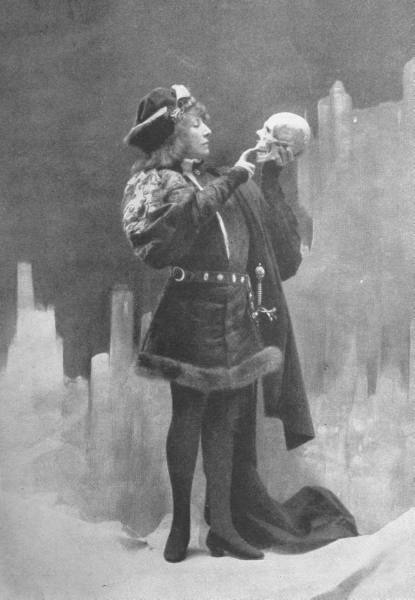
A well-known skull seems to want to communicate with those who stop to observe it: the skull of Hamlet, donated by Victor Hugo to the actress Sarah Bernhardt, which first came on the scene on the international theatre in the first half of 20th century playing a male role as the enigmatic Hamlet.

A dusty book will certainly catch the attention of fans: it has significant importance because it includes all the works of Shakespeare. Printed in 1623, it represents the first attempt at publishing all the works of the author, from the most famous to the most detailed.

On yellowed pages, readable names are known; a sentence on the page open, opening words of the play “The Twelfth Night,” reads: “If the music be the food of love, play on!” Words and phrases so aware prompted philologists and lovers of literature to do further research on indefinite origins of Shakespeare.

A professor of Oxford seems to have found the answer, formulating a hypothesis on the origin always more reliable of the Italian origin of the poet. Guglielmo Scrollalance seems to have been born in Italy. Be or not to be English… This is the problem! For further information visit the website of Victoria & Albert museum.

To get there, take the District or Circle line and stop at South Kensington. Enjoy your visit! 


INTERVIEW

The Victoria & Albert museum hosts a very beautiful path across the life of William Shakespeare. We have asked some people and we have and we found surprising results: the fame of the author seems to have really reached all over the world.

A Taiwanese girl informed us: “I have a great passion for Shakespeare and for literature, in my country there aren’t exhibitions of this kind, I came to the museum to see the place and I was pleasantly surprised to see that there is this exhibition about Shakespeare!”.

Coordinators and members of staff told us that It kind of exhibition is very popular with tourists.

3 millions people at the national gallery

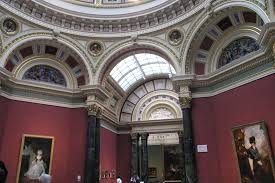
London Nation Gallery – If you love art in its purest expression, you should definitely visit “The  national gallery”. The museum hosts masterpieces from the 13th to the 19th

century.

“It is one of the world largest collection.”, one member of the museum’s staff

told us. “Every year we have about 3 millions of visitors. To prevent the

gallery from getting too crowded, we have two different doors from which people

can go in and out. The free entry is great and it is possible because we

frequently have extra exhibitions and the money we raise goes to pay for

restauration; many people also make a free donation.” Another coordinator

informed us about the security of the museum: “We have a laser system and most

of the paintings have alarms: but we don’t know which!”.

Inside the gallery we approached a few peolpe including a young illustrator:

NationalGallery3“I draw ispiration from classic art; I especially like the story and the

symbols. Free entrance is fantastic and since I’m from London I’ve been taking

advantages from it all my life.”

A girl who was sitting in front of the picture “The rape of Ganimede” cought

our eye: “I study art in high school and even though I’m not particularly keen

on classical art I come here often because it’s easy to bicycle to. What I like

the most about this painting is the wings.” In another room we found a Chinese

couple. “We are students and we don’t have a job, so it’s amazing to be able to

come here for free” the girl said. “In China sometimes you can find pictures

within a museum, but we don’t have any galleries” the young man added. We saw

smart looking man who was sitting in front of a Velázquez painting: “I love

Caravaggio and Velázquez and I don’t mind modern art. I live in Amsterdam and

there Rijksmuseum is nice but very expensive, well I greatly appreciate free

entrance.”

We met a elderly woman with granddaughter that stopped to talk to us: “We live

in London and we are here because we love art in general; we hadn’t been here

for about three years so we come here to see what’s new. I prefer Impressionism

art while my grandmum loves all the art. Life in London is very expensive so I

think that free entrance is a very beautiful thing both for tourists and

english people. Onestly, we prefer National Gallery to the Tate.”

An italian girl was watching “Baigneurs” of Paul Cézanne and she told us what

she thinks about this painting: “I love classic art in general; in this picture

I like most the blue colour that inspired calm in me.” Another group of

students was italian and they told us: “Yesterday we came here with our school

group but today we come back here to see more and with more attention!”. An

italian student told us that he likes most modern art because astrattism makes

it possible to see in the piece what you want.

Visit “The national gallery”! For further information go to the website!

Niqaab, Burqa, Hijab : what are their origins?

-The veil in the Oriental tradition. – The veil in the European countries. – The veil like a woman’s chose.
In the Qur’an women are admonished to cover their heads and to pull their coverings over their bosoms . In chapter 33, verse 60 of the Holy Qur’an and in chapter 24 verse 32 Allah says that the women should pull down upon them of their outer cloaks and they display not their beauty or their embellishment and their private parts.

In light of these sentences some women choose to cover the faces or to cover the heads only. So there are different interpretations, both of which are valid. The Niqaab covers the face and the head with the eyes showing.

The Burqa covers the face, the head and the body, the woman can see from a gauze over the eye area. The Hijab covers the head and the neck only. So, the style of veil varies according to the situation and to the culture.

But why do the women wear the veil? Is there just a religious reason? The Qur’an orders to use the veil, but in the Islamic community the Qur’an isn’t just a religious text. It is the main and the first source of Islamic law, the Qur’an has laid down rules which cover the whole way of life. So for the Islamic women wear the Hijab is a religious, cultural, civil duty. And the reason is the necessity to shield the woman.

But protect from who? Someone thinks the veil is necessary to safeguard the women by men’s gazes. But do the women want to be shielded? Is the veil an obligation? How does the veil became an imposition by the Islamic men? A lot of questions about this duty. But the countries cultures and the valid interpretations of Qur’an are a lot and this means a lot of different answers. For example in the Yemen, the women always use the Burqa and the men cannot image a woman without its.

niqab burcaHe cannot know the woman’s body and her shapes, so it will result absurd to see a woman without Burqa. We have met an Italian who Antonella, has worn the Burqa: Even in the Yemen, the woman cannot sit close to a man in the bus. Antonella used the Burqa during your travel in the Yemen because it was necessary like a protection against men’s nuisances. In the Iran the women wear the chador in public space, it is a full body length that is open down the front, it hasn’t hand opening or any buttons. Today black chador are reserved for funerals and the women prefer to use a colored chador.
And in Europe? How do the European countries consider the veil? In London the women can wear the type of veil their prefer. So the women with close-face can attend public areas in England.

Whereas in Italy some Tribunals banned the integral veil in the public places because it can be a community safety problem and because in Italy exists a law, (22 may 1975 n.152 )in which is just banned the use of integral helmet that covers the face during public events.

burqaBut the State Council believes it’s necessary to edit the law with specific indication about the integral veil in the public areas. So actually there is an important discussion about this issue but yet there isn’t a law with specific prohibition to wear a veil in the public places. On the contrary in France, like in Belgium, a law ban the total veil in the public areas with a fine for the transgressor.
show Miraculi, its first creation

Theatre Senza presents Miraculi, its first creation. The play has been shown from 4th to 9th August during the Camden Fringe Festival. The play taken place in the Tristan Bates Theatre in London.
Theatre Senza is a new international troupe of trained actors that wants to tell about a journey to Lampedusa, the southernmost European island. The team is an international group, including member of France, Finland, Italy. The actors are: S. Cowie, P. Laurilla, E Montenau, D. Nalbantoglu, D. Read. Valentina Zagaria is the play’s writer and director.
The Lampedusa project involved the actors who lived in September 2013, for a month, in the island. Miraculi is the result of years research and studies by Valentina Zagaria and it gathers up journey’s memories, statements, opinions and true life stories of the tourists, migrants and of the people who lives there. The Lampedusa island is knew like the “Porta d’Europa”, Doorway to Europe, effectively the people travelling through it but they don’t want to remain there.
The aim of the troupe is to give an idea about their travel and about the different life stories on the island. The team’s scope is to attract audience’s attention on the importance of migration’s issue in Lampedusa and in the Europe. So Miraculi become a mean to reflect about humanity and responsibility issues.

read more :

[read a inteview here – A few words with Valentina Zagaria ] by Serena Olivieri L’italoeuropeo

LA LONDRA DEGLI ITALIANI BY ALESSANDRO FORTE

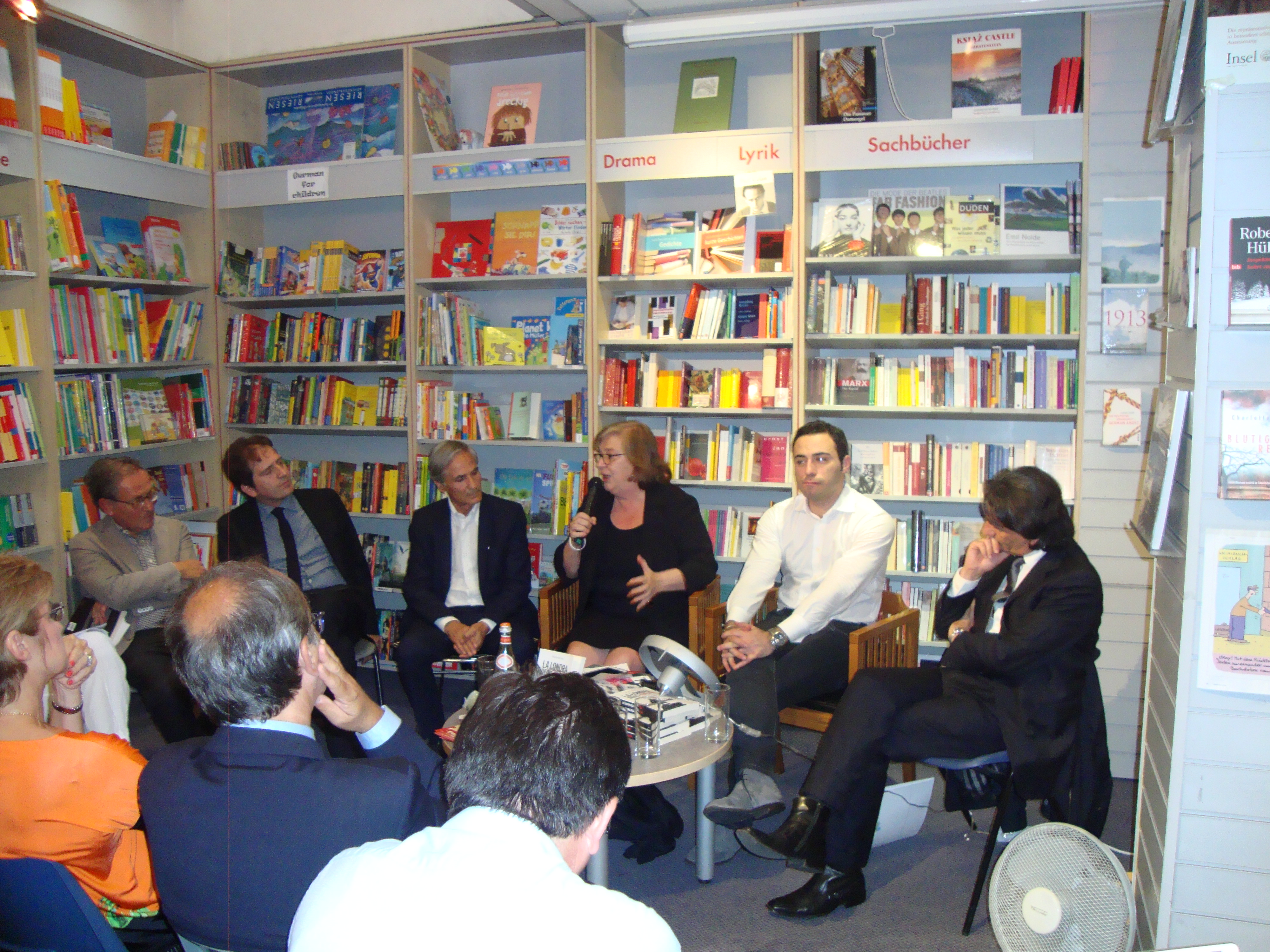
On the 25th of July at the Italian Book Shop took place the presentation of the book “La Londra degli Italiani – dai penny ice alla City: due secoli di immigrazione” written by Alessandro Forte.

There are 200.000 Italians in London and the number is increasing year after year. Actually there is a significant statistical proxy about the university: before the 2005 the professor and researcher’s number was 5500, but after this date 11500 Italians work in this field in London. This brain drain is only a consequence of the world and Italian crisis or a rebellion to the Italian system? The emigration rate from Italy to London is raising, maybe Italian people find in London a place in which they can express and satisfy themselves.

London is an “happy island” where a lot of lucky phenomenons take place: opportunities, welfare, tax, hope, melting pot and so on. This book go through every wave of Italian immigration in London: from the penny ice and trattoria , to the renowned restaurant, from the poverty to the wealthy of the white collar City. An interesting historical and sociological excursus which highlights not only the strengths and opportunities but also the weaknesses and threats that we have passed and that we have to face and get over living here .

Do we need more courage to stay in Italy or the move in another nation?
The event was also attended by representatives of the Apulian Gal (Local Action Groups), which consists of public and private entities in order to promote local development of a rural area. The Gals process the Local Action Plan (PAL) and are run by financial contributions from the European Union and by the European Agricultural Guidance and Guarantee Fund.

Alberto Casoria, on behalf of leading GAL, explained that “The Apulians represent a large proportion of migrants in the world. But, the excellences of Puglia, in the field of agri-food products, also migrate. In fact, the export of the region Puglia is increasing of 18% compared to other Italian regions, although there is the problem of the crisis in the steel industry (ILVA). Local action groups have the goal of creating a synergy between the emigrants and the territories of their origin. It often happens that the people of Puglia are deeply rooted in their traditions and are not aware of the changes that happen in our regions”.

So that, Apulian region, represented by dr. Genchi, has recently started out a new project, entitled “Fuga Attraction”. The project consists in the selection of Apulian entrepreneurs operating in the world to let them come back Puglia to show them how this reality has changed. They will find in their homeland new investment opportunities. 10-15 entrepreneurs have already enthusiastically joined. For now, the targets are Europe and North America, but it is not excluded the possibility that the project could be extended. The project will be available on Web and it will engage researchers, schools and enterprises. It will be presented in September in Bari, in the occasion of the 78th edition of the “Fiera del Levante”. (13th -21st September).

Later, other representatives of Gal Apulia took the floor: Alessia Ferreri, on behalf of GAL Serre Salentine, talked about the emigration in Apulia region, that is the first region in Italy as far as emigration in concerned. The first emigration was in the early 900, when Apulians went to Argentina and North Europe. The second emigration was in the post war period and Australia became the most famous goal. Nowadays, lots of young people are leaving for North Italy, where there are many industries and, so many opportunities for working.
Rocco Malatesta, representative of GAL Ionico (from Crispiano to Grottaglie, in province of Taranto) and Pasquale Redavid, representative of GAL sud-est barese, reminded of the possibilities for the association “Apulians in the world” to become a bridge between emigrants and homeland, in order to spread the knowledge of emigration.
Elena Gentile, member of Euro Parliament, concluded the meeting, remembering the great value of the emigrants, who, going abroad, just apparently deplete Italy.

The regional law n. 23 11/12/2000 recognizes “in the Apulians in the world, in their families, in their communities and in the descendants it’s recognized an essential component of the regional society and a resource to activate in order to strengthen ties with the countries that host them and give to such relations a fundamental component to support and develop.”
So that, Italians, and particularly Apulians, in the world represent the value, from which we can raise again.

Peppino Impastato: the years of the Italian Mafia

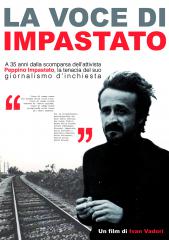
London – at Riverside Studios was screened the documentary film on “The voice of Peppino Impastato” It was written and directed by Ivan Vadori, an Italian journalist, born in San Vito al Tagliamento, in the Italian region Friuli-Venezia Giulia, who dedicated his thesis to the radio founder in 1977 by Peppino Impastato “Radio Aut”. Po eppino Impastao twas a italian younger journalist, political and activist who opposed the Mafia, which ordered his murder in 1978. 

“When I was In Sicily for the first time, in 2006, – he said, talking about his documentary – I got scared and full of prejudices: I had always thought that Sicily was the site of shootings and deaths of the Mafia. Despite this I really wanted to pay homage to Falcone, Borsellino and Peppino Impastato and so when I came back home, I couldn’t forget that beautiful isle: everything will stick in my mind, forever”
“I saw a theatrical monologue about Peppino and Aldo Moro ( Moro- was a centre-left Italian politician and the 36th and 38th Prime Minister of Italy, from 1963 to 1968, and then from 1974 to 1976. He was one of Italy’s longest-serving post-war Prime Ministers, holding power for a combined total of more than six years.)

was two / three years before the film, “The Hundred Steps” by Marco Tullio Giordana, came out. Peppino Impastato’s story intrigued me: a young man who gives his life to fight against the Mafia. You would not believe that!.”
The film documentary “The voice of Peppino Impastato” talked about the life and the new ideas of this special man, through his brother, Giovanni’s voice.
Giuseppe Impastato, said Peppino, was a journalist and a Sicilian activist, who was killed by the Mafia on 9th May 1978, in Cinisi, for the willingness of Mafia boss Gaetano Badalamenti. On 9th May 1978 is also the day in which it was found the body of Aldo Moro in via Caetani in Rome. The discovery of the body of the President of the Christian Democratic Party, who was killed by the Red Brigades after 55 days in captivity, completely overshadowed the news of the murder of Impastato.
The Sicilian journalist, who was a candidate in municipal elections by Proletarian Democracy, was killed in the night between 8th and 9th May and his body was blown up with dynamite on the railroad tracks of the Palermo-Trapani, in order to make it appear that it was a suicide attack.
In May 1984, the Education Bureau of the Court of Palermo, on the basis of the indications of the Director Instructor Rocco Chinnici, who had started the work of the first anti-mafia pool and was murdered in July 1983, recognizes the matrix mafia crime.
On 5th March 2001 the Assize Court has recognized Vito Palazzolo guilty and punished him to 30 years in prison. On 11th April 2002 Gaetano Badalamenti was condemned to life imprisonment, like a ordered murder of Peppino Imastato.

In the film, various voices alternate each other, like that of illustrious writers Carlo Lucarelli, journalists, like Salvo Palazzolo and Antonella Mascali, and judges who have dealt with the case, as Franca Imbergamo and Gian Carlo Caselli. There are also Nando Della Chiesa, who explained the four important principles of Mafia (Violence, territorial control, relations with politics, transform citizens into their employees) and Don Luigi Ciotti, founder of Libera, an association against Mafia. Salvo Vitale, Peppino Impastato’s close friend and co-founder of Onda Pazza, the Radio programme created by Impastato, and Danilo Sulis, president of “Radio 100 passi” took a part in the film too.

The importance in the Italian history of Peppino Impastato is his ability to understand before the others what was happening around him. In fact, he was an artist and a sensitive soul. He founded the radio “Aut” with the objective to penetrate into the texture of society and through irony he made fun of the mafia. Calling Badalamenti Sitting Bully, he made people laugh behind him. But, the boss could not stand his way of doing. In fact, Peppino was born in a family of Mafiosi and, so that he knew what they couldn’t stand.
“The radio was the fastest way to communicate. His project died with his death. But if Peppino had lived, he would have found other ways to communicate”- said Giovanni Impastato.
“The mafia organization will be defeated when the desire to “mafia”, i.e. the way the shortcut and recommendations, will have gone away. It is no longer the time of massacres that have shaken and moved Italy, but now the mafia operates in more subtle way” – said Don Luigi Ciotti.

In the documentary a leading role is played by women, first of Felicia Bartolotta, Peppino Impastato’s mother and then Franca Imbergamo, anti-mafia prosecutor. So, I asked Ivan Vadori, the film director why he underlined their rule.

He said : “Mum Felicia has played a role of primary importance in the life of Peppino. She was the only one to understand the will of the child to get away from society mafia and his family and she caused the reopening of the case Impastato and kneaded to the resolution of the case in 2001. Peppino learned a lot from her mother: Felicia used to say, “C’è da scialare”, (there are reason to smile) and Peppino has destroyed the mafia leaders through. She challenged relatives and institutions.
Franca Imbergamo had an iron hand in this process, showing courage and determination.”

Ivan Vadori told me he’s going to write a book on Peppino Impastato’s life, because he wants to spread around the world the story of a man always present, not only in 1978, since: “without past, there isnt’t future”

LA RABBIA by PIERPAOLO PASOLINI

At the Institute of Contemporary Art in London, in the 10th of July at 19.30 took place the show of the documentary “La Rabbia” directed and wrote by Piepaolo Pasolini and Giovannino Guareschi, chose by the filmmaker Gastoni Ferranti because they were the most important intellectual in those years. They want to answer to the question “which is the origin of the unhappiness, the fear and the conflicts that shake the society?”. They analyze in a very critic and polemic way all the phenomenons and the social conflicts of the contemporary words.

On the notes of the Albinoni’s Adagio, and through the speaking voice of Giorgio Bassani during the poem and for the placidity and of Renato Guttuso during the prose for the anger, the movie analyzes the happenings of the last ten years. All the documents were taken from newsreel and documentaries, and put together with an ideological and chronological line. The movie is against poverty, imprisonment, war, banality, standard of beauty, priggishness, bourgeoisie, it is against everything could reduce a man in empty mood framework. Pasolini with the poetry wants to react to the normality, and to push people into thinking and reacting to the entire world. The topics that come in succession are: De Gasperi’s death an important Italian political of the past, the war in Korea, the floods, the television, Sophia Loren, Marylin Monroe, the Queen Elizabeth’s coronation and so on, a river of thoughts about everything can touch the human being. Anger is analyzed in many different ways, through different shapes to touch all the types of viewers and let them think and reflect about the world.
when the movie came out was a commercial failure and it is rediscovered only now, maybe because we are in a period in which we don’t know our identity and rule in the world. Maybe we have lost the values conquered by our parents and grandparents so the movie in the 60s was anachronistic and difficult to understand but actual nowadays.

Festival of italian music across the UK

To mark Italy’s six months Precidency of the council of the European Union, Suona Italiano- the biggest festival of italian music, classical,jazz and folk- come to the Uk from 3rd July and running to December 2014.

The festival sees the foundation Musica of Roma, based at the Auditorium Parco della musica, Partnering with the UK’s leading music and opera istitutions in an unprecedented collaboration. The partner include: Royal Opera House, Edinburgh Festival, Longborough Festival Opera , Garsington Opera, EFG London jazz festival, Barbican Centre, BBC symphony Orchestra and more.
Artist and ensembles include: Joyce DiDonato, with Antonio Pappano, openg the season at wigmore hall, La serenissima , quartetto di Cremona, Rinaldo Alessandrini’s Concerto Italiano, Soprano Anna Caterina Antonacci , Pianist Nicola Piovani, trumpet Player Paolo Fresu and more.
Britan’s great appreciation of Italian Culture will be further enriched by a line-up of musicians, many not widely-kow or appreiated outside of italy ad well as the nation’s Manon Lescaut and Gianandrea Noseda at Edinburgh Festival For ROssini’s william Tell.

In Autumn the Italian Culture istitute in London will host a series of concerts with Nicola Piovani the OSCAR-winning composer ( ilm-score to Life is beautiful) and othe jazz artists including Paolo Fresu Danilo Rea, Gilda Butta’ and more.
suona italiano is conceived and organised by the Fondazione Musica per Roma with the support of the italian Cultural institute in London and otehr italian and British institution including the italan Ministry of Foreingn Affairs, the Italian Ministry of Cultural Heritage, the Italian Embassy in London and the italian Cultural Institute in Edimburgh.

The italian Embassador Pasquale Terracciano at the conference press at the italian caltural istitute today sead “the italian culture is fondamental in the world in particular the music many English Italian music playing”.

Toight ther is a great concert to Open the season, The Italian Ambassador to the UK H.E. Pasquale Terracciano, is delighted to invite all italian in London to a concert to mark the Italian Presidency of the of the Council of the European Union in St John’s House
Smith Square
London
SW1P 3HF