NARENDRA MODI: THE CHRONICLES OF THE TEA SELLER

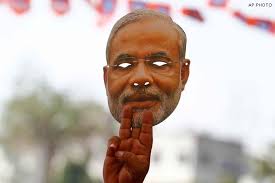
Like in the movie “V for Vendetta” where protesters wore Guy Fawkes masks to ignite a revolution and destroy government in UK, Modi voters too wore masks of his face during his packed election meets expressing their support. And when he sworn-in as Prime Minister on Monday, hot cups of NaMo tea were given for free at a tea stall in Vadodara referring to his poor origins. He is Narendra Damodardas Modi, leader of Bharatiya Janata Party (BJP), former chief minister of the western state of Gujarat since 2001 and now the Prime Minister of India: One of the most controversial politician of our times.

Those who love him, say that he is the chosen man: the only one who can change the future of India, transforming it into an economic and efficient country. Whereas those who hate him, reminisce his role in Gujarat riots and fear the extent of his strong Hindu roots. Modi has been accused of initiating and condoning the violence, as have police and government officials who allegedly directed the rioters. Many still believe that he played a key role in the outburst of the hindu-muslim riots as he did nothing to stop it resulting in the deaths of many innocent people. Because of his complicated image, many of the international personalities label him as an outcast, but now most of them are competing to congratulate him for winning.

Modi was denied a US visa after the Muslim massacre of 2001 but recently it has been reported that the US President, Barack Obama complimented and invited him to U.S.A. David Cameron, did the same, adding that he wanted to work with him, in a new business friendly environment. Even the prime minister of the complicated neighbour (Pakistan), Nawaz Sharif, said some good words.

“Modi might be a fine tonic for India, loosening the shackles of corruption, boosting growth from a meagre 5%, emancipating millions of workers- rural ones especially- from poverty, and stalling the sexually transmitted democracy of the Nehru-Gandhi dynasty,” said Amol Rajan, journalist, The Independent. At the same time the writer also expressed his fear for the country with different religions, considering modi’s involvement of the massacre of Gujarat.

Hugo Swire, Britain’s foreign minister for India said that the most important challenge for the new prime minister is to demonstrate “that he is the prime minister of the whole of India and of people of all faiths”.

In United Kingdom, more than 1,4 million of people came from Indian (480.000 in London), and 45% of the total from Gujarat.
 

phot oibnlive.in.com

British museum Ancient Lives new discovery.

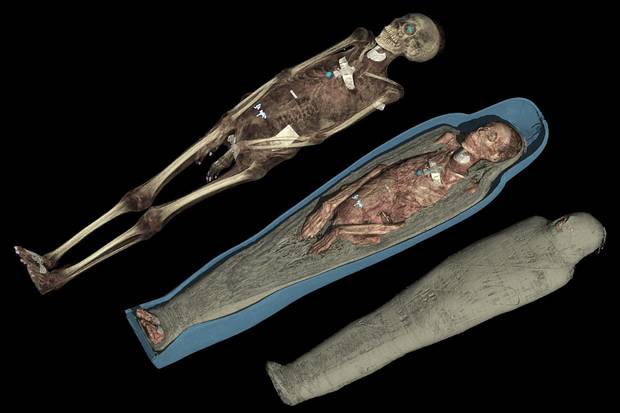
London Open 22 May – This great Exhibition will introduce you to eight people form ancient Egypt ad Sudan whose bodies have been preserved, either naturally or by deliberate embalming. Using the last techonology, the exbition will unlock hidden segrets to buld up a pictures of their lives in the Nile Valley over a remarkable 4000 years from prehistoric Egypt to Christian Sudan.

Owing to the sensitive nature of the materials within the exhibition, and because of the interactive technology involved, the number of people who can visit each day will be much smaller than many of other exhibition. With this in mind the museum s introducing the possibility for a small number of Member to book in advance to visi the exhibition.

This is the frist time that you can see inside the body of Egyptian mummies, it a straordinary moment where you can still see the last meal eaten in the stomach after millennia and the brain, or amulets.

mummis2It’s a  incredible journey to the discovery of the bodies never seen before, an iterative journey where you can play yourself to discover the body of the mummies.
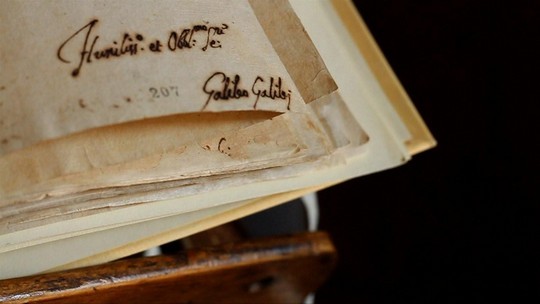
you must  to see for understand the importance of this unique show, over the world.

The Dark age is bright at the British Museum

Thanks to a donation of the businessman and philantropist Sir Paul Ruddock and his wife Jill, for the first time the Dark Age is enlighted in all of her spendor in the Room 41 of the British Museum.

The gallery is dedicated to Europe AD 300-1100 and the spectacular treasure of Sutton Hoo. The discovery of Sutton Hoo was of primary importance for historians of the period high-medieval English, as it sheds light on a period of British history along the border between myth, legend and history.

Going to the Sir Paul and Lady Ruddock Gallery of the British Museum, you can see material never shown before, like as Celtic hanginf bowls, Frankish jewellery and a giant multi-chain necklace from the Baltics.
The objects that you can admire in the display in the center of the Room 41 all belonged to the same man. Nobody knows his identity, but scientists recognized that he was an Anglo Saxon king who died in 625 a.C. His body was buried with the other objects exposed in a funeral boat 30 meters long. In addition to the sword and the shield, in room 41 you can admire the piece de resistance: the helmet of the king. It is made with brown corroded metal and has two dark holes for the eyes, the eyebrows are inlaid with silver thread.

Sue Brunning, curator of medieval collections, is determinated: “We’re hoping to change people’s minds”, he told to The Guardian. In fact, even if this period has long been perceived as “dark”, because relatively little is known about it, “That’s not the case any more, now that there’s been lots of archaeological research”, continued the curator.

4Walking through the Dark Age is an experience that can not to be missed, in the bargain the admission is free. The proof of the pudding is the eating: it will be hard to resist the charm of a knight.


The legendary Sutton Hoo excavations

The legendary Sutton Hoo excavations

The history of the Sutton Hoo excavations is worth remembering. In fact it has always been clouded i… READ MORE

Discovering Benjamin Franklin House

Discovering Benjamin Franklin House

Benjamin Franklin (1706-1790) did a lot of things during his life. He was an inventor, scientist, journalist, writer, musician, economist, diplomat and philosopher. Franklin invented the lightning rod and bifocals, he studied the Gulf Stream and he was even the creator of daylight saving time. He is also one of the Founding Fathers of the United States of America, his greatest invention, which earned him a place on the hundred dollar bill.

During all this, he also had time to live in London, at 36 Craven Street. Now there you can visit the world’s only remaining home of Benjamin Franklin. It was opened to the public for the first time on 17 January 2006, Ben Franklin’s 300th birthday, as a dynamic museum and educational facility encompassing.

To discover more about the house and its famous tenant, Italoeuropeo interviewed Stephen Wilson, the Education Manager of the Benjamin Franklin House.

Benjamin Franklin was a very polihedric man. If you have to summarize his life and personality in a sentence, what will you say?

That is hard, because he did so many different things and he had so many ideas. I will say that he was a curious person, who wanted to help people.

Can you tell me some anecdote that happened in this house?

Well, there is this popular story which demonstrate that even if Benjamin Frannklin had wonderfull ideas,  this story shows that not all of his ideas were good. Most of his ideas were excellent and very helpful.. He was very early for his time and he saw the importance of personal hygiene. So he invented what he called the “air bath”. It was basically standing in front of an opened window with no clothes on and let the air wash all over him. I don’t think that he actually did it to be cleaner, but I deem that he believed it was good for him. You can imagine, there were a lot of neighbors that could see what he was doing. Apparently one day a menials who works in this home walked on him having his air bath by the window and…she fainted at the sight!

What is the popular feeling about Benjamin Franklin?

He is very popular, in particular between the Americans becuase he was one of the Founding Fathers of the United States. In fact 1776 he was appointed a member of the Committee of Five that drafted the Declaration of Independence and in 1787 he participated in the meetings in which it was drafted the American Constitution. Certainly he was one of the architects of the democracy in the United States. So, as you can guess, Americans adore him. British visitors are the second largest group. In general I think that after the visit everyone has a lot respect for what he did.

100-gadling-bumper

What kind of activity do you propose in the house-museum?

For adults we offer what we call the “historical experience”, which is a piece of theatre. This performance uses the historic spaces where so much took place as stage, blending acting, sound, lighting and visual projection to tell the important story of Franklin’s London years in his words. An actress plays the part of Polly Hewson, daughter of Franklin’s landlady. She is a central character and her performance is very interactive: the visitors follow the actress from one room to the next, discovering different aspects of Benjamin Franklin’s life in this house.

Every Tuesday we propose free activity for school groups. Our actress in costume takes the children around the house telling some funny story and answering questions.
We also have a demonstration room, in which the student can explore how the enquiries of Franklin led to amazing inventions.
Besides we have some interactive games which the children can play in the Discovery Room and in the Medical History Room.

actress-benjamin-f 2064194bWhat are the future programs of the Benjamin Franklin House?
We are planning many events for adults and kids.
For example a Debate Competition for upper secondary school students, in collaboration with the US Embassy London, family days during the school holidays, lectures and talks like the annual Robert H. Smith lecture at the British Library in May.

It is almost impossible not to be inspired by a man like Franklin, bacause, as the old Ben wrote: If you would not be forgotten as soon as you are dead, either write something worth reading or do things worth writing.

The Greek Marbles: should give back to Athens the Greek

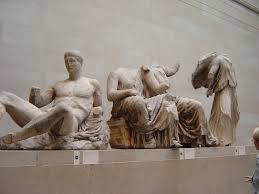
 A few days ago, in Berlin, during an interview with a Greek journalist, the American star George Clooney suggested London should give back to Athens the Greek marbles displayed at the British Museum. The issue arose because Clooney’s last film, Monuments men, tells the story of some men that, in the last years of the Second World War tried to retrieve artworks stolen by the Nazis. But the controversy on the marbles of the Parthenon is long-standing, even Lord Byron (1788-1824) the most charismatic figure of English Romanticism, wrote these verses in a poem: “Cold is the heart, fair Greece, that looks on thee,/ Nor feels as lovers o’er the dust they loved;/ Dull is the eye that will not weep to see/ Thy walls defaced, thy mouldering shrines removed/ By British hands, which it had best behoved/ To guard those relics ne’er to be restored./ Curst be the hour when from their isle they roved,/ And once again thy hapless bosom gored,/ And snatched thy shrinking gods to northern climes abhorred!”.

Continue reading The Greek Marbles: should give back to Athens the Greek

Giuseppe Mazzini’s journalism in London

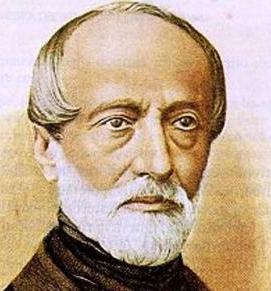
The life of Italian patriot Giuseppe Mazzini during his forced exile in London was yesterday examined in the Ucl (University College London) Italian department.  In particular, the lecture held by Andrea del Corno, who is the responsible for the Italian Collections at the London Library , addressed to Italian political journalism in London during the years 1840-1859, primarily focusing on four journals (Apostolato Popolare, Il Pellegrino, L’Educatore and Pensiero ed Azione) run by Giuseppe Mazzini (1805-1872).

Continue reading Giuseppe Mazzini’s journalism in London

Scienze museum Exhibition’s Collider LHC

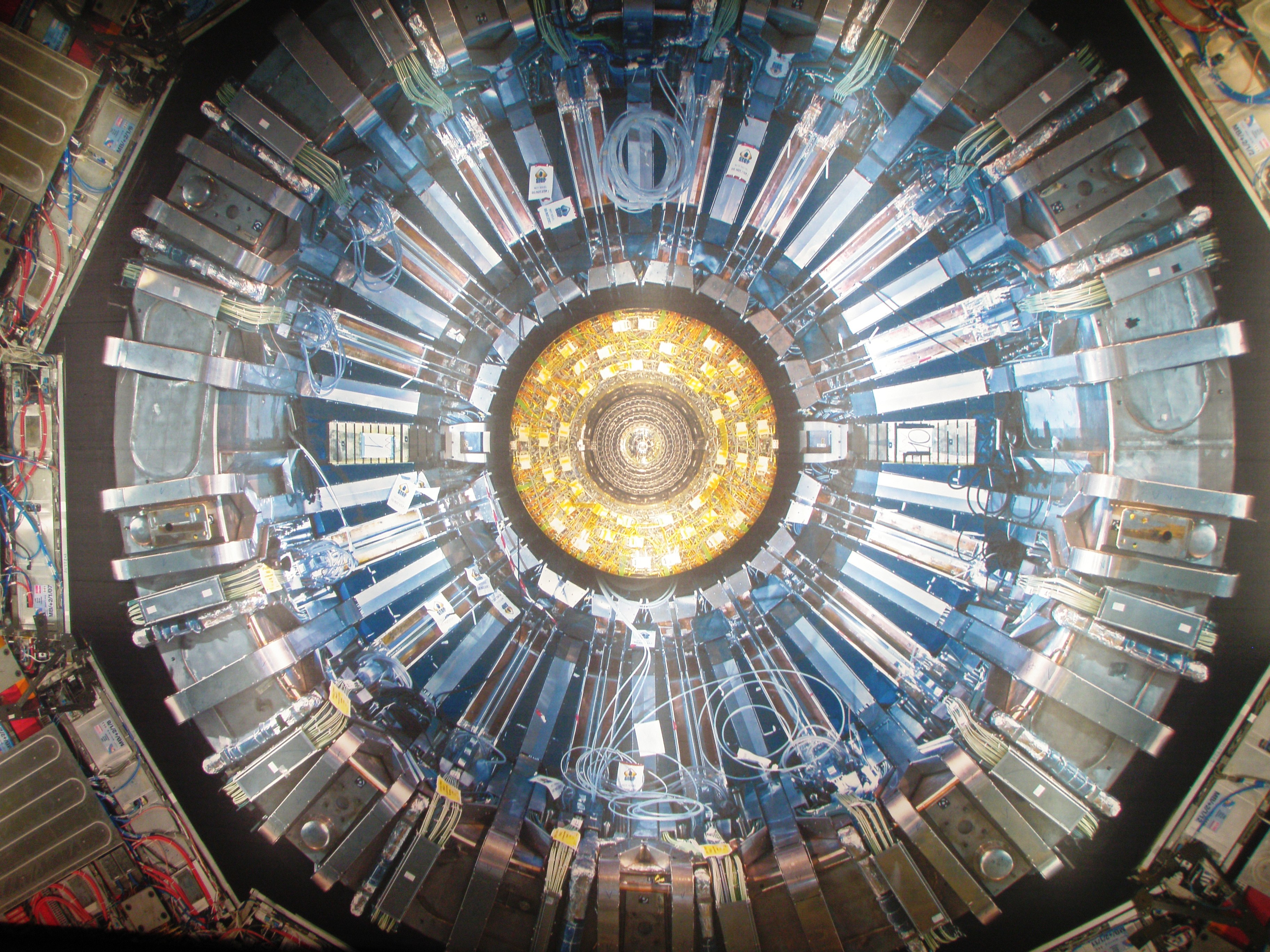
London Scienze museum – step inside the world’s greatest experiment13 November 2013 – 6 May 2014. Buried deep under the border between Switzerland and France, CERN’s Large Hadron Collider is the work of ten thousand men and women from across the globe, united in their quest to uncover the fundamental building blocks of our universe. The LHC is the largest and most powerful particle accelerator ever built. It took international teams numbering in the thousands to design, construct and operate the 27 km collider and its four giant particle detectors. All this great work and try to chase the Higgs Higg.

Continue reading Scienze museum Exhibition’s Collider LHC

The Reneissance art in the Adriatic territories

It is arrived in London “Adristorical lands”, the European project which aim to promotes the cultural values of the Adriatic territories, enhancing local identities and promoting tourism based on the appeal of historical villages, walled cities, castles and cultural sites, that still today, are nearly unknown.

Continue reading The Reneissance art in the Adriatic territories

The Italian Bookshop new incoming season

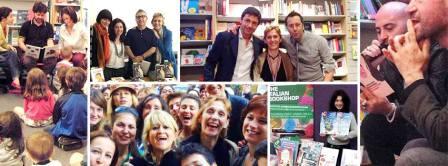
An events full incoming season for the Italian bookshop, directed by Ornella Tarantola

The Italian Bookshop is the best place to attend, in London, if you love books and Italian culture, but also if you are interested on languages learning and workshops.
This lovely, famous bookshop, part of European Schoolbooks, represents a kind of outpost of Italian culture across the Channel, but it is also a place able to give its visitors many free opportunities to talk about literature and books.

Continue reading The Italian Bookshop new incoming season

Sir John Soane’s Museum’s evening opening

London: A candlelight unforgettable visit in one of most interesting and intimate museums of London: the Sir John Soane’s Museum .


Each first tuesday of the month, in front of 13 Lincoln’s Inn Fields, from 4 pm, you can find a large group of people patiently and neatly waiting. Whoever passes and ignores the reason of their waiting, looks perplexed the crowd on the trot and goes on, without understanding what is going on.

In the wonderful frame of Lincoln’s Inn Fields, the largest public square in London, close to the Tube station of Holborn, there is a little museum that nobody should miss, in London, and just this museum is the reason of so many people’s waiting.
It is Sir John Soane’s Museum, set in the house belonged to the namesake architect and based on Soane’s private art collection, which is showed to public into an enchanting and surprising place.
On each first tuesday of the month, Sir John Soane’s Museum’s staff gives visitors the opportunity to see Soane’s collection without electric light: the house of the well-known architect is illuminated by candles only.
It is such a special and moving thing that lot of people meet in front of museum’s building, in the early afternoon, in order to get their entrance pass.
The entrance is free, but only the first 200 people can experience the honor to visit Sir John Soane’s collection with this particular and unforgettable atmosphere, able to bring visitors back in time and to make them feel as if they were visiting a true house, room after room.

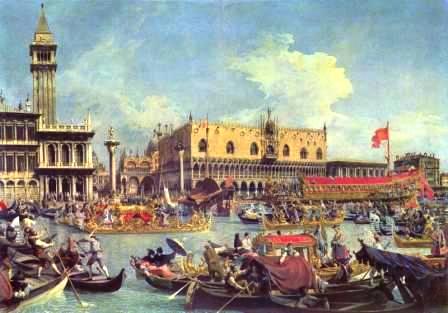
Soane’s collection is a surprising mix. It houses a sarcophagus belonged to King Seti I, one of Canaletto’s masterpieces, Riva degli Schiavoni, drawings by Christopher Wren and Robert Adam.

There is also a little surprise which is waiting for you, if you decide to visit this lovely, hidden place, in the heart of London.
We will not tell you nothing more. But during your visit, pause a little bit longer in the room which hosts Piranesi’s works and wait for the precious staff of this museum. They will tell you a hidden and serial story, wearing white gloves and with lot of emotion and enthusiasm.

Visiting Sir John Soane’s Museum is a singular experience. Something really different from any other monumental collection you can find in London’s museums and gallery.
I you decide to go there and visit it, you will be surprised also because of this perceptible difference. It was a private place, and you can feel it. Passing through the hallways of this building which looks like a labyrinth, you will feel as you were travelling in the past, through different ages and you will feel and meet the spirit of the creative, forward-looking man who projected and choose everything, as he was still alive, hovering in this two-floors lovely place, which is more than a simple [museum].


Thomas Lawrence John Soane*Sir John Soane (Reading, 10 September 1753 – London, 20 January 1837) was one of the most estimated Neo-Classical architects. Thanks to his talent and his creative skills, during his studies in Royal Academy, he was awarded of sundry award and a travelling scholarship who gave him the possibility to visit France and Italy.
From the mid-1780s Soane becomes a successful professional, he received lot of prestigious commissions. Among his works, Piercefield House (1784), Chillington Hall’s remake (1785), The Manor, Cricket St Thomas (1786), Bentley Priory (1788) and the extension of the Roman Catholic Chapel at New Wardour Castle (1788).
The most important commission is for The Bank of England: Soane became architect and surveyor and worked to the project for 45 years.
He was professor of architecture at the Royal Academy, but Soane is also known as forerunner of museology’s discipline and because of his interests in art collecting, flowed in his surprising collection showed in the namesake Sir John Soane’s Museum, set in London, in Lincoln’s Inn Fields.