The Man on the White Horse Second World War.

Memories of Amedeo Guillet (1909-2010), the last man to lead a cavalry charge against the British army


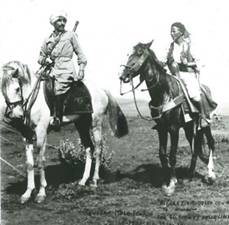
Amedeo Guillet was an Italian officer who led a cavalry action at Keru on January 21 1941 against British forces invading Italian East Africa from the Sudan. His horsemen were within 25 yards of Gazelle Force brigade headquarters before British artillery opened fire. For many who witnessed the scene, it remained their most vivid memory of the entire war. After the Italian surrender in Africa, Guillet led a minor guerrilla war against the occupiers before seeking refuge in the Yemen from where he returned to Italy in 1943. He was one of the most decorated Italian soldiers of the Second World War.


An intimate subordinate of both Italo Balbo, the governor of Libya, and the Duke of Aosta, the viceroy of Italian East Africa, Guillet was uniquely placed to witness the disaster of Italy’s entry into the Second World War.

few of the leading figures of pre-war Italy were unknown to him. Before 1940, he had also fought in the conquest of Ethiopia in 1935-36, in repeated actions on horseback, and in the Spanish Civil War, after which he no longer wished to live in Europe.


After the Second World War, his passion for the Middle East saw him serve as ambassador to Yemen, Jordan and Morocco. He retired to Ireland in 1972 after his final posting as ambassador to India.


Talk by Sebastian O’Kelly

and Baroness Mary Soames


Sebastian O’Kelly is a national newspaper journalist and author who has written a biography of Amedeo Guillet (Amedeo, HarperCollins; Rizzoli). He first met Guillet in Ireland in 1994 on the prompting of Indro Montanelli, doyen of Italian journalism. The two became close friends and together visited Eritrea in the year 2000 to visit Guillet’s battlefields – and the hideouts where he took refuge from his British pursuers.


Mary Soames (Baroness Soames) is the surviving child of Winston Churchill and the widow of Sir Nicholas Soames, the British diplomat and politician.

She first met Amedeo Guillet and his wife Beatrice Gandolfo in the Middle East, and they became lifelong friends. Lady Soames, who served as her father’s aide de camp during the war – meeting Truman and Stalin at Potsdam

– is the author of several books including a biography of her mother, Clementine. She once described Amedeo Guillet as ‘un chevalier sans peur et sans reproche’.


Monday 4th April 2011 at 7pm


Italian Cultural Institute

39 Belgrave Square, London SW1X 8NX 

RSVP: rsvp.icilondon@esteri.it / 020 7396 4430

The Man on the White Horse Second World War

London: Cerimonies in London for the 150th anniversary of Italy s unification

March 17 2011 marked a memorable date for the country of Italy.In that date Italians celebrate the 150th anniversary of Italy’s unification. The history of Italy, as a united country, is quite youth: only 150 years . Before that , “The Boot” was formed by a group of city-states and principalities not even unified by a language. 

[photo: The National Monument of Victor Emmanuel II is lit with the colors of the Italian national flag, during the Night of Tricolor in celebration of the 150th anniversary of Italy’s unification, in central Rome, capital of Italy, March 16, 2011.]

In the United Kingdom – the first country which recognised the newly unified Italian state, after having enthusiastically followed the epic deeds of the Risorgimento– several events took place , which offered the occasion to celebrate this important anniversary.

The Italian Ambassador in Uk Alain Giorgio Maria Economides invited in his residence all the Italian fashion houses that are present in London. The choice of reuniting the great and prestigious brands of Italian fashion was not casual. “The fashion sector represents an example of excellence for the country”the Ambassador claimed. Small craftsmans together with the manifacture and other enterpreneurs have created the condition for an advanced democracy that characterized Italy and all the European Country. Thanks to the genius and the initiative of ancestors the history and the ability of the italians is now popular worlwide.

[Photo The Italian Ambassador in Uk Alain Giorgio Maria Economides by Cinzia Cerbino]

ambasciatoreWhile the evening reception was tooking place in the Ambassador’s residence, in the Hampshire, far away from London, the Orchestra of the National Academy of Saint Cecilia, directed by Antonio Pappano, played the symphony Aida of Giuseppe Verdi.

These initiatives represents only the beginning of a long series of celebrations for the 150th anniversary of Italy’s unification.

The day for the country was not less ceremonious. Events, celebrations and institutional speechs were the set for the anniversary.

The President of Republic Giorgio Napolitano highlighted the “pride and confidence for the extraordinary historical deeds, the Italian unification”.

Despite the political and economical situation that the country is living, as many international country, giving a quick look at the past the Italians can still be proud to be part of a territory where people builded their activities believing in their capability. On the other hand it is still there, the famous sentence on the Square Colosseum in Rome (Palazzo delle Civiltà, Eur): “A nation of poets, of artists, of heroes,of saints, of thinkers, of scientists,of navigators, of transmigrants “.


Interview to the great voice of the erotic literature Maxim Jakubowski.

A very skilled and sensitive writer: that’s Maxim Jakubowski, one of the best crime and erotic novelists. In our interview, he expressed his thoughts, ideas and cleverness. Maxim was born in England but he spent part of his life in France. He worked as a publisher and  then opened the Murder One bookshop, a very popular crime bookstore. His masterpieces are: “It’s You That I Want To Kiss”, “Because She Thought She Loved Me”, “The State Of Montana”, “On Tenderness Express”, “Kiss me Sadly”, “Confessions of a Romantic Pornographer”  “I Was Waiting for You’. What strongly emerged from the interview was Jakubovski’s deep psychological intelligence. 

 Mr. Jakubovski, when you depict your characters what are (if) the features they never lack? Are there any constants in your characters?

-I would say that many of my characters lack true happiness, and the stories i knit around them depict the way they seek it, and often find it either superficially or wrongly in the pursuit of sex, or at any rate something they can’t quite put their finger on. It’s both a lack and a constant, although it can differ slightly whether it’s a male or a female character, and also is dictated by their sexual nature, be it dominant or submissive.

“When you talk of men and women, you have to talk  inevitably of sex” that’s what you said in an interview. I think another indispensabile reality, strongly linked to a man, is death(in all its aspects: loneliness, depression, discouragement). Eros and Thanatos represent the double face of life. That’s why your literary styles are both thriller and erotic?

– The death factor is terribly important to me, and the book I am currently finishing is actually very much about it, EKATERINA AND THE NIGHT (being published in England this October). But there are deaths in almost all my books, whether or not they are thrillers. Death is the opposite pole of sex and their intersection is fascinating place. It’s the usual cliche to say that orgasm is also called la petite mort in French (the small death), but I do believe (and follow George Bataille) that orgasm is the closest we can get to knowing death. In addition, when I am writing thrillers, I often have a character, Cornelia, who is a hitwoman (and very popular with my readers), so killings and death are a narrative requirement to say the least! Only one of the books in which she appears (CONFESSIONS OF A ROMANTIC PORNOGRAPHER) has unfortunately appeared in Italy

Love and sex: what’s the relation between these two terms in your opinion?

-They are inseparable. As soon as one grows up and leaves adolescent romantic fantasies behind, I think it is inevitable they are closely joined at the hip (or the genitals)…

Sex and loneliness: is there a relation between these terms?


-In my books and stories, they are also closely connected, although I am not sure that is also the case in real life. Because of things that have happened in my life, I have been a lonely inhabitant for many days and nights of hotel rooms all over the world and I have an ambivalent relationship with them. One feels a strong sense of loneliness being alone in a hotel room when night begins to fall and memories come racing back through one’s mind, but at the same time, because of those memories and feelings, a hotel room feels/smells/breathes of sex, so that all makes the loneliness and sex equation a burning one, and something that does affect me a lot. In addition, there is a seductive spell in the anonymity of hotel rooms that attracts me. It’s almost living outside one’s life where morality and taboos no longer exist.

What is BDSM in your view?


-A very complex set of emotions and actions. There are so many cliches and misapprehensions about BDSM. It’s not all about leather, latex, handcuffs, chains, dungeons and whips. There is also a subtle emotional underpinning in the way certain aspects of BDSM can define a person or a character’s sexuality or help them understand their true nature. BDSM can cover so much ground and is an area that truly fascinates me, although my personal dabblings in it have been minimal because of the sometimes ridiculous nature of its ‘toys’ and activities and the fact I have a strong sense of irony and too many BDSM typical situations just make me burst out laughing.

 I read “Kiss me Sadly” and “American Casanova”. Your style is so smart and fine.  Can a writer maintain a smart style though he uses a direct language, when writes about sex and erotism? How?

– When I write about sex, my most important preoccupation is to avoid all forms of vulgarity. It’s not easy and I do my best. I do believe one can write about sex and explicitly at that, and write well. It helps if you can manage to give credibility to your characters, and provide them with a life and emotions that readers can identify with. But there is no magic formula. I am still learning on every new page I write, but there is no method involved, just intuition. I just do not see myself as a ‘sex writer’, just a writer who happens to write about sex. A fine but an important distinction.

How do you live your daily life? Are you an outsider? Do you like social life or a retired life?

-When I am In London, I am up around 7am every day and write fiction until 11am. Some days It’s just 500 words, some other days I can  manage up to 2,000 words. Afternoons, I write articles, read, review, listen to music, see films. If I am travelling, I just write a few notes here and there as inspiration strikes, even though I always travel with my laptop computer; although once I did write a whole short story between leaving my New York hotel in a taxi for JFK airport, andf the plane departing 3 hours later. It was a short erotic vampire story an American editor had asked for, and suddenly inspiration struck! But normally, it’s the usual slow grind and systematic discipline of most writers.  I am not a retiring person but then neither am I great socializer. I have a limited amount of friends and am not greatly comfortable in parties or big gatherings, especially due to the fact that I don’t drink (not by principle at all, purely a matter of taste). I am quite self-contained and private, but because of my writing and journalism I still have to function in public at film and book preview parties and events, as well as literary and film festivals. I also greatly enjoy doing public readings for my books and appear to be quite popular. But basically, I am most comfortable with just two or three people around discussing matters of art, or, preferably, a woman who touches me inside, just talking, having coffees, eating, walking and maybe more…

Three words to describe Maxim Jakubovski.

-Outardly misanthropic and quiet; internally, a cauldron of emotions; overall, just a dreamer of a man. Not quite 3 words, but three descriptions.

Have you any regrets in your life?

Too many. Women I have lost, women I have never known, things I should have done differently, words I should have said. And, less importantly, that some of my favourite books still haven’t been translated into Italian!

What is femininity in your opinion? And what about seduction?

-My whole life and the purpose of my writing, I think, is to understand women, their beauty, their soul. And I have never questioned the power of seduction. I can only seduce with the power of words and an ironic smile. I have never been a Don Juan, and have been more (or attempted to be ) a minor version of Leonard Cohen.

Do you feel seductive?

If only I could. Sigh…

Have you ever hated one of your characters? Have you ever created a character to object to him/her?

-No. Some have been caricatural, and deliberately so in the cases of the bad people/villains in some of my thrillers but otherwise every character I write about has something of me, whether male or even female. Madame Bovary, c’est moi! No hate is involved; on the contrary I dearly love my female characters. As I write about them, I try to inhabit their life, their bodies in a desperate attempt to understand them fully, identify myself with them (even the killers…).

What would you suggest to a budding erotic writer?

– Just write. Don’t think about being erotic or not. If you write naturally and you are true to your heart and your inner pulsions, maybe some readers out there in the great nowhere will find your lines erotic.

A writer is both lucky and condemned. Lucky because he can experience the deepest aspects of life but he is condemned to suffer because of the empathy with the world surrounding him. Have you experienced these double aspects of being a writer?

-Yes, totally. Every new book or story is a new torture. Every line hurts.

Is there one of your characters you liked most?

-I tend to like all of them, but I have the deepest affection for the female characters who have been inspired by women I have known (well or very little) in real life. Because they still live in my lines. In a way, even though they are erotic, most of my stories are also love letters to someone.

Have you ever cried while writing a book?


– Yes, when the reality that inspired them was too much to bear.

In your opinion what makes a writer “THE” writer?

– I don’t and neither expect to ever know. All I know is what I am. And I am all too sadly aware that I am just a minor writer in a minor genre but I’m grateful that I have the talent to express my obsessions in this way as a form of catharsis, I suppose. On the other hand, there are many other authors (not necessarily erotic by nature) whom I love and admire, and whenever I read a few of their lines it is immediately evident that they are THE writers!

Who are the writers you appreciate most?

-John Irving, J.G. Ballard, Cornell Woolrich, Emily St.John Mandel, David Goodis, Drieu la Rochelle, Cesare Pavese, F. Scott Fitzgerald, Jim Thompson.

 You have lots of fans. What kind of relationship do you have with them? What is the funniest thing a fan told you? The saddest one?

-I get letters in the mail, but only from people who like my stuff, so it’s not very critical. It’s good for the ego, especially in weeks when I feel unsure whether it’s worth continuing to write or whether I have something worthwhile to say. At public events, contacts are more fleeting as most are a bit shy at the prospect of confronting an erotic writer in the flesh.

You lived in Italy for a year (in Castiglione delle Stiviere). Tell me something about your  Italian experience. What is your opinion about the literary scene in Italy? Do you think the erotic literature is considered in Italy? Who are the Italian writer you like most?

– I was only in Italy for 14 months and this was a long time ago. But I have been back many times, at least 2 or 3 times a year. I love Rome, Veniceand Genoa. The women. The atmosphere. My contacts are mostly with Italian writers in the crime area because we meet annually in Courmayeur.Pavese of course, And amongst contemporaries Barbara Baraldi, Francesca Mazucatto, Isabella Santacroce, Tommaso Pincio, Simona Vinci. I like Cris Formetta’s stuff (and have published and translated some of her stories in England) but I feel she still has to concentrate more on her fiction and less on money-making non fiction (she’s a friend).

What are your project for the future?

I hope to have finished my new novel EKATERINA AND THE NIGHT next month. It’s about an affair between a young Italian journalist and an older man, and also involves a woman who is the angel of death. Sort of LOLITA meets STORY OF O, with supernatural overtones! The finale takes place in Venice in winter, and the final chapter stands alone as a short story in the VENICE NOIR collection I have just delivered to my American publishers, which features 14 all-new stories about Venice and its darkness by lots of different writers from Italy, the UK, the USA, France and Canada. It’s a sequel from my ROME NOIR collection which should be appearing from Einaudi later this year.

Thanks to Maxim Jakubovski for accepting the interview. 

[photo:angolonero.blogosfere]

read more article on Maxim Jakubovski :


London: Maxim Jakubowski and his love for Italy


To be a photographer:new challenge in the new era.

A synoptic interview with the photographers Winners of Accademia Apulia Photographic Award.

The Italoeuropeo has interviewed the three winners of Accademia Apulia Photographic Award for a better understanding of what is the meaning of being  a photographer nowadays.

In a interesting dialogue with the winner Matteo Sandrini and the finalists Alex Boyd and Stefano Morelli, the interview unveils the essence of their art.

Q: When you take a picture, what do you intend to communicate with your photography?
( I think that it is the same when a painter start painting)

Matteo Sandrini finalista dell’Accademia Apulia Art Award 2010A:Matteo Sandrini:A painter can choose what to paint and how, a photographer can only select a subject and a point of view. At the moment what I want it’s to give different point of views about problems, situations or realities such as the one of the district of my hometown.


A:Stefano Morelli: I am a photographer really involved in social issues, so the main aim of my projects is to try giving voice to invisible persons, as Roma’s people in Tirana are.


Alex_Boyd_Press_Portrait__1_.jpegA: Alex Boyd :I would agree with the American photographer Thomas Joshua Cooper that I ‘make’ a picture instead of taking it. Each image from my Sonnets series is the result of much consideration and planning, and when I arrive at a location, the main variables are light, weather and my own mood – these are all important factors which make up the final image.
In my photography I attempt to create images which are largely free of narrative and are freely open to interpretation. For my Sonnets series in particular, this has created an ambiguity which forces the viewer to engage with the figure, and attempt to work out his relationship to the landscape around him. While I do have my own thoughts regarding the meaning of  Sonnets, my approach was largely inspired by the work of Bill Brandt, who wrote about emphasising one element of a subject, as this would”…most effectively arrest the spectator’s attention and induce in him an emotional response to the atmosphere I have tried to convey.”

Q:In a society of visual art (media, advertising) is there any space for new imagery? Is there any space for innovation?

A:Matteo Sandrini :I tend to think that there will always be space for innovation. Nonetheless, it’s probably better to think always twice before taking a picture, since nowadays we are swamped by images from hysterical media. It is fundamental being aware and being smart in every artistic decision. Furthermore, I believe that only through researches and studying true innovations are possible.

A:Stefano Morelli:I hope so. I am very sad when I can see the main interst of italian magazine is focusing on the pink pages, putting off important world events.

A:Alex Boyd :There is always room for innovation, and I’m continually surprised by some of the talented artists and photographers whose work I come across on a weekly basis. Photography has never been so vibrant as it is today, and while there are of course mediocre works being created, I tend to concentrate only on those that leave an impression, and make me want to revisit them.

Q: Photography is something immobile. In a society that changes continously, can photography be a useful instrument that makes people think? 

A:Matteo Sandrini :Of course, many people walk or run not even knowing why they are doing it. Sometimes simply a picture can make people think and discuss.

A:Stefano Morelli :I can assure that. The still image can be a possibility to stop and think, extremely rare fact during our daily life.

A:Alex Boyd:Yes, there are still times when I will see images which cause me to stop whatever I’m doing and give them all of my attention. Most recently this was a photo essay by David Gillanders on street children in the Ukraine. The cruel and desperate conditions that those kids live in forced me to find out what was being done to help them, and if I could play any small part in that. It was a strong emotional response which arose from viewing his stark images, and caused me to reflect on my own relationship to images of poverty.

Q: In your opinion, how can photography contribute positively to multiculturalism?

A:Matteo Sandrini :I think photography can only be another instrument that the people can use to reflect, discuss and better understand a problem. So with my pictures I hope to give something more to think about. 

A:Stefano Morelli c can contribute positively for the multiculturalism going directly to tell what really happens in forgotten places.

A: Alex Boyd:I strongly believe that photography can play a key role in contributing to multiculturalism through sharing the experiences, stories and lives of people from all walks of life. I recently had the pleasure of meeting with photojournalist Stefano Morelli and seeing his hard hitting images from around the world of peoples who are largely marginalised, such as the Roma in Albania. The most difficult challenge he faces is not taking the images of these people, but sharing them with an audience who have been made apathetic through so called ‘compassion fatigue’ . For example his work covering minefields in Cambodia was largely ignored by news outlets in the West for being ‘just too depressing’. These hard hitting images could have led to further discourse on the subject, however this has not been allowed to happen.
My own work is slightly different, and attempts to challenge stereotypical conceptions of what constitutes multiculturalism by rejecting the approach of making images concerned exclusively with race, and by concentrating on the diverse backgrounds and cultures which make up the wonderfully diverse culture of modern day Scotland.

Q:In your masterpieces, what is the relationship between man and nature?

A:Matteo Sandrini:I believe that the relationship between the human being and nature in my work is represented by the street and the small world that animate it simply passing by.

A:Stefano Morelli:I try to tell the domestic life of Roma’s people in the huts where they survive. They live in narrow contact with nature, intending for nature the outdoor life they do. Above all they survive picking up irons in the dump or begging in Tirana’s street.

A:Alex Boyd:Thank you for the kind words, however I wouldn’t call my own work masterpieces, that is something I would associate with Wynn Bullock, Paul Strand or August Sander for example.
For my current series Sonnets there is a very close link between man and nature. Each of the images has been created in a carefully selected location, one that is generally known to Scottish viewers for historical, or scenic associations. Locations that rose to prominence in the 19th century with the creation of a new Scottish national identity, and romanticism.
One such example is Glencoe and Rannoch Moor in the Scottish Highlands. Places of stunning natural beauty, images of these wild landscapes have understandably been photographed ad nauseam, and they adorn everything from calendars to shortbread tins.
Dominated by picturesque mountains such as Buachaille Etive Mòr, and by the expanse of the moorland itself, the weather and ground there can be extremely unforgiving, as anyone who has walked over Rannoch Moor can testify. These aspects are often forgotten though as photographers tend to congregate in the same shooting locations, unimaginatively taking the same image of the same tree, the same waterfall, and the same vista – often creating uninspiring images. This prompted me to challenge these conventions, and It was in Glencoe that the Sonnets series began.
What has been of greatest interest to me is the reaction that my images seem to illicit in some viewers. I have had correspondences with Scots from around the world, from viewers of exhibitions, to MSPs , telling me that the Sonnets series is for them a perfect representation of Scottish identity. I was even approached last year by an agency working on behalf of the government to use Sonnets internationally as the face of Scottish Tourism, and a surreal moment when I was congratulated by our parliament for my work on challenging traditional depictions of Scotland.


in photo Alex Boyd,Stefano Morelli, Matteo Sandrini

  see more :

 LONDON : The importance of multiculturalism through a Photographic Award. 

The importance of multiculturalism through a Photographic Award.

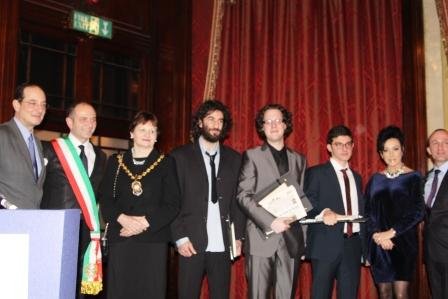
At  the prestigious Royal Horseguards, Whitehall, on the 11 February 2011 , the three finalists for the inaugural Accademia Apulia Photographic Award, have been announced after over 300 participants of all nationalities entered the competition. In the presence of cultural representatives from the UK and Italy, in association with the Patron of the Accademia Apulia UK, Nancy Dell’Olio,  the Award Ceremony took place after that an international panel of judges thought that three candidates best interpreted the spirit of the prize.

 – [Photo( Igor italoeuropeo) from Left to Right:Uberto Vanni d’Archirafi- Consul General of Italy in London, Giuseppe Lovascio -Mayor of Conversano ,Lord Mayor of Westminster – Councillor Judith Warner, Stefano Morelli, Alex Boyd,Matteo Sandrini,Nancy Dell’Olio and  Angelo Iudice –president of the Accademia Apulia]

The Photographic Award –Genius Loci, Spirit of Place and Cultural Diversity-, was established in 2009 by Accademia Apulia UK to champion the importance of diversity in a fast-changing world.  “The Award is intended to inspire artists from different communities to reflect on their local heritage and customs, and how these, in turn, inform their own understanding of their community” Angelo Iudice –president of the Accademia Apulia- claimed.

During the ceremony the importance of the diversity and multiculturalism was underlined by the  Lord Mayor of Westminster – Councillor Judith Warner -in  her speech.  London is the city where  different cultures meet up and dialogue together. In the last time the importance of this mutual enhancement was denied. The

AccademiaaPsibdaci.jpg

 Photographic Award represents an excellent example of intentions in keeping and consolidating those dialogues.

Uberto Vanni d’Archirafi- Consul General of Italy in London- emphasized the central rule of integration for a society and he supported as this kind of initiatives are going to boost the friendship, the integration of  cultures and multiculturalism.“Today we celebrate the capacity to transform ability in masterpiece”.

The  great mastery, object of the group exhibition, belongs to Alex Boyd, Stefano Morelli and Matteo Sandrini, the winners of the price.

Alex Boyd is known for his figurative landscape work. Since 2007 Boyd has been working on the series ‘Sonnets’ which was inspired by the work of Edwin Morgan, the first National Poet of Scotland. In an interview Body affirmed “ Edwin  Morgan helped me to appreciate the depth and vitality of Scottish history and culture, and inspired me to visit the places he so often wrote about – for example the Sonnets from Scotland poems open with a description of the dramatic cliffs of the Island of Hoy in the far North of Scotland, which pushed me to make the long journey there to see them through my own eyes”.

 foto 1


Stefano Morelli  presented a photographic essay that focused on the Roma’s existence on the fringes of society and their survival in Bregu I Lumit, a camp on the outskirts of Tirana, Albania. His photos capture their struggle to maintain their own identity whilst being seemingly invisible to broader society.

  foto 2

 Matteo Sandrini, the winner,  focused his project on the social dynamics of an ethnic diverse district of the affluent Italian city of Brescia where the locals there feel that the place has lost its local identity. For several days and always at the same time, Matteo  positioned himself on the main street and this opportunity photographed people passing by. Out of individual shots he created a composite image with individuals from multi-ethnic background lined up side by side, as in a collage of social integration.  

foto 3

 Once again the reality is testimonial that the word multiculturalism has its own force and potentiality that emerges and seeps out especially when events as the photographic award of Accademia Apulia gives the opportunity.


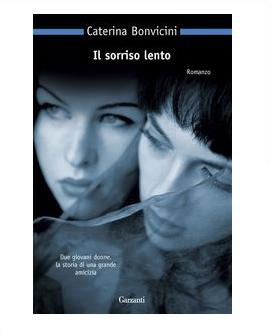
Il Sorriso Lento

The most sparkling way to leave a light on. Never loosejuiced, like paper stars in an inked room, Il Sorriso Lento traces the inner journey of Clara and the suffered love gesture for Lisa, in a piece of passionate romance for words and existence. The opera is a literary education to the concept of mourning, but also an idyllic splinter and a parable of dainty prettiness. And overall an hymn to friendship, because amity is a gift that fills every life, is the path that follows us even when all seems a lost road, is the totem that monitors and protects any other link. So it is for Clara, so it is for Lisa, mates from childhood: cultivate their relationship with the madness of adolescence and the innate awareness of feeling, with the ensemble of the soft and hispid strength that grows lichen on chipped walls, under the sun, wherever it is unthinkable that could survive any other body.

And it is on the tangles of life that the group of souls (Marco & Diana; Daniele, Veronica and Sandro) that surrounds them becomes an inexhaustible source of hope, because is when fate seems to steal every certainty, that is revealed the stoic power of the Union. Yes, because Lisa gets sick, and Clara becomes prisoner of the painful questions of growth, including anxiety, laughter and tragedy. Ben, self-centered musician and womanizer, will accompany her through the process of metabolism of pain and loss. The thrill of a graceful and poignant novel, therefore, runs on a balance of feelings, according to which happy is the one who does not need to try to be wealthy, healthy, or remaining far from worldly worries and the obscene scheme of solitude. No heated up soup. This is not the copy of a hundred copies: it is a work full of quivers and gallant goodwill.

Filomena Campus the Sardinian jazz jester.

Filomena Campus launched in London her new album “Jester of jazz”. The launching was made with two concerts the 26th and 27th January at Jazz Club Soho. And additionally the 27th Filomena propped up Paolo Fresu in presenting his book at the Italian Bookshop.

The Jazz Club Soho concerts were performed by Filomena Campus Quartet so composed: Filomena Campus (vocals), Steve Lodder (piano), Dudley Phillips (double bass), and Winston Clifford (drums). Furthermore featured performers were on the 26th Rowland Sutherland (flute), on the 27th Jean Toussaint (sax) and both the evening Paolo Fresu (trumpet).

The 27th January concert was marvellous with all those very good players. Filomena has a powerful and eclectic voice, Fresu and Toussaint were delightful and the rest of the band showed great talent.

The music of the “Jester of jazz” is, of course, jazz and in a neat style. But there is also an original blend with theatre metaphors evoked by poems and literature.

Campus plays with the colours of jazz music, mixing the jesters style with her Sardinian legacy. Filomena paints her performances with the colours of the Harlequin costume.

Filomena Campus is an international artist well- known as jazz vocalist and also as theatre director. She has toured and collaborated with top UK jazz musicians including Evan Parker, Guy Barker, Orphy Robinson, Byron Wallen, Cleveland Watkiss, Jean Toussaint, Antonio Forcione and the London Improvisers Orchestra

In 2010 Filomena founded the ‘Filomena Campus Quartet’ with Steve Lodder, Dudley Phillips and Winston Clifford and “Jester of Jazz” is their new original project.

Filomena Campus is also Theatralia Artistic Director Since 2006 Theatralia’s productions have been sponsored by the Arts Council England. Theatralia have performed once a year their “Interludes”, multimedia performance/happenings of free improvisation featuring top UK jazz musicians, performers and visual artists.

Filomena has performed in several international festivals and in many different countries. Her theatre performances are highly inspired by jazz music.

The last 27th January, after the presentation of Paolo Fresu’s book was over, they both moved to Jazz Club Soho where they had the concert.

After the concert we met Filomena Campus and had a nice interview.

You do this show with a quartet that has your name. Additionally tonight there were two guests.

It is a show that is called “Jester of jazz” and with my quartet we have done two dates here. As guests in the first one we had Rowland Sutherland, in the second Jean Toussaint, both of them they play in the album also called “Jester of jazz”. And for both the concerts I invited Paolo Fresu as a guest too.

So your connection with Paolo Fresu: tonight as well this Sardinian soul could be seen.

Well yes. Of course I met Paolo in Sardinia and namely I know him his concerts. Then few years ago I attended to jazz seminar Paolo organize in Nuoro and it was a revelation. I mean it was a special occasion, as in Sardinia unfortunately there are not much. But that seminar was an occasion to improve myself, to learn jazz. And from that seminar I understood were my way was.

You live in London but work in Berlin too.

I live in London but very often I got to Berlin. I work in Germany and in Italy but live in London. My house is London.

So you too are a part of the Italian brain drain…

Absolutely yes!

This album “Jester of jazz”…

The title is inspired at the Nobel motivation to Dario Fo in 1997 where he was considered the jester, in the most original meaning of the term, like jesters were considered in the medieval time. So this in this album the jester, the clown, it comes out with my presence on stage. There are some lyrics from Stefano Benni. France Rame collaborated in writing a lyric. However this work is connected to my character which is also to be a theatre director. So theatre and jazz get together in one only idea.

Future projects?

Promote this project firstly and tour it around Europe. So I wish I can tour with it anywhere as far is possible. For this moment this is the future project.

Gianluca Pellerito and his Quartet, a 16 years old jazz star

 Jazz lovers in London discovered an amazing talent during a session at the Italian Cultural Institute in occasion of the “London Jazz Party” hosted in Belgrave Square. Drummer Gianluca Pellerito, a Sicilian teenager, enchanted the audience playing with his group, the “Gianluca Pellerito Quartet”.

It is incredible how a 16 years old could lead accomplished musicians but this is the case, this group is just right and when Gianluca starts his solos at the drums, everyone forgets his age, he is so talented and his virtuosity masterfully executed that at the end the only thing to do is to clap vigorously to show the appreciation for this performance.

Gianluca Pellerito together with Michael Eckroth at the piano, Marco Panascia at the bass and Michael Rosen at the sax gave the audience an evening where classical and modern jazz have been played for everyone’s delight. In the programme pieces by Jaco Pastoius, Dave Brubeck, Kenny Dorham, George Gerswhin, Pat Metheny, Chick Corea and Duke Ellington have been performed excellently.

Gianluca Pellerito started playing the drums when he was just three years old, using pots and pans from his mother’s kitchen, then few years later he started a course where his teacher said to his parents that if he was playing drums like that at that moment, when he would have been eight years old he would have been a genius. Just to affirm this prophecy, when Gianluca was eight he has been offered a scholarship at the Berklee College of Music in United States of America which he will take when finishing his regular studies and he will reach the age of majority.

Despite being a jazz star he is a grounded boy, and his family supports him following him around the world when he has to perform with his group or as a guest with other major jazz players, in theatres and international festival like Umbria Jazz just to name one. Hopefully we will see more of the Gianluca Pellerito Quartet, London, has a long tradition in jazz music and it cannot miss this young artist and his group and ItaloEuropeo wishes Gianluca a string of gigs at the temples of jazz in London.

PHOTO: CRISTINA POLIZZI

CLOCKWISE AROUND TUSCANY

Tuscany never fails to amaze visitors from near and far with its incomparable beauty. Many associate Tuscany with sunshine, great food, art, stunning landscapes and wine, not that this marvellous region hasn’t given us many world-famous icons now synonymous with Italy: the leaning tower; cypress trees, olive groves and rolling landscapes covered in rows of terraced vineyards to name but a few. Yet a great deal of the region still remains unexplored, especially by the phalanx of videocam and sneaker-clad tourists who arrive each year in their modern chariots, only to limit their visits to the main city destinations.

With ten provinces to choose from, each containing a cache of hidden and inexhaustible treasures just waiting to be unlocked, there’s really more to Tuscany than meets the eye. Whilst working in Florence on secondment from England, I had all these treasures within easy reach, but I was always far too busy to appreciate them. Like the fleeting tourists, I too stood accused of not understanding what the true spirit of Tuscany was really all about until embarking on my own journey of discovery.

Armed with my compact digital camera I set off to explore the region in its entirety. It didn’t take too long for me to become captivated by the infinitely various and varying colours of the landscape just as Leonardo da Vinci had experienced as a boy in the hills and valleys surrounding his birthplace. Along the way – a Journey that began in the latter half of 1998 and continued until 2009 – I criss-crossed the region by air and along many isolated gravel roads, delighting in photographing the unexpected, capturing the sunlight, a crumbling tower, a questioning smile, or a moment in time.

I also set out to capture not only the familiar views, but also encapsulate intriguing frames of Tuscany, which of themselves not highly noted nor easily recognised, would immediately rouse curiosity. My journey, which started in the province of Massa Carrara and proceeded clockwise to Lucca, Pistoia, Prato, Firenze, Arezzo, Siena, Grosseto, Livorno, and finally concluding in Pisa, was full of many unexpected surprises and experiences. For me, each new experience pieced together an identity.

An identity that lies in a distinctiveness that not only permeates every aspect of Tuscany today, but one that draws its inspiration from a combination of strong historical and cultural traditions, battles for independence and a score of revolutionary thinkers who played a pivotal role in shaping the world as we know it today.

This journey has inspired me to produce a book, which not only contains a collection of photographs taken throughout my journey, but also accompanying text. In assembling this book, which I have called Clockwise around Tuscany, I had two overall objectives in mind. First to not only seek out all the familiar places, but also search for the hidden, little-known gems that truly make Tuscany the magical place it really is, and second, to give readers a chance to savour the richness of this wonderfully diverse and historic region and invite them to venture out and discover the hidden and inexhaustible treasures buried deep within this very seductive and beautiful part of Italy. According to a Chinese proverb, “one picture is worth ten thousand words.”

One picture may be worth ten thousand words, but even the best pictures can never truly do justice to Tuscany’s magic. You really have to experience the real Tuscany to understand. Apart from the proud cities and towns with buildings steeped in tradition and ancient history, the landscape provides a feast of many splendid and vibrant colours just waiting to be discovered. Resonant noises echo throughout the countryside and bustling piazzas, and mysterious fragrances, each evoke special images and memories that will gracefully allure you.

Tuscany is not just a physical place. It is a state of mind and I hope that by taking this journey with me you will be able to experience this too.

Lindsey Davis in conversation with Lauren Henderson

Two ladies of the crime fiction genre have been in conversation at the Italian Cultural Institute for the series of meeting with Anglophone writers passionate by Italy and its culture.

Maxim Jakubowski, who organized all these meetings, introduced both authors and then the audience had a very lively evening with these two sparkling writers Well-known author Lindsey Davis, creator of the ancient roman detective Didius Marcus Falco, has been the guest for this evening, where journalist and writer Lauren Henderson introduced Ms Davis highlighting her achievements and awards won thanks to her painstakingly work of research to be documented about life in ancient Rome where her character lives and works that in a poll among readers about who was the sexiest male character in novels, he arrived second only after Rhett Butler. When asked why a woman has written a series of books with a male character, Ms Davis answered that she wanted to write her books set in ancient time but obviously using a woman would have not been a proper thing because of the mentality during ancient times regarding the role of a woman in the social life. Lindsey Davis had the honour to be awarded with the “Premio Colosseo” an acknowledgment given by the City of Rome very sparingly, to who enhance the image of Rome in the world.

The only other recipient of this award has been Franco Zeffirelli. Both authors are part of the “Noir Literature” so the conversation has been well balanced and the questions asked has been well received and answered for the joy of the audience who attended this event, with moment of laughter thanks to quite a few answers from Ms Davis very humorous. During the evening passages from “Nemesis”, “A Body in the Bath House” and “Falco the Official Companion” has been read without giving any clue of what was happening in the plot just not to spoil the fun, but enough to wet the appetite of the readers. Focus of the evening it has been Lindsey Davis latest book “Nemesis” where Falco find himself entangled in another mystery and where families are involved.

This is a style very much different from Lauren Henderson’s heroine Sam Jones, very modern, a sculptress and casual sleuth. Questions from the public have been made and everybody after the conversation surrounded the Italian Bookshop’s point of sale to buy copies of the books mentioned and asked the authors to sign them.


Biography: Lindsey Davis http://www.lindseydavis.co.uk/biographyLD.htm