
Opinion Polls and Democracy

Statisticians have already overrun every branch of science with a rapidity of conquest rivalled only by Attila, Genghis Khan, and the Colorado beetle. – M.G. Kendall ( 1907 – 1983 ), pioneer of advanced Statistics.

At the dawn of western civilisation Pythagoras said, ‘All is number.’ In the pursuit of this dictum ever more fields of knowledge have been conquered by the empire of numbers, the hard sciences first, astronomy, physics, chemistry, then the soft ones, psychology, sociology, ethology, and so on. The general public is daily bombarded with opinion polls, which aim to mirror people’s beliefs, just as they do any other form of human behaviour.


[photo greece.greekreporter.com]
The French scientist H. Poincaré ( 1854 – 1912 ) remarked that, because of our human inability to grasp the overall sense of the world, we were compelled to cut it into slices. This is the rationale for opinion polls. Statisticians working with market research findings stratify their random samples into various groups by age, gender, race, social class and so on, in the same ratio as exists in the population under scrutiny. Then, by interviewing a cross section of selected people, they endeavour to envisage the behaviour of specific groups or classes of human beings.
The American George Gallup ( 1901 – 1984 ) using a robust statistical sample of a few thousand people made his reputation – and fortune – when he predicted in 1936 that the Democrat, Franklin Roosevelt, would defeat the Republican, Alfred Landon, in the U.S. Presidential elections, in direct contradiction of the authoritative Literary Digest magazine, whose poll was based on 2.4 million completed questionnaires.

Asking citizens their point of view lends visibility to public opinion, creating a semblance of democracy and modernism, even though it still remains to be ascertained whether, and to what extent, the proliferation of opinion polls has shrunk the distance between rulers and ruled and/or augmented the reliance of the public on the political class. It is important to remember here that one is dealing with opinions about facts, rather than with facts themselves. Managing opinion and actually understanding attitudes of social communities are two entirely different aims.

In addition there are a number of matters that may evoke a range of different shades of opinion, subtleties that just cannot be picked up by a questionnaire. As the Latin poet Terence put it, ‘So many men, so many opinions.’
Leaving statistical technicalities aside, the crux of the matter is the essential nature of the questionnaires that underpin the opinion polls. First of all, one has to bear in mind that the population samples are far from random. Some interviewees when asked for their opinion will straightaway realize that they do not really have one. And it is a constant occurrence that a fair proportion of those interviewed do not, in fact, fully complete the questionnaires, thereby altering the significance of the sample used. In France, the country that ranks second in the world in its use of opinion polls, 20% of those interviewed fail to answer the questions because of a basic reluctance to challenge majoritarian attitudes. This conspiracy of silence involves the aged, single women and persons socially or culturally on the periphery of society. Hence the oft repeated criticism that opinion polls lend more relevance to the needs of the middle class.

It is also important to remark that each questionnaire is but a sample listing of all the possible questions on a given issue, and the panel of experts, in charge of the questionnaire, is itself but a sample of all possible panels.


Furthermore, even the answers returned by the people being interviewed are merely a sample of their attitudes, based on their interpretation of specific questions at a given moment in their lives.
Finally, the personality of the interviewers as well as the wording of the questionnaire may provoke different reactions in the same people. During World War Two, the National Opinion Research Centre sent out two teams of interviewers to ask questions of five hundred black Americans in a southern city of the United States. White interviewers made up one team, black the other. One of the question was, ‘Do you think it is more important to concentrate on beating the Nazis, or to make democracy work better here at home?’ ‘ Beat the Nazis ’ was the reply of thirty–nine per cent, according to the black interviewers; of sixty–two per cent, according to the white.

[photo cbc.ca

Right from the beginning, opinion polls have achieved their greatest visibility and successes at election time, even though this activity represents less than 10% of the overall business of market research entities. Economic competition operates primarily on a basis of the number of researches undertaken in the shortest possible space of time, since consumer’s wishes have often proved quite difficult to grasp and a preference made explicit for something not yet possessed may well disappear once that same prize has been obtained. The techniques of market research, however, ever more skilfully refined in electoral issues, have become a useful investigative exercise with which to grasp the volatility of consumer attitudes, and analysis of the latest elections results along with the relevant opinion polls, has revealed itself to be a suitable tool with which to test the degree of consistence in people’s behaviour.

Harold Wilson ( 1916 – 1995 ), statistician and British Prime Minister in the 1960s and briefly again in the seventies, declared that one had to pay attention to opinion polls without turning them into idols… to consider them as honest attempts to encode public opinion at a given time… The presentation of the relevant outcomes should not, he felt, be influenced by the prejudices and the interests of those who controlled information… Opinion polls were a service to the public in that they contributed to democratic decisions… Eventually, people were elected to legislate, to rule and to give a judgement basing their decisions not upon what was electorally convenient but upon what was good.

The famous Arch of Palmyra will be replicated in London and NY


The violence of so-called Islamic State does not threaten only the inhabitants of those areas in Syria and Iraq under administration of the Isis militias, but also the archeological sites dated before the establishment of Islam.

Nevertheless the administrations of London and New York have anticipated the aggressive initiatives of Islamic State and have decided to replicate the monumental entrance of Temple of Bel in Palmyra. The 15-metre structure is one of the few remaining parts of the 2,000-year-old Temple of Bel in the Syrian city, but the replicas of this arch will be put in the central places of: Trafalgar Square and Time Square, during the heritage week, that will take place in April.

This choice will represent a good signal of response against the terrible actions of these fundamentalist militants.

Since 2011, year during which erupted the Syrian conflict, the extremist fighters of Islamic State have been destroying a lot of ancient cities across Syria and Iraq, because their explicit target has always been that to erase every trace of a evidence of the Middle East’s pre-Islamic history.

Palmyra has been seriously hit, over the years, by the the fundamentalist militias of Isis, and its most important building: the famous temple consecrated to the Mesopotamian god Bel, was destroyed by these barbarian fighters.

Founded in AD32, the temple was the main centre of religious life in Palmyra. Known as the Pearl of the Desert, Palmyra (which means city of Palms) is located 130 miles north-east of Damascus. Before the Syrian conflict begun in 2011, more than 150,000 tourists visited the city every year, but now is become a ghost city.


However,by certain sources, it seems that the Temple of Bel’s entrance Arch has apparently survived to the attempt by Islamic State to raze it. Currently to send journalists in these critical areas of Syria and Iraq is very dangerous, therefore we cannot know with sure if this Arch is officially survived or not to the attempt to demolish it, but the news if confirmed would be very positive.

However the initiative taken by the administrations of London and New York it’s very important not only because will show to these fighters blinded of revenge that the force of the culture will triumph ever, but these replicas will keep intact the knowledge, for the next generations, of this important monument that, day by day, risks to being seriously razed.
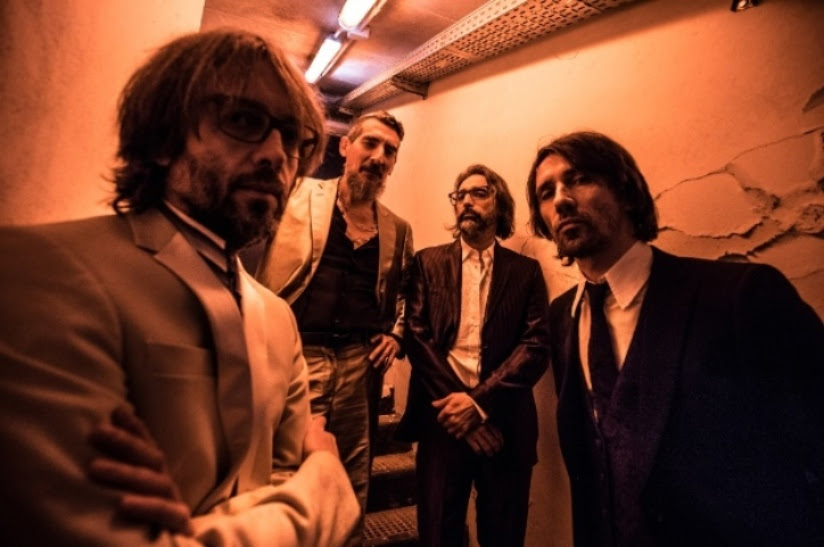
CinemaItaliaUK success of the documentary – Senza Lucio-

Without Lucio The last work of the director Mario Sesti is a documentary entirely dedicated to the figure of the great Italian singer Lucio Dalla. Narrated by Marco Alemanno’s voice, his partner for a lot of years until his end, “Without Lucio” is a open window on the private and professional life of this icon of Italian pop music.

This documentary has been selected for being screened on Saturday 12 December, by the staff of Cinema Italia UK that once again confirms the great expertise of its team that, event by event, offers to us screenings always more interesting.

The director and movie critic Mario Sesti decided to fill the huge gap that the Lucio Dalla’s death left in the whole Italian society, dedicating to this important artist an entire documentary.

But the purpose of Mario Sesti’s last work was not only to celebrate the Lucio Dalla’s successes, but was that to show us Lucio under a lot of aspects of his secret personal life.

A travel in to the memory of one of greatest Italian pop artist of ever, his best hits are not only a piece of history for the Italian cultural heritage, but are treasures donated to the world’s heritage.
Dalla began his artistic career as musician in a local jazz band of Bologna called Rheno Dixieland Band, he played the clarinet but his versatility was so clear since his early beginnings, that the famous singer-songwriter Gino Paoli, hearing Dalla’s vocal qualities, suggested that he attempted a soloist career as soul singer.

It’s very curious also the anecdote that links the famous director Pupi Avati with Lucio, indeed the Italian director was a member of the same Jazz band but when Dalla did his entrance in that band, his huge talent as clarinettist, was so evident that Pupi Avati began to be invidious and to hate a bit him.

However Dalla’s debut at the “Cantagiro music festival” in 1965 was not a successful probably for his music, which was too original and experimental for that time. Anyway his great talent did not remain in a shadow for a lot and first with the song “4 March 1943” and after with “Piazza Grande”, Lucio Dalla was definitely projected on the Italian musical scenario. With “Caruso” written in 1986 and “Attenti al Lupo” composed in 1990, the Italian singer reached the notoriety to abroad, his great hit “Caruso” was also sung by two important Italian tenors such as: Andrea Bocelli and Luciano Pavarotti.

During the documentary, of the director Mario Sesti, will not emerge only the important results that this Italian singer-songwriter achieved over his artistic career, but thanks to the tribute that important national and international artists such as: Toni Servillo, Renzo Arbore and Jhon Turturro, wanted to pay, the audience will can know the private life of this versatile artist.

A true and emotional journey across the Dalla’s life, this is the purpose that the author of this Documentary wanted to insert in his last work. Watching this, the public will receive interesting and curious information about his life and thoughts unknown to the majority of people.

Galileo : The scientific revolution man

Humankind has always wanted to know and understand the world he live in; one of the fields that study this is astronomy. In particular scientists dedicated themselves to the study of Universe, developing new theories about it.

The geocentric theory is one of them and it is considered important because it was able to establish itself for many centuries.
According to this theory the Earth was situated at the centre of the Universe and the planets orbited around it drawing circular orbits.

This theory is also called Aristotelian or Ptolemaic theory, since it was hypothesized by the Ancient Greek astronomer Ptolemy, who lived in Alexandria of Egypt during 2nd century A.D. The sacred Christian texts, like the Bible referred to this theory.

But around the year 1500 the polish astronomer Copernicus hypothesized a new astronomic theory: the heliocentric or Copernic theory. According to this theory the Sun was at the centre of the Universe while the planets orbited around. However Copernicus was only able to suppose it, not to demonstrate it, as he didn’t have access to adequate scientific tools.

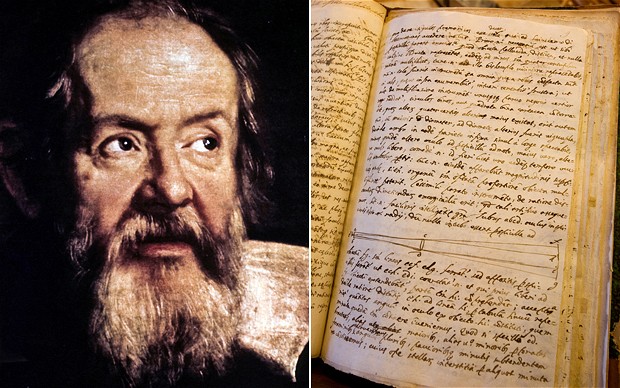
The one who demonstrated it was the astronomer, physicist and mathematician Galileo Galilei (1564-1642).

Galileo was able to prove the theory’s effectiveness thanks to the evolution of science and of its instruments.

One of particular importance for Galileo was the telescope, an astronomic observation’s instrument created for watching phenomenon and enunciating laws. He built this tool, after he came to now that in the Netherlands was invented a glass, which made far things very close.

He perfected this glass, creating a new instrument.
Galileo’s theories were “dangerous” for the Church, because they were not conformed to Christian dogmas. Therefore he received an injunction.
Galileo didn’t attack religious truths, but scientific truths, considering them independents. Faith is about the relationship between mankind and God, the spiritual salvation and the transcendent life.

Religious beliefs are dogmatic, which means they have to be believed as they are, since they are dictated by God and a man cannot experience them in this world, nor explain them. Religious truths are in the sacred texts.

Instead scientific truths are about the material world, in other words the world where a men live and can experience everything around him. They concern and are based on the certainty of phenomenon that a human can demonstrate through observation and experiments. Galileo believed that God was the one who gave humankind the instruments to understand and know the world around, like sense and reason.

In fact he thought nature was an open book written with mathematical characters, so that men could observe, study, enunciate laws on natural phenomenon and gave a scientific proof. This model of study is the scientific method, introduced by himself.

That’s why Galileo is considered the father of modern science.
He also believed that ancient books must be read and interpreted historically, that is the author’s mind must be considered, as well as his time period and his general knowledge.


In order to support the veracity of his theory, Galileo wrote “Dialogue Concerning the Two Chief World Systems” showing two theoretically versions of the Universe, declaring himself impartial.

This work is written as a dialogue between three characters: Sagredo, the impartial one, the naïve Simplicio, supporter of the Ptolemaic theory, and the educated Salviati, supporter of the Copernican theory.

For this writing Galileo was convicted for heresy, because he didn’t follow what was established by the injunction.

Galileo’s discoveries weren’t at first acknowledged due to the controversy with the Church, since it limited freedom of thought and above all every heretical form. Today instead we can see the importance that Galileo had in the science evolution; in fact today we had both the heliocentric vision of the Universe and the scientific method.

The Brain a “Perfect machine”

London – Brain’s study has always fascinated millions of people, bringing several scientists to be interest in its many facets. How many people know, the “Perfect machine” is the pinnacle of nervous system of living beings.

But how do this “Perfect machine” works? And why had it always fascinated both scientific and not-scientific words? The brain is composed of about 100 billion nervous cells (neurons) that transmit some information through electrical impulses.

Neurons communicate with each other at special junctions where chemicals help to bridge the distance between one neuron and the next one. Thanks to these nervous cells, you can do many different things such as thinking, doing actions, reacting, etc.

The brain receives these impulses directly from your senses: feel, hear, taste, smell and sight. You are able to recognize the odour of something that it is familiar to you, because the smell fixes better than other senses in your “Perfect machine”.

So now you understand that when you do an action, for example to raise your arm, in your body are transmitted millions of impulses that bring the information to the brain. In the end we can say that nervous impulses are at the base of each single movement. All this occurs in normal condition of the brain; when drugs and alcohol affect it, they break neurons and slow down connections between them. This effect is commonly seen on people that use drugs. In some moments they have peaks of euphoria because drugs help to speed the connections; then when this effect ends, the speed of nervous impulses decreases, destroying connections between neurons. Thus it is important to take care of ourselves, to pay attention to our habits that could be dangerous for our fundamental organs’ functions.

EARTH’S TREASURY The biggest diamond in the world

Visiting the Natural History Museum you can be fascinating by all the amazing minerals and gemstones. There are some examples of mineral use, ornamental mineral art and meteorites.
The best place to find minerals is at mines. Mines are locations where industrially important rocks, minerals and gemstones are extracted from the earth.

Mines can produce large amounts of specimens of certain minerals, and continue to provide specimens as long as the mine is actively working. Some are also found in road cuts on the side of roads, highways and railroads.

A part from this there different gemstones marvel at variety of colours, textures and shapes. One of the most important diamond in the museum is the Cullinan.

Discovered in 1905 at the Premier mine near Pretoria, South Africa, it is the largest diamond ever found (3106 carats), although its shape suggest that it was part of an even larger stone. It was purchased by the Transvaal and presented to King Edward VII on his birthday and cut in 9 diamonds and in 96 small brilliants. Glass models of the nine cut are shown in the museum, while the 4 largest stones are in the Crown Jewels of the United Kingdom.

The Great Star of Africa (530.2 carats), reputed the largest and most perfect diamond in the world and now in Queen’s Sceptre with the Cross.
It measure 58.4×45.4×27.7 mm, and has 76 facets. Other diamonds are: the Second Star of Africa (317.4 carats) now in the Imperial State Crown; the third star of Africa (94.45 carats) and the Fourth Star of Africa (63.65 carats) both now in the queen’s possessions.

Today, the Cullinan is situated in the tower of London. The years pass and the earth creates spectacular things and minerals, but a diamond is forever.


Superheroes with scalpels

Superheroes with scalpels

The decades following the end of the Second World War saw major changes in the practice of surgery. … READ MORE

Superheroes with scalpels

The decades following the end of the Second World War saw major changes in the practice of surgery. Many stemmed from the application of scientific researches in new fields such as pharmacology, biochemistry and immunology.

The use of antibiotics eliminated some of the diseases that surgeons had previously dealt with, such as tuberculosis, joints or infections of the mastoid; physiological and biochemical researches led to improvements in anaesthesia and intensive care (helping surgery on the heart, brain, etc.); studying immunology organ transplants became possible.

So surgery became more scientific and surgeons also became more reliant on technology to complement their skills.
Surgeons and their patients were quick to realise the benefits of minimal access surgery. In fact in 1990 only about 15% of cholecystectomies were performed laparoscopically. Within five years it was estimated that this tend had risen to over 70%.
Microsurgery and minimal access surgery transformed many surgical specialties and created others, while advances in imaging and new materials found widespread applications.
Each new discipline could lay to specific expertise in anatomy and pathology, diagnostic techniques and in surgical or therapeutic practice.
By the end of the 19th century established specialties included ophthalmology, dental surgery, otology and laryngology. Dedicated hospitals and wards provided an institutional framework for clinical practice and training, while societies and journals promoted specialist research and fostered a sense of professional identity.


After the war also neurosurgery and cardiothoracic surgery were defined.
Neurosurgery was based on the use of imaging technologies for diagnosis and improvements in operative techniques. Brain surgery led to important advances in neuroscience: mild electrical currents were used to stimulate the brains of epileptic patients under local anaesthetics. It was possible to map the functions of different parts of the brain by observing their responses. This techniques was later used in the treatment of brain tumours and other neurological disorders.
In cardiothoracic surgery the heart-lung machine, combined with the use of chemical solutions that temporally stopped the heart from beating, allowed surgeons to perform longer and more complicated ‘open’ operation inside the heart.

It also made operations outside the heart – such as coronary artery bypass – easier and safer.
Thanks to these discoveries and innovations in surgery the mortality rate has fallen significantly and life expectancy continues to grow.
Now I ask you: what would we do if there were no surgeons? So you have to remember that you don’t need superpowers to save lives.

Superheroes with scalpels

The decades following the end of the Second World War saw major changes in the practice of surgery. Many stemmed from the application of scientific researches in new fields such as pharmacology, biochemistry and immunology.

The use of antibiotics eliminated some of the diseases that surgeons had previously dealt with, such as tuberculosis, joints or infections of the mastoid; physiological and biochemical researches led to improvements in anaesthesia and intensive care (helping surgery on the heart, brain, etc.); studying immunology organ transplants became possible.

So surgery became more scientific and surgeons also became more reliant on technology to complement their skills.
Surgeons and their patients were quick to realise the benefits of minimal access surgery. In fact in 1990 only about 15% of cholecystectomies were performed laparoscopically. Within five years it was estimated that this tend had risen to over 70%.
Microsurgery and minimal access surgery transformed many surgical specialties and created others, while advances in imaging and new materials found widespread applications.
Each new discipline could lay to specific expertise in anatomy and pathology, diagnostic techniques and in surgical or therapeutic practice.
By the end of the 19th century established specialties included ophthalmology, dental surgery, otology and laryngology. Dedicated hospitals and wards provided an institutional framework for clinical practice and training, while societies and journals promoted specialist research and fostered a sense of professional identity.


After the war also neurosurgery and cardiothoracic surgery were defined.
Neurosurgery was based on the use of imaging technologies for diagnosis and improvements in operative techniques. Brain surgery led to important advances in neuroscience: mild electrical currents were used to stimulate the brains of epileptic patients under local anaesthetics. It was possible to map the functions of different parts of the brain by observing their responses. This techniques was later used in the treatment of brain tumours and other neurological disorders.
In cardiothoracic surgery the heart-lung machine, combined with the use of chemical solutions that temporally stopped the heart from beating, allowed surgeons to perform longer and more complicated ‘open’ operation inside the heart.

It also made operations outside the heart – such as coronary artery bypass – easier and safer.
Thanks to these discoveries and innovations in surgery the mortality rate has fallen significantly and life expectancy continues to grow.
Now I ask you: what would we do if there were no surgeons? So you have to remember that you don’t need superpowers to save lives.

SCIENCE MUSEUM: To the moon and beyond – a Journey of inventions exploring the space

Since the dawn of time human beings have been fascinated by what is around them , but above by the sky and stars. Thanks to technology they have managed to discover so much about it . Many of these inventions became history and we can find them in a museum in London, ‘The Science Museum’.

In fact there is a zone that shows us all these things. You can see ‘Apollo 10 Command, the capsule used by Tom Stafford, John Young and Gene Ceman to travel around the moon in 1969. There are also some remains of real rockets, satellites and space probes?.

On the walls you can read something about the science in general, from the first man in the space (Yuri Gagarin) to the words of Einstein. You can explore the historical and cultural background of Russia, yearning for space, discover deeply personal stories of the pioneers who kick-started the space age and see the most important space artefacts ever to be displayed in the UK, from real cosmonaut-flow spacecraft to the fascinating equipment needed to live in space.

A spectacular projection of our Earth explains all the changes happened in the years end makes that very modern and interesting.

By visiting this museum it is possible to discover the terrific story of how the dream of space travel became a reality in this once-in-a-lifetime exhibition. If you are passionate to space and if you want to know more about these inventions, ‘The Science Museum’ is the place for you.