Are Londoners in step with the Italian music?

Londra – (C. de Martino, M. Federico, V. Maria Iorio) – Talking about Italian music, what would you say? People from all over the world have at least heard about some Italian musicians and songs. Names of the importance of Giuseppe Verdi, Andrea Bocelli and Luciano Pavarotti made the Italian music history and allowed its songs to spread all over the world. Both Bocelli and Pavarotti rightfully deserved a place on the Walk of Fame. These artists and their music, like Verdi’s ‘Traviata’ have been able to reach France, Spain and even US.

People coming from all these countries have really different opinions about Italian music: from London Hannah (40) says: «It’s nice! I like it because it’s so relaxing». Genevieve’s thoughts (24), instead, are not so favourable: «In my opinion – she says – it has a lack of originality».

But focusing on London, how much is the Italian music known by its citizens?

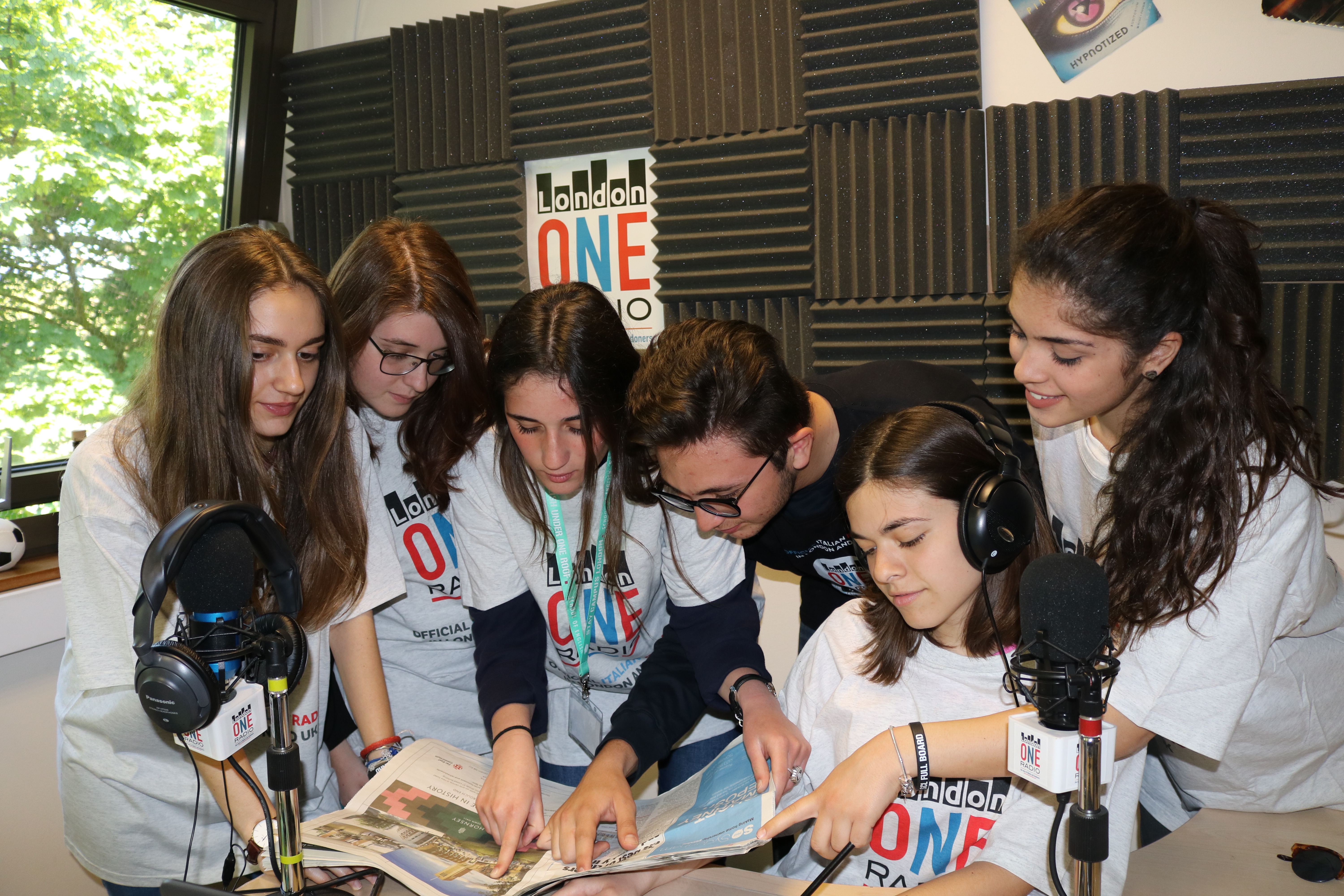
From May 11 to 21 London ONE Academy team conducted a survey to discover how many Londoners listen to, or at least, have heard something about Italian music. There are about 4 million British people in London: for this inquiry it was chosen a sample of over 1800 people to interview, with an age range running from 16 to 89 years old. The questions asked are focused on their thoughts and knowledge about the Bel Paese’s music. The areas covered throughout those 10 days were some of the most well-known places in London: Trafalgar Square, Oxford Street, Green Park, Leicester Square, Piccadilly Circus, Westminster, South Bank and about 400 people were also reached into the Tate Modern Museum.

In these places, people highlighted their different personalities and opinions answering to three essential questions:

  1. What do you think about Italian music? Do you know any artist or song?
  2. Have you ever heard about the Sanremo Music Festival?
  3. What about the Eurovision Song contest? Do you know the Italian artists that have performed over the years?

Consequently, the attention was focused on a few essential points: what Londoners think about Italian music, the Italian artists known by them and the awareness of Sanremo Music Festival.

At the end of the inquiry, it has been emerged that currently 33% of them listen habitually to Italian music.

It has been discovered that most of these people are over 40 years old: London’s youth is not really into non-English songs. This is why just a few people are informed about Italian contemporary music: elder people are more interested in Opera rather than the latest pop artists. The majority of Londoners, in fact, is more familiar with Opera singers and classical musicians such as Pavarotti (16%), Puccini (13%), Verdi (7%), Bocelli (9%) or Vivaldi (11%). However, well-known are also pop singers that have shaped our musical culture in the last decades, like Eros Ramazzotti (15%) and Laura Pausini (5%). Instead only the 2% out of it also mentioned other artists, such as Jovanotti, Gianna Nannini, Al Bano and Romina, Tiziano Ferro and the Italian band, Lacuna Coil.

Nowadays the phenomenon of talent shows is spreading across the world, but Italian musical culture is renowned for more traditional shows, such as music festivals and contests. London One Academy team tried to discover if British people are informed about this reality.

The Eurovision Song Contest is one of the most important music festivals in the world. This year was celebrated its 63rd edition, and it is watched globally. Italy is one of the ‘Big Five’, the founder countries of this contest, allowed to participate directly to the final. The survey has found out that 83% of the interviewed people enjoy watching Eurovision and keeping up to date about the new talents presented. Some of them even like the Italian songs proposed both this year and last year (Non mi avete fatto niente by Ermal Meta and Fabrizio Moro and Occidentali’s Karma by Francesco Gabbani).

However, the most important Italian festival is undoubtedly Sanremo, the ‘Festival della canzone italiana’ (literally ‘Festival of the Italian song’) held annually in Sanremo, Liguria. The researchers wondered if it could have been so well-known also in London, but the answer shows that only 20% have heard about it, usually from an Italian friend or on the web, and almost no one of them knew that Sanremo’s winners are selected to participate to the Eurovision, not even people who usually watch it.

Why is Italian music not well-known abroad? Only 31% out of the interviewed people is aware of the current Italian music. 

Why is Italian contemporary music not reaching an English audience? Is it a problem of language or quality? 

«English people are not familiar with the main Italian contemporary artists because, in general, they’re not interested in foreign languages’ songs» this is the opinion of Sophie, 52.

Others support that Italian music is often easily influenced by foreign artists. The most accredited opinion focuses on the idea that today Italian music lost that genuine originality that has characterised its romantic lyrics for ages. According to them,  Italian music has abandoned its traditional sounds, going towards more popular genres and therefore losing its unique folkloristic features. Not everyone appreciates this metamorphosis, not even Italians. Nevertheless, this new Italian music trend is slowly overcoming the Italian borders reaching a worldwide audience.
London attack: latest updates

London – by Chiara Fiorillo

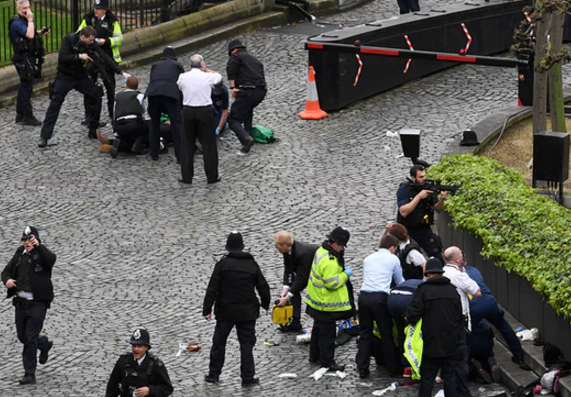
Here are the latest updates of today’s attack in London:

  1. Police confirmed four people have died, including a police officer and a man who is believed to be the attacker. Two of the victims are believed to have died on the Bridge.
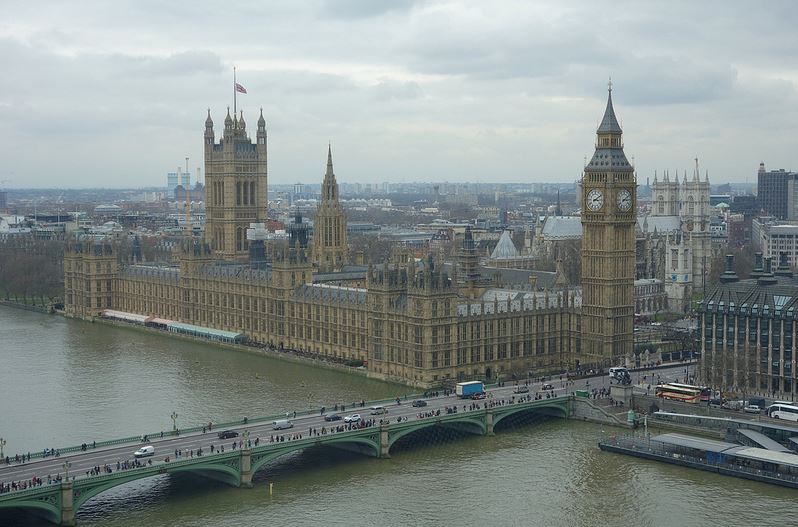
  2. At least 20 other people were injured as the attacker drove into them in a car on Westminster Bridge. Among the wounded people there are three French students from a secondary school in Brittany. Also three police officers returning from a ceremony were among the people injured on the bridge.
  3. One woman was rescued from the Thames after she jumped or fell from the bridge.
  4. The assailant was shot and killed by armed police inside the security cordon of the Houses of Parliament.
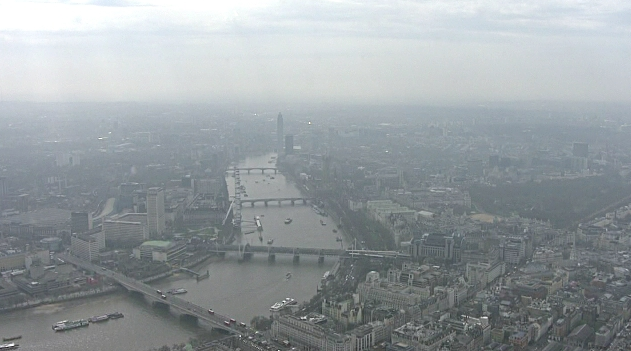
  5. The whole area around Westminster has been locked down.
  6. Buildings are in lockdown. Metropolitan Police say they are treating it as a terrorist incident.
  7. Theresa May will shortly hold a special ministers’ meeting.
  8. The prime minister, Theresa May, was evacuated from the parliament building and driven to Downing Street within minutes from the attack.
  9. The public is invited to call 999 only in case of a genuine emergency.
  10. The London Eye is also in lockdown, with some people being held inside the attraction’s pods.
  11. The flag above Scotland Yard is being flown to remember the heroism of its officer and the other victims of the attack.

Khan offers motorists £3500 to buy green vehicles

London – by Chiara Fiorillo

Air in London is so polluted that the mayor of the City, Sadiq Khan, has proposed an alternative solution to the problem: offering motorists £3500 to demolish their old cars and buy greener vehicles. If the plan is accepted, the government will give families with low income £2000 to scrap 130,000 cars and £1000 for older taxis.

According to Khan, this solution, which would cost about £500m, could reduce nitrogen monoxide emissions by 40%.

Pollution is so bad that Khan has asked Londoners not to go out if not necessary. He also said that this seems to be the only solution to tackle the problem.

According to the government estimates, about 50,000 people die every year because of pollution and £27.5bn are spent because of this issue.

Sadiq Khan has passed the proposal to ministers, such as the chancellor Philip Hammond. Westminster, however, has said that it would also be good to oppose other sources of pollution, such as wood stoves in UK homes.

Earlies this month, the prime minister Theresa May said that tackling pollution will be one of her government’s main policies. However, she said, more needs to be done in order to bring back the good quality air every person wants.

According to Gerry Keaney, Chief Executive of the British Vehicle Rental and Leasing Association, Khan’s proposal could have many benefits if motorists are willing to collaborate.

Westminster and the scandal of sex parties

London (by Rosita Pirulli and Philip Olland)

Child sexual abuse is affecting Westminster, the heart of London.

After silent and covered-up years, numerous corroborations are coming to the surface.

Among several investigations, the most detailed ones were carried out in 2015, after Jimmy Savile’s scandal. In the same year, Metropolitan police disclosed charges against 76 politicians who had abused kids in the past.

Today, their best-known names, mentioned by the English press, are:

Ewan Graville Janner, Lord Janner di Brounstone – (11/07/1928 – 19/12/2015) MP for Leicester, barrister and author. In 1991, he received the first charges related to the sexual abuse towards Paul Winston. Lord Janner denied the evidence declaring he had helped him in one situation. The support received by the alleged victim and his party prevented him from being jailed.

Other evidence has emerged recently, bringing to light 22 sexual assaults happened during the 1960s, 1970s and 1980s. Lord Janner was brought to court last year, but he showed first signs of dementia: “Oh, it’s wonderful,”  he answered to the court, instead of declaring his identity. Consequently, Alison Saunders, Public Prosecutions Director, declared him immune from the hearing, as he was diagnosed with advanced dementia.

Cyril Smith – (28/06/1928 – 3/09/2010) liberal democratic MP for Rochdale. His first charges date back to 1970s when he abused eight kids in Cambridge House hostel in Rochdale and then in Knol View School. The Public Prosecutions Director declared the facts were unfounded. After that, he has taken part in some sex parties in a Coronation Building flat and subsequently into another one in South London. The evidence of the facts – videos and pictures – were scrapped: officers ordered the police to cover the evidence, otherwise they would have been prosecuted under the Official Secrets Acts law. Even though Smith was arrested, he did not face any prosecution declaring him guilty of child sexual abuse. In 2012 – when he had already died – the police were considering to take solid measures against him.

According to the English media, politicians kept in touch with their victims for years. As one of them, ‘Nick’ (his pseudonym), claimed: “They were very powerful people and they controlled my life for the next nine years. They created fear that penetrated every part of me, day in, day out. You didn’t question what they wanted, you did as they asked without question and the punishments were very severe.”

The most common place used to practice sexual abuse was Dolphin Square – luxury flats building near Westminster. Nick testified it saying that his experience had taken place there with other children, who were often killed. He witnessed a murder made by an MP during a sex party in 1980s. According to Nick, the murderer was Harvey Proctor, who also organised another murder, in which victim was killed by a car.

Operation Midland is the name of the inquiry conducted by the Met Police to gain further information about this issue. After several charges and investigations against Proctor, Bernard Hogan-Howe, head of London’s Metropolitan Police announced the serious failings brought to light during their work. Therefore, he apologised to Proctor, who accepted the apology but declared his decision to take penal measures against the Met Police because of the serious issues – losses of job and home – caused by it.

Also some authorities made mistakes in the past. Cliver Discroll, former head of Metropolitan Police, told that the reason for covering the evidence was that this matter had been “uncomfortable for a lot of people”.

Will the same situation have happened in the Operation Midland? The English press reveals that the reason results from:

-Searching premises, a serious mistake of judgement;

-Not having psychologist to assess Nick;

-Relying only on Nick’s counsel, without checking her qualification and experience. In fact, Nick is now under investigation.

However, the Operation Midland’s failings do not exclude the total existence of sex parties organised by the members of the House of Parliament. IICSA (Independent Inquiry into Child Sexual Abuse) is paying attention to the case in particular. The inquiry, founded by Theresa May in 2014 and now chaired by Alexis Jay, aimed to find out whether the statal and non-statal institutions of England and Wales have taken serious responsibilities to protect children or not.

The current inquiries cover 13 areas, among which Lord Janner, Roman Catholic Church, Anglican Church, Westminster, Residential schools, Internet. Furthermore, the inquiry welcomes public declarations of victims and survivors, in order to facilitate and improve the researches.

The aims are now more targeted: Alexis Jays has announced she will end the whole investigation by 2020.

Programmes regarding Westminster are already provided for 2017: Alexis Jay has claimed to have documents regarding the investigations about prominent people and Cyril Smith will be the protagonist of next year. The full project is on their website with further details on the other aspects mentioned above.

If this inquiry is useful for a social improvement, we will say it within a few years. In the meantime, journalists and other authorities are going to investigate the facts further, hoping not to be hampered by the law.

Official Secret Acts (1989): It makes offence the publication of information – crime, international relations, foreign confidence, security services activities – that leads prominent people such as: former and actual MPs, members of security services or police. The punishment provided is imprisonment for two years.


Sources:

Siddique, H. (2016) “Operation Midland: Complainant ‘Nick’ for attempting to pervert course of justice – as it happened”, The Guardian, 8th November.  Available at: https://www.theguardian.com/uk-news/live/2016/nov/08/operation-midland-report-into-mets-sex-abuse-inquiry-published-live-updates?page=with:block-5821d972e4b0d073c27d2981 (Accessed data: 18-12-2016)


Booth, R. (2015) “Westminster child sex abuse claims: missing pieces remain in inquiry jigsaw”, The Guardian, 16th March. Available at: https://www.theguardian.com/society/2015/mar/16/westminster-paedophile-ring-innuendo-evidence (Accessed data: 18-12-2016)


Hopkins, N. and Morris, J. (2015) “Cyril Smith child abuse inquiry ‘scrapped after his arrest’, BBC News, 17th March. Available at: http://www.bbc.co.uk/news/uk-31908431 (Accessed data: 18-12-2016)


Duke of Westminster dies at 64: 25-year-old Hugh Grosvenor inherits the estate

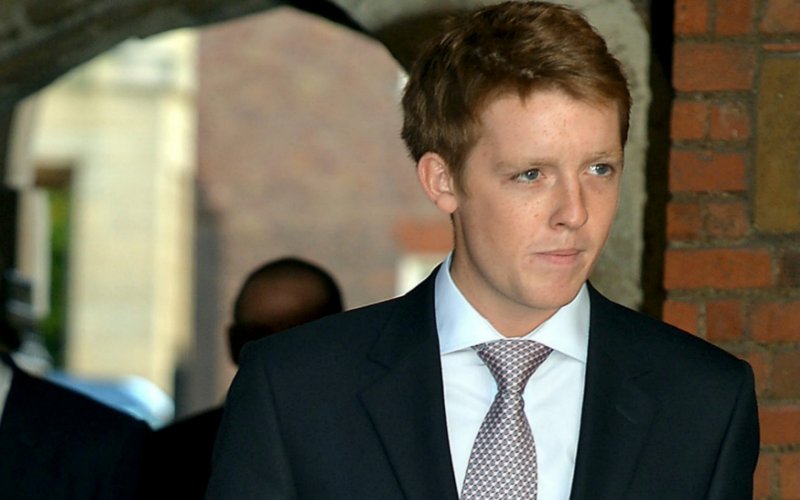
LONDON – The 6th Duke Of Westminster, one of the richest men in the UK and in the world, with an estimated fortune of £11bn, Gerald Cavendish Grosvenor died at the Royal Preston Hospital in Lancashire on Tuesday after suddenly becoming ill on his Abbeystead Estate. His only son – he has three daughters, too – the 25-year-old Hugh Grosvenor inherits his fortune. Hugh Richard Louis Grosvenor, born in 1991, works as an account manager for a green tecnhology company: he was also chosen as the youngest godfather of Prince George.

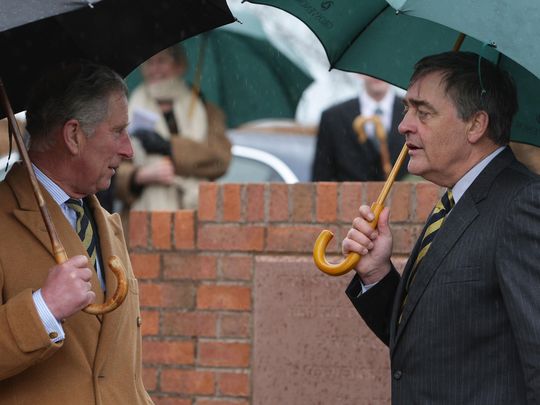
The property business of this family started more than 1,000 years ago, when the ancestors of the family we know right now acquired 500 acres of swamp – some of which they still own today, in the Mayfair and Belgravia area, near Buckingham Palace, some of the most expensive zones in London. The relationship between Gerald Cavendish Grosvenor and the Royal family has always been close: he was asked by Prince Charles to be the mentor to his son Prince William. He is described as a very down-to-Earth man, who inherited his father’s fortune in 1979: during an interview with The Independent he said that if he had had a choice, he wouldn’t have wanted to be born wealthy. He was very active in the charity area: his Westminster Foundation supports a number of charities in areas where his estate has an interest; he also served as president of the Royal National Institute of Blind People and the first aid charity St. John Ambulance for years.