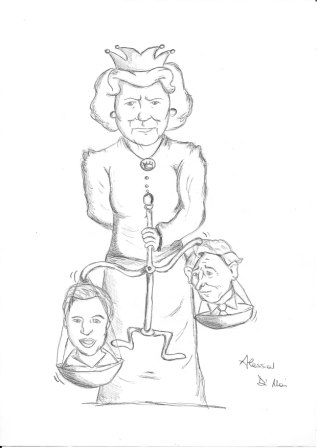
Queen Elisabeth II : Mother of her people?

London – What Londoners thing about Royal Family:

As we know on 9th September 2015, Queen Elizabeth II has overcome the record of permanence on the throne of her ancestor Queen Victoria for more than 63 years, and this is the longest reign of a queen in the history.

But in the 21st century is the monarchy still important? We’ve attended an enquire, asking English people if they like the queen and the monarchy and who they think would be the best successor, Charles or William. We’ve taken a sample of 4000 people that has been noticed in different areas of the capital: British Museum, Convent Garden, Piccadilly Circus, Tower Bridge, Bank, Leicester Square and East London. On page 10 there is a graphic that shows precisely the results. What you can see from the data is that British people love the queen because they think that she’s an important symbol for the country and they really believe in the monarchy, not only because it increases the economic power of the kingdom. But there’s a little part which is composed by people who don’t care about the monarchy and the royal family, and they think she is only an attraction for the tourists. [ illustration by Alessia Dinoi groups puglia ]

So the idea that all English people love the queen is a stereotype especially in the poor areas. In fact some answers surprised us because they were really negative: “I don’t like the queen because she cares only about her family and rich people”, “She represents us, but she’s controlled by other people”, “She is too old”, “She’s a German impostor”, “She can represent us but not the church”.


Going through this enquire it was spontaneous also asking who people want as her successor. Most of respondents would prefer William than Charles because he’s the youngest. A very interesting answer that a lot of people have given is that they prefer William because he’s Diana’s son and it underlines how much people still today love Diana, sometimes more than Elizabeth.

CHARLES WILLIAM CON TOTALE-page0001So from the richest zone to the poorest zone, we found different opinions, trying even to get to the bottom, beyond the simple answer, in order to understand what the monarchy and who represents it means for the population.


A good witness is a special respondent, deaf and dumb, who just to express what the queen means for him, has asked paper and pen, writing there his opinion, rather than go away. An enquire that goes beyond the trivial, but tells, between the lines, who are the English that the queen “has grown up”.

 GRAFICO MONARCHIA GIUSTO-page0001

conclusion
Who are those people who admirate and hate her, that criticized and speak lovely about her figure, who want her at the throne or have the dream to see Diana who govern the reign. People have different ideas and gave different answer to our questions but the most ones say they want the Queen at the throne and they also see William in the future of the country. Anyway we want say: God save the queen!

GRAFICO FINALE-page0001

EARTH’S TREASURY The biggest diamond in the world

Visiting the Natural History Museum you can be fascinating by all the amazing minerals and gemstones. There are some examples of mineral use, ornamental mineral art and meteorites.
The best place to find minerals is at mines. Mines are locations where industrially important rocks, minerals and gemstones are extracted from the earth.

Mines can produce large amounts of specimens of certain minerals, and continue to provide specimens as long as the mine is actively working. Some are also found in road cuts on the side of roads, highways and railroads.

A part from this there different gemstones marvel at variety of colours, textures and shapes. One of the most important diamond in the museum is the Cullinan.

Discovered in 1905 at the Premier mine near Pretoria, South Africa, it is the largest diamond ever found (3106 carats), although its shape suggest that it was part of an even larger stone. It was purchased by the Transvaal and presented to King Edward VII on his birthday and cut in 9 diamonds and in 96 small brilliants. Glass models of the nine cut are shown in the museum, while the 4 largest stones are in the Crown Jewels of the United Kingdom.

The Great Star of Africa (530.2 carats), reputed the largest and most perfect diamond in the world and now in Queen’s Sceptre with the Cross.

It measure 58.4×45.4×27.7 mm, and has 76 facets. Other diamonds are: the Second Star of Africa (317.4 carats) now in the Imperial State Crown; the third star of Africa (94.45 carats) and the Fourth Star of Africa (63.65 carats) both now in the queen’s possessions.

Today, the Cullinan is situated in the tower of London. The years pass and the earth creates spectacular things and minerals, but a diamond is forever.


Superheroes with scalpels

Superheroes with scalpels

The decades following the end of the Second World War saw major changes in the practice of surgery. … READ MORE

Greenwich: what you should know over the meridian

Greenwich is often known as the little place where the homonymic meridian passes to define the exact time and regulate the clocks around the world, but is it only this?

First of all it’s a pleasure village situated on the River Thames in the South of London and there are a lots of interesting things to see as:
the National Maritime Museum: the main maritime museum in the United Kingdom.
the Queen’s House: a royal English residence and one of the most important buildings in British architectural history, being the first consciously classical built in Britain.
the Cutty Sark: a British clipper ship, built on the Clyde in 1869 for the Jock Willis Shipping Line, it was one of the last tea clipper to be built and one of the fastest.
the Observatory’s Peter Harrison Planetarium: where you can enjoy a leisurely tour of the space with an astronomer.
the Royal Observatory: where the Greenwich‘s meridian was founded.

Right here there is a nice particularity: on the observatory there is a kind of a compass with a giant red “ball” that rises at 12:00 and falls more or less at 14:30.
Near the Royal Observatory, which is situated on the top of the hill, you can admire the amazing landscape that shows the beauty and the immensity of London with its modern skyscrapers and giant green parks.
Then in the evening a green laser is projected to symbolize the Greenwich‘s meridian line that should hypothetically go through the whole globe.
Making a final report, Greenwich is a historically rich area of London with lots of green space. It is also a great places to visit for entertainment, food and drink. This makes Greenwich a popular area for family days out in London.

National History Museum: the cathedral of our history.

The National History Museum is one of the three biggest museums in the zone of South Kensington (London). It hosts more or less 80 million of finds, divided in five principal collections: Botany, Entomology, Mineralogy, Paleontology and Zoology.

First, the actual museum was a cathedral but in 1881 the Natural History department of the British Museum was transferred into the actual place.

This transfer lasted more or less one year. The responsible for the building of this Museum was Richard Owen (1804-1892), a leading Victorian scientist. He was the first person to recognize the existence of giant prehistoric land reptiles.  He called them “Dinosauria”, from the Greek “terrible lizards”. 

He also studied many other species, such as the platypus and the moa. However, the building was declared as a museum  only in 1963. Apart from the transfer, the Museum was created by Alfred Waterhouse (1830-1905), a famous British architect.

The Museum presents a big central cloister (near two towers) painted with bricks and blue – yellow earthenware. Leitmotiv of the National History Museum is the origin of the species and the evolution of the human being. It is divided in two sections: the Life Galleries that host the collections of the living things and the Earth Galleries, the geologic section.

Furthermore, the Museum is divided in four colored zones: the green zone, his arguments are the life, the planet, the environment and the evolution; the blue zone hosts the diversity of life on our planet; the red zone talks about the origin of the planet, his collocation in the universe; finally, the orange zone that hosts the Wildlife Garden which shows different habitats and the big Charles Darwin Center. The Museum is famous also thanks to the collection of exemplars of Darwin (1809-1882).  His unique observations were inspired by the diverse wildlife he saw during the five-year voyage of HMS Beagle.  This experience helped him to write his famous theory that was defended also by the brilliant anatomist Thomas Henry Huxley (1825-1895). Another important protagonist of the Darwin era was Alfred Russel Wallace (1823-1913), a welsh naturalist. He made his evolution theory for natural selection, which was very similar to Darwin’s theory. 

Then Alfred sent his ideas to Darwin, who was quite impressed so he published his theory together with Charles theory. In the museum, in fact, behind the reconstruction of the Diplodocus skeleton, we can see Darwin statue and near it the image of Alfred Russel Wallace. This museum is a wonderful place to visit also because it is not only exposition. In fact, there is a laboratory where it is possible to take rocks to help scientist’s examination.

There is the simulation of the 1995 Kobe earthquake and we can also change rivers course and the climate with a simulating game.

East end: Jack the Ripper and the Jews community

London is 2000 years old and its peculiarity is to change profile. Everyone interested in the modern and multicultural part of the city should come to the East End zone.

It consists in two main parts: Whitechapel and Mile End. In different eras the first district has been populated by immigrants such as Huguenots, Jews and all those who were banished from Bangladesh.

The background represented London in 1800, made up of poverty and rubbish. Here Jack the Ripper enjoyed quartering prostitutes during the Victorian Age, inculcating terror either as a real story or as a myth. Nowadays Whitechapel hasn’t got the same noir atmosphere as in the past, but it is poorer and of course full of life. Between the City and Whitechapel it is situated the Aldgate’s zone.

A Jewish community was established there from 1181, until King Edward I ordered their ejection because they didn’t lend to him the money to finance the Wales conquest. They have been living in England since Roman and Anglo-Saxon times, but they became an organized community thanks to William the Conqueror. At the beginning King Edward I banned them from usury. He wanted their possessions to become property of the crown.

Then he started arresting Jews men; some of them were also executed in the Tower of London. They used to wear a yellow star as a marking badge on their dresses in order to be recognized.
On 1st November 1290 he approved the Edict of Expulsion that ordered that all the Jews would have been banished from England. In Aldgate there’s only one symbol, which witnesses their presence in the past: it’s a menorah, which is described in the Bible as a seven-branched candelabrum made of gold with the Star of David, which consists in two equilateral triangles.

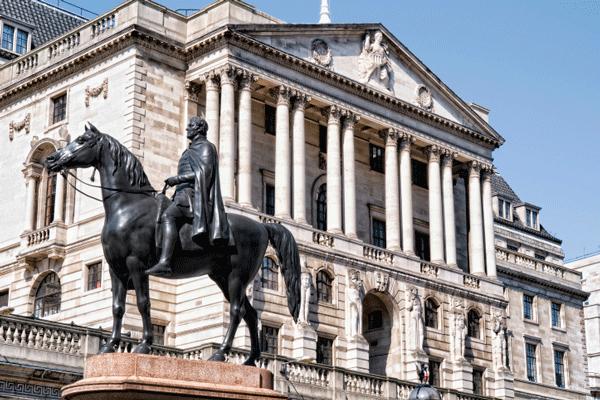
The evolution of the Bank of England.

 From the beginning to our days. The Bank of England has a story.

It was founded during the wars against France to raised money from private investors, who lent coins to the government.

The Bank was established by royal charter in 1694. After 40 years, The Bank was moved on Threadneedle Street in 1734. So the bank grew up.

It had also a nickname: “The Old Lady of Threadneedle Street” attributed during the Napoleonic wars, from a cartoon by the satirist James Gillray. The role of the bank changed during the First World War because of the increasing of the national debt.

The bank’s buildings became too small and so between 1925 and 1939 the bank was rebuilt by Sir Herbert Baker. It was taken into public ownership in 1946.

Then, in 1971 Britain’s currency changed. There was the creation of the modern system with 100 pence to 1 pound. Today, you can visit a little museum under the dome of this incredible building, where you can see how the coin is changed. The bank: The most important building for the increase of the country, for all the World.

ALL ROADS LEAD TO … LONDON How English people value their Roman origins

The Museum of London, cultural site situated in the City near Saint Paul’s Cathedral, isn’t a touristic destination so much known but perfect if you want to discover something about the origin of the capital.

Interesting and captivating for the visitors of all ages but especially for children that can study the history in a different way because delved into all the ages.

The expositive technique, adopted by the architect Philip Powell and Hidalgo Palace, compels the visitors in an itinerary from the prehistory to our days. If you really want to get an idea of what life was like when the Romans where around come to visit the Roman pavilion, you can find every single part of Roman life in London from the legionary’s weapons to the cooking utensils.

The Romans tried to conquer England many times, the first in 54 BC with Julius Caesar who attacked a tribe living on the north bank of the Thames but the real conquest of the country took place under Emperor Claudius. The first things the Romans did after they conquered a place was to encourage the growth of the city near their bases.


So they built bathrooms, basilicae, villae, forums and an incredible network of streets, over 9600 km of street in Britain. These fantastic architects built a bridge across the Thames, the first London Bridge. It proved to be a convenient central point for the streets which soon spread like a fan from the crossing place.

This Roman’s settlement was called Londinium and quickly became an important trading center for the goods. During Adrian’s Empire Londinium was at its height but by the 122 AD the political instability and the economic recession caused London’s decline.

In the museum it’s possible to admire reconstructions of roman buildings like the domus, famous for the triclinia, frescoes and mosaics that underline the artistic ability and sophistication of roman people.

From windows of this area you can see the remains of the walls built by the Romans between the 190 and 225. You can understand how much the English care about their origins and how much they love the ancient population from how they preserve every single pieces, even the less important, of their history unlike many other country like Italy, that can’t bring prestige to its artistic and cultural heritage.

ASIA A LAND OF MYSTERIES

A land full of mysteries, discovered by Alexander the Great. Even if it was “discovered” this new world had its own culture, religion and philosophy that have changed during the history. From the Ural mountains to the Pacific ocean, the Asia continent covers a huge amount of countries, each with their own secrets and beauties.

During time Asia was ruled by the Mongols with the famous Genghis Kan, China with the famous Ming dynasty and Japan with it’s first Emperor Jimmu and his descendants. Throughout history the extreme east showed mighty powers like China and Japan, which shared their philosophy, languages, religions, art and their way of life.

From Ise Province (modern Mie prefecture) Japan, late 18th - early 19th century ADThe British Museum offers an entire view of these ancient cultures. The museum has a huge amount of artefacts and art pieces that amaze visitors every time. There’s an entire floor dedicated to Japan and other 2 levels for Chinese, Japanese and Korean art. Try to discover Asia and its beauty at the British Museum.

Superheroes with scalpels

The decades following the end of the Second World War saw major changes in the practice of surgery. Many stemmed from the application of scientific researches in new fields such as pharmacology, biochemistry and immunology.

The use of antibiotics eliminated some of the diseases that surgeons had previously dealt with, such as tuberculosis, joints or infections of the mastoid; physiological and biochemical researches led to improvements in anaesthesia and intensive care (helping surgery on the heart, brain, etc.); studying immunology organ transplants became possible.

So surgery became more scientific and surgeons also became more reliant on technology to complement their skills.
Surgeons and their patients were quick to realise the benefits of minimal access surgery. In fact in 1990 only about 15% of cholecystectomies were performed laparoscopically. Within five years it was estimated that this tend had risen to over 70%.
Microsurgery and minimal access surgery transformed many surgical specialties and created others, while advances in imaging and new materials found widespread applications.
Each new discipline could lay to specific expertise in anatomy and pathology, diagnostic techniques and in surgical or therapeutic practice.
By the end of the 19th century established specialties included ophthalmology, dental surgery, otology and laryngology. Dedicated hospitals and wards provided an institutional framework for clinical practice and training, while societies and journals promoted specialist research and fostered a sense of professional identity.


After the war also neurosurgery and cardiothoracic surgery were defined.
Neurosurgery was based on the use of imaging technologies for diagnosis and improvements in operative techniques. Brain surgery led to important advances in neuroscience: mild electrical currents were used to stimulate the brains of epileptic patients under local anaesthetics. It was possible to map the functions of different parts of the brain by observing their responses. This techniques was later used in the treatment of brain tumours and other neurological disorders.
In cardiothoracic surgery the heart-lung machine, combined with the use of chemical solutions that temporally stopped the heart from beating, allowed surgeons to perform longer and more complicated ‘open’ operation inside the heart.

It also made operations outside the heart – such as coronary artery bypass – easier and safer.
Thanks to these discoveries and innovations in surgery the mortality rate has fallen significantly and life expectancy continues to grow.
Now I ask you: what would we do if there were no surgeons? So you have to remember that you don’t need superpowers to save lives.

Superheroes with scalpels

The decades following the end of the Second World War saw major changes in the practice of surgery. Many stemmed from the application of scientific researches in new fields such as pharmacology, biochemistry and immunology.

The use of antibiotics eliminated some of the diseases that surgeons had previously dealt with, such as tuberculosis, joints or infections of the mastoid; physiological and biochemical researches led to improvements in anaesthesia and intensive care (helping surgery on the heart, brain, etc.); studying immunology organ transplants became possible.

So surgery became more scientific and surgeons also became more reliant on technology to complement their skills.
Surgeons and their patients were quick to realise the benefits of minimal access surgery. In fact in 1990 only about 15% of cholecystectomies were performed laparoscopically. Within five years it was estimated that this tend had risen to over 70%.
Microsurgery and minimal access surgery transformed many surgical specialties and created others, while advances in imaging and new materials found widespread applications.
Each new discipline could lay to specific expertise in anatomy and pathology, diagnostic techniques and in surgical or therapeutic practice.
By the end of the 19th century established specialties included ophthalmology, dental surgery, otology and laryngology. Dedicated hospitals and wards provided an institutional framework for clinical practice and training, while societies and journals promoted specialist research and fostered a sense of professional identity.


After the war also neurosurgery and cardiothoracic surgery were defined.
Neurosurgery was based on the use of imaging technologies for diagnosis and improvements in operative techniques. Brain surgery led to important advances in neuroscience: mild electrical currents were used to stimulate the brains of epileptic patients under local anaesthetics. It was possible to map the functions of different parts of the brain by observing their responses. This techniques was later used in the treatment of brain tumours and other neurological disorders.
In cardiothoracic surgery the heart-lung machine, combined with the use of chemical solutions that temporally stopped the heart from beating, allowed surgeons to perform longer and more complicated ‘open’ operation inside the heart.

It also made operations outside the heart – such as coronary artery bypass – easier and safer.
Thanks to these discoveries and innovations in surgery the mortality rate has fallen significantly and life expectancy continues to grow.
Now I ask you: what would we do if there were no surgeons? So you have to remember that you don’t need superpowers to save lives.