London – London One Radio, the official Italian radio station in the UK is broadcasting everyday Radio Radicale’s news bulletin.
The Italian Government has recently passed a new law, known as ‘budget law” that cuts the funds to support broadcasting companies like Radio Radicale.
In this case Radio Radicale is in the situation of being forced to close down its station on 21st May.
Radio Radicale can be considered the Italian history’s archive, because it has been recording, collecting and documenting for 40 years relevant court trials, congresses of all Italian political parties, debates and CSM’s sessions
That is why London One Radio is mobilizing alongside those who are fasting in these days (Maurizio Bolognetti, historic militant of the Radical Party in Basilicata, for almost 50 days since last April 9th, Rita Bernardini, Maria Antonietta Farina Coscioni, Irene Testa, all three part of the Presidency of the Radical Party, and of Paola di Folco, militant of non-violent struggles).
Philip Baglini, Director of London One Radio, had already hosted an interview with Radio Radicale’s Director Alessio Falconio on March 21st. Given the approaching closure of the radio despite a great mobilization in Italy, with this gesture he also wants to help the Italian community in London to know what Italy is losing
The Government and Parliament must break the Brexit deadlock and find a way forward warns the Federation of Master Builder (FMB), in response to the latest Construction PMI data, which shows another drop in construction output.
The March 2019 PMI data revealed an Index score of 49.7, up slightly from 49.5 in February, against the no change threshold of 50.0. This points to a sustained decline in construction output, representing the first back-to-back fall in construction output since 2016. While the residential building sector enjoyed an upturn, commercial construction was the worst performing area.
Commenting on the results, published this morning, Sarah McMonagle, Director of Communications at the FMB, said: “The construction industry is being seriously affected by Brexit uncertainty as evidenced by two very worrying sets of results for construction output in the first quarter of 2019. Businesses have been waiting for politicians to come to some resolution for far too long now, and it’s time that this deadlock was broken. It’s not surprising employers are finding it hard to plan for the future, when we don’t even know when, or indeed if, we’re leaving the EU. Today’s results are a reminder of just how vulnerable the construction industry is to political turmoil as confidence among consumers and contractors continues to wobble.”
McMonagle concluded: “Brexit uncertainty and the construction skills shortage have created a perfect storm in our industry. Around 9 per cent of construction workers in the UK are from EU countries, but we know from speaking to small construction employers that many of these skilled workers are starting to return, whether that’s because of strengthening economies elsewhere, or that they simply don’t feel welcome anymore. This is compounding an already severe construction skills shortage, and I’m worried that the Government’s post-Brexit immigration system will make it even worse. For example, the system will not allow Level 2 tradespeople to live and work in the UK for more than 12 months at a time. At the same time, the Government’s figures last week show that the number of Level 2 apprenticeship starts among our domestic workforce is dropping. It’s quite simply not possible to build the homes and infrastructure we need without bricklayers, carpenters and plasterers. The Government and industry must work together to attract more people into the industry, by offering them high quality training with clear career pathways for progression but in the meantime we need sustained access to tradespeople of all skill levels for the industry to continue being open for business.”
London Rainbow Halo archway it a innivation. The designers behind Tatty Devine, Rosie Wolfenden and Harriet Vine are also available for interviews at this time – please let me know if this is of interest? Please see below some further information.
The Rainbow Halo installation is a vast illuminated and jewelled starry archway, providing a festive welcome to Peninsula Square and encouraging residents and visitors alike to ‘live colourfully’ this season. The archway is sprinkled with jewelled stars, each one representing themes that are often celebrated at this time of year: love, peace, unity, luck, magic and joy – all in cosmic harmony.
Inspired by the vibrant Chase The Rainbow jewellery collection, The Rainbow Halo draws on a joyful technicolour aesthetic; supersizing statement jewellery to create a monumental installation. Where possible, the archway has been made from a variety of sustainable, recycled and hired materials. At the end of the festive season, the installation will be sold with all proceeds going to Tatty Devine’s chosen charity, The Fawcett Society, the UK’s leading charity campaigning for gender equality and women’s rights.
Please find below illustration of the Rainbow Halo in situ on Peninsula Square, by the O2. I have also attached the full press release for more information on Greenwich Peninsula’s Winter Programme, including arts & culture events such as SAMPLE Christmas pop-up market and the Richard Malone exhibition Rinse, Repeat at the next door NOW Gallery.
Stefano Fugazzi – Free movement of workers is one of the key rules governing the EU internal market.
Within the euro area, labour mobility plays a key role in adjusting imbalances in current accounts and local job markets.
A currency union eliminates exchange rate flexibility as a way of responding to economic crises. By allowing workers to move from regions hit by a negative shock to regions hit by a positive one, labour mobility could then work as a substitute.
The accession of ten new countries to the European Union in 2004 and the financial crisis of 2007-09 have changed the migration dynamics fundamentally.
Prior to the global financial crisis, many citizens from Central and Eastern Europe migrated to Spain and other peripheral countries. The 2007-09 crisis profoundly impacted EU migration trends forcing many southern Europeans to relocate to Britain in search for jobs.
Immigration doesn’t hurt native jobs or wages
The recent rise in UK immigration has ignited the debate on whether migrants affect local jobs and wages.
The stereotype of the Polish plumber, used widely as a symbol of cheap labour, encapsulates the commonly held belief that immigration in Britain has pushed down wages in the most affected jobs.
However, the balance of the research on this issue suggests that the share of immigrants in the workforce has had little or no impact on the pay rates of the indigenous population.
According to a Bank of England research published in December 2015, immigration may have a small negative impact on wages for some low-paid workers. But the idea that immigration is the main or even a moderately important driver of low pay is simply not supported by the available evidence.
A newly published study by the National Academies of Sciences, Engineering, and Medicine finds that the long-term impact of immigration on the wages and employment of native-born workers is very small, and that negative impacts are most likely to be found for prior immigrants or native-born high school dropouts. First-generation immigrants are more costly to governments than are the native-born, but the second generation are amongst the strongest fiscal and economic contributors in the US.
The US research also concludes that immigration has an overall positive impact on long-term economic growth.
Another study by the Federal Reserve Bank of St. Louis debunks the myth of the job-stealing immigrant.
The Federal Reserve research looks at wages and immigration figures for the years 2000, 2005 and 2010 to assess whether a change in immigration affect unemployment rates and payrolls.
The study shows that the relationship between unemployment and immigration is weak to non-existent, even during periods of financial crisis.
In some US states, an increase in the rate of unemployment is matched by a decrease in the proportion of foreign-born among the total population.
The research also finds no links between an increase in the proportion of immigrant workers and a reduction in hourly wages.
Changes in the level of wages are very similar across states even though changes in the proportion of foreign-born people vary a lot.
Refugees have no impact on local job markets.
There is a general consensus amongst researchers that refugee waves have little or no impact on native wages.
The large inflow of Cubans to Miami in 1980 did not affect native wages or unemployment; migration from Algeria to France after independence in 1962 caused a small increase in unemployment whilst the Balkan crisis of the 1990s did not materially increase unemployment in the refugee hosting countries.
Birmingham National Conservatives Conference 30 Nov-3 Oct .:
The structure of the Italian Group in the Conservatives Party is evolving, and the newly elected President Alberto Costa MP has announced it at an event in the exclusive “Blue Room” in the heart of the national conference of the Conservative Party UK.
The Group is the evolution of the Westminster Italian Group that from a group of volunteer activists at the local level has expanded over time to have the credentials from the party to become a real and proper association at national level.
Informal blessing of the “British Italian Conservatives” was the same Theresa May who has always followed and supported the group’s growth in the past 3 years of activity. The BIC was formally made official by the president of the Conservatives Party Brandon Lewis MP and its executive committee.
The new elected “Founder Chairman” the Tuscan entrepreneur Dr. Maurizio Bragagni has always supported the organization of the “Gala Reception” where among the various guests there were the Italian Ambassador in the UK Raffaele Trombetta, Alberto Costa MP, the 5 times Minister of State The Right Honorable John Hayes Mp, the newly elected BIC Vice Founder Chairman Simon Blagden MBE (Honorary President Fujitzu UK) the Personal Consultant of the Prime Minister at N10 in Social Media Dr Mario Creatura and several Members of the National Board of Directors Conservative party.
The “Executive Director” Christian Vinante Giovannini presented as guest of honor the new London Mayor candidate Shaun Bailey confirming the future support for his electoral campaign.
Mr Bailey said that during his selective phase he was in all areas of London where he often met members of the British / Italian Conservatives who proved to be one of the most active groups in the Party. Mr. Bailey was then introduced to Ambassador Trombetta by the newly elected “deputy Founder Chairlady” Stefania Signorelli.
The Italian Group has also been praised by the former candidate for mayor Zac Goldsmith MP who at a private event in the Presenting Shaun Bailey reiterated the constant commitment of the Italian group in London.
The new elected Vice President Founder Domenico Meliti and the strategic manager for Media Commendatore Marcio Borlenghi Fasano sent a note of apology for the absence.
Always, thanks to Dr Maurizio Bragangi, an Italian stand was present in the conference area where the present members of the BIC committee represented the association: Sara Gezdari (Richmond Coordinator), Ivan Ghiosso, Franca Buongiorno (Founder of Italians Grown Up in the UK) Sabrina Boni and Francesca Lalli.
It should also be noted that the Italian group welcomes non-Italian collaborators, starting with the renowned Pakistani Pharmaceutical entrepreneur Mohamed Moustafa, who is one of the new “Patrons” the newly elected treasurer James Cockram (Westminster Association Secretary) but also social activists and politicians like Aamir Haroon who helped the Italian group during this conference.
London (Caterina Moser) – “Theresa May’s Brexit trade plan won’t work” the President of the EU Council Donald Tusk has said at the end of the EU summit in Salzburg.
The Prime Minister showed her “Chequers plan” to the leaders of the 27 remaining member states.
In these last days, she repeated several times that her proposals were “the only serious credible” ways to avoid a hard border in Northern Ireland.
After her speech, the 27 leaders held a meeting discussing the May’s purpose. They agreed on the unacceptability of the “Chequers plan”.
“It was a good and brave step by the prime minister” said French President Emmanuel Macron. “But we all agreed on this today, the proposals in their current state are not acceptable, especially on the economic side of it” he added.
At the press conference, the President of the EU Council Donald Tusk said that there were some “positive elements”, but “the suggested framework for economic cooperation will not work” he added.
The plan signs up to a common rule book for trade in goods and a combined customs territory. Nevertheless, according to European leaders, it will undermine the single market by giving British companies a competitive edge.
President Tusk motivated the rejection of the proposal: there should be more transparency on future commercial relations. “It must be clear that there are some issues where we are not ready to compromise and first of all this is our fundamental freedoms and single market and this is why we remain sceptical and critical when it comes to this part of the Chequers proposals,” he said.
In addition to the criticism expressed by the EU, May’s proposal is also unpopular in her country, and even inside her party.
MP Tory Jacob Rees-Mogg said that Tusk’s remarks signaled the end of the Checkers proposal.
There was a “lot of hard work to be done” Theresa May said. She has ready to meet EU reserves on his plan for a cartel announcing “soon new proposals” on the future of the borders between Ireland and Northern Ireland.
Mr Tusk gave an ultimatum: October would be the “moment of truth” for reaching a deal. It is the only condition to held the summit in November to formalise the deal. The Brexit summit will be held on 17 and 18 November.
The October EU Council will be the “moment of truth” for Brexit.
“Without an October grand finale, in a positive sense of this word, there is no reason to organise a special meeting in November” stressed Tusk.
London (Giulia Faloia) – The Royal Academy presented “The art of making buildings”, an exhibition of Renzo Piano’s buildings.
On 12th September the most famous Italian architect was in London for the launch of the exhibition that will officially start the 15th September. It was organised by the Royal Academy of Arts in collaboration with Renzo Piano Building Workshop and the Fondazione Renzo Piano.
The exhibition was born with the idea of following step by step Mr Piano’s career, from the influence of his Genoese heritage and his rise to the meeting with his friend and collaborator Richard Rogers, to current projects still in the making.
The protagonists of the exhibition are 16 buildings, by which people can easily understand how the Renzo Piano Building Workshop designs buildings “piece by piece”, making deft use of form, material and engineering to achieve a precise and poetic elegance.
Mr Piano himself took part at the presentation on the 12th September by talking about the importance of architecture nowadays and its influence on our daily lives. He focused mainly on what he calls “fil rouge”, the idea that architecture has its continuity in time and space.
https://youtu.be/FWdQ047i1eI
He also added that the same art must be used for people and that it represents a change in society. Architecture, as he claimed, gives you the illusion that it changes the world, when actually everything and the world itself is under a constant transformation.
Piano also said that he would like that people look at buildings not just as they are, but finding behind their structure something more: “maybe poetry”, in order to catch more than the simple construction.
The architect, as an Italian and as a Genoese, couldn’t avoid to talk about the tragedy happened in Genoa when the bridge Morandi collapsed.
He said that a bridge falling goes beyond the collapse itself, because it is a symbol of connection that falls. First, a bridge should never fall and walls should be shot down, while nowadays the exact opposite is happening, metaphorically and in the real world.
At the following link you can listen to the whole interview had with the curator and creator of the exhibition, Kate Goodwin.
London (Elisabetta Steri and Erica Atzeni) – The most known teddy bear “Winnie the Pooh” will return to the scene with the new Marc Forster’s movie “Christopher Robin”.
It will be released on 17th August in the UK’s cinemas, while in Italy will be out on 30th August. The Scottish actor Ewan McGregor has been chosen as the main protagonist who is Christopher Robin, son of A.A Milne (Winnie the Pooh’s English author), who was born in the same month of the movie realising.
The movie deals with the story of the famous kid Christopher Robin, who forgot his imagination over the years while he was becoming a man. So, we could see Christopher spending most of his life working and risking to totally forget the most important values: family and happiness.
That is why Winnie comes to life again with its friends by trying to bring him back to the right way and help him remembering the the happy adventures they lived together in the One hundred acred Wood.
Will Pooh and her friends reach their goal? Wait and see. Meanwhile we can take a look at the most curious aspects of the most famous teddy of the world.
The woods, in which the story takes place, is inspired by the country house where Milne used to live, in Ashdown forest, south est of England.
Winnie’s stuffed animal is incredibly successful in the whole world and it is in the second place of the “Most sold puppets for children” chart, after Mickey Mouse.
Just a few people know that the original peluche doesn’t look like the one we can see today on TV. The original Winnie was manufactured by Margarete Steiff in 1906-10 and a copy of it was exhibited at the Victoria and Albert Museum from 7th December 2017 to 18th April 2018 in London, where an entire exhibition about Milne and his teddy bear was attracting thousands of people.
Winnie the Pooh has got million of fans, starting from the Royal Family including Queen Elizabeth II and Prince Harry. Before the Disney movie’s announcement, this year Prince Harry bought the first edition of Winnie The Pooh book by A.A. Milne spending about £8000.00 for his nephew’s (Prince Louis) christening last July.
Now will be again on the screen stealing children and adults’ hearts as it has kept doing it for a long time.
With Wimbledon and a heat wave marrying nicely this summer, picnics are the perfect way to celebrate the tournament, relish the SPF 50 temperatures, and enjoy good food and better company. The Betty Blythe Vintage Tea Rooms is a private vintage tea room in West London, in a little nook called Brook Green. The beautiful 1920s themed setting even offers to the table the Betty Blythe’s Fine Food Pantry.
Serving their very own bespoke picnic hampers that capture the essence of a quintessentially English picnic; from a wicker basket with Chinese ceramics, fresh sandwiches and cakes, to Champagne and lashings of ginger beer! Today Betty Blythe’s ownFounder, the UK’s no.1 expert on Street Parties and author of Style Me Vintage Tea Parties, Lulu Gwynne, is giving her top tips on how to be ever ready for a perfect picnic:
Don’t forget a blanket! – genteel folk who picnic in the outdoors must show a commitment to a day of lazing and indulging by having an essential summer luxury of a wool or cashmere blanket to spend the day on. Don’t forget fans, pillows, and sun hats. Ones’ delicate skin can be saved by having a sun umbrella – choose a light colour shade and decorate with pretty bows and frills!
Dress for the day – if the Yahoo! Weather gods allow it, aim to hold your picnic on a sunny day. Choose the perfect dress to spend the day in, think about how comfortable the dress is to sit in; anything tight around waist is bad news for digestion and don’t also choose anything too short, the chaps don’t need a flash of your undergarments whilst enjoying their eats!
Keep it cool – while quaint picnic hampers are beautiful way to keep all your eating equipment in check, it’s best to the food itself stored in a cool bag or box. Do not turn up with plastic bags! If in doubt borrow these types of things from a kind neighbour!
Fun food – when packing for a period-themed picnic use your vintage china, depression glasses; packed safely using your linen napkins. What about the food I hear you cry! What delicious goodies you could pack? Betty Blythe favourites are tea sandwiches with salmon and cream cheese, thin slices of ham or chicken with asparagus with vinaigrette, rice salad with celery, nuts and raisins, a fruit and cheese plate and to complete your picnic plenty of fresh strawberries, a Victoria sponge and lashings of good cheer!
Boozy beverages – on your picnic, it’s essential to bring a varied menu. White wine and rosé wines are very good for a picnic, being bright and breezy in taste. Champagne is encouraged as its perfect to accompany things like smoked salmon and picnic foods. For cool drinks try a refreshing lemonade or ginger beer!
Located in leafy West London in a little nook called Brook Green, the Betty Blythe Vintage Tea Room is a privately-owned vintage tea room who pride themselves on having the best cake counter in London. Placed in a beautiful 1920s setting that is quintessentially British with a hint of Hollywood glamour
Opening Hours
Monday to Friday – 8am-5.30pm
Weekends – bookings only
London (M. Sannino, E. Robustelli, A. Biccario) – It is widely claimed that Londoners are obsessed with the Italian food, or at least, the majority of them. Such popularity of the ‘Made in Italy’ is due to the quality of their products but also due to the intense promotion made over the last few years.
The remarkable results out of it has been an increase in Italian restaurants – more than 2000 in London – that the English press remark with the acronym “Yet Another F***ing Italian” (YAFI).
Such acronym does not surprise anybody, as the Italian community counts more than 600.000 Italians in the UK – according to the lasted data released by the Italian General Consulate in London – whose 58,3% live in the English capital.
Yes, it is a consistent amount of people, but there are also other numerous communities that make London a colourful and multicultural city. Yet, what London One Academy understands, is that most of the food businesses in London offer Italian products to customers, by making the Italian cuisine at the top of their diet list.
The Italian cuisine has been always recognised for its ‘Mediterranean diet’ composed of low fat dishes known for their variety of fruit and vegetables, perfect for anyone want to follow a better lifestyle.
However, the same products started their trade in Great Britain long time ago, dating back to 43 AD. Indeed, when the emperor Claudius and his troops arrived in the southern regions of England, they imported wine, olive oil, fruits, vegetables and some food traditions that were very appreciated by the Celtic Britons until now.
During the Middle Ages, it was thanks to the trade in the Mediterranean that England became very wealthy and, as a consequence, Italian products started to be imported in the country.
Here an old advertisement of ‘spaghetti bolognese’ promoted with the sentence “Bring a little Rome home”.
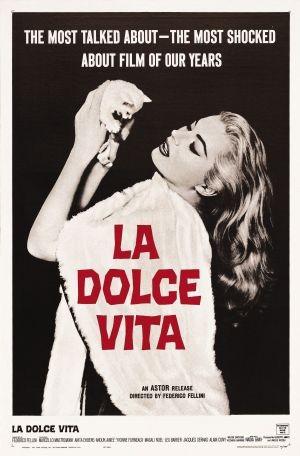
In the last century the explosion of the Italian culture abroad happened after the release of the successful movie “La Dolce Vita” in 1960. According to the reports of that time “immoral” and rebel characters of the movie contributed to spread the Italian charm abroad, including the UK. In the same year the “spaghetti bolognese” became part of English dining tables acquiring its popularity.
A bit later, in the 80s, Italians started to open restaurants in the UK, they brought their original ingredients and food traditions to English customers, who still appreciated them. But are they able to cook Italian food at home or do they prefer to eat it out?
According to London One Academy inquiry – lasted from 13th to 22nd June – 17.65% out of 2000 Londoners avoid cooking Italian food, as they estimate it takes too much time and effort.
In fact, as many Italians learned from their grandmothers, cooking Italian plates requires patience, dedication and sometimes a lot of time, what most of English people do not have.
On the other hand, the 82.35% of them really appreciates cooking Italian dishes at home by claiming the enjoyable atmosphere that Italian cuisine brings when the food is cooked at home.
As Hannah stated: “I love cooking Italian food. My family and my friends love it!”. Others also recognise its genuine taste because it is “Healthy, delicious and simple” as Sarah from London states.
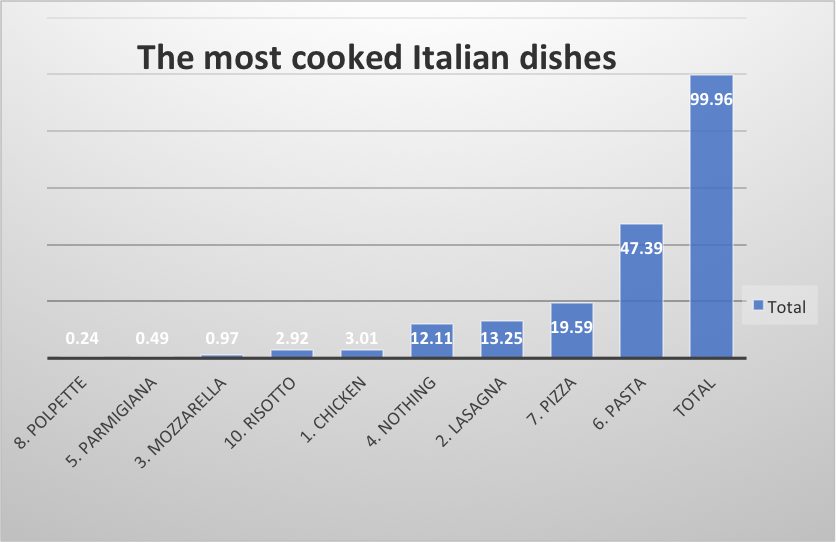
As the graphic below shows, the most popular Italian dish in the UK is pasta, such as bolognese and carbonara, mostly because it is easy to cook, or because of its amazing taste when combined with all kind of ingredients. Some people even said that they often try to make their own fresh pasta at home because the taste is “astounding”.
Regarding pizza, it can be considered as the second most cooked dish at home – 19.59% of Londoners cook it at home, or at least they try.
Paul, from Ireland, said “I usually love pizza, but since I can’t cook well, I prefer buying it”.
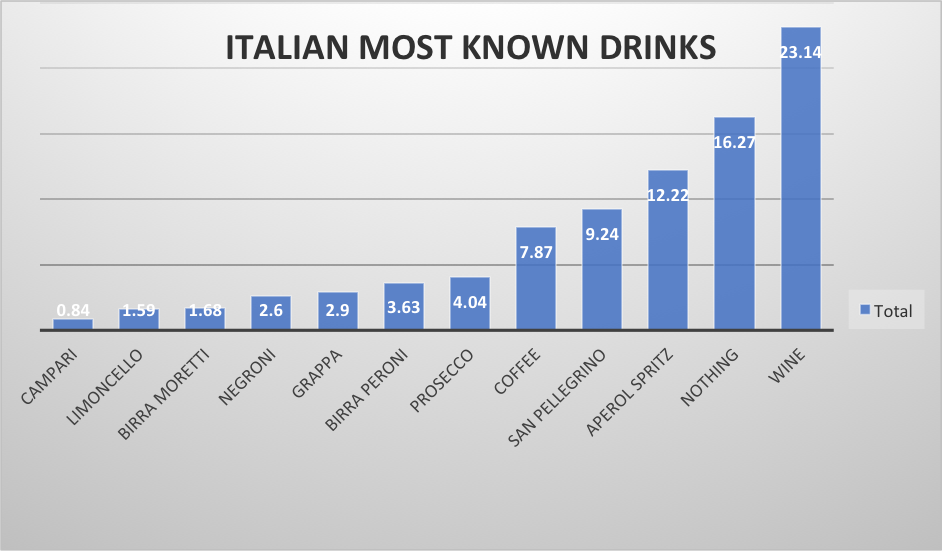
About Italian drinks, it has been shown that 16.27% out of 1800 Londoners interviewed do not know anything about it, but the statistics below also show that Italy is still famous for its viticulture and beverage. 23.14% of them know Chianti, Prosecco, Cherchi, Asti, Limoncello, Negroni, Grappa, Peroni or Moretti beer.
Amongst the Italian drinks, San Pellegrino, Aperol Spritz, Crodino, Campari are very well known by importing the habit of the popular Italian ‘Aperitivo’ composed of snacks and drinks.
But how is it going to happen to all these products under the Brexit deals? The opinions and answers about it are contrasting. As the chart shows, 53.13% think that Brexit will affect in different ways the imports, like prices and also quality. On the other hand, 31.81% claimed that Brexit will not affect negatively the Italian cuisine as its roots are well established all over the country.
In the meantime the Italian authorities are working together with the UK in order to help the Italian enterprises settled in Great Britain to overcome any challenges Brexit will showcase once the country will definitely leave the EU in 2019.







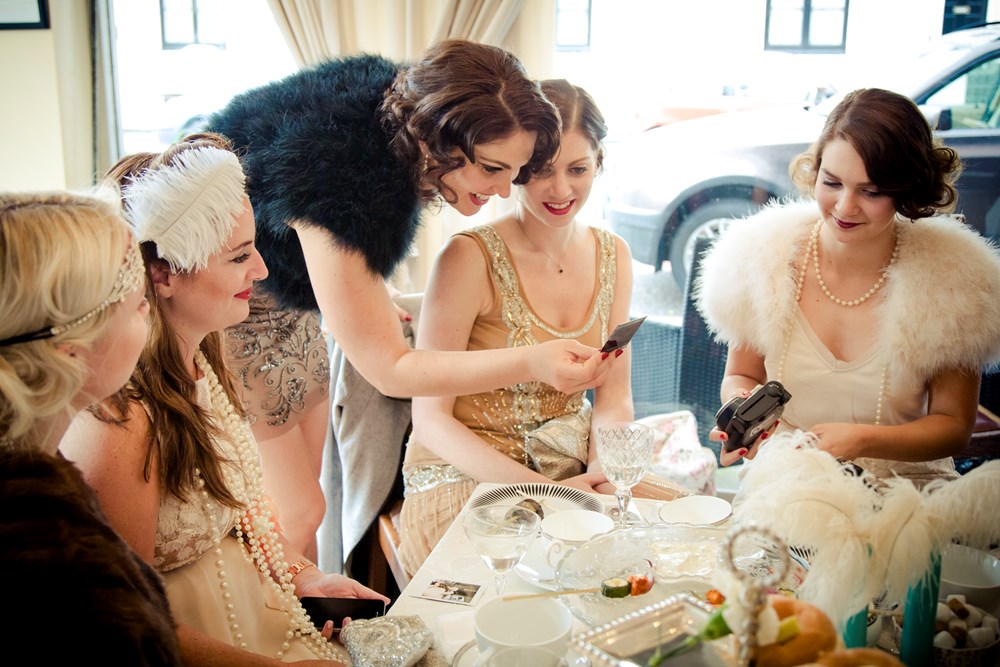

 Located in leafy West London in a little nook called Brook Green, the Betty Blythe Vintage Tea Room is a privately-owned vintage tea room who pride themselves on having the best cake counter in London. Placed in a beautiful 1920s setting that is quintessentially British with a hint of Hollywood glamour
 Opening Hours

 About Italian drinks, it has been shown that 16.27% out of 1800 Londoners interviewed do not know anything about it, but the statistics below also show that Italy is still famous for its viticulture and beverage. 23.14% of them know Chianti, Prosecco, Cherchi, Asti, Limoncello, Negroni, Grappa, Peroni or Moretti beer.
 But how is it going to happen to all these products under the Brexit deals? The opinions and answers about it are contrasting. As the chart shows, 53.13% think that Brexit will affect in different ways the imports, like prices and also quality. On the other hand, 31.81% claimed that Brexit will not affect negatively the Italian cuisine as its roots are well established all over the country.