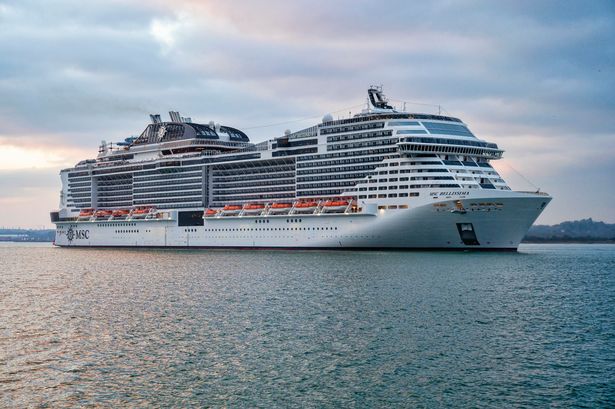
MSC Cruises: incredible discounts for your holidays

MSC Cruises gives you the opportunity to disconnect from the daily routine and give yourself a dream vacation at an affordable price with the “Out of Office” Deal.

The “Out of Office“package is specifically designed to encourage workers to leave their desks and spend unforgettable days with their family visiting the most beautiful destinations in the Mediterranean.

With less than £ 74 per person per night, MSC Cruises offers excellent onboard service including the premium drinks package.

To receive the discount just book an MSC “Fantastica Experience” Cruise, choose the period and the itinerary, and prepare your deserved relax.

Among the different services on board, are included:

1. 24-hour room service (delivery is free) with breakfast in the cabin (delivery + free breakfast).
2. Buffet available 20 hours a day (gourmet menu for any time of the day)

3. Priority choice of catering  in gourmet restaurants. In fact, with a “Fantastic Experience” on the ships MSC Opera, MSC Lirica, MSC Sinfonia and MSC Armonia you can dine in the restaurants with flexible meals option “My choice”. The dishes available cover a wide range of cultures and recipes including the real made in Italy for those tied to their traditions.

4. You will also find a swimming pool area and you can do your exercises in gyms with panoramic views.

5. If you travel with the rest of the family, your children can have fun at the Kids Club, where the on-board staff will play new language learning games and small “Doremi Chef” cooking sessions.

The Out of Office offer is available until March 2020, so if you don’t want to miss the opportunity to spend an unforgettable holiday at this incredible price, hurry up and book a “Fantastic Experience” on www.msccruises.co.uk and sign up to the newsletter to be always updated.

St. Patrick’s Day at The Piano Works

St. Patrick’s Day, March 17th, will be celebrated with a party full of music at THE PIANO WORKS.
The band will be ready to perform all night long the most popular Irish songs .
Pints ​​of Guinness for just £ 3 from 3pm, in a bubbly atmosphere where Irish-style hats, wigs and disguises are highly encouraged.


Start with Happy Hour from 5pm to 8pm, with selected cocktails from £ 5.50 and bottles of Prosecco from £ 12.50.
You can book a table for your group of at least 8 people and get admission for £ 1 with a Guinness or Cocktail included.
The Piano Works is the only non-stop live music venues in London that play songs requested by the public. It hosts over 65 independent musicians from Great Britain and organize its  SingEasy evenings with non-stop  live music, in which pianists and singing waiters are at the center of the scene to play the songs requested by the public who can enjoy eccentric cocktails and delicious food.
Alan Lorrimer, founder of The Piano Works, says:“Given how many music venues have closed in London it is very rewarding to have created two venues that have such talented musicians, playing to a loyal and hugely appreciative audience.  Our on tour bands are also in high demand.”

For more info: The Piano Works West End;  The Piano Works Farringdon

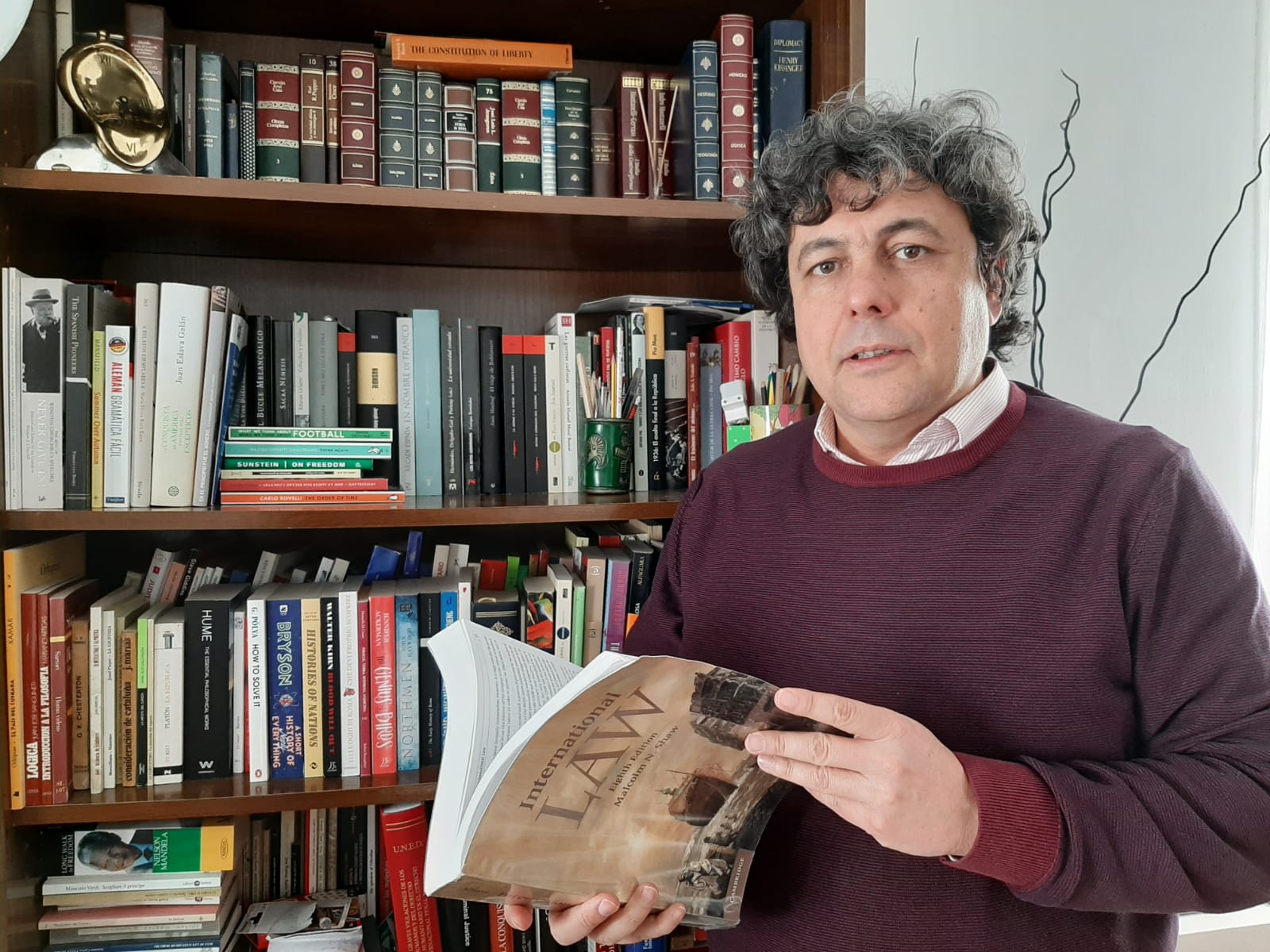
FERNANDO VAL GARIJO – A talk on Brexit

(by Stefania Del Monte)

Fernando Val Garijo is Associate Professor at the Public International Law Department of UNED (Faculty of Law). He received a PhD in Law from UNED, and a Master’s degree in EU Studies from Universidad Politécnica de Madrid. He has taught courses on International Law and EU Law at UNED, the Spanish Diplomatic School, FRONTEX and CEPOL, as well as International Law seminars at La Sapienza and East London University. His research has focused on International Criminal Law, International Humanitarian Law, Human Rights and International Organizations, with special regard to European Union issues. He has served as external legal counsel for the Spanish Ministry of Foreign Affairs and Cooperation (2008-2011), and as legal assistant of one of the Special Rapporteurs of the International Law Commission of the United Nations in Geneva (2015, 2016, 2017 and 2019). He is also author of The Impact of Brexit on the Spanish and European Health Care Systems (2017, in Spanish).

We have met him to talk about Brexit.

Professor Val, as an expert of International Law and especially of EU issues, what is your personal opinion on Brexit and what is the most realistic scenario we can expect, five years from now?

Five years is a long time in politics and international relations. Many scenarios are possible in this time frame, and I tend to avoid either worst-case or best-case scenarios. I would say that it is reasonable to expect that the EU and the UK will have agreed on a stable relation focused on trade and, hopefully, on some security issues. However, neither the EU nor the UK will be better off after this agreement. Membership was better than any future agreement, especially for the UK, but also for the EU. In this regard, I see Brexit as a lose-lose situation.

This is why, in my opinion, Brexit is a bad idea, whose supposed benefits have never been credibly explained. The UK, of all member states, had no need to leave the EU. It was one of the big, influential member states. It benefited greatly in areas such as services trade or the funding of scientific research. It had used the opportunities given by the flexibility of EU integration: opt-out regimes in areas such as the euro and social policy. In a way, when it was a member state, the UK could “have its cake and eat it” in certain respects. It will no longer be the case; it will be either no cake or no eating, contrary to what some brexiteers still say. One of the absurdities of Brexit is that it wasn’t necessary at all, even from a Eurosceptic perspective, Of course, it was from a Europhobic perspective, but then phobias are very powerful forms of irrationality. Brexit seems to me like a self-inflicted blow.

However, although the impact on the EU-27 will be less, I also think that in the long run the EU will be worse off without the UK. In spite of being reluctant EU members, the British made valuable contributions to European integration, providing an alternative to Franco-German views and advocating a flexibility in the EU integration process that is one of its strengths. Brexit is everyone´s loss, even if the loss will be greater for one side. It still fills me with sadness.

While Wales has voted in favour of Brexit, Scotland, Northern Ireland, and even London have never hidden their disagreement on the subject. Should they decide to pursue a different path, would they really have any space for manoeuvre?

This is more a question for a British constitutionalist lawyer, or for British political commentators. But it seems to be the case that Brexit weakens the unity of the United Kingdom, and that EU membership was a source of internal stability. EU membership has that effect in other member states, Spain being a case in point. If a second referendum of independence took place in Scotland now, independence from the UK would probably win, and Scotland could become a new EU Member State. But that referendum is very unlikely to be held in the near future. The new British government has some time to try and win over sufficient Scottish voters for the UK not to lose Scotland. At the same time, the prospect of a united Ireland has never been as credible as now, as the issues relating to the border between Northern Ireland and the Republic of Ireland are showing. British political leaders do not really know how to solve the Irish conundrum, at least not yet. Having said this, a break-up of the United Kingdom is not to be expected soon. One should not underestimate the strength of a union like the United Kingdom. The political bond between the four nations cannot be broken as easily as some think, although Brexit will, in my modest opinion, weaken that bond. Seeds of dismemberment have been planted during the Brexit process but that kind of fruit is far from ripe today.

Officially, there are over 1.2 million British nationals currently living in the EU, including over 300,000 in Spain (actual figures might be well over 2 million). How do you think Brexit affects them?

At the moment, there is a transition period set out in the Withdrawal Agreement, which lasts until 31 December 2020. Until that date, most things will remain the same as they were before 31 January 2020 (official Brexit date). A positive development is that the Withdrawal Agreement guarantees UK citizens who have registered as residents in a EU member state broadly the same rights as they enjoy now in terms of living, working and travelling. These rights will cease after a leave of absence of more than five years. Even during the transition period UK citizens can move to the EU and consolidate these rights. For example, UK citizens living in Spain or moving here permanently before 31 December 2020, will have life-long healthcare rights in Spain, provided they continue to be residents. Of course, with UK citizens who are not residents before that date the situation will be different.

Do you expect any other of the EU countries to follow the example of the UK, any time soon?

I do not, mainly because the benefits of leaving are still not obvious to anyone. The British case is an example of how difficult it is to withdraw, especially after more than forty years of membership and integration. EU leaders are determined that the EU-UK agreement on their future relationship does not leave the UK in a better position than when it was a member. In this regard, EU member states have so far shown a remarkable unity and resolve. At best, some member states may be adopting an attitude of “wait and see” regarding Brexit. The EU is imperfect, at times, irritatingly so, but for Member States it still solves more problems than it creates. The same cannot be said of Brexit, an option that still has to prove its alleged blessings.

Do you believe there is still a future for the European Union?

I am strongly pro-EU integration. I believe the EU enhances the possibilities of Member States and of the citizens of Member States in areas like trade, protection of the environment, defence and security, influence in foreign policy. It also consolidates common standards in areas like fundamental rights (including employees’ rights), consumer protection, food safety, health regulations, and several other topics.

EU citizens would benefit from more education on EU issues and the EU system. When I teach EU law and EU integration I perceive the average level of knowledge on the EU is very low and surprisingly inaccurate among undergraduates. It is at times even worse with the media. EU leaders, EU institutions, schools, academics and the media have a responsibility in bringing the real EU closer to EU citizens, so that they can decide whether they want it or not. I think this is, in times of populism and fake news, a crucial challenge. But it is a beautiful challenge too, one that can shed a positive light on the European realities of today.

In the cover: Prof. Fernando Val Garijo
image courtesy of Elisabetta Bagli

OCEAN CAY, MSC Cruises’ Caribbean island

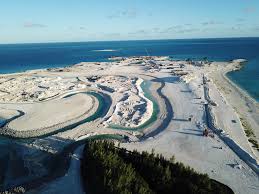
Ocean Cay is a private paradise in the heart of the Bahamas. This pearl of the Atlantic Ocean owned by MSC was obtained from a former industrial site and, after being completely restored, has become a real dream destination.

Not only tourist offer characterize this tropical paradise.  MSC Cruises has in fact, in line with its sustainable philosophy, developed a project to create a positive and long-term impact  on the environment and on the Bahamas community, using materials and local suppliers and hiring local staff.

Ocean Cay MSC Marine Reserve was a unique project that required three years of work to reclaim and transform the island, making it today possible to offer the best possible experience to cruise passengers.

During the reclamation process 7,500 tons of metal waste were removed and a team of expert and marine biologists carefully removed individual colonies of hard coral from the debris at sea, transferring them to more suitable and uncontaminated seabed.

An innovative naturalistic program involved the island, having taken actions to promote an environment with high biodiversity and sustainable impact, and having planted more than 75,000 plants and shrubs throughout the island. is to offer its customers a complete tourist offer in full contact with nature.

Once arrived on this exclusive paradise on earth, guests can admire breathtaking views, infinite blue shades of the sea, white beaches and unspoiled nature.


Also available to guests is a planning of exceptional activities: from snorkeling to the vision of great timeless classic movies on maxi screens under the starry Caribbean sky, from paddle boarding or kayaking in the crystal clear sea to naturalistic excursions. Those who want can also enjoy a magnificent spa treatment or relax in a private cabana on the beach.

The island has seven white sand beaches for a total of two kilometers; each with its own particular characteristics will allow guests to try all the experiences of seaside tourism. Around the island there are 64 square miles of protected waters along which a coral nursery is being created.

The iconic 30-meter lighthouse host a bar and a terrace, and among the dining options there are the Sneakers Food Court, a rich buffet restaurant with international dishes, or the Ice Cream Parlor, a few steps from the beach.

COP26 Pontignano 2020: Italy and UK new bilateral relations on climate change

London (Rosita Dagh) Italy and UK established a new bilateral relationship on climate change during the Pontignano Conference.

The event took place in London on February 25th.

The Italian and English governments came together to find new solutions to the issues that affect our planet.

Climate change remains one core subjects of global debate to which everyone is called to do something on the matter. In fact, world leaders will join COP26 (Conference of the Parties) in Glasgow next November 2020.

Now the goal of the United Kingdom and Italy is to apply the “Pontignano” method to bring new ideas and projects at the COP26 wich are aimed at reducing CO2 emissions.

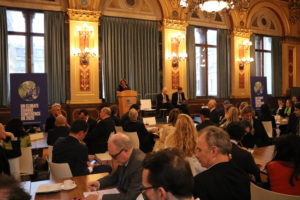
Today The Pontignano Co-President, Carlo Calenda and Lord Willetts, hosted 100 people from the local journalists, politicians and experts at the Foreign and Commonwealth Office in London,  to discuss how to overcome current obstacles related to the climate change.

Zac Goldsmiths, Minister for the Enviroment; Lord David Willetts

The event was also attended by the Minister for the Enviroment, Food and Rural Affairs, Zac Goldsmith, who insisted on the fact that in UK, since 2014, we have assisted to very high temperatures never seen before but, at the same time, he highlighted how the British citizens have always been activeto propose new solutions to the government.

The population has immediately shown interest and willingness to stop this problem” – he said.

Therefore, the Minister concluded that the success of COP26 is not about convinceing people to do something on climate change, but convinceing them of leaders’ capability to take serious measures to protect our planet.

https://www.youtube.com/watch?v=KEthbvbPAUE

TOMMASO BASILI – From Empire to Paradise

(by Stefania Del Monte)

The name of Tommaso Basili occurs more and more often in the television and cinema panorama, both Italian and international.

The actor was born in Tempio Pausania, Sardinia, in 1980. His father, originally from the Marche, grew up in the United States and his mother was born and raised in the Franco-Portuguese colony of Madagascar. He spent his childhood between Milan and Lake Como, before continuing his higher studies in Switzerland, the United States and Spain, where he graduated.

His approach to acting came late, first training for three years in Milan, at the Michael Rodgers Acting Studio, and then in New York, at the Stella Adler Studio of Acting.

His first professional experiences saw him engaged in several commercials directed by excellent directors such as Gabriele Salvatores, Stefano Sollima, Silvio Muccino, Luca Lucini, Fausto Brizzi, Francesco Fei, Sidney Sibilia and Tom Hooper.

His first official role came with 1993, a Sky Atlantic fiction. After that he took part in the film Il Vegetale and in the Rai1 fiction La Strada di Casa 2.

Subsequently he got more and more relevant roles, as in the Canale 5 fiction L’Isola di Pietro, with Gianni Morandi. In January he arrived on Netflix, in the American series Rise of Empires: Ottoman, where he played the role of Constantine Palaeologus XI, the last emperor of the Eastern Roman Empire.

He is currently in the cast of Il Paradiso delle Signore 4, an acclaimed television series broadcast on Rai 1, with the role of Ennio Palazzi, a young entrepreneur from northern Italy, as well as in the fiction Don Matteo 12, where he plays an architect with a very complicated life. We will also see him soon in Medical Report, a new project coming out in March on Rai 1, alongside Luca Argentero and Matilde Gioli.


Tommaso, the first part of your life and your studies took place in a multicultural context. Only after graduating in Spain did you approach acting. How did this decision come about?

It was a decision that I tiptoed, almost apologizing to myself. For some reason it was difficult for me to admit that I wanted to take this path. But even before that, there was a lot of confusion about what I really wanted to do in life, and some shy and awkward approaches towards the art of acting. Then there were several clues along the way that gave me the determination to follow my instincts. It is an eternal discovery, a continuous attempt to improve without having future certainties.

What attracted you to this world?

There are many things that have always attracted me to this world. Audiovisual in general has fascinated me since I was a child. The combination of images and music is something with immense power: from cinema to advertising itself. In fact, as a graduation thesis (I don’t know how successful I was, but the attempt was sincere) I focused on the use of music in television advertising in the 1980s. And then cinema, story-telling and the unique ability that cinema has to make the ordinary extraordinary, poetizing every aspect of life. Cinema gives me the same amazement in observing the reality of when I was a child.

Once you embarked on this path you had to start over with your training, which took place between Milan and New York. Was it tiring?

Yes, it was. But mostly because I am my worst enemy, so through the study of acting I had to deal first with myself and then, possibly, with lyrics and characters. In Milan I had an extraordinary teacher: Michael Rodgers (leader in training for actors, ed.). It was first a school of life and then acting. New York, instead, gave me that typical dynamism of Americans, capable of being extremely serious and meticulous through the atmosphere of the game.

On a professional level, you got off to a very good start, with high-level commercials. How did the transition to television and cinema come about?

Advertising gave me a way to understand how a set worked, what it meant to be in front of a camera and observe great professionals at work. In the meantime, I was studying and it was a nice way to go from classroom to work. The transition from advertising to television occurred when Paolo, my agent, decided to believe in me and to help me have my first chance. It is so important that someone believes in you, especially in the beginning, when you are even more fragile. I am eternally grateful to everyone who has given me a chance, and the list is long.

After a series of participations in Italian-based fiction, Costantino’s role in the Netflix series Rise of Empires: Ottoman arrived. An international production, in which you are the only Italian in the cast. How did you prepare for this role and what kind of difficulties did you encounter, during the shooting, compared to your previous experiences?

I have to be honest: I had just over two weeks to prepare for the role of Constantine XI. I was in total panic! For a complex character, really existed but of which there are few historical sources available, and for a story so full of events, I tried to make life as simple as possible and I focused on some basic aspects of the character, first of all the voice. I had to decide his timbre, and his walk: it certainly must not have been that of a modern-day boy. And I was also afraid of ending up representing the archetype of the Emperor and therefore something stereotyped and, consequently, fake. The truth, I hope, I found it in the middle. The difficulties on the set, I must say, have been very few. I felt very comfortable with everyone. A lot of work, but with great enthusiasm, and sometimes many but many laughs: to such an extent that it has often been unnerving to try and get serious again.

Is this the first time you play a historical figure?

Yes, and I couldn’t have wanted more.

Is there much difference in the Italian way of working, compared to an international context?

I didn’t find any particular differences. In Italy, lunch breaks are longer!

At the moment you are also engaged in Il Paradiso delle Signore 4, where you play the role of Ennio. Can you tell us more about this character?

Ennio Palazzi is a determined, romantic man, a dreamer, but also a pragmatic entrepreneur. I really like this duality, especially if immersed in that world, that of Italy in the 50s/60s where being polite was compulsory. I think Il Paradiso delle Signore does a masterful job in representing this aspect of the society of that time, and much more. I am delighted to be part of it. Besides, there is a fantastic working atmosphere and I believe that the results of the series prove it!

Are there other projects in the pipeline?

I have a project in the pipeline but for superstition I prefer not to talk about it.

Do you have a secret dream?

Continue to grow by working.

On the cover: Tommaso Basili
images courtesy of the interviewee

Click here for the interview in Italian

BIC: “Brexit and the Law: What may come next?”

At the Palace of Westminster In Committee Room 10 on 12th February 2020 the British Italian Conservative have organised an event aimed to try to put some lights in to what can happen with the future legislations between EU and UK.

The conference was chaired by Maurizio Bragagni and Simon Blagden (BIC Chairman and Deputy Chairman respectively) at the kind invitation of Alberto Costa MP (BIC Honorary President), he proposed the Amendment to the Brexit Deal that leaded to his forced resignation from a Government position, the amendment however was later positively voted by the government. Alberto said: “the rights of EU citizens and UK citizens will be guaranteed perpetually underpinned by international law, my job will be to monitor the technicalities of how the Government will set those guaranties in laws”

The special guest was Simon Davis, President of the Law Society England and Wales, who talked about how the profession was organising to cope with the aftermath of Brexit and what it might mean for the legal profession mentioning that “What’s happens next depends on a great extent on you and those like you outside this room, for you I mean Politicians Lawyers Business Representatives and Activists”.

Followed by Maria Memoli, Law Society Council Member, ” “This is a very tense time for the citizen, businesses and member states and is worried about the divergence of views between UK and EU. Time is short. The transition finishes at the end of the year. In large parts of the economy, people rely on advice and support of solicitors”.

She was followed by Alessandro Belluzzo, President of the Italian Chamber of Commerce, who talked about the impact of Brexit and the hope that future negotiations would allow more rather than less opportunities for UK industries for trade, and then Gerardo Aprovitolo, a partner in the London law firm of ADL Solicitors, who talked about the problems facing European SMEs post-Brexit, the various free trade models that had been proposed, and how he hoped negotiations might be concluded in the best possible way to allow companies based either in the UK or Europe to continue to trade with its partners after Brexit. He was followed by Angela McFarlane, Market Development Director and Chair of Brexit Task Force, IQVIA, who gave a very interesting talk about how the UK leads the world in clinical trials and the importance of this industry, how the European Medicines Agency had been removed from the UK to the Netherlands over Brexit (and the problems that had ensued), and how the industry in the UK might remain able to continue to provide services (which mainly relied on free flow of data) within the EU. Sara Alessandrini, a criminal defence solicitor and partner at O’Keeffe Solicitors, then talked about how changes to do with the European Arrest Warrant had already occurred, and the challenges that lay ahead to continue to provide security with cross-border co-operation on law enforcement. The last speaker, Professor Mark Watson-Gandy, a Barrister at Three Stone Chambers, talked about insolvency laws and how these might change and evolve outside the EU. There was then a short question and answer section, followed by closing remarks by Maurizio Bragagni. Many speakers commented on the particular needs for continuation of trade in services with the EU, noting that most public interest seemed to be in trade in goods, which have much less influence on our balance of trade with the EU, and the hope that the British Government would recognise how important the service sector was to the UK economy.

Ideated and organised by Christian Vinante Giovannini, Gerardo Aprovitolo, Maria Memoli and Eleonara Gorla the event was extremely well-attended, with over one hundred guests, with a very relaxed atmosphere despite the high calibre of both speakers and invitees.

MARTA SIMONETTI – Everything we need to know about climate change

(by Stefania Del Monte)

Marta Simonetti is an experienced green finance director based in London. She worked in the City of London, initially in marketing and then in development and transition banking for the European Bank for Reconstruction and Development. In 2017 she set up her consultancy, Globalfields Ltd, which specializes in green finance and sustainable leadership.

From August 2017 to date she has carried out several assignments at senior level for the Green Climate Fund, WWF-US, GIZ, IPC GmbH, Absolute Energy Capital, as well as for private equity companies and governments. She is now focusing on the green transformation of financial markets, working with governments, financial institutions and the consultancy sector in Europe, Africa, Central Asia and south-east Asia.

In her work thus far she has been leading bilateral and multilateral structuring and negotiations in climate and conservation finance, including with the Green Climate Fund, the Global Environment Facility, the NAMA Facility, the German bilateral cooperation agency (GIZ) and multilateral banks, as well as for private companies. Her main skills are in fund management (legal and institutional structuring), blended finance structuring (mixed participation equity and loans; revolving funds; guarantee funds), resource mobilization, programme structuring in climate and environmental finance. She also offers pro-bono work for the delivery of presentations and leadership training programmes specific in the areas of green finance, climate change and environmental degradation, in particular for schools and in careers events at universities in London.

We have met her to try and get a better understanding of this very complex matter.

Marta, your academic and professional experience in the climate and environment field is impressive but we would like to start with a very basic question. We often hear the expressions global warming and climate change. What exactly are they and what’s causing them to happen?

Many thanks for this question, which is not that simple at all! Climate science is an important aspect of our work in green finance as it gives us the evidence of the anthropogenic factors (i.e. the man-made role) in temperature warming vis-à-vis normal patterns of change. It reinforces the fact that we can make a concrete impact in our work with clients.

Specifically, global warming refers to the long-term rising of the average temperatures of Earth’s climate system observed since the pre-industrial period (i.e. the period between 1850 and 1900) due to human activities, primarily fossil fuel burning, rapid urbanization and loss of ecosystems. With time, those have increased heat-trapping greenhouse gas levels in the Earth’s atmosphere.

When we look at historical temperature changes, we see a succession of warm patterns followed by ice ages over the earth’s geological history. Thanks to the analysis of Antarctic ice-cores carbon dioxide (CO2) concentration alongside the study of temperature changes, we know that warm periods, with some exceptions, are periods of high atmospheric CO2, and cold periods, geologically, have been periods of low atmospheric CO2.

After the industrial revolution we see a 40 per cent rise in CO2 atmospheric concentrations during the 20th and 21st centuries. When we look at temperatures between 1880 and now, the ten warmest years ever recorded are within the last 17 years. The hottest temperatures ever recorded were in 2016, 2019, and 2015. There is a lot of convergence on these data among major research organization, including NASA, the Hadley Centre for Climate Science, British Antarctic Survey and the Oceanic National Oceanic and Atmospheric Administration.

(data from ossfoundation.org)

Because of this pattern change in temperatures and CO2 concentrations, we are also experiencing new weather patterns that have remained in place for an extended period of time and cannot any longer be considered as isolated occurrences. This change in the Earth’s climate system is climate change. For example, we are now experiencing an increasing number of extreme weather events, such as violent storms, heavy or irregular precipitation patterns, unprecedented floodings, more frequent and longer-lasting heatwaves, droughts.

In 2020, and with all the research available on the subject, we are still faced with a large number of deniers. How is that possible? Do we have to believe Greta Thunberg or Donald Trump?

I find Greta’s message very powerful because it is really seeking to achieve what we (the older generation) haven’t done fast enough: i.e. bringing about systemic change across all sectors. A crisis such as that we are witnessing now is indeed unprecedented. Think about the bush fires in Australia, the snow-free Christmas day in Moscow, or the current above-average temperatures in England followed by three weekends of storms and torrential rains. Those occurrences used to be abnormal, rare events. Now it is the new normal. Greta would say: Your house is on fire. And rightly so, because we cannot any longer think that those are remote problems that will not affect us. Yet…every crisis brings fundamental questioning, and the way we answer those questions, the motivations we bring behind our answers are the real catalysts for change. I think we are now at the right juncture to substantially speed up climate and environmental action. Our awareness and knowledge of the issue have increased, because the problem is so in our face that we cannot turn away from it.

Climate deniers thrive on instilling doubt and misinformation. We need to remain very aware that the most prominent deniers out there receive significant financial backing from (predominantly) the oil and coal industries, and then also from farming and heavy industries. What I find dangerous in this rhetoric is their effort to disenfranchise and disengage people from the actual conversation. If we are not responsible for climate change, then it follows that we shouldn’t worry so much about what we do because nothing we do actually matters. This is an abdication of responsibility! This is an abdication of our true human nature and our ability to bring change and meaning, in our own lives, as well as for the environments and communities we live in.

The real conversation has another focus. We have the technology to move away from fossil fuels. This is happening faster in some countries and not so fast in others. In a way we can say that it is important to remain mindful of the complex socio-economic transitions that are needed to decrease reliance on coal, oil and gas, as those have a price, expressed in the affordability of clean energy. Yet this transition needs to happen, globally. At the moment, while technology costs are coming down, we still have entry barriers, for example in mismatches between policies on the one hand, and regulation on the other; or political uncertainties which then translate in higher insurance costs or may act as deterrent to investment.

We have two major paradoxes here. Short-termism is now pervasive, in politics and in business. For many politicians it is impossible to think past the next election. This jeopardizes the ability to accept short-term costs for longer-term gains. In business, we want to see quick returns on investments and short pay-back times. When we work in climate action or in sustainability, the work is fundamentally long-term. We seek long-lasting impacts.

The second paradox is that while we seek to reduce emissions through clean energy generation and resource efficiency practices, we have rapidly become a more electrified, digitalized society. Think about how many tasks we now do digitally that were previously done without electricity: paying bills, writing letters, studying, billboards. Who goes now to the post office to pay, say, the water bills? Or when was the last time we sent a friend an actual letter written by hand, using pen and paper? While we may still have books, online content is now so efficient that it can really save us time and energy. And what about money? Here in London, where I live, there are shops that do not accept cash any longer. Now we have smart houses, big data, machine learning, predictive technologies. This is all very useful. It all needs electricity. So, as the population grows, any efficiency gain in carbon mitigation, water efficiency, or resource efficiency that we may achieve through new technology is eroded by the growing rate of consumption of that resource. This is the Jevons paradox, very much used in environmental economics. Before we start thinking though that any efficiency improvements in climate action is futile, let’s add another perspective here: i.e. the growing role of environmental conservation and stewardship of the planet. This is why now more than ever we need to find and implement applicable solutions.

So, when I look at Greta I really see progressive politics fighting against regressive government. In Greta I see the spark for systemic change rather than clinging to the status quo. For our future, the future of our children and humankind, for the health and preservation of the earth systems, we need to choose climate action!

It is too late to prevent climate change?

Climate change is already happening. What we can do now is to make sure that we decrease emissions, and fast. GHG emissions in fact increased in 2017 and 2018, and stabilized in 2019, according to the International Energy Agency. An important concept here is the planetary boundaries of the earth systems. In some instances, we have made useful progress, for example in the reduction of chlorofluorocarbons to slow down stratospheric ozone depletion thanks to the Montreal protocol and more recently the Kigali Amendment.

But in other areas – namely climate change and biosphere integrity – we may have already gone beyond the boundary. What does this mean? That we are fast approaching a tipping point, beyond which certain changes may become irreversible, such as loss of ice cover in polar regions, with subsequent sea level rises; or loss of ecosystems. Some people may find the extinction of some species irrelevant, or may be unmoved by an emergency thousands of miles away from home. Those events, though, are neither unrelated nor irrelevant, because ecosystems are interconnected, planetary boundaries are interconnected and ultimately, we are also connected (to ourselves, to others, to the contexts we live in). Do you remember John Donne’s poem ‘No man is an island entire of itself…’? The balance is in humankind’s approach to become aware that we are all part of a whole system, and that this interconnection is not a new concept or new-age mumbo-jumbo. It is real.

What do you think are the most important priorities, in order to tackle the climate crisis?

There are four key areas of priority where I believe we can bring substantial changes and impacts.

  • Financial support. For many countries, there is still a need to bridge the gap between the technical and impact potential of a project, and its commercial viability. This is where I see still a steady role for public interventions given as blended finance in the form of concessional lending, guarantee instruments and subordinated positions in financial instruments (e.g. first loss and tiered funds). We definitely need a little bit more risk-taking in order to bring new technologies on the market, which can be achieved through concessional equity in incubators and accelerators funds, as well as for venture capital. Supporting the supply of viable projects can strengthen the arguments for the business case of investing in green and SDG-linked products, which is paramount to speed up divestment away from fossil fuels.
  • Technology solutions. There are two ways to look at this: a solution as a new product, design or process (e.g. gravitational technologies for energy storage); and as a system change, i.e. green connectivity, circular economy and cradle-to-grave solutions, ‘green-digital’ urban designs and urban adaptation practices. To name a few…
  • Nature-based solutions. This would include conservation efforts, resource preservation and management, re-building of ecosystem. In this area we have solutions at hand, for example in carbon sequestration through reforestation and afforestation practices. Those solutions need to be implemented at a faster pace that the on-going destructions of those same ecosystem, which is very challenging.
  • Applicable awareness. I hear too often people feeling disempowered: how can one person make a difference? Well, let’s bring awareness to this issue and see what we can do, as individual, as part of a community, and in the bigger political arena, then we are not anymore acting as one but as humankind. As we prepare for next Conference of the Parties (COP26), co-organized by the UK and Italy and taking place in Glasgow in November 2020, we can take the opportunity to learn more about what’s happening and empower ourselves to bring change.

For example, what are some key changes we can bring into our lives?

I would like to give some suggestions… Switch energy supplier to full renewable energy; reduce meat consumption; join a vegan / vegetarian group for inspiration and recipes; reduce food waste; seek bulk or unpacked shops where you can use and reuse your own containers; increase energy efficiency by, for instance, switching all lights off, as well as through efficient lighting, windows and walls; join a clothes swapping group or sales apps; use sharing services rather than owning a product (e.g. car sharing); vote with your wallet by deliberately choosing which product and company you want to support and which you don’t; participate in tree-planting exercises and other sustainability activities organized by your council; use public transport to move around; vote for those candidates who have a clear pro-climate and sustainability agenda.

How can your expertise make a difference?

At Globalfields we look at climate change and sustainability practices in businesses from a variety of angles. We are interested in the interconnectedness of the issues and therefore we are able to offer holistic approaches. As I was mentioning earlier on, clean energy generation and efficiency gains cannot be taken in isolation from conservation efforts and stewardship of the planet. We need to think about energy and resource efficiency solutions alongside their wider impacts. We need to align corporate efforts with the sustainable development goals and with international agreements such as the Paris Agreement.

Globalfields was incorporated almost two years ago, and in this relatively brief time we have worked very closely with a number of governments, public and private-sector institutions to create processes or policies to implement green finance practices.

In particular, our work includes supporting organizations in drafting green finance strategies and roadmaps for their implementation; in designing framework for a company’s alignment with the SDGs; supporting the work around frameworks for green loans and SDG loan certifications; advising on financial instruments in green finance, with specific use of concessional and blended products for developing countries; fund-raising and structuring of funds.

More recently we have also worked on green finance training and made our first investment in small-scale hydropower. Two additional investments are under consideration as we speak.

Most of our work is targeted at corporate level, but we have also designed frameworks for coaching for transformational ‘green’ leadership, delivered individually or in small groups. This is where we aim to empower people to not only understanding the subject matter but also to design the most appropriate pathways for them to become transformational leaders in their organization. Working at corporate and individual levels is in my opinion a necessary undertaking in order to bridge the gap between science, policy and action.

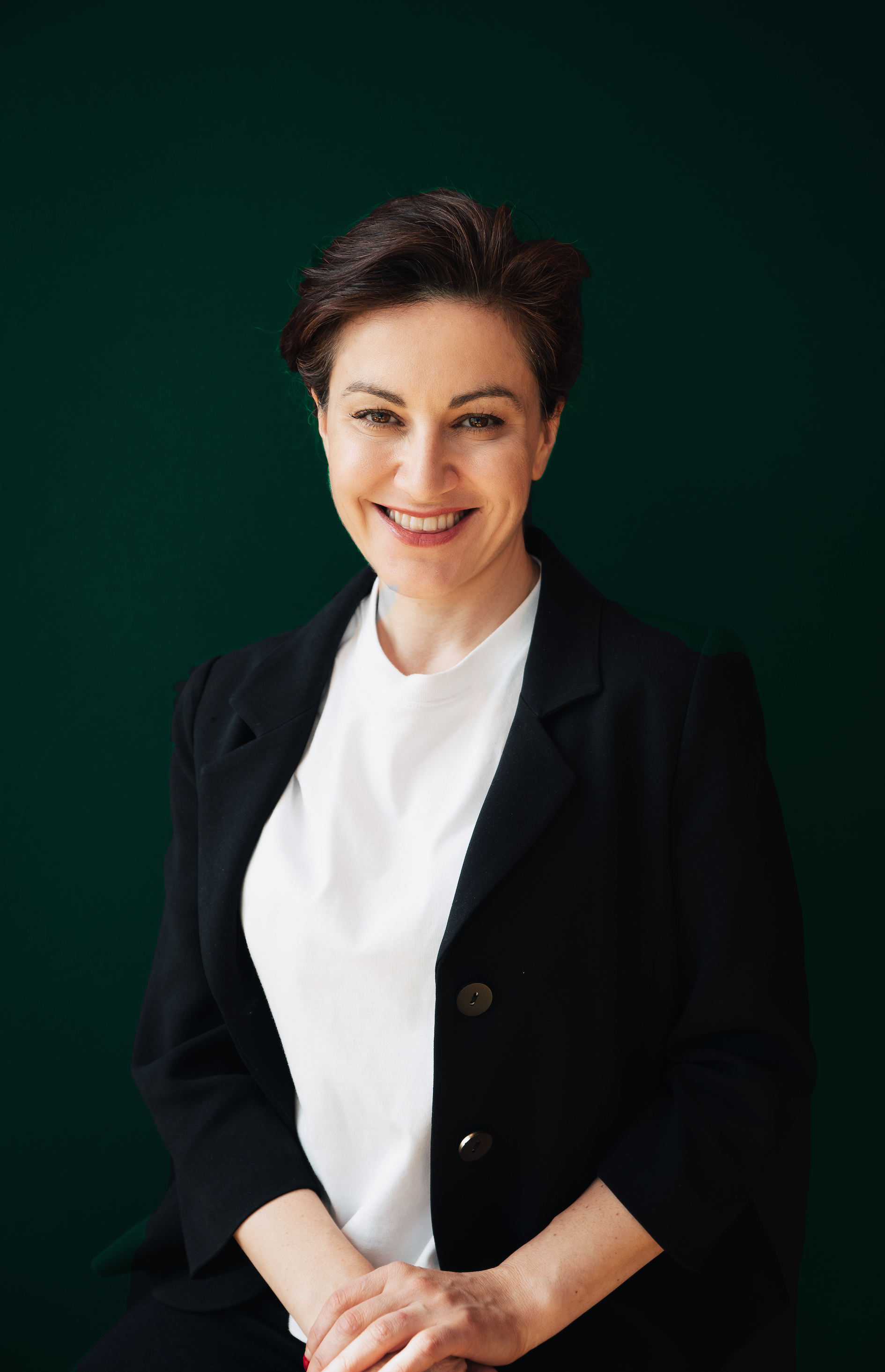
Cover image: Marta Simonetti


PAOLO ROSSI – How long it lasts a moment

by Stefania Del Monte

He was an idol and was disqualified. He returned and became the Pablito of the Spanish Mundial in 1982. This is, in short, the story of Paolo Rossi who, from 1980 to 1982, from the punishment for football betting to the victory over Germany, lived the two hardest and most exciting years of his life. A fairy tale with a happy ending, imbued with striking successes alternating with lacerating pains, with strong surges and ruinous falls, with dreams come true and deep wounds, with precious awards and injustice. It is the black and white of an exceptional existence, the perfect script of a film that has enchanted generations and continues to be reviewed and relived by the public.

Written in collaboration with the journalist Federica Cappelletti, the book Quanto dura un attimo (How long it lasts a moment) is the autobiography of a boy who has defied fate to become a legend, realising his dream as a child and writing immortal pages of the history of universal football. Of this, and many other things, we speak directly with the protagonist of this extraordinary life: Pablito!

“How long it lasts a moment”: a book written in collaboration with your wife, Federica Cappelletti. How was the idea born?

The idea was born over a coffee. It was a grey morning, it was raining, and the sound of the falling rain reminded me of the cleats that beat on the floor in the tunnel that separated the changing rooms from the Bernabeu Stadium in Madrid. It was the 1982 Spain final: Italy-Germany. I still have chills on my skin. My wife asked me to go ahead with the story and then tell it to the world, in a book, so that it could become everyone’s heritage.

What inspired the title?

The moment has always been my characteristic. For me, it meant anticipating the opponent. Get there first. Score. But the moment is also the happiness I felt in those eternal moments of the World Cup in Spain.

Have you always wanted to be a footballer or did you have other dreams as a child?

My dream was to become a footballer. I had an idol. His name is Kurt Hamrin. He had my characteristics; he was an opportunist on the field. I liked him. But I also thought about being a doctor. Rather, my mom wanted me to be an accountant.

Before turning into legend, your career had undergone several jolts, causing strong reactions from the press of the time to the news of your call to the World Cup in Spain. How did you experience that period before arriving in Iberian land?

I suffered a great injustice in my life. I was disqualified (despite being innocent) for two years for not reporting a teammate and two fixers who wanted to combine a game. The Perugia-Avellino in which I scored two goals: but only because it was what I knew how to do. They paid me to score goals. I scored many. So the call to the World Cup in Spain was meditated by Enzo Bearzot and in the end apt. I repaid the coach for his boundless trust and I’m proud of it.

And what, on the other hand, is the most beautiful memory you have of that extraordinary adventure that was the 1982 world championship?

The team. The coach. The sense of family. Home. The affection I felt by everyone. And then, the three goals in the match against Brazil. I became a legend thanks to them, but they also gave me the strength to start again. And I became the top scorer, world champion, golden shoe and golden ball.

Among others the book is dedicated to Enzo Bearzot. How important was his figure to you?

I owe a lot to Enzo Bearzot, I owe him my rebirth. He knew what I was made of and challenged everyone by proving he was right. He is in my heart, where he will remain forever.

The victory in Spain helped to bring colour back to an Italy that tried at all costs to leave the darkness of the Seventies behind. How did the Italians welcome you on their return?

The return to Italy was a tricolour feast. Italy, with that World Cup, has found confidence, raised its head, the Italians have returned to smiling. Sociologically it was an important victory: one of the most important in history.

Among the legendary companions with whom you had the privilege of playing, was there one to whom you were most attached?

I have been and I am deeply attached to everyone. But Antonio Cabrini and Marco Tardelli remain the closest. Also today.

And the most feared opponent?

Brazil, without a doubt. But only before the final, at least for me!

Your best goal?

The first I scored to Brazil definitely unlocked me. But the others weren’t bad either!

Among the prestigious prizes and awards obtained, which made you happier?

The Golden Ball, certainly. In Italy we are only five to have won it: Omar Sivori in 1961 (born in Argentina but national team at the time of recognition); Gianni Rivera in 1969; then I in 1982, Roberto Baggio in 1993 and Fabio Cannavaro in 2006.

What did you do once you “hung up your boots”?

I am a commentator, I have a resort in Tuscany (in Poggio Cenina), I was a builder, I produce oil and wine. I write books with my journalist wife (laughs).

Do you like today’s football? How much has changed in forty years?

I like today’s football: it’s faster. The changes have been many, profound, starting with the management of cards and players. But rightly so, football is also adapting to modernity.

Do you see yourself in any football player today?

There aren’t many players with my characteristics. Perhaps one who resembles me a bit is Mertens of Napoli.

Do you have any regrets?

None. I did what I wanted to do, I made a dream come true, I won everything there was to win.

Cover: Paolo Rossi and Junior, Italy-Brazil, Spain 1982
visual material courtesy of Paolo Rossi

Click here to read the interview in Italian 


MSC BELLISSIMA, star of an incredible documentary on Valentine’s Day

MSC Cruises’ BELLISSIMA will be the star of the fascinating documentary “Building The Ultimate Mega Cruise Ship” to be screened on Channel 5 at 8 p.m. on Valentine’s Day (February 14th).

In the an hour-long documentary, the construction secrets of the largest ship ever christened in the UK will be revealed.

MSC Bellissima was officially christened last spring in Southampton, and has as its godmother the Italian actress Sophia Loren: built with 35,000 tonnes of steel, 171,000-ton vessel and measuring in at 1,036 feet with the capacity to accommodate up to 7000 people including passengers and crew members.

The audience will thus be able to see the behind the scenes that made the construction of this magnificent ship possible, from its conception to its daily practical operation, including the way water is provided on board and the technology behind the fantastic entertainment venues, including the Cirque du Soleil shows.

Antonio Paradiso, Managing Director, MSC Cruises UK & Ireland, said: “MSC Bellissima is one of the largest and most technology-advanced cruise ships in the world, and it’s great to be able to share an in depth look at some of the ship’s key engineering features with the U.K. audience. By watching the show, our audience will be able to get a unique look inside the ship’s key technical areas that guests don’t usually get to see.”

Created by Windfall Films, the episode will focus on not only the internal mechanisms of MSC Bellissima, but also on design and its first voyages, highlighting all the advantages that a cruise holiday can offer.