THE PIANO WORKS – Say it with a song

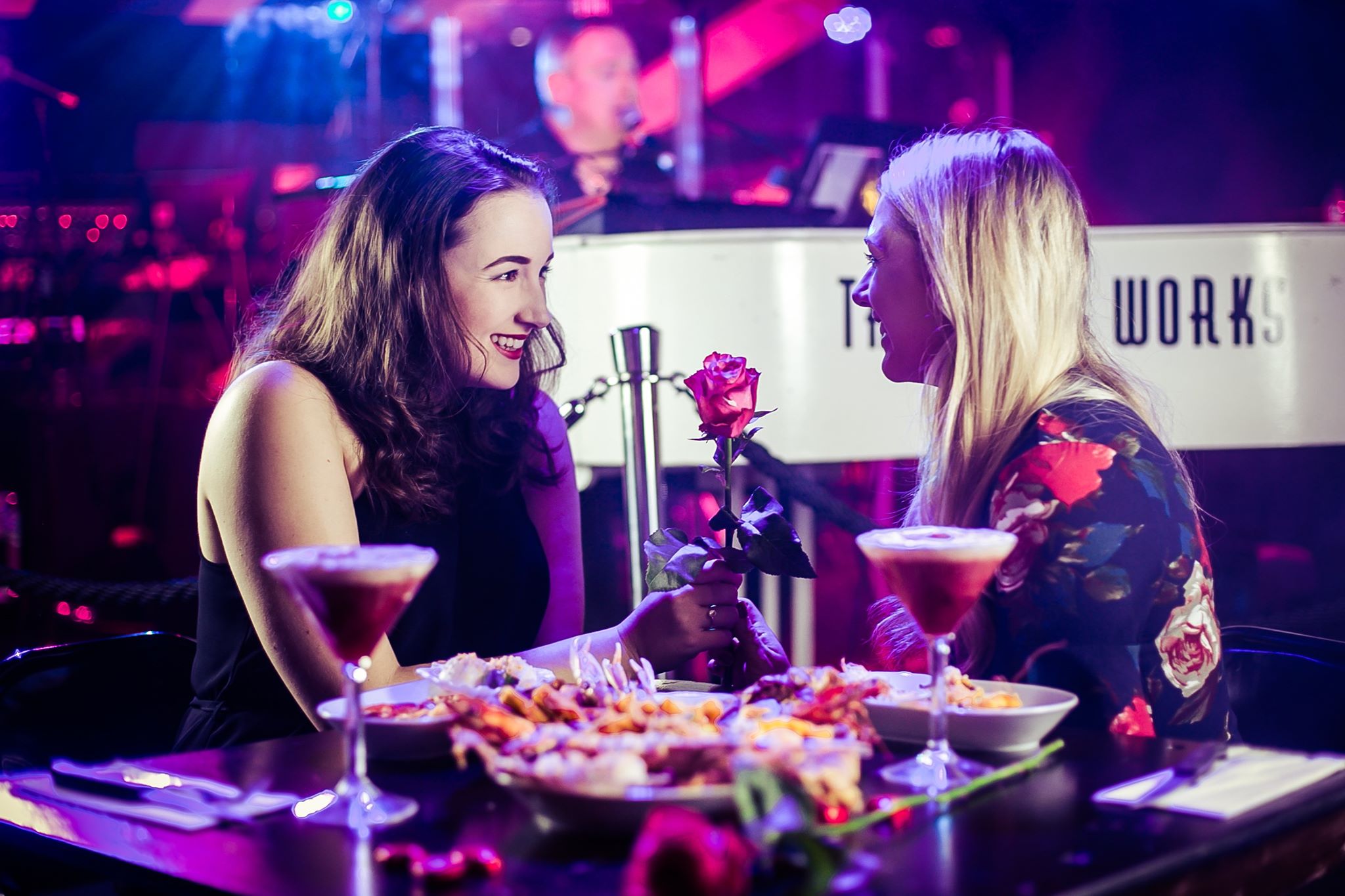
Celebrate your Valentine’s Day at THE PIANO WORKS by dedicating a song to your partner or simply to someone who catches your eyes.

It will be possible to taste a romantic menu accompanied by the in-house six-piece band that will be ready to call out your request, or you can just join the late-night party (free entry after midnight).

The event is a great opportunity to meet new people: guests will in fact receive a numbered sticker that they are encouraged to wear in order to be recognized by possible secret admirers, so that they can dedicate or be dedicated a song. Once the song is played, it will be possible to trace the number and, why not, to find love.

To increase the possibilities of matching, there will be also a  Cupid matchmaker  that will help guests in finding the perfect song and shoot the arrow of love. This will ensure an outstanding date night experience, bond over amazing music.

The dinner includes a three-course menu with a glass of Moët & Chandon and a selection of dishes such as tuna tartar with guacamole and wasabi mousse, a sharing sea food platter, or côte de boeuf. Vegans and vegetarians are equally catered for, with delights such as vegan walnut pâté and shepherd’s pie.  End on a high note with a pear and liquorice strudel or warm chocolate brownie with salted caramel.


For further information: The Piano Works, FarringdonThe Piano Works, West End

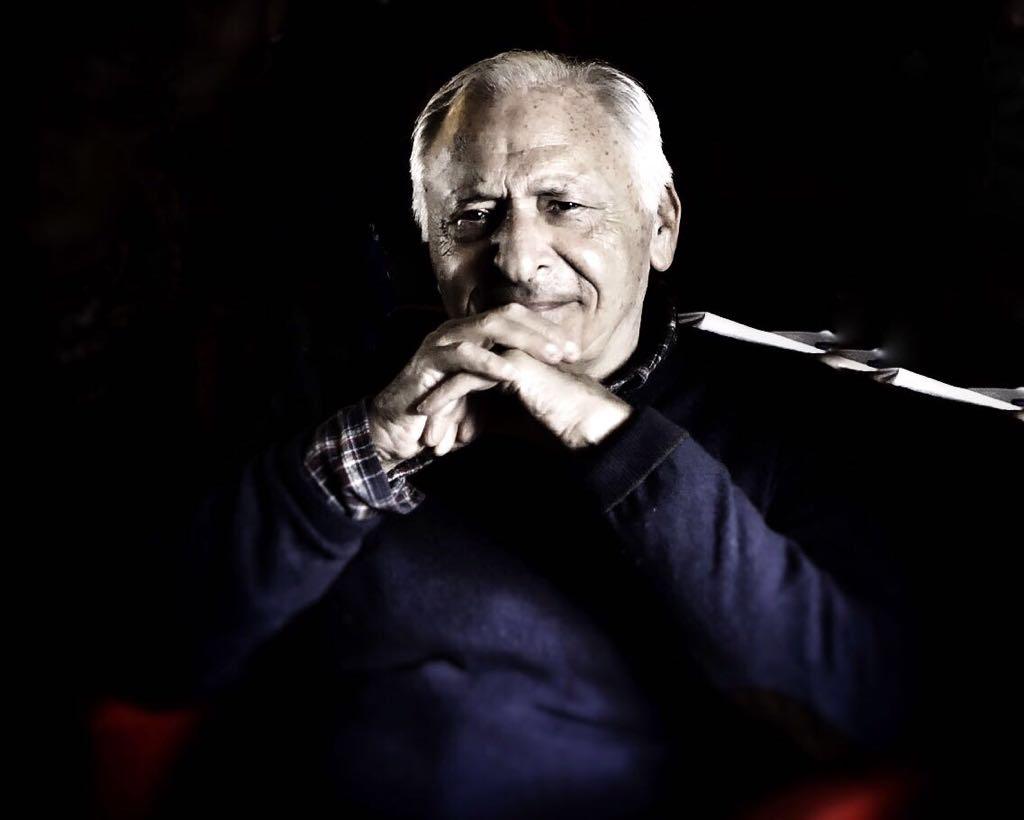
MOGOL – “Emozioni” on stage

by Stefania Del Monte

With over 1,500 songs published and a myriad of collaborations of great international prestige under his belt, Giulio Rapetti Mogol is one of the most prolific and by far the most successful author on the Italian music scene.

Known by everyone simply as Mogol, at the age of 83 – including over sixty of artistic career – he is a man who has always known how to live his life in depth and then tell it in his texts as a friend, revealing human truths and intimate thoughts.

Calling him a lyricist would be an understatement. The world of this great character is in fact dotted with social commitment, family loves, sports (football and horse riding above all), travel, mentoring, entertainment and much more.

His songs, however, are the ones that more than anything else define him and – even after fifty years – continue to arouse the same, identical emotions as ever in the general public. And it is no coincidence that his new theatrical performance is called just like this: Emotions (Emozioni in Italian, ndr).

Turin, Macerata and the Ancient Theater of Taormina will be just some of the stages touched by the tour. We talked about it directly with him: the legendary Mogol.

On 26 March Emotions will be staged at the Colosseo Theatre in Milan. Can you tell us about it?

It is a theatrical performance in which, together with the interpreter Gianmarco Carroccia, we make a journey through my songs with Battisti. A 16-piece orchestra will perform a real musical biography, while Carroccia will interpret the songs and I, present on stage with him, will tell anecdotes and curiosities about the birth of some of those songs. There will also be three songs by Gianni Bella: Il profumo del mare, Il patto and Quello che non ti ho mai detto.

Why did you prefer a theatrical performance to a concert? What does theatre offer compared to other forms of entertainment?

The show alternates parts of the concert – with lyrics projected in the background and an audience that actively participates, singing with passion – and my more discursive interventions, where I tell a little bit about the circumstances in which certain songs were born. It is a type of representation that offers great interaction with the spectators.

This year marks the 50th anniversary of the release of the Emotions album and the songs it contains continue to be very popular. Why do you think these songs are so loved by the public?

These are songs that have remained in people’s hearts and memories. My lyrics are often autobiographical but many Italians recognize and identify themselves in the thoughts, words and, above all, in the emotions told in these passages.

Speaking of emotions, one cannot help but think of your artistic collaboration and, above all, of your long friendship with Lucio Battisti. How do you remember him?

Between us there was a relationship of great friendship and mutual esteem. He called me the poet and for me he was the best musician I had known. I remember that we had established a habitual way of working, almost a routine: Lucio came to my house after composing the music of 10-12 songs. We started around 9 in the morning: he played the guitar, singing in macaronic English and I, lying on the carpet, composed the lyrics. In less than two weeks the job was ready. Many of the songs were born within an hour.

Gianmarco Carroccia, your co-protagonist in the theatrical show, is an artist who trained within the CET Centro Europeo di Toscolano. Can you tell us more about this academic project of yours?

CET is a non-profit association that I founded in 1992 with the aim of enhancing and qualifying mainly new pop music professionals, people sensitized to the importance of popular culture and the ethical needs of communication. The centre is located in a complex of over 120 hectares in the heart of Umbria. CET, however, is first of all an academy that has prepared and prepares artists of the highest international level. Last year I taught courses in the United States, Berkeley and Harvard, and there they gave us a lot of compliments for our teaching methods.

Gianmarco Carroccia, in fact, was a pupil of CET between 2010 and 2011 but to tell the truth I didn’t remember him. Then one day I heard him sing in one of his concerts, in front of an enthusiastic audience and, from there, planning a show together was almost inevitable. He is a great showman and knows how to involve the public. But not only that: he is also an incredible performer and his shows are always sold-out.

Looking back on your first steps into the world of music, what did it mean to be an author in the Sixties? How have musical tastes evolved and what is the public looking for today compared to that period?

Look, I am lucky enough to have sold over 523 million records worldwide, with 151 hits that placed in the top ten of the charts and of which, more than half, are songs composed with Battisti. These are incredible numbers and I myself, when I first heard them, found it hard to believe it. I think this success is due to the fact that I write for myself and not following the tastes of the public.

How do your songs come about?

My characteristic is that I never have a prepared subject: I listen to the music and recognize what it is telling me.

Your repertoire is vast. Of all the songs published, is there one that has a special meaning for you?

Yes: it’s the song Anche per te. It is a text that, I believe, everyone would have liked to write. It was inspired by three lonely women, whom I would have liked to help.

During your career you have collaborated with many world-famous artists: from Mina and Celentano to Bob Dylan and David Bowie. Among today’s names, is there an artist you admire more than others?

I would say Cristicchi: a great artist, both musician and theatre, with whom I also had the opportunity to collaborate.

Cover: Mogol
Audiovisual material courtesy of Mogol

Click here to read the interview in Italian


ERIKA BEZZO – A coach for expats

by Stefania Del Monte

Erika Bezzo, owner of ChangeXperience, is a strategic and intercultural coach with ICF (International Coach Federation) certification, specialised in helping those who leave their home country to start a new adventure abroad. Her thirteen years of experience as manager in marketing and communication led her to live and work in Italy, Germany, France and Spain. She holds coaching sessions in Italian, Spanish, French, German and English and has just launched a new version of her website, now available in English, Spanish and Italian. We met her to learn more about her role and understand how she can help expats in their transition.

Erika, what is, exactly, the role of a coach?

Imagine having a nightmare while sleeping. You are trapped in a reality from which you cannot get out, you are sick, you are looking for a solution but you cannot find it. The malaise grows, you run, you struggle in an attempt to put an end to that anguished situation, but nothing, you cannot do it. Suddenly someone wakes you up and you are in a new reality, which allows you to observe from the outside, from a new perspective, the “nightmare reality” that seemed to you to be dead end. The Coach is the one who “wakes you up”, leading you to explore reality from a new perspective, from which you discover paths and solutions that were previously not visible. And it accompanies you on this journey of discovery until you reach the goal.

How do you carry out your business?

With my private customers, who live almost everywhere in the world: the sessions are mainly online. With companies, I generally go to the client, for individual and group training and/or coaching.

How much did your previous work experience help you to become a coach and professional trainer?

My experience in the company has been fundamental. When your customers are managers, entrepreneurs, freelancers or employees who every day have to deal with an organisational structure, hierarchical relationships, power games … having lived the company life allows you to understand closely what they are talking about.

Did the fact of having lived in different countries help you?

Moving on average every three years leads you to experience continuous and constant change exponentially. Expatriation is the only event in life that leads you to face so many challenges and changes simultaneously: work, language, country, culture, friends, colleagues. In my case, the first transfer also coincided with my wedding. Expat life is an experience as exciting as it is destabilising: when I help my customers in the transition, I know exactly what they are experiencing because I have tried it on my skin, several times. And they feel it. Once, a French manager of a large German multinational said to me: “I chose you as a coach because you are a woman, a foreigner; you know what it means to work in this country (ed. Germany) and you speak my language”.

How did you deal with the inevitable changes that accompany every move?

The first time, with the blissful unconsciousness of a 27-year-old girl. Later, with greater awareness, great curiosity, desire to discover and learn new languages ​​and new cultures, but also with organisation, determination and stubbornness.

What did you take with you from the places where you lived?

From Germany the essentiality of the content, from France the value of the form, from Spain the value of lightness, in the positive sense of the term. The Spaniards have the great advantage of knowing how to smile even in difficulties; it is a great force.

And what about Italy?

I lived in Italy till the age of 27. This is the place where I developed my core identity. From my home country I take a lot of cultural peculiarities, but probably the most distinctive one is the art of getting by.

One of the most important aspects of your work is the intercultural one. What pushed you in this direction?

As soon as you arrive in a new country, you don’t know its culture, values, customs. You therefore continue to behave as you would in your country of origin. Misunderstandings arise that generate anger and frustration. If someone gives you the keys to interpret the behaviour of others in the host country, your ability to adapt to the new cultural context is much faster. The desire to help people feel comfortable and quickly find their new balance is what prompted me to put at the service of others what I have learned in recent years as an expat, in addition to my intercultural studies.

In 2014 you founded Italia Altrove. What is the purpose of the association?

I could no longer hear: “Ah, are you Italian? Pizza, mafia and mandolin …”. Pride and the desire to promote the best of the country had me started, to communicate a different image of Italy. The Association, through art, literature, music, theatre and Italian talent in general, aims to export one of the best versions of our country.

What kind of activities do you organise?

Among things, we invite contemporary Italian authors to present their books, organise musical and theatrical events, have a reading club that meets monthly to discuss a book by a contemporary Italian author.

Can you reconcile all these commitments and get some space for your free time? What are your interests?

Well, family is a priority. After the birth of my second daughter, I left the corporate world and moved on to the freelance profession in order to manage my time in a more flexible way. Like everyone, I am constantly looking for the right balance between private and professional life: I apply the techniques I use with my clients first of all to myself. When I am travelling, I am away even for a whole week, but when I am at home I try to be very present. Much of my free time is dedicated to volunteering through Italia Altrove. The rest I dedicate to reading (I am a compulsive reader) and to sport. My two hours of pilates a week are essential. When I was in Germany, in addition to pilates, I was jogging in the woods near my home. Since I am in Madrid I have not yet managed to resume this routine in a stable way, I miss both the woods and my jogging companions, but I am working on it. This is also part of the constant adaptation of expat life!

Click here to read the Italian version

FRANCES ATKINS – The chef that brings to the table the flavours of Yorkshire

by Stefania Del Monte

Frances Atkins was the first female chef to be awarded a Michelin star in the UK. Brought up in Ilkley, she attended Bradford School of Food Technology and after graduation spent some time working abroad. She then followed her passion, cooking freelance until she was able to open her first much cherished Restaurant, Atkins, in Great Missenden. For the past 23 years, she has established an international reputation for fine food and exceptional hospitality with her trusted team at award winning The Yorke Arms, a magical restaurant with rooms in the heart of one of the most beautiful English counties: Yorkshire.

Chef Atkins, your passion for cooking was evident since, as a teenager, you started supplying a local deli in your hometown with your own handmade cheeses. What led you to become a professional chef?
Cooking is a natural way for me to express myself and I have never wished to do anything else.

Have you been inspired by anyone in particular?
My inspiration has always come from nature, beautiful ingredients and wonderful aroma.

Before opening The York Arms in the Yorkshire Dales, in 1996, you worked in Denmark, Scotland and London. What did you learn from those experiences?
From past experiences running businesses, I have learnt that every day is different in Hospitality and certainly in Kitchens. I am an expert in crisis management!

What brought you back to Yorkshire?
Yorkshire is the county of my roots: the terroir and flavours are exceptional!

You were one of the first female chefs in Britain, and the first one to be awarded a Michelin star. As a woman in this industry, what kind of challenges did you face?
Challenges have always been of my own making. I am very focused but also very independent and feel with concentrated hard work anything is possible.

What do you consider the best achievement of your career?
Having the desire to continue to flourish!

What kind of food do you like to make and how important is the environment in your cuisine?
The environment is everything to me. It’s what lifts my spirit and makes me creative. I worked in London for three years, underground, and found it to be very narrowing.

What are your favourite ingredients?
I love all ingredients: oils, vegetables herbs anything that grows and is fresh. We have amazing grouse on our moors, here, that just feeds on the heather. So, what pure meat that is! We serve it with bilberries (black berries) that grow in the heather and then add a little peaty whisky into the grouse sauce. The heather grows in the peaty moors so all the favours are related and produce the  ‘taste of Yorkshire’.

And your favourite food and wine pairing?
We have a marvellous local white wine, Solaris, which is the perfect accompaniment to many of my dishes. The taste is so exciting and unique.

As a member of the Royal Academy of Culinary Arts and a fellow of the Master Chefs of Great Britain, you are passionate about nurturing young chefs. What do you feel is the role of British cuisine, today?
It’s an exciting time for British cuisine today. The standards are internationally influenced, mainly by the media, and the desire to take our food to another level is very much there in the
younger generation.

Images courtesy of the Bayford Group

DONATELLA CINELLI COLOMBINI – The Lady of Brunello

by Stefania Del Monte

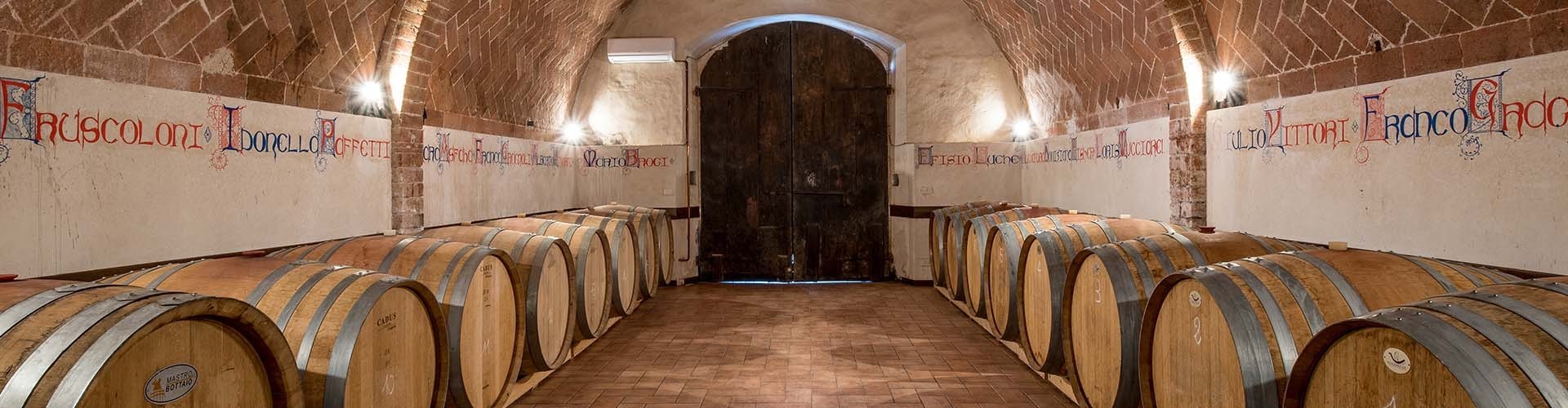
That of Brunello di Montalcino is a centuries-old history. Among the oldest wineries in the Sienese hills is Fattoria del Colle, where the lives of heretics, jurists, churchmen and winemakers were intertwined. Great characters, great passions and great wines in one of the most beautiful areas of the world, which keeps its traditions alive. The underground cave of Fattoria del Colle is described in the “Decimari” of the XII and XIV century as “Ermitorium S.Egidii de Querciola”. Today, that cave contains a very precious collection: the antique Brunello di Montalcino bottles by Donatella Cinelli Colombini.

Born in 1953, Donatella graduated in History of Medieval Art. In 1993 she founded the “Wine Tourism Movement” and invented “Open Cellars”, the day that in a few years brought wine tourism to Italy. Today she teaches wine tourism in the post-graduate Masters of three universities. In 1998 she created her own company, consisting of Fattoria del Colle in Trequanda and Casato Prime Donne in Montalcino. In 2003 she won the Oscar for best Italian producer awarded by AIS Bibenda and published the Wine Tourism Manual followed, in 2007, by the book Marketing of wine tourism. From 2001 to 2011 she was Tourism Councilor of the Municipality of Siena. Among her achievements the “urban trekking”, a new type of sports tourism that, from Siena, was exported throughout Italy. In 2012, she received the Vinitaly International Award and the following year was elected President of the Orcia Wine Consortium. In 2014 she was named a Knight of the Italian Republic and in 2016 she was elected National President of Women of Wine.

In short, the name of Donatella Cinelli Colombini is synonymous with excellence in the production of one of the finest wines in the world: not surprisingly, she is considered “La Signora del Brunello”. So let’s try to find out more about her story by talking to her directly.
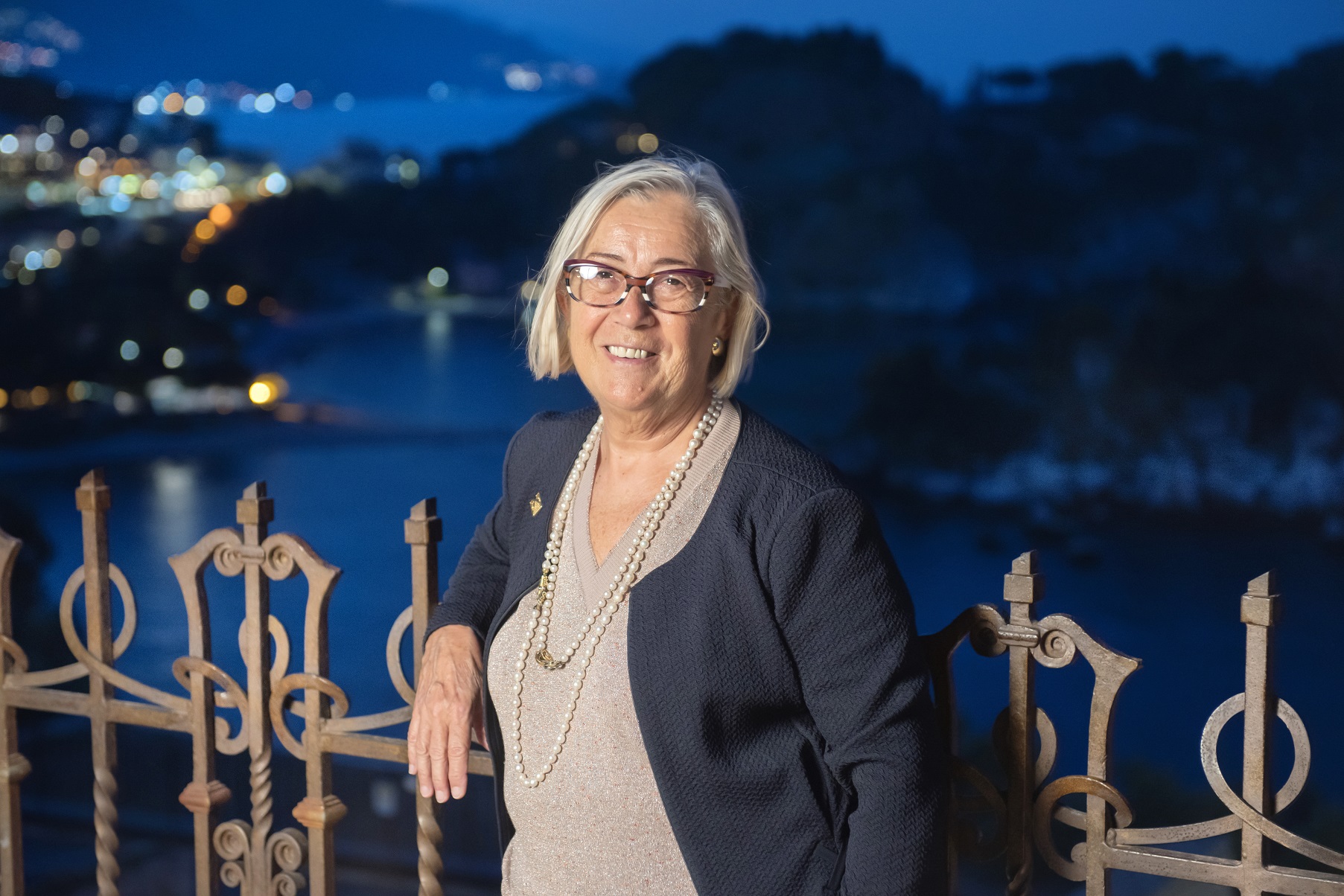
Born from a family of Brunello producers, Montalcino has always been your home. What makes this wine, and these places, so appreciated in the world?

Montalcino was the last “city state” with an independent government until 1559. It has a noble and courageous history and we are proud of being from Montalcino. It is the place in the world where the Sangiovese grape is best expressed and – a unique and extraordinary characteristic – it is able to give young, satisfying and harmonious wines, and wines of great aging, of extraordinary finesse.

Who drinks Brunello di Montalcino and in which countries?

The first market is the United States but the highest per capita consumption in the world is in Switzerland. More than half of the wine goes abroad and a 20% slice is bought and consumed on the spot by predominantly foreign wine lovers.

In 1993 you founded the Wine Tourism Movement and the “Open Cellars”, making a decisive contribution to the success of wine tourism in Italy. How important is this resource for the Italian economy?

Very very much! Tourism is a fundamental driving force of the Italian economy also in terms of currency revenues. Food and wine tourism contributes to the GDP for about 12 billion euros of annual business, and wine tourism alone for around 3 billion. It must be remembered that the agri-food delicacies are the first magnet of foreign tourists and even beat the artistic heritage in terms of destination Italy attractiveness. Moreover, for years they have been leading the list of things most appreciated by foreign visitors returning from our country. At this point we must ask ourselves how much the food & wine combination can give to the Italian tourism economy, and stop wondering what tourism can bring to our cellars.

In your opinion, what are the steps still to be taken to further develop national food and wine tourism?

I would talk about wine tourism, which is the sector I know best. There are three things to do. First of all, diversify the tourist offer in the cellars: those who continue to offer only guided tours, with an explanation of their name, bore. There are about 25 thousand wineries open to the public, 8 thousand of which are appreciated for their hospitality. In this panorama, it is essential that each company works to offer something unique and exciting. Second, the communication of the Italian wine tourism offer must be organized with a portal and national marketing actions, as for example France does. Third, it is necessary to have trained staff for wine hospitality, which must come from hospitality and tourism institutes: currently, wineries are paying for staff preparation, but that’s not good.
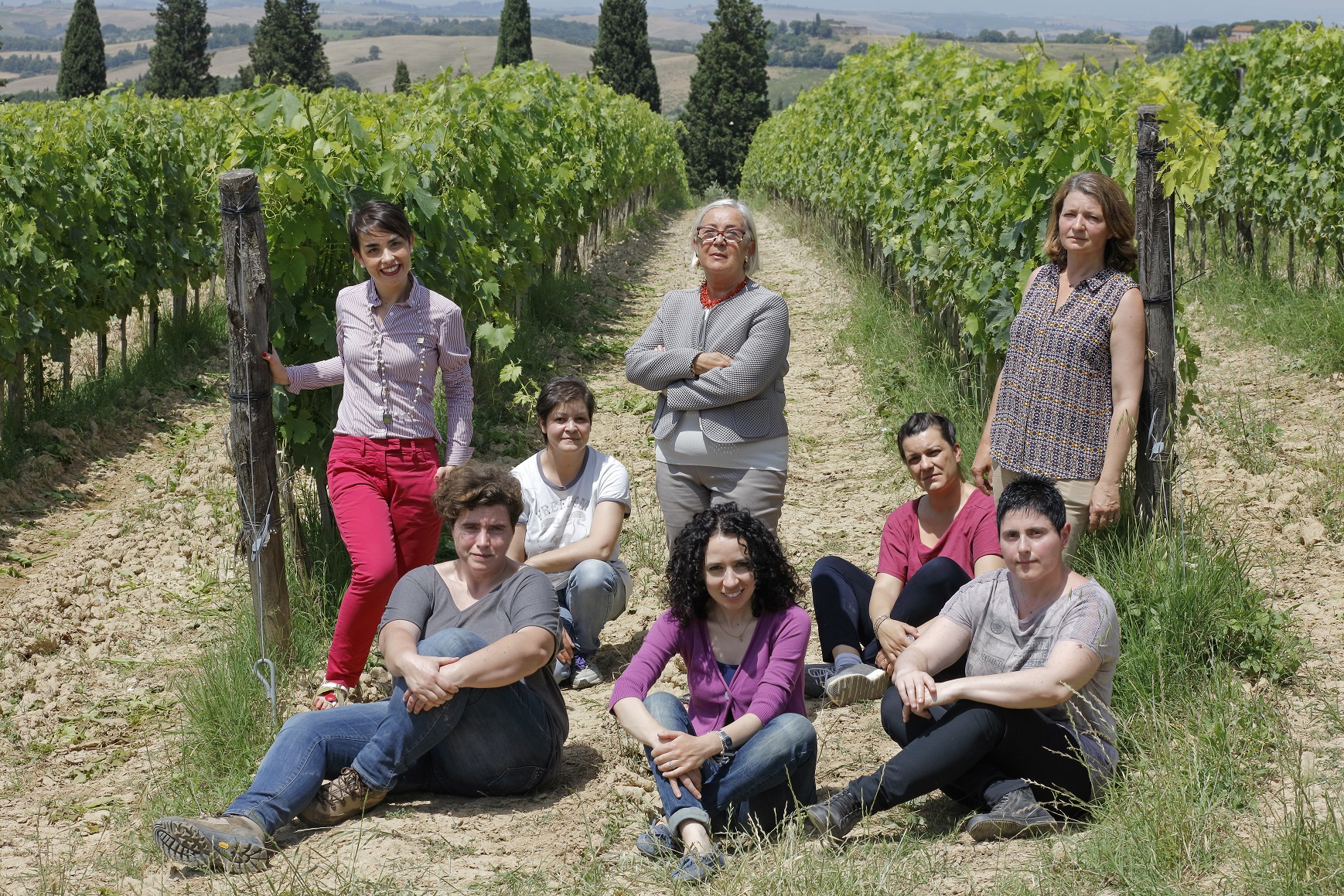
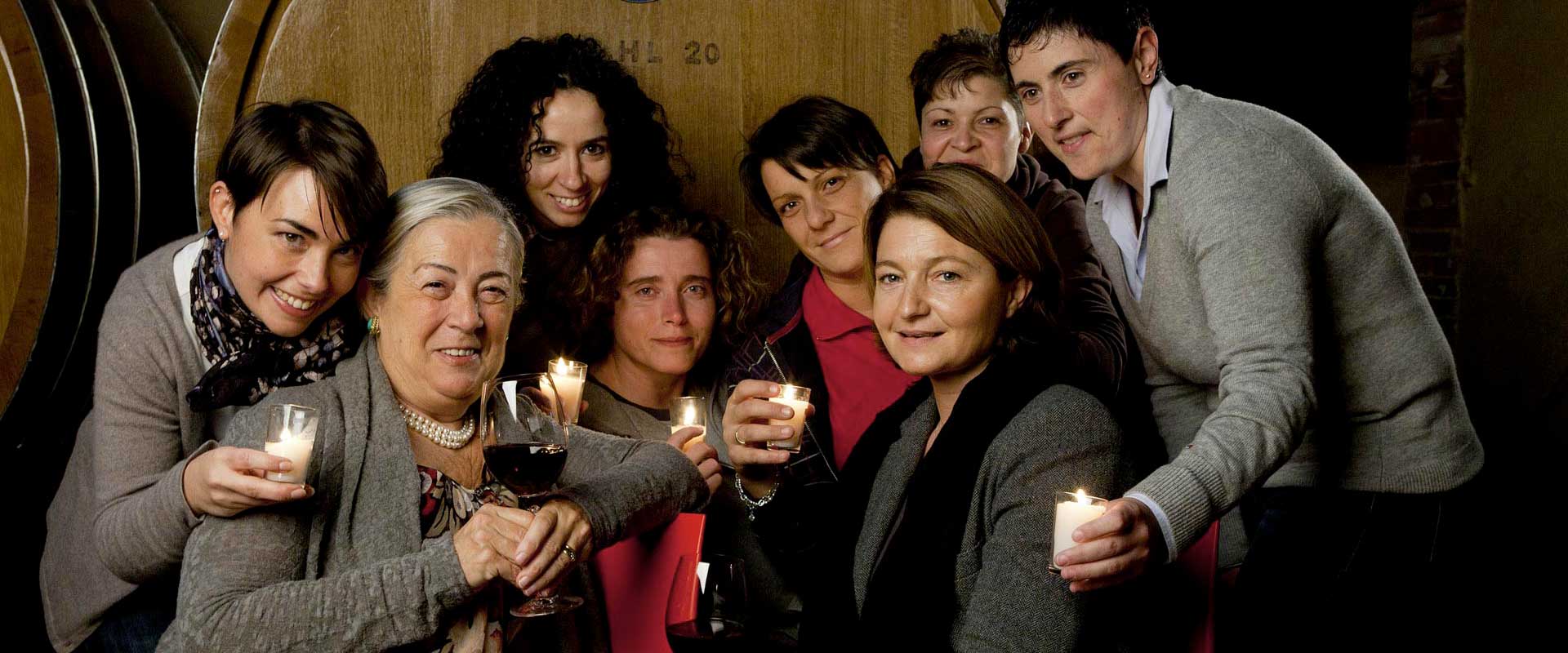
In 1998 you founded – in addition to Fattoria del Colle in Trequanda –Casato Prime Donne in Montalcino, the first Italian winery with women-only staff. How was the idea born?

When, in 1998, I left the family business, my parents gave me two estates to renovate and a small amount of Brunello, still in the barrel, to help me pay the first investments and start creating a commercial network. I needed a cantiniere to follow the maturation of this wine and I asked to the Siena oenology school, where the vice-principal told me: “it takes years of booking, they are very much in demand”. When, on the other hand, I asked for a woman winemaker, the answer was different: “we have a whole list, they are excellent students but the good cellars don’t want them”. I became aware of the existence of such profound discrimination as to be invisible and decided to do something to show that great wines need talent and passion, not muscles. From here, the “Prime Donne” project began with a winery managed by a staff of women only. The project was successful because, in 20 years, after replanting the vineyards and building two cellars, we now export to 39 countries around the world and the judgments of the international press about our wines are excellent.

Is it true that you have also launched a Brunello “barricaded for ladies”. Is the production of Casato addressed to a purely female market?

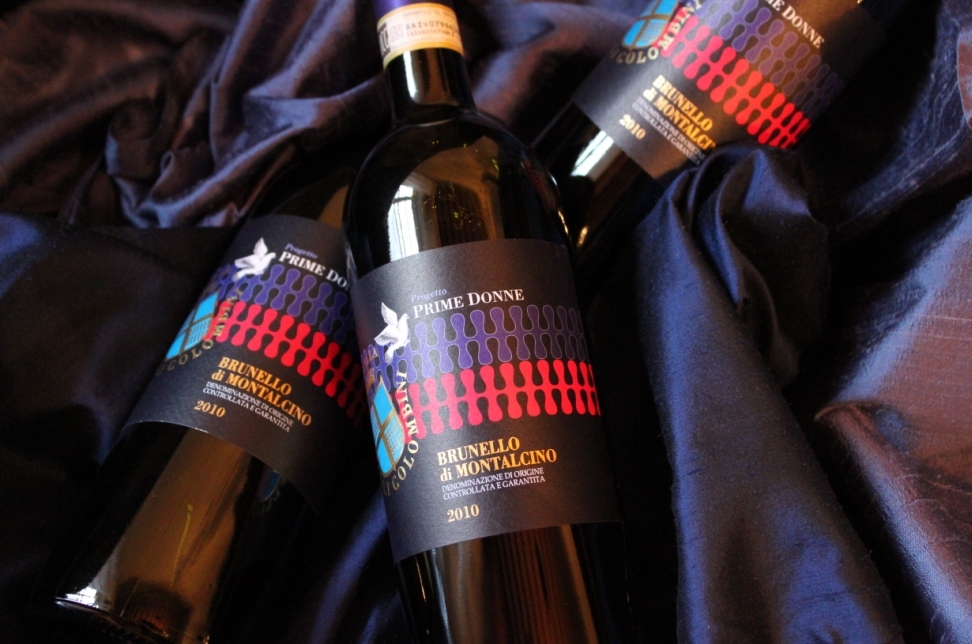
Actually, the Brunello Prime Donne does not mature in barrique, indeed it is a decidedly traditional Brunello, which often ages in large oak barrels or in 5-7 hectoliters tonneaux. It almost always comes from the same vineyard that is called Ardita and is at the highest point of the Casato Prime Donne. During the five years it spends in the cellar, there is a panel of 4 tasters who decide the barrel in which to make it mature and, finally, the blend between the various barrels. It consists of about 6 thousand bottles, produced only in the best years. The tasting panel is international and is composed of the Master of Wine Rosemary George, the German wine expert Astrid Schwarz, one of the best Italian sommeliers, Daniela Scrobogna, and the Master of Wine Madeleine Stenwreth, who has joined the group only lately. Brunello Prime Donne is very popular with female consumers, for its harmonious character and its silky tannins, but it has above all male admirers.

For over twenty years there has also been the Casato Prime Donne International Award. Who is it for?

The prize is divided into two parts. There are journalistic and photographic sections that aim to enhance those who divulge, with commitment, the territory of Montalcino and its wines. In addition, the award each year designates a “first woman” who is an example or a help to the female world. In recent editions, Sara Gama, captain of the women’s national football team, has won, and also Alessandra Ghisleri, a political scientist and pollster in a country like Italy, where politics gives little room to women. In short, these are women who break the mold and show the advantage of giving more space to women.

What was the best wine produced in your cellars over the years?

I believe that the last harvest, the 2019, is superior to any other previous one, but it will take five years to have this Brunello in the glass. Among the wines already on the market, my heart beats for 2010.
What food would you combine it with?

A chianino beef steak: a beautiful fiorentina cooked on the grill.

What do you like most about your job and what drives you to throw yourself headlong into ever new challenges?

I like the wine people, the courage with which they challenge the adversity of the climate, the creativity with which they invent new styles, the passion that they transmit to those who knock on the doors of the cellars … They are characteristics that I find in producers all over the world and that create vineyard friendships.
Are you working on any new ideas or projects?

Challenges are the spice of life and the engine of entrepreneurship. In a couple of days, construction will begin on the enlargement of the Fattoria del Colle cellars: 500 square meters in which to refine the bottles of still and sparkling wines, new vats in bare cement with fulling, to make the Cenerentola Doc Orcia as we vinify the Brunello. In addition, an “immersive” tasting room that will be a real surprise.

What interests do you cultivate in your spare time?

I studied History of Medieval Art and I have an irresistible attraction for the works of the 13th and 14th centuries. But my dream is to create a new type of religious, indeed spiritual, tourism where men and women of whatever creed can live participated experiences, which help them find serenity and a desire to build a better world. We are ahead in the study of the prototype and I hope that it will have the same success as my other achievements: open cellars and urban trekking.

Read the Italian version on Ciao Magazine
Images courtesy of Donatella Cinelli Colombini
A Boy Called Porro, each child is special, each child is loved

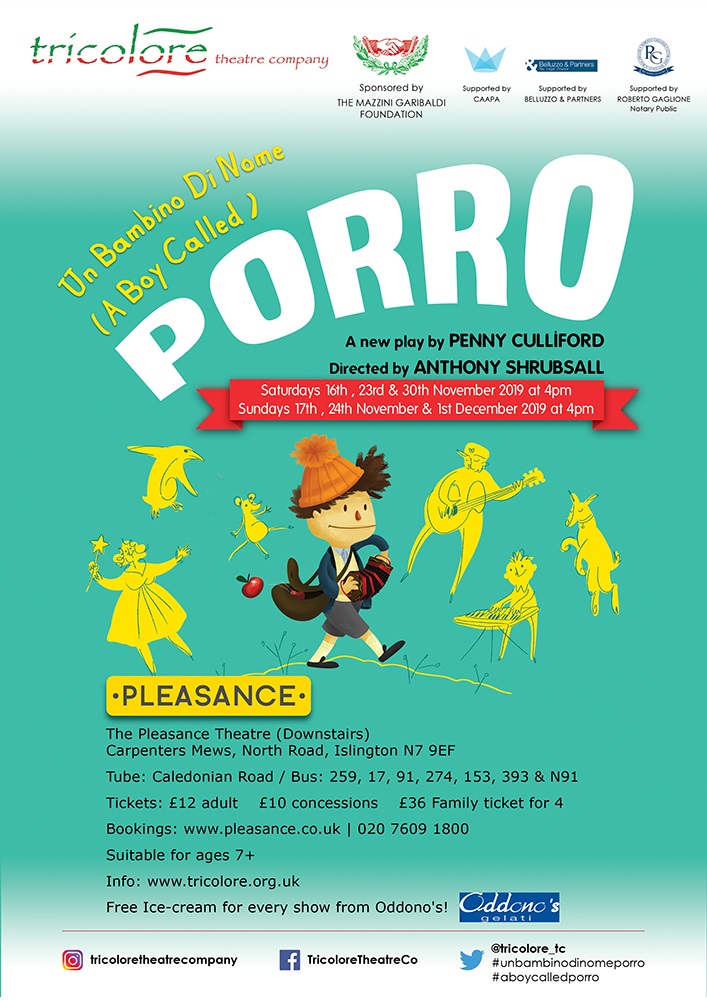
London – Un Bambino Di Nome (A Boy Called) Porro is Tricolore Theatre Company’s new magical bilingual play for children from 7-11 which premieres in London this autumn at Pleasance Theatre (Downstairs), Carpenters Mews, North Road, Islington N7 9EF.

On Saturdays 16th, 23rd, and 30th November at 4pm and Sundays 17th, 24th November and 1st December at 4pm.

The play, in English and Italian, features a life-sized puppet and live actors and tells a heart-warming story of a young boy’s journey from underdog to top dog as he travels through an enchanted world.  On the way, he meets a drowsy dormouse, a petulant penguin, a daring dog and a band of musicians who see the potential in the little boy whose hair is too vertical, whose ears are too small and who is always late.

Written by Penny Culliford and directed by Anthony Shrubsall, with original score by Stefan Potiuk, and with a cast of professional Italian and English actors, the play combines Tricolore’s expertise in appealing to English and Italian audiences, young and old, with captivating storytelling, energetic performances and innovative staging. Designed by Offie Nominated Alys Whitehead and Sound & Lighting by Offie Commended Chuma Emembolu.

Tricolore’s previous productions, all written by Penny Culliford, include Saffron Hill (also directed by Anthony Shrubsall), La Catena d’Oro (The Golden Chain) and The Gingerbread Man (L’Ometto di Pan Pepato) a bilingual play for younger children that toured to Rome.

Tickets are available from www.pleasance.co.uk 020 7609 1800

Price £12 adults, £10 children and concessions plus £36 for a Family ticket for 4 – includes FREE ice cream at every show from Oddono’s Gelati www.oddonos.com/

Bellavita Expo now proudly the UK’s largest Mediterranean food and beverage expo  

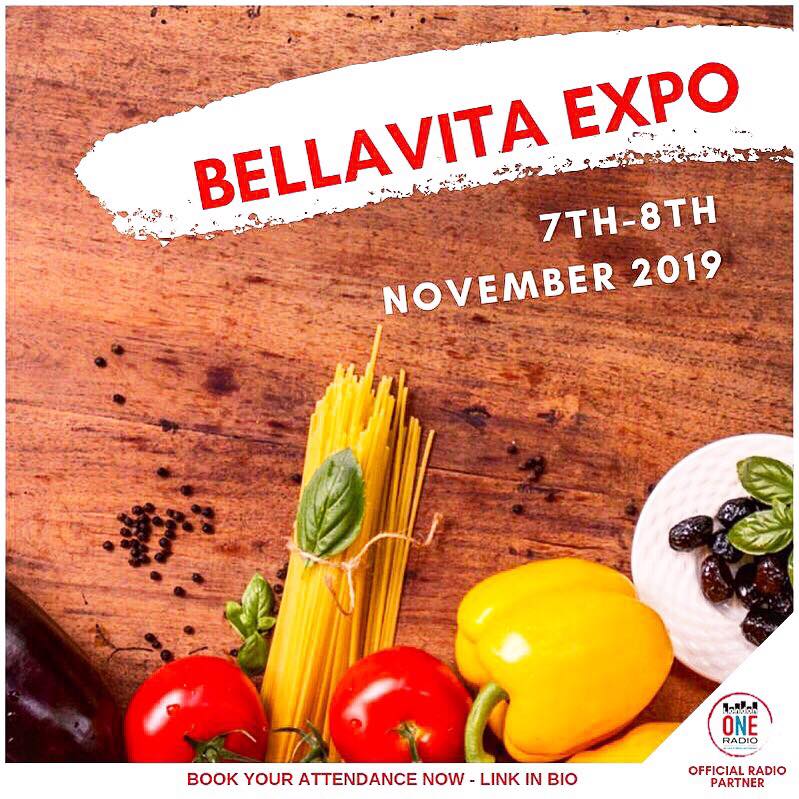
 – Bellavita Expo returns to London for its sixth year, featuring a massively expanded and diverse showcase of the finest food and beverages from not only Italy, but across the wider Mediterranean region.

From Thursday 7th – Friday 8th November 2019, Bellavita Expo will once again take place the Business Design Centre, in the heart of London’s Angel, for its revamped flagship event following a year of successful exhibitions across the world, including Amsterdam, Warsaw, Hamburg, Chicago, Toronto, Mexico City, Bangkok and China.


2018’s event in London was an immense success, continuing the exponential growth of the expo year-on-year. Over 6,000 professionals were in attendance, over 1,000 new products were exhibited and over 300 top buyers judging the annual Bellavita Awards. 92% of guests reported that they intend to revisit, and 90% believed the Expo stood out compared to similar events.


This year, Bellavita Expo is set to exceed even this, with an exhibition introducing visitors to a far greater range of quality food and drinks from the likes of Spain, Croatia and Slovenia. From iconic brands to lesser-known artisanal wonders, over 350 exhibitors will be in attendance, presenting an expansive range of 10,000 individual products, including 1,200 making their debut in the UK market. Among Bellavita’s newest offerings will be products from 85 Spanish companies, providing visitors with more variety than ever before.


Though the scope of the event has greatly expanded, all the hallmarks of the carefully selected products on display remain – attention to detail, authentic flavours and high-quality ingredients, in everything from essentials such as fresh dairy goods and extra-virgin olive oils, to gluten-free, vegan and vegetarian alternatives.


More than just a trade show, Bellavita Expo is also dedicated to providing those in attendance with a day full of the highest quality content and business opportunities – Aldo Mazzocco, CEO, says: “In partnership with industry leaders Veronafiere S.p.A. (Vinitaly) and Fiere di Parma S.p.A. (Cibus), Bellavita Expo will offer guests the chance to engage directly with producers and experts of the tradeWe are enhancing our visitors’ experience with a wider selection of Mediterranean products while also working with the most respected opinion leaders in the trade to bring to buyers the most up to date news and insights, live industry debates and exclusive product tasting”.


Moreover, Bellavita Expo will continue to play host to networking opportunities for the copious professionals in attendance from the food and beverage industry, giving visitors the chance to forge critical connections and partnerships. Buyers, distributors, restauranteurs, sommeliers and head chefs will here have the chance to confer with Mediterranean producers and discover the key trends in the F&B sector.


Five academies, each respectively dedicated to Food, Wine, Beer, Mixology and Pizza, will host a series of in-depth talks, debates and masterclasses exploring both current and upcoming trends in the industry, led by 84 key speakers from throughout the sector. “Bellavita is always a huge opportunity to learn and find new brands. I cannot wait to be part of it again” says Giorgio Locatelli, Michelin-starred chef and judge on MasterChef Italia, who will be returning to the Bellavita stage this year to share his industry knowledge, among other speakers.


BeWine, Bellavita Expo’s wine academy, will host exclusive wine tasting and food pairing masterclasses, with not-to-be-missed Mediterranean organic, volcanic, and sparkling wines with Masters of Wine and WSET-qualified sommeliers. Angela Mount, event ambassador and wine presenter, says Bellavita “truly represents the spirit of Italy, and the quality of the produce both in food and wine, and is now attracting impressive audiences from all over the world. I am delighted to be working with them again.”


Among the newest features of this edition is the Private Label Zone, an area entirely dedicated to buyers from the retail and HoReCa sector seeking own-labelled products. A concierge will be on hand to assist buyers to plan their visit, schedule meetings with producers and provide samples.


Further features and experiences will be announced in the lead up to the event, ensuring that Bellavita Expo continues to be a vital date in the calendar of any F&B professional with a passion for the very best that the Mediterranean has to offer.

Libiamo, the online club of the best Italian wines & spirits in UK

London (Francesco Pappaleo)  – Are you in the UK but you miss your winery weekend? Libiamo is your answer: the online wine club that specialises in high-quality Italian wines & spirits.

Libiamo was born in 2014 owing to a collaboration between Italian and British partners who share a passion for the Made in Italy. Since that time Libiamo aims at establishing a community of Italian wine and food enthusiasts in the United Kingdom, taking inspiration from the famous toast in Giuseppe Verdi’s renowned opera La Traviata: “Libiamo nei lieti calici!” (“Let’s drink from the joyful cups”).

Everyone can have access to it and can be part of a new community to meet new friends by sharing the same interests.

By visiting the website you can discover a wide range selection of wines and Italian spirits that you can try by buying it online.

However, Libiamo is more than an online wine store: the club proposes a new approach to the Italian wine and food tradition by telling the cheerful stories hiding behind the wines and their producers, by suggesting the best food and recipes to pair the wines with.

Also, the club is promoting new tours through the most suggestive Italian vineyards and by organizing the most innovative wine tastings. So Libiamo gives you the chance to live the Made in Italy in total, by discovering more about the Italian culture and lifestyle. 

For this reason, Libiamo is a gastronomic philosophy, an innovative approach to wine enjoyment with friends, a journey through the history of Italian wine-making and a chance to visit Italy and her amazing landscapes.

Regarding the spirits, Libiamo features an outstanding selection of premium quality artisanal spirits from legendary Italian producers: grappa, vermouth, gin, nocino and limoncello. The secrets of mixology are revealed to all our friends.

To discover more visit the website libiamowines.co.uk and enjoy the true Italian lifestyle!

No more deadlines. Is it really the end? The final goodbye is near for the UK

London – the final date for the UK to leave the EU – is here within two months! The Hungarian composer and entrepreneur’s Brexit-inspired music has never been more actual then now!

The British exit if the European Union is the most significant economic agreement between major economies since the Second World War and much about the forthcoming process of transitioning out of the EU has no precedent. Both the UK and the EU will be significantly changed by what is about to unfold economically, socially and in every aspect of our life.

It is no wonder that this historical event urges many battels of opinion, emotional turmoil and even inspire artists who feel the urgent need to express the opinion of hundred thousand of people through their art! Mr Joseph Felföldi Hungarian composer and entrepreneur mogul, the founder of a Hungarian food company was one of the first artist who responded to this life changing significant act of the UK.


In the immediate wake of the 2016 shock UK decision to leave the European Union, Hungarian film and music producer Joseph Felföldi felt moved to compose a musical response entitled “Brexit Ballet”.


The composer has strong business links to the UK so he wanted to express the mixed feelings of Europeans that he felt were missing from the discussion. Felföldi’s music video was uploaded to YouTube 2 years ago and gained almost a million views. More than half of the views came from English-speaking countries, with most of the rest from European Union countries.


Mr Felföldi feels the near-one-million views and countless comments have vindicated his video project and he hope it will continue to draw attention to the importance of international political awareness as the world enters an ever more turbulent period of change.


No-deal Brexit has never loomed larger than in the current moment. Boris Johnson has said that Britain will leave the European Union on 31st of October. His entire political strategy is based on the credibility of his threat to follow through, regardless of whether he has come to an agreement with the remaining 27 members.


A no-deal Brexit means the UK would leave the European Union immediately on 31stOctober 2019, and there would be no agreements in place about what the relationship between the UK and the EU will be like in future.This includes special agreements about how UK and EU companies could work and do trade with each other. A lot of companies have said they are worried about not knowing exactly how their businesses will work if there is a no-deal Brexit at the end of October.


“ I sympathise with the people of the UK, I respect their their decision to leave the EU”  Mr Felföldi says, “ I would even go further and say that I don’t think the British people’s vote to leave was a mistake, but that the leaders have made a mess of it since.”


Joseph Felföldi’s song is inspired by the English ballad tradition, with the lyrics identifying themes that Europeans associate with Britain: A misty island, at once nearby and distant; a proud seafaring nation with a long history; and a complex destiny intertwined with that of Europe. Out of respect, Felfoldi sings the lyrics in English, himself.


The choreography is arranged by Zsuzsa Laczó of the Csokonai Theater in Debrecen, with dancer Kitti Gall playing Britannia on a bare stage. The narrative evokes a combination of admiration, beauty, trauma, and sorrow.


“With our eyes on Britain now, it creates an opportunity for self-reflection and wider reflection, too: Where we come from, where we are now and where we are heading to politically, physically and spiritually. These are significant questions we should contemplate and we should act if we don’t like the picture.” – explains Felföldi.”


Felföldi is a Hungarian businessman and founder of a candy company which exports across Europe and the world, with the U.K. representing one of its strongest partners. He also writes and produces songs and poetry. He lost one of his eyes in an accident when he was 14 years old. “At this time, his sister gave him his first guitar; his affinity and commitment to music, literature and arts has accompanied his every waking moment since,” the statement says.

Discovering Eton College

London, Maria Vittoria Bognetti

Eton College was born in 1440 from by King Henry VI who desired to found an institution that would shape and educate the next british ruling class in the English Language, aiming at creating a natural ‘bridge’ between high school and university education level. It started as a charity school which provided free education for seventy poor boys in Windsor, Berkshire, who then continued their scholastic career in the exclusive 70 colleges between Oxford and Cambridge, leading universities in the world.

For the first time, Eton College opened his doors to an Italian production team, London One Radio, allowing us to perceive the unicity and the peculiarities of this institution in its whole beauty. Dr. Marco Liviero has been the voice who guided such tour in the numerous rooms of the college, by providing insights on what distinguishes them from other boarding schools. He explains that Eton College was love at first sight: he visited the school during an academic trip, and already passionate about the British culture, theatre and Shakespeare, he pictured himself in this institution. A dream that came reality as, for the past 19 years, he has been the Professor of English Literature at Eton College.


Eton is not like any other boarding schools, students are developed in toto. As Dr. Marco Liviero explains, “Excelling in school is not enough. Being passionate is an essential quality, and what is mot important is to be willing to invest effort and time in these”. The academic part is indeed just a small component of the education that student receive from Eton: they develop their passions, initiative spirit, and sense of responsibility through the many extracurricular activities from sport, to music and theatre.

The Farrer theatre, the creative heart of Eton College, is one of the most magical places in the boarding school. And the very essence of theatre allows Eton students to grow as human beings, touching the many spheres of an inclusive development: it allows to “understand who you are and who you can become”, key elements in the receipt to disclose the full potential of each student. It is not surprise that many brilliant actors passed from here, from Hugh Laurie, the Dr. House protagonist, to Eddie Radmayne, who recently won the oscar for his interpretation of Stephen Hawking in the Theory of Everything.

Eton’s traditions have been lasting for more than six centuries, and it is the combination of such solid and extraordinary background, academic excellence and a constant innovation that allows this school to be the most prestigious boarding school in the United Kingdom, if not the world.

“The school master’s skill is understanding the different talents of each pupils”, a quote by Quasiliano, found in a fresco in the Head Master Chamber, the office of the Head Master in XIII century, well embraces and expresses the spirit of this brilliant institution.