What do Londoners prefer about Italy?

London (Branciforti Vittorio, Cuius Iuculano Stefano, Cusumano Elisa, Di Gregorio Denise, Grimaldi Giacomo, Gulizia Erika, Morretta Miriam, Palumbo Elisa, Scalogna Francesca, Scalzo Giuliana, Scuto Noemi, Vassallo Alice) – It is known that Italy is famous for wonderful landscapes and beautiful places. That is why a lot of foreign people visit the country. But do they really know Italy? And which are their favorite places? The guys of London One Academy tried to discover it for us. 

The project started on 7th August 2018 and the people involved in it were divided into three groups: the “speaking-group”, which had to choose what to ask people for an inquiry about travels in Italy; the “excel” one, which had to make graphics and statics; and the “marketing-group”, which had to promote the radio.

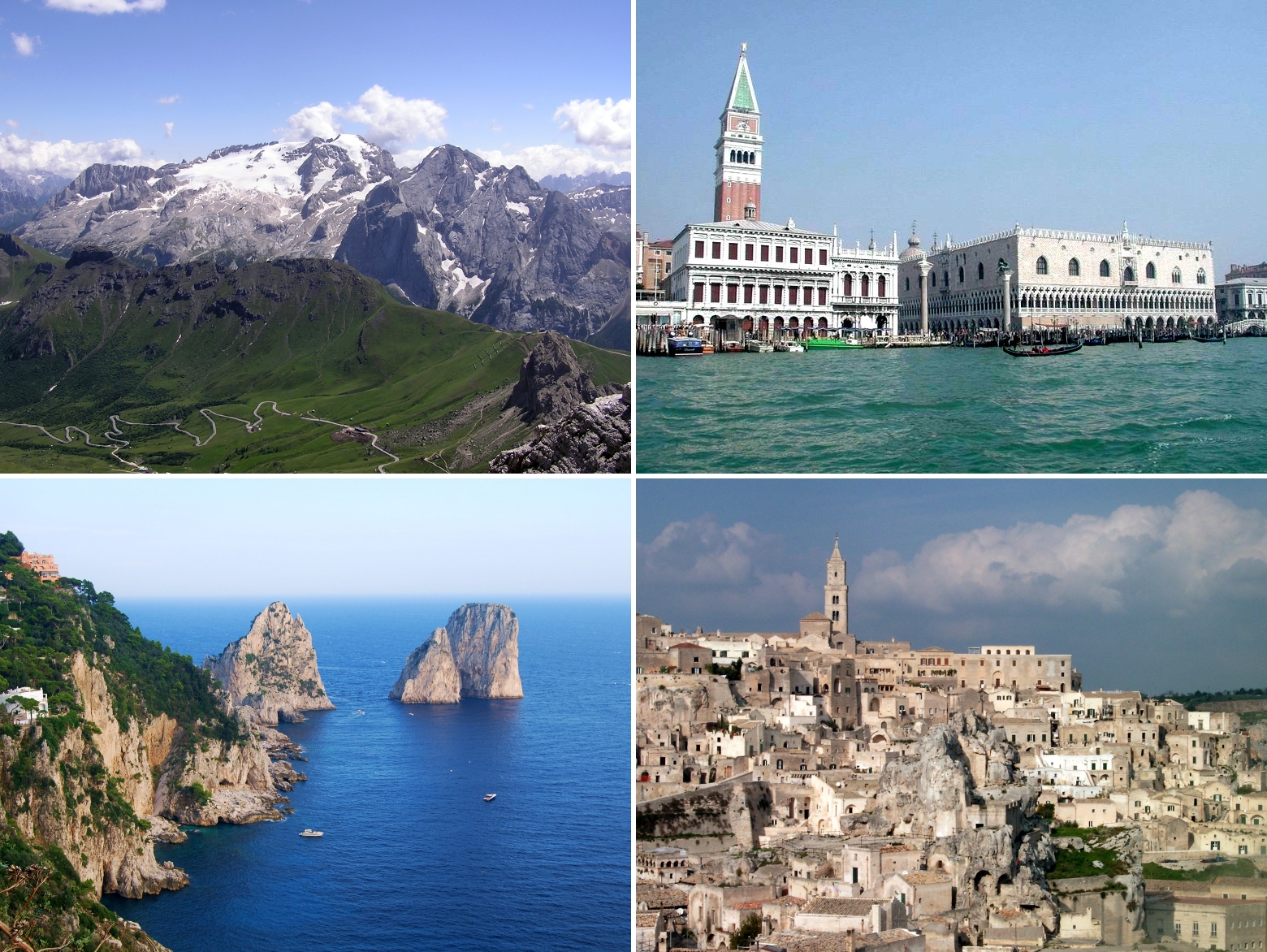
Then, the groups became four, each one composed of three students. They had to interview people around London and every morning they collected more than 150 interviews. The main questions were: “Have you ever been in Italy?”. If yes, “where have you been?”; if no, “ where would you like to go in Italy?”. The last question was “When you travel, do you prefer to visit museums or go to the beach?”. Amazingly many people have already visited Italy, especially Rome, Florence, Venice and Naples.  
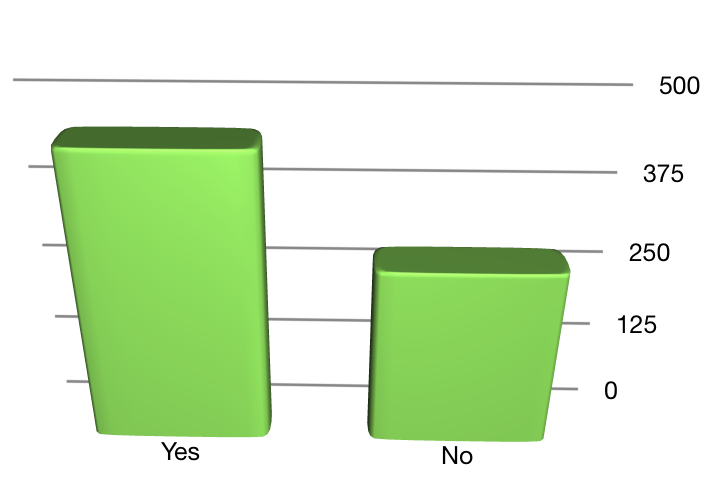
 

Everybody was very excited to talk about Italy and Italian food, for which we are very famous abroad. Thanks to the interviews, the groups found out that foreigners love the Italian language; they would like to learn it or they are already learning it. On the other hand, they met people who have never been in Italy. However, they would like to go to the capital, which is Rome, and the most part would like to visit Tuscany and Sicily, too.

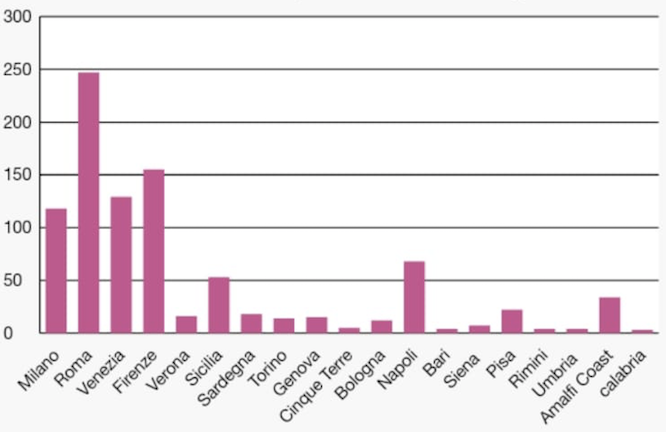
The other group worked with Excel, they created a graphic with the information they collected every day in the interviews. So they showed the rate of answers and they made a graphic for each question with the percentage.

In the first graphic, there are the most visited Italian cities: at the top, there is Rome (27%), Florence has the second position (17%) and Venice has the third position (15%). There are also destinations that are not so famous, but people would like to visit them, such as Sicily (5%), Sorrento (5%), Pisa (2,6%) and Sardinia (0,9%).
  

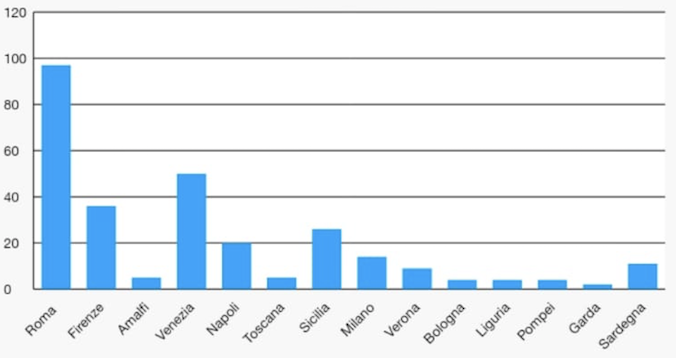
In the second one, the Italian cities in which people would like to go: even in this case, Rome (36%) has the first place, probably because it is the capital, Venice (20%) follows it and Florence (11%) is the third one. Many people also answered Sicily (9%) and Verona (6,7%).  
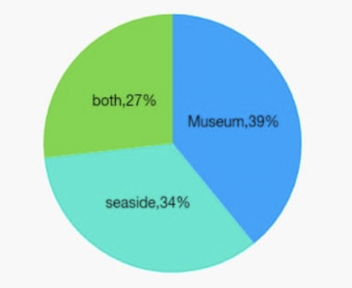
The last graphic contains the percentage of people who prefer museums (39%), seaside (34%) or both (27%). 
Thanks to the data collected, it is quite clear that people from every country of the world love Italy, its history, language, culture and obviously food. This made the students who work at this project very proud of their Italy, especially of their Sicily, which is also very popular all over the world.

Brexodus is real: many banks are leaving United Kingdom because of Brexit

London (Giulia Faloia) – Brexit brings Brexodus. More and more banks are now leaving UK due to the abandonment of European Union.

According to the Financial Times, Treasury and Bank of England are “at loggerheads” over City of London regulation after Brexit.

Chancellor Philip Hammond said he wants to keep Britain closely aligned with the EU’s rules to ensure maximum access to the European market. However the Bank is fearful of any compromise that would leave it as “a rule taker”.

There are different opinions about the kind of relationship between the two sides. According to the Daily Telegraph, they are “very, very bad”, while an unnamed Treasury source tells the Times that the department has a “very good” working relationship with the Bank.

It’s pretty clear that the situation of banks and their employees – as much as their clients – is quite critical, especially if there will be an Hard Brexit.

The Minister Dominic Raab has recently warned people about the possible scenario after a no-deal. In fact according to him customers could be faced with increased rates and major precessing times for euro transactions. He also added that payment costs by credit card between United Kingdom and European Union could increase.

ilsole24ore.com

According to the Minister, there could be problems for British citizens living in countries belonging to European Union. In fact, in case of an Hard Brexit the same customers could loose the possibility of accessing  deposit and loan services and insurance contracts.

British banks have already started to leave Great Britain and probably more and more will follow.

One of the greatest and latest blow to the British economy was the one by Hsbc. In fact the bank has announced that its activities will be transferred to Europe, in France. The seat in London will loose the control on seven European branches: Belgium, Czech Republic, Ireland, Italy, Luxembourg, Netherlands and Spain.

The list of the banks that will leave United Kingdom is destined to get longer. The destinations will mainly be Germany, France, Spain, Ireland and Denmark.

The match between London and Bruxelles is still opened and the possibility to end it with a no-deal is more and more close. Meanwhile Brexodus is real.

Windsor Castle will host an amazing exhibition of the main clothes used in the Royal Wedding

London (Giulia Faloia) – Some time passed since 19th May 2018, the day of the Royal Wedding. Despite Meghan Markle and Prince Harry got married several months ago, they are still giving the chance to talk about the ceremony. 

In fact some objects used for that occasion will be available in an exhibition at Windsor Castle this October.

Meghan Markle’s stunning Givenchy wedding dress will be exposed as well as Queen Mary’s 1932 diamond and platinum bandeau tiara that was lent to the Duchess of Sussex by the Queen for the first time.

Meghan’s breathtaking wedding dress that was designed by British designer Claire Waight Keller will on display at exhibition titled A Royal Wedding: The Duke And Duchess Of Sussex.

nytimes.com

Every lover of fashion and weddings in general will have the chance to admire the details of the silk gown, five-metre long train.

It will be possible to see also the stunning veil that is embroidered with the flowers of all 53 Commonwealth countries and Wintersweet and a California Poppy.

Clare revealed that Meghan told her from the start exactly how she wanted to look at her Royal Wedding and that it took no less than eight fittings to create the final dress.

She added: “We very quickly agreed on the perfect dress. I wanted a modern and fresh silhouette while respecting her style” and, talking about the entire job, she said that it was “an immense honour to have worked closely with Meghan”.

Clare herself also revealed that the Duke of Sussex congratulated her after the wedding saying: “Oh my God. Thank you. She is absolutely magnificent”.

The Royal Collection Trust told Express.co.uk that Meghan’s second stunning dress of the evening that was designed by Stella McCartney will not be part of the exhibition.

thebusywomanproject.com

A copy of the Duke of Sussex’s Savile Row-tailored uniform will be on display.

Prince Harry’s outfit was a specially commissioned frockcoat uniform of the Blues and Royals was made by Dege & Skinner. Plus the uniform will be paid with trousers made of blue and black wool barathea.

The exhibition will start at the wedding site of Windsor Castle before making its way to Holyrood Palace.

It will be at Windsor Castle from October 26 to January 6, and at Holyrood Palace from June 14 to October 6 next year.

The Association Fiorentini nel Mondo celebrates Michelangelo

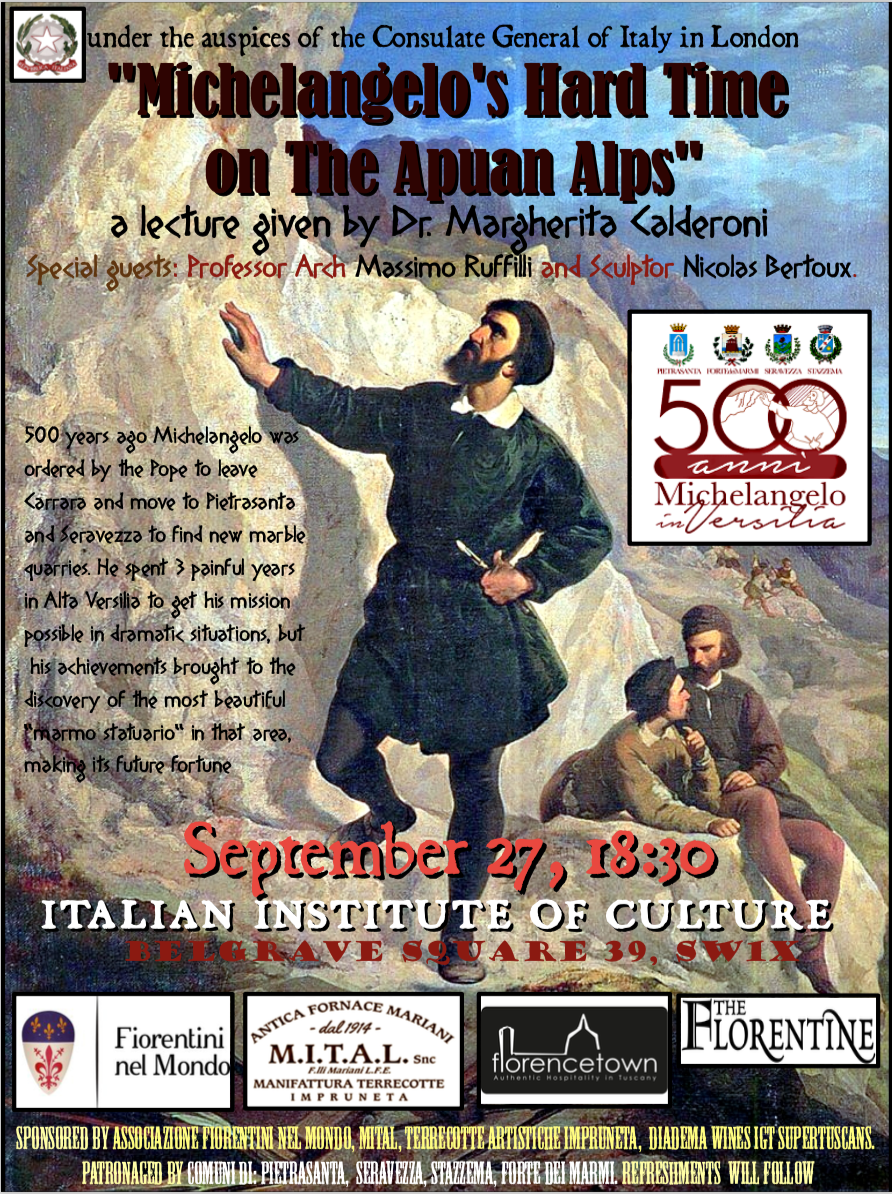
London (Caterina Moser) – The event “Michelangelo’s Hard Time on the Apuan Alps” will be on 27th September at the Italian Institute of Culture in London.

Once upon a time… It is not a fairy tales. It is a significative part of Italian and Tuscany history. 500 years ago, Michelangelo Buonarroti was sent to Alta Versilia by Pope Leo X. It was a difficult time which the italian sculptor considered a failure, but that was the origin of the marble industry in Alta Versilia. 

Under the auspices of the Consulate General of Italy in London, The Association Fiorentini nel Mondo presents “Michelangelo’s Hard Time on the Apuan Alps”. The event will take place at 18.30 in Belgrave Square 39, where Institute of Culture in London is based. 

The journalist and historian Margherita Calderoni – Proconsul in Uk for the Fiorentini nel Mondo Association – will talk about the time in which Michelangelo passed in Alta Versilia and the origin of the marble industry in that area. 

The event will have the contribution of Professor Massimo Ruffilli from Florence, expert of the San Lorenzo façade complex story and promoter of a project involving the Michelangelo design for it. There will be also another special guest: Sculptor Nicolas Bertoux, owner of a historical marble laboratory and founder of ARKAD, the cultural foundation in Seravezza recognized for their world-class capabilities as an innovative, delivery focused transformational learning organization.

It is always a good reason to talk about and remind Michelangelo. In this case, the 4 historical Communities of Verisilia – Pietrasanta, Seravezza, Forte dei Marmi, Stazzema – will celebrate Michelangelo’s presence on their territory. 

500 years ago, Pope Leo X ordered Michelangelo Buonarroti to excavated marble in Alta Versilia for the façade of San Lorenzo in Florence. He had to leave his beloved Carrata and find a new quarries. 

Michelangelo tried to oppose to the papal decision, in vain. Indeed, there was an economic reason: the Capitanato of Pietrasanta was under Florence influence and so the marbles from that Apuan districts came for free. 

His life in Alta Versilia was dramatic. He was a sculptor, a painter and an architect. Now, he had to improvise himself as road worker and quarryman also. He spent three years of hard working declaring “I am the most unhappy man in the world”. He faced the asperity of places and the rusticity of the locals.

In one of the many letters to his brother he declared regarding the incompetence of the local workers “It looks like having to resurrect the dead when I try to tame these mountains or to instill skills in this country”. 
Even if he was sick and fed up, he kept working and snatched marble from the mighty “Altissimo”. And it wasn’t easy. In those three years among technical problems and personal worries from Leo X, he complained about lack of collaboration and money. 

However, he carried on and he found splendid “marmo statuario” on Monte Altissimo. He also built a road to the see for shipping it to Florence. 

A failure and a waste of money. Leo X discharged Michelangelo in 1520.

In reality, what looked as a failure and a waste of money was discovered as a resource. Years later Granduke Cosimo I guessed the potentiality of that area and continued Michelangelo’s deed. He built a gorgeous Villa in Seravezza, completed the road from Monte Altissimo to Forte dei Marmi and paved the way for the marble industry in Versilia. 

Michelangelo left an significant mark in Alta Versilia and – after 500 years – it is important to celebrate him.

The event is under the auspices of the Consulate General of Italy in London, under the patronage of the Comuni Pietrasanta, Seravezza, Forte dei Marmi, Stazzema. With The Florentine newspaper as media sponsor, the event is sponsored by Fiorentini nel Mondo cultural Association, Mital – artistic terracotta factory and Florencetown – cultural tours operator. 

Cheese and wine reception will follow, to toast to Michelangelo with the renown Diadema IGT wines from Tuscany. 

Renzo Piano, an Italian genius who loves London

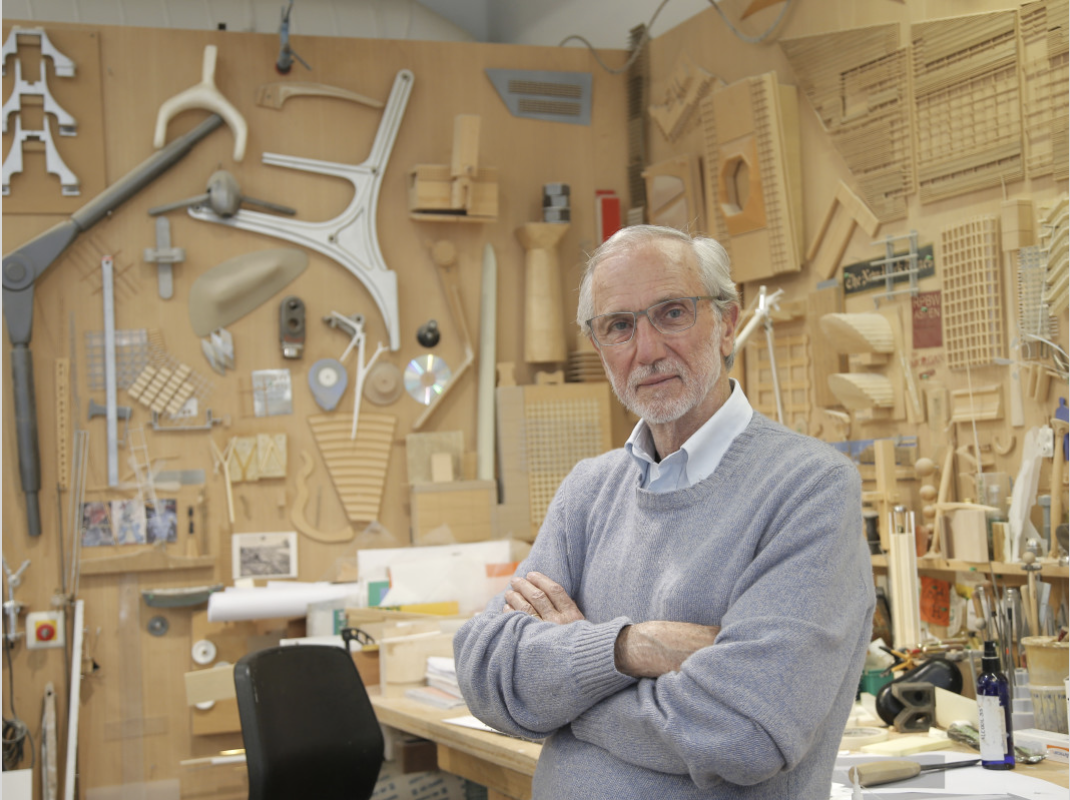
London (Giulia Faloia) – Renzo Piano is one of the greatest Italian talents who has became famous also abroad, in the most famous cities of the world such as Paris, Oslo, New York, Tokyo and London. 

That’s why London will host the architect on the 15th October in the Royal Academy, Piccadilly. He will talk about his work, philosophy and life.

Renzo Piano started to work in Italy and he achieved the first, great assignments there, such as the Triennale in Milan, Olivetti in Turin and the Italian stand for the Expo in Osaka.

He got the first work abroad in England, when he was 31. In fact he was one of the author of the Grafton Centre in Cambridge.

cinquecosebelle.it

Following the chronological order, it’s impossible not to talk about his most famous building in London: The Shard, the highest skyscraper in European Union.

Piano’s building is in Southwark – a London’s neighborhood looking out onto the Thame – and it is 310 meter tall. It has the shape of an irregular pyramid and it is completely covered by glass.

cinquecosebelle.it

The entire work costed 435 millions of pounds, more than 560 millions of euros. Inside the building you can find 72 habitable floors and a total of 87.

In addition the skyscraper has became one of the most recognizable referring points of London. In fact you can easily see it from every corner of the City and perfectly incorporated in it, putting together the ancient and the modern soul of London.

The beauty of Renzo Piano’s works is also in their diversity. Compared to The Shard, Saint Giles Court – or Central St. Giles – is a completely different building and its colors are the protagonists.

cinquecosebelle.it

This is a group of buildings between Covent Garden and Bloomsbury, with different highness, position, light effect and – especially – colors. The entire project involves 11 shops and restaurants and 109 flats. Furthermore inside the compound there is a 2000 square foot square.

In 2014 The News Building was opened and it replaced the old name of London Bridge Place. It seems the younger brother of The Shard, since they are so closed and it was built  to counteract the older building. In fact The News Building is also called “The Baby Shard”.

cinquecosebelle.it

The official name is due to News UK, such an important British editor that reports to News Corporation by Rupert Murdoch. In fact the major press affiliations controlled by the society are in the buildings, such as Wall Street Journal, Times, Sunday Times, The Sun and the offices of the editor HarperCollins.

In 2013 they started a project that hasn’t been finished yet: The Fielden House. La “house” should be in St. Thomas Street, incorporated with the place and linked to The Shard and the News Building.

cinquecosebelle.it

The project includes a 26 floor tower, higher than the News Building, but less wide. It should have 150 flats that will be mainly inhabited.

Every Architecture’s lover in London can’t absolutely miss the opportunity to meet Renzo Piano next October. 

Training vessel Amerigo Vespucci comes back to UK

London (Giulia Faloia) – The Italian Training Vessel Amerigo Vespucci will be back in Portsmouth from the 24th to the 27th of August. During the 26th of the same month people will have the possibility to visit the ship.

The Amerigo Vespucci is  “the most beautiful in the world”. She earned this title thanks to the American aircraft carrier USS Independence that sailed the Mediterranean in 1962. The Independence was traveling the sea when the Amerigo appeared on the American radar. The Italians told their identity – as usual when two military vessels meet – and the Independence crew answered: “You are the most beautiful ship in the world”.

spiccandoilvolo.com

Amerigo Vespucci is also the most ancient vessel of the Italian Navy: she was built in 1931 and she turned 87 this year. She’s now working as a school ship for the young students who have to learn the art of sailing. In particular they practice in seamanship, navigation, operation of drive systems and auxiliaries, management of logistics, administrative and medical issues. 

As any other Italian ship, Amerigo Vespucci has her own motto that values the vessel and encourages the crew: “Non chi comincia ma quel che persevera”. This sentence is attributed to Leonardo Da Vinci and it is referred to the strict formation of the future sailors. The motto means that the point isn’t starting the route but completing it successfully.

spiccandoilvolo.com

Amerigo Vespucci carries out two kinds of activity: training campaigns for Naval Academy cadets and showing-the-flag in support of national diplomacy. She began her career as Training Ship for the Naval Academy cadets a short time after her creation. 

From 1931 to 2005 – in addition to many short cruises around Italy – she has carried out 71 training campaigns in the Mediterranean Sea, Northern Europe and Atlantic Ocean. Furthermore in 2002 and 2003 she sailed around the world, spending several months in New Zealand for the America’s Cup. 

spiccandoilvolo.com

Therefore if you are in Portsmouth or nearby you can’t miss the opportunity to visit this awesome, beautiful vessel. From 1 p.m. to 4 p.m. you will have the chance to try the experience of getting in a real Navy’s ship, “the most beautiful in the world”.

Homelessness and Rough sleeping. The Government is looking for solutions

London (Giulia Faloia) – Theresa May’s Government is going to use £100m trying to solve the problem of many people living on the streets of London.

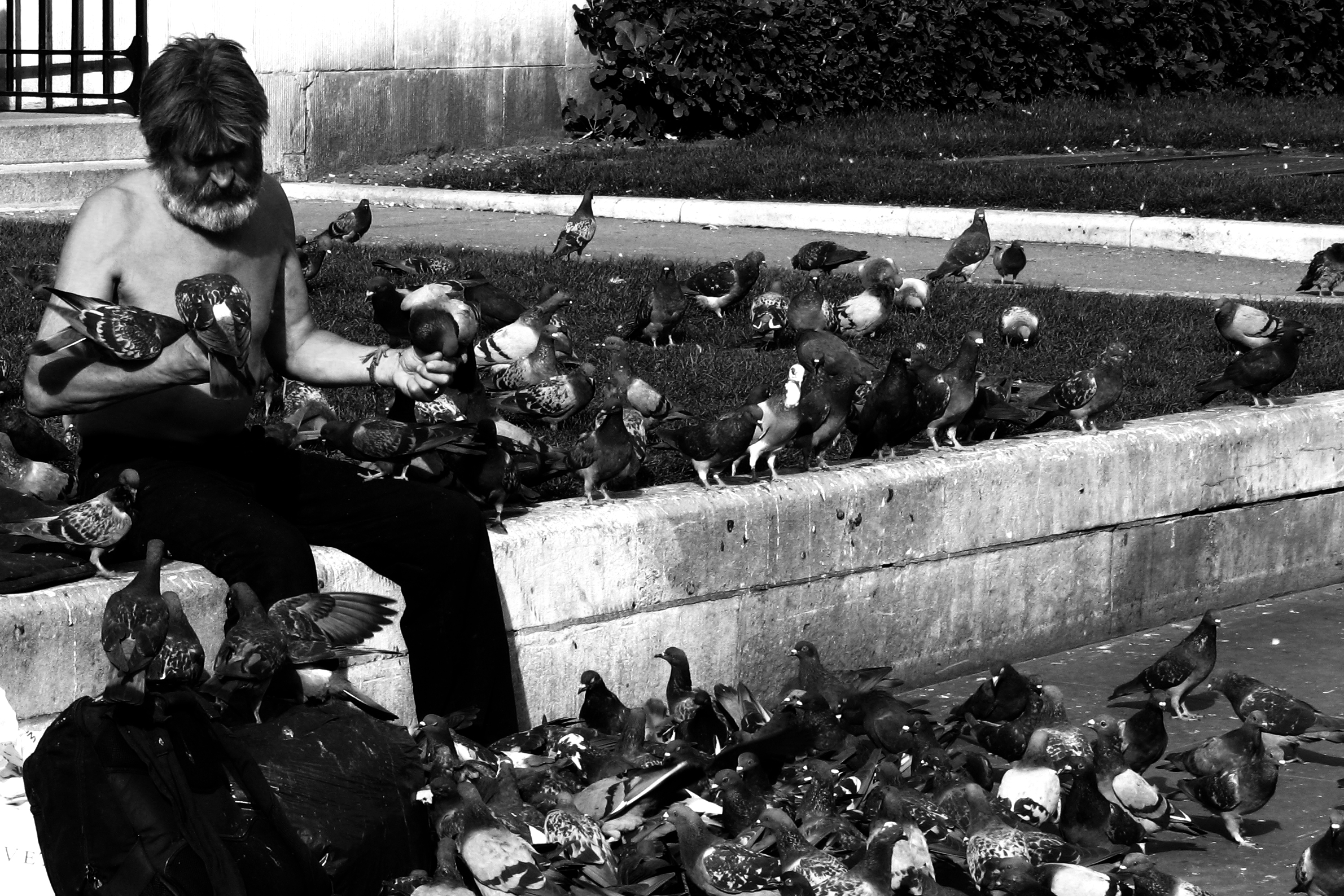
In fact wandering on the City you can easily see men and women sleeping on a piece of cardboard asking for money. The majority of people use to call them homeless but they aren’t always right. Let’s try to clarify the concept.

Being homeless means having no place to call home. There could be a lot of different reasons for it. For example they might have had problems with their family which means they had to move out, or they could have mental health issues.

Being homeless doesn’t always mean that someone is living on the streets. It could also involve a person who’s temporary living on a friend’s coach or in a temporary accommodation provided by a local charity or the council.

Rough sleeping is a type of being homeless. This is about people who have absolutely nowhere to stay, so they have to find a place to sleep at night, which is often on the streets. They may have to rely on local groups, like churches, to provide them with hot meals, and could sleep in a different place each night.

globaltimes.cn

James Brokenshire, the communities secretary, said that efforts to tackle homelessness had “not being good enough” with 4,751 people sleeping on the streets each night.

He added that the strategy of the government will offer help to those with mental health problems and addictions, domestic abuse victims, those leaving prison, and will set about researching the scale of LGBT+ homelessness.

Labour disagrees claiming the lack of urgency while charity Shelter said the plans were not a “total fix” for homelessness.

The new strategy will be based on three steps: prevention, intervention and recovery. 

Up to £30m of the fund will be used for mental health treatment and to provide training for frontline staff to help those under the influence of the synthetic cannabinoid spice.

A further £50m will be used to fund homes outside London for people ready to move on from hostels and the ones looking for help after domestic abuse. 

Accommodations will also be provided for people leaving prison trying not to let them on the streets.

The problem is huge and clear to everyone who walks on the roads of London. This is a first effort to deal with one of the most evident issues of the City.

Is Internet taking our free time off?

(London, Gruppo Federico II – Marzia Gravante, Ylenia Gravante, Sara Gravante, Paolo Di Puorto) – During the last month we have been in London asking more than 2100 people how much time they spend online. We discovered that the majority of them use internet in their free time and that the majority of them cannot live without any tech devices.

The public survey carried out by our team reveals currently some Londoners spend almost an entire day per week online. Both Netflix – with more than 7 hours per day – and social media with at least 6 hours. The reason? They want to  keep up with their friends’ lives as well as curious to discover what is happening across the world.

The results are not so that diverse to the latest researches, according to which the UK adults spend more time online than asleep, with an average of 9 hours per day online and only 8 hours sleeping.

The most alarming news concern children though, who are now spending more than 24 hours a week on tech devices. In fact a lot of parents are worried that it may cause problems by affecting them also psychologically.


The chart above depicts all people interviewed, divided according to their ages, in order to identify which generation is the top online consumer. As we can see, people between 14-25 years old are the ones who use the Internet the most (50%), compared to those between  26 to 40 years old who don’t use internet as much as them. Still, we can apply the stereotype that older people are more conservative and traditional to their habits, as they are not very integrated in such online trend.

However, we need to consider that many people use internet to work, but as our public survey reveals,  the same people spend 2 or 3 hours more on social media in their free time instead of going out and spending time with their friends. 

Walking and commuting across London we notice that many people are nowadays busy on their smartphones, by avoiding eye contact or conversations with people. Such behaviour is very common in the tube, the place where we started asking why. 

The first answer that came up to our minds was that people are becoming addicted so much to their smartphones, or any other tech devices, that they’re unable to live without them. 

In fact when we asked if they could live without any tech devices many looked at us oddly. Why? Most of them were surprised and excited at the idea that they would like to try such experience.

Why is this such habit became so popular? Tech devices, especially in a city like London, are much more convenient as they instantly find you a solution to your needs. 

So,  in a world made mostly by apps, are people are aware of how much time they usually spend online?  Having asked our questions people started to think about the time they spend online doing nothing productive and realized that probably their free time has decreased since they started using the internet. 

An interesting interview is the one we did to a researcher who  said that he usually spends about 6 hours online per day. He also said that he couldn’t live without technology because – once again – he needs it for work and to make his researches easily. So of course not everyone spends too much time online doing nothing and not everyone thinks that the internet is ruining our life. We have to admit that it really helps us doing things in a much a faster way.

What we learned from this experience is that, fortunately, very few people use internet in an excessive way. It happens that sometimes they use it even when they don’t really need it. However  for somebody checking their phones has became an habit and they forgot that they can live perfectly without them.

Skin-whitening creams are still hurting people, someone keep on selling them

London (Giulia Faloia) – Self acceptance is very hard to achieve and its lack can bring to devastating consequences especially if it involves the use of illegal substances.

That’s exactly what happened to women who used skin-whitening creams. This kind of products  were banned from being sold over-the-counter in the UK since they contain hydroquinone and mercury that can cause liver, nerve and foetal damage.

However some business owners haven’t respected the ban and they have kept on selling the forbidden creams.

Some journalists visited 17 shop in London, Leeds, Birmingham and Manchester to see how many merchants are still selling the banned products.

Even if 6 of these shops had already been prosecuted for this reason, the under cover reporters found out that 13 shop keepers are still braking the rules and selling the creams.

The forbidden product was manufactured in Nigeria and it is called Funbeaut-A. It contained 3% hydroquinone, which is more than the strongest medicine containing hydroquinone licensed for prescription by UK doctors.

bbc.co.uk

The clearest consequences of the skin-whitening creams are blisters and scars on the whole parts of the body on which people rub it. But unfortunately this isn’t the worst aspect.

In fact some victims of the creams developed a kind of addiction to them. Stop rubbing it on their skin was as hard as stop taking drugs. 

Furthermore what makes the problem even bigger is that anyone could buy these products. Even a little girl could come in a shop and take it, without any kind of restriction.

Anyway Trading Standards officer Cenred Elworthy said that some shop keepers stopped selling the products after being prosecuted. He added that “secondary offenders are often not selling things that are blatantly, obviously full of illegal products”.

On the other hand Elworthy also said that “no-one has actually served jail time for selling them” despite being caught still selling the illegal products while serving a suspended sentence. 

For this purpose he suggested the application of “on-the-spot fines” for businesses selling the skin-whitening products, and clearer sentencing guidelines.

The problem is real and stricter rules are necessary. This is the only way nobody else gets hurt.

Being a social follower today: do you know what and who influences you?

London (E. Flori, S.Orfei and E. Manicone)  – The Internet usage in Great Britain is still growing since its services have been sophisticated over the years. The last figures reported by the Office for National Statistics show that, in particular, London and South East of England “have the highest internet access”.

So, how do people spend time on the Internet? At this question, one of the common answers is social media. In fact, according to the latest data released, over 39 million social media’s users was dominating the UK population in 2017 and now is amounted to 44 million active users.

Social media, in fact, is becoming a major platform where pictures, videos but also news are shared. However, what it has been emerged is that a phenomenon, called ‘Influencer’, is becoming very popular on the online platforms, catching the attention of London’s population too.

So, what is an Influencer? Most of Londoners, according to our team survey, do not know it, even though they are affected – consciously or unconsciously by it. Therefore, from June 18th to June 27th London One academy’s inquiry, tried to discover what and who such phenomenon involves, how it operates and if it can be identified either in a special figure or via an abstract idea.

More than 4000 people aged between 8 and 70 were interviewed across several London’s areas, starting from the most famous landmarks, such as Trafalgar Square, Leicester Square, Covent Garden, Bond Street, to the the folkloristic East London, where also Spitalfields Market is located.

The survey’s results report that 24,79% of the interviewees either have never heard this term or are not sure about its meaning, while 75,21% were at least ready to provide a definition.

London One Academy team understands that young people
– who were the highest percentage amongst those who were aware of the term – recognise the Influencer’s notion easily, as it is a neologism specifically connected to social media.

The social platforms most used by Londoners are currently Instagram, Snapchat and Facebook, as showed by the graphics. As the interviewees explained, those social platforms are direct with an immediate impact and connection to their influencers with which they can have online conversations. The striking feature of the survey conducted is that even though 24,79% of respondents do not know the term Influencer, the majority of them appear to be influenced by famous people -celebrities, actors, singers, etc. – without calling them “influencers”.

So at the question: “who do most influence you on social media?”- 24,79% answered citing names of artists, musicians, athletes, writers or intellectuals, such as William Blake and Gandhi.

According to Federico Clapis, Italian artist, an Influencer ‘is just a more elegant term to identify someone who creates contents.” However, is the ‘influencer world’ just a matter of words and contents?

Marshall Mc Luhan would answer with his motto: “the medium is the message”. Such observation still applies today, also connected to the image of the Influencer that today, in particular,  plays the role of ‘the medium’ for many people in London.

So, “The medium is the message” turns out to be up-to-date in order to interpret not only the features of mass media communication, but also unexpected aspects of communication in the digital age.

Regarding the contents or topics followed by the users are are fashion, music and sport, but a notable number of people – almost 32%- don’t declare a specific sector of interest, as the histogram above depicts.

Also by connecting the topics shared and follow  to the variable of sex, it has been emerged that men are mainly involved in sports, while women follow influencers who are experts in fashion, music or also make up.

However, one of the common questions raised is  if such phenomenon has existed also in the past or it is a new trend recently came out.

According to the Influencer’s definition – mentioned by Mr Clapis too – it can be stated that, yes, there has always been an influencer in the human history. However, changes and developments are part of every societies and generations, and consequently a change is even visible in this case. The knowledge diffused, or commonly ‘shared’ by the influencers today, is defined as a  medium of ‘commerce and money’ rather than good information and communication. The results are, according to some respondents, a lack in identity and originality.

Studies by P. Lazarsfeld and E.Katz from the Columbia University, released in the 50s and 60s, demostrate the power of mass media shown over the years via opinion leaders, who used to control and affect society’s thoughts and behaviour. Nowadays this phenomenon is still alive, in particular on new media rather than traditional ones such as TV, press or radio, because of the social networks interactivity that attracts the young generation.

Consequently, the will of choosing specific brands and following the last trends is due to the need to confirm our identity into a community where we feel the necessity to be approved.

What is then the solution? Demonising or deleting apps could be the answer for someone but not for all. What it has been emerged from such survey is that the current century is deepening its roots into the digital era soil. What the future can offer us is a double edged weapon, it depends on the usage we do with it. Social media can be considered a drop in the ocean of the Industrial Revolution 4.0, but this does not mean we should underestimate their potential power.