BARBARA PANETTA – Chloe’s Promise

(by Stefania Del Monte)

Barbara Panetta is the author of Chloe’s Promise, an alluring new children’s book and video initially raising funds in favour of the NHS and now supporting Momentum Children’s Charity.

Originally from Italy, Barbara is currently based in Richmond, Surrey, where she lives with her husband, two children and a golden retriever. This is not her first book: her language studies and interest in psychology drew her to write her first novel Ricordi in movimento (2015). She also curated several publications.

We are eager to find out how the idea of Chloe’s Promise was born:

It was all very sudden! – reveals Barbara – One day I was in my garden listening to one of my daughters practising the piano, when I noticed a column of ants struggling to collect a biscuit crumb that had fallen to the ground. This set my thoughts in motion and the idea for Chloe’s Promise germinated”.

Author Barbara Panetta

Once the story had been outlined, Barbara worked together with children’s psychologist Giovanna Campolo to ensure that the words used and the morals were appropriate for children of three years and above. The result is a charming, illustrative work that is sure to engage any child.

The story – she explains – is about a little ant named Chloe and her brothers and sisters. The main focus is the relationship between adults and young children, and especially the ways in which they both learn to trust and respect each other and the choices they make”.

The book is enriched by beautiful illustrations sketched by Barbara, who is not an illustrator but used her passion to produce some pretty drawings. She has used watercolour rather than digital processing, to keep it as simple as possible.

Later, graphic designer Aurelio Scalabroni intentionally added spots of colour in most of the pages, giving the impression of an unfinished work and sharing with readers the idea that nothing is perfect.

Through such illustrations and the use of simple language, children can therefore identify with the main characters, comparing themselves to hard working, determined and disciplined ants.

Chloe’s Promise aims to raise charity funds:

“Since the beginning – affirms Barbara – my intention was to support storytelling at home between parents and children during the COVID-19 crisis. I believe that at difficult times we can all contribute, in different ways. I also really wanted to help children in need, therefore all profits generated from the book are donated to a local registered charity called Momentum Children’s Charity, who is supporting children with cancer or life challenging conditions. I wish my book could bring a big smile to all those unfortunate children”.

This is both a print and a video book benefiting from the collaboration of Ben Shephard, presenter of ITV’s Good Morning Britain and Tipping Point, who proudly agreed to narrate the story, and musician Alessandro Viale, author of the soundtrack.

Viale talks enthusiastically of this special project:

It has been a lot of fun! – he says – This involved composing, selecting and performing. Because of the lockdown, I had to find creative ways to work without moving from home. This is why I ended up recording on a very ancient English Broadwood square piano made in 1815. I tended to play different pieces according to my mood and, when inspiration struck, compose something new. Therefore, I identified with the little ant Chloe and with all the feelings emerging from the story. She loves Chopin (and Tchaikovsky) but, sometimes, she just reacts to what happens by putting her hands on the piano and improvising”.

Barbara, whose daughters both play the piano and the cello since they were three years old, agrees with Viale in believing that it is very important for children to familiarise with music from an early age:

“I think music can help to express the vast amount of new emotions that a child undergoes while growing. I am very happy that little Chloe decided to spend her day relaxing and playing the piano: no surprise that the day after she was able to work even harder!”.

Featured image:
The illustrated cover of Chloe’s Promise


PAOLO ROSSI – How long it lasts a moment

by Stefania Del Monte

He was an idol and was disqualified. He returned and became the Pablito of the Spanish Mundial in 1982. This is, in short, the story of Paolo Rossi who, from 1980 to 1982, from the punishment for football betting to the victory over Germany, lived the two hardest and most exciting years of his life. A fairy tale with a happy ending, imbued with striking successes alternating with lacerating pains, with strong surges and ruinous falls, with dreams come true and deep wounds, with precious awards and injustice. It is the black and white of an exceptional existence, the perfect script of a film that has enchanted generations and continues to be reviewed and relived by the public.

Written in collaboration with the journalist Federica Cappelletti, the book Quanto dura un attimo (How long it lasts a moment) is the autobiography of a boy who has defied fate to become a legend, realising his dream as a child and writing immortal pages of the history of universal football. Of this, and many other things, we speak directly with the protagonist of this extraordinary life: Pablito!

“How long it lasts a moment”: a book written in collaboration with your wife, Federica Cappelletti. How was the idea born?

The idea was born over a coffee. It was a grey morning, it was raining, and the sound of the falling rain reminded me of the cleats that beat on the floor in the tunnel that separated the changing rooms from the Bernabeu Stadium in Madrid. It was the 1982 Spain final: Italy-Germany. I still have chills on my skin. My wife asked me to go ahead with the story and then tell it to the world, in a book, so that it could become everyone’s heritage.

What inspired the title?

The moment has always been my characteristic. For me, it meant anticipating the opponent. Get there first. Score. But the moment is also the happiness I felt in those eternal moments of the World Cup in Spain.

Have you always wanted to be a footballer or did you have other dreams as a child?

My dream was to become a footballer. I had an idol. His name is Kurt Hamrin. He had my characteristics; he was an opportunist on the field. I liked him. But I also thought about being a doctor. Rather, my mom wanted me to be an accountant.

Before turning into legend, your career had undergone several jolts, causing strong reactions from the press of the time to the news of your call to the World Cup in Spain. How did you experience that period before arriving in Iberian land?

I suffered a great injustice in my life. I was disqualified (despite being innocent) for two years for not reporting a teammate and two fixers who wanted to combine a game. The Perugia-Avellino in which I scored two goals: but only because it was what I knew how to do. They paid me to score goals. I scored many. So the call to the World Cup in Spain was meditated by Enzo Bearzot and in the end apt. I repaid the coach for his boundless trust and I’m proud of it.

And what, on the other hand, is the most beautiful memory you have of that extraordinary adventure that was the 1982 world championship?

The team. The coach. The sense of family. Home. The affection I felt by everyone. And then, the three goals in the match against Brazil. I became a legend thanks to them, but they also gave me the strength to start again. And I became the top scorer, world champion, golden shoe and golden ball.

Among others the book is dedicated to Enzo Bearzot. How important was his figure to you?

I owe a lot to Enzo Bearzot, I owe him my rebirth. He knew what I was made of and challenged everyone by proving he was right. He is in my heart, where he will remain forever.

The victory in Spain helped to bring colour back to an Italy that tried at all costs to leave the darkness of the Seventies behind. How did the Italians welcome you on their return?

The return to Italy was a tricolour feast. Italy, with that World Cup, has found confidence, raised its head, the Italians have returned to smiling. Sociologically it was an important victory: one of the most important in history.

Among the legendary companions with whom you had the privilege of playing, was there one to whom you were most attached?

I have been and I am deeply attached to everyone. But Antonio Cabrini and Marco Tardelli remain the closest. Also today.

And the most feared opponent?

Brazil, without a doubt. But only before the final, at least for me!

Your best goal?

The first I scored to Brazil definitely unlocked me. But the others weren’t bad either!

Among the prestigious prizes and awards obtained, which made you happier?

The Golden Ball, certainly. In Italy we are only five to have won it: Omar Sivori in 1961 (born in Argentina but national team at the time of recognition); Gianni Rivera in 1969; then I in 1982, Roberto Baggio in 1993 and Fabio Cannavaro in 2006.

What did you do once you “hung up your boots”?

I am a commentator, I have a resort in Tuscany (in Poggio Cenina), I was a builder, I produce oil and wine. I write books with my journalist wife (laughs).

Do you like today’s football? How much has changed in forty years?

I like today’s football: it’s faster. The changes have been many, profound, starting with the management of cards and players. But rightly so, football is also adapting to modernity.

Do you see yourself in any football player today?

There aren’t many players with my characteristics. Perhaps one who resembles me a bit is Mertens of Napoli.

Do you have any regrets?

None. I did what I wanted to do, I made a dream come true, I won everything there was to win.

Cover: Paolo Rossi and Junior, Italy-Brazil, Spain 1982
visual material courtesy of Paolo Rossi

Click here to read the interview in Italian 


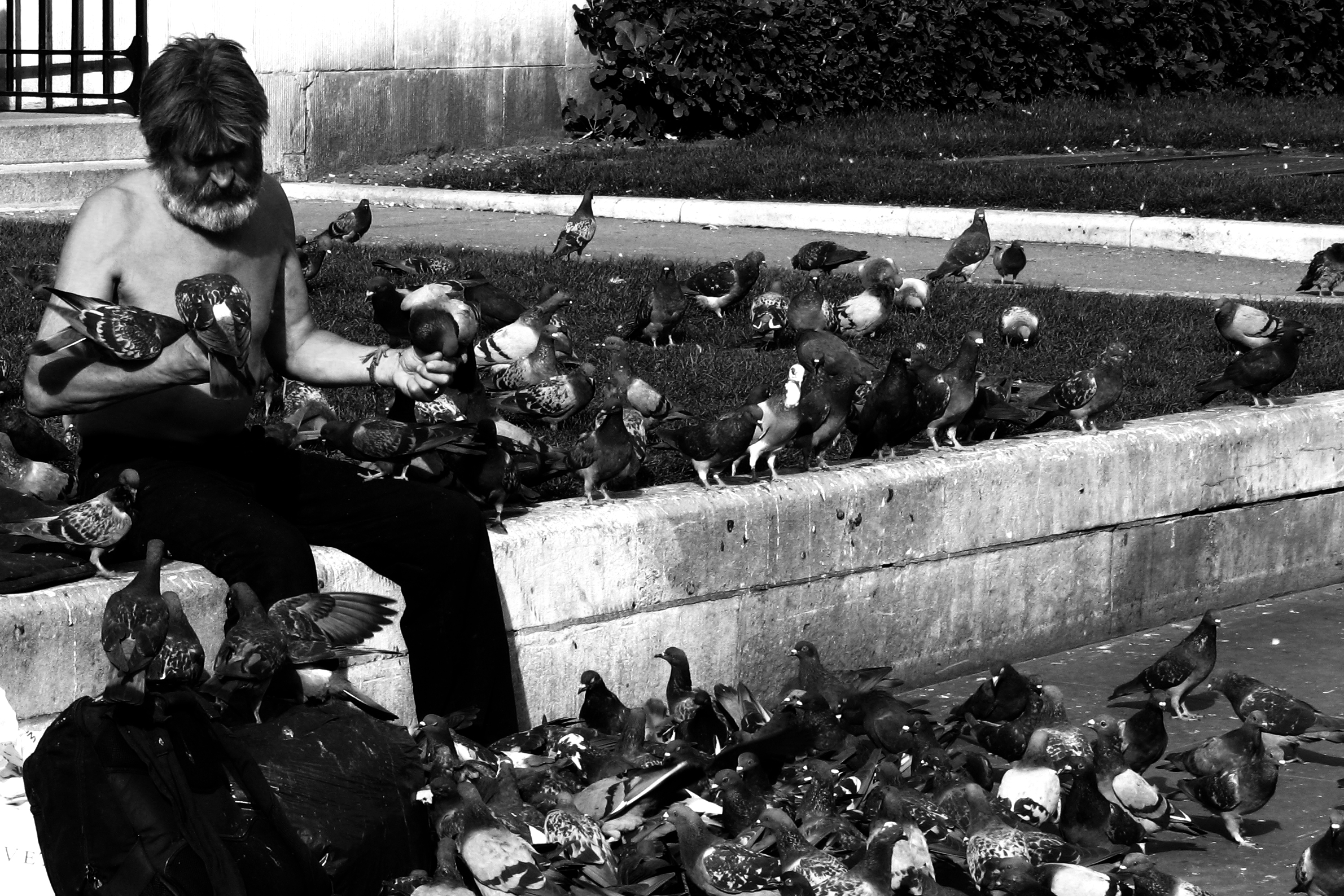
Homelessness and Rough sleeping. The Government is looking for solutions

London (Giulia Faloia) – Theresa May’s Government is going to use £100m trying to solve the problem of many people living on the streets of London.

In fact wandering on the City you can easily see men and women sleeping on a piece of cardboard asking for money. The majority of people use to call them homeless but they aren’t always right. Let’s try to clarify the concept.

Being homeless means having no place to call home. There could be a lot of different reasons for it. For example they might have had problems with their family which means they had to move out, or they could have mental health issues.

Being homeless doesn’t always mean that someone is living on the streets. It could also involve a person who’s temporary living on a friend’s coach or in a temporary accommodation provided by a local charity or the council.

Rough sleeping is a type of being homeless. This is about people who have absolutely nowhere to stay, so they have to find a place to sleep at night, which is often on the streets. They may have to rely on local groups, like churches, to provide them with hot meals, and could sleep in a different place each night.

globaltimes.cn

James Brokenshire, the communities secretary, said that efforts to tackle homelessness had “not being good enough” with 4,751 people sleeping on the streets each night.

He added that the strategy of the government will offer help to those with mental health problems and addictions, domestic abuse victims, those leaving prison, and will set about researching the scale of LGBT+ homelessness.

Labour disagrees claiming the lack of urgency while charity Shelter said the plans were not a “total fix” for homelessness.

The new strategy will be based on three steps: prevention, intervention and recovery. 

Up to £30m of the fund will be used for mental health treatment and to provide training for frontline staff to help those under the influence of the synthetic cannabinoid spice.

A further £50m will be used to fund homes outside London for people ready to move on from hostels and the ones looking for help after domestic abuse. 

Accommodations will also be provided for people leaving prison trying not to let them on the streets.

The problem is huge and clear to everyone who walks on the roads of London. This is a first effort to deal with one of the most evident issues of the City.

Is Internet taking our free time off?

(London, Gruppo Federico II – Marzia Gravante, Ylenia Gravante, Sara Gravante, Paolo Di Puorto) – During the last month we have been in London asking more than 2100 people how much time they spend online. We discovered that the majority of them use internet in their free time and that the majority of them cannot live without any tech devices.

The public survey carried out by our team reveals currently some Londoners spend almost an entire day per week online. Both Netflix – with more than 7 hours per day – and social media with at least 6 hours. The reason? They want to  keep up with their friends’ lives as well as curious to discover what is happening across the world.

The results are not so that diverse to the latest researches, according to which the UK adults spend more time online than asleep, with an average of 9 hours per day online and only 8 hours sleeping.

The most alarming news concern children though, who are now spending more than 24 hours a week on tech devices. In fact a lot of parents are worried that it may cause problems by affecting them also psychologically.


The chart above depicts all people interviewed, divided according to their ages, in order to identify which generation is the top online consumer. As we can see, people between 14-25 years old are the ones who use the Internet the most (50%), compared to those between  26 to 40 years old who don’t use internet as much as them. Still, we can apply the stereotype that older people are more conservative and traditional to their habits, as they are not very integrated in such online trend.

However, we need to consider that many people use internet to work, but as our public survey reveals,  the same people spend 2 or 3 hours more on social media in their free time instead of going out and spending time with their friends. 

Walking and commuting across London we notice that many people are nowadays busy on their smartphones, by avoiding eye contact or conversations with people. Such behaviour is very common in the tube, the place where we started asking why. 

The first answer that came up to our minds was that people are becoming addicted so much to their smartphones, or any other tech devices, that they’re unable to live without them. 

In fact when we asked if they could live without any tech devices many looked at us oddly. Why? Most of them were surprised and excited at the idea that they would like to try such experience.

Why is this such habit became so popular? Tech devices, especially in a city like London, are much more convenient as they instantly find you a solution to your needs. 

So,  in a world made mostly by apps, are people are aware of how much time they usually spend online?  Having asked our questions people started to think about the time they spend online doing nothing productive and realized that probably their free time has decreased since they started using the internet. 

An interesting interview is the one we did to a researcher who  said that he usually spends about 6 hours online per day. He also said that he couldn’t live without technology because – once again – he needs it for work and to make his researches easily. So of course not everyone spends too much time online doing nothing and not everyone thinks that the internet is ruining our life. We have to admit that it really helps us doing things in a much a faster way.

What we learned from this experience is that, fortunately, very few people use internet in an excessive way. It happens that sometimes they use it even when they don’t really need it. However  for somebody checking their phones has became an habit and they forgot that they can live perfectly without them.

Brexit seen by another point of view

London (Valeria Piccioni) – The phenomenon of the Brexit will have an impact on the future of the European Union: the difficult situation of the UK will affect the trade marketsboth internally and externally. However it is important not to fall in hasty conclusions. Infact, as soon as the UK leaves the EU, many changes will arguably be implemented in the trade with EU and with the Commonwealth countries.

The Commonwealth is an intergovernmental organisation made of 53 member states that are mostly former territories of the British Empire. Leaving the EU, the UK will exit the customs union and the bloc’s external commercial policy. This political phenomenon could put EU in a better position for possible trade market deals with Australia and New Zealand after Brexit. Indeed, New Zealand’s trade minister, David Parker, said that the UK’s withdrawal did not diminish the potential gains for his own country which would come from breaking down trade barriers with the remaining 27 member states.

Moreover also Australia has been currently under the spotlight. As a matter of fact UK is the big country’s eighth largest two-way trading partner. Australia’s Commonwealth Bank currently declared a doubling in costumers.

Australian government is now negotiating a deal with the EU. Nevertheless, according to experts, Brexit could be a new opportunity for the Australia and New Zealand to sell in a tariff-free market in the UK.

By establishing a Free Trade Agreement (FTA), Australia could achieve a new deal between its and UK’s enterprises. This recent treaty will also consider theregulations for the relocations of the enterprises allocated in both of the Countries.

In order to dislocate Australian and New Zealand companies to London, the businesses would require real estate services to stay in UK. For this reason, it is important  to focus on Stonelink International, London’s Real Estate Broker.

“International firms, especially from Australia and New Zeland who have a lot moving parts in terms of relocating staff and family, logistics & transportation of vital equipment want to ensure the commercial space and property they will move into, is ready for them, well ahead of time” said Nicholas Tsiougos, Managing Director of Stonelink International.

It has always been argued that several business and investments will experience  numerous difficulties after  2019. However this hypothesis could possibly not be accurate. As a matter of fact, a considerable amount of businesses has not been affected by Brexit. On the contrary, these enterprises have experience and unexpected growth. Therefore Brexit is likely to offer Britain different opportunities which are neither better nor worse than the previous ones.

Future starts here: the visionary exhibition

London (Valeria Piccioni) – The pioneer city of London inaugurates a visionary exhibition: “Future starts here”. This exhibition displays the future of design. Located at the Victoria and Albert Museum, it will be open until 4th of November. Over 100 prototypes that could possibly change the world will be exposed. As a matter of fact these inventions will probably influence our daily life shaping our routine .

The first department focuses on the ralationship between humans and technology. For instance the department displays “super-clothes” similars to wearable muscles thanks to bio-meccanic contribution. Moreover, there are exposed solars t-shirts which absorb sun’s Energy allowing to charge phones and cameras.

The Second part deals with the issues regarding public aereas. Some of protypes exposed will be: the first model of the zero-emission city, Abu Dhabi, or «The House of One» in Berlin that is at the same time a Church, a mosque and a synagogue.

Furthermore among the greatest inventions that exibition hosts it is possible to admire Volkswagen’s without-driver car, micro-satellites that throw artificial falling star in order to give an impression of atmosphere works. Moreover Samantha Cristoforetti’s pot is also being displayed. An area regarding the considerations revolving around the future of democracy along with progress can be visited within the exibition rooms. In addition the corrent department about life after death also focuses on the illusion of immortality.

Furthermore it is ipothetically possible to transfer cerebral connections in a USB key in order to create an avatar with artificial intelligence. It could be also doable to make disks conteining human knowledge’s heritage. Humanity is trying to fight mortality by surviving a possible extinction.

The final aerea displays several sprinkling questions over the exhibition’s walls. The main ones are: “What makes us human?” “Does democracy still work?” “Who wants to live forever?” “We are alla connected but do we feel lonely?”.

“Since the beginning our exposition sponsored pioneering art, sciences, design and technology” stated Tristram Hunt, the gallery’s director “we are in the middle of a digital revolution and with this exibition we want to research the most exciting experiments and the most incredibles teories about our future in order to take them out of the laboratori in order to share them with the audience.”

A draft bill for Italians abroad

London (Valeria Piccioni) – The new draft of the Italian Government deal takes into consideration the matter of Italians abroad’s.

“Regarding the Italian communities situated abroad, it is necessary to highlight knowledge and experience heritage in order to support Made in Italy, the Italian culture  and the Italian language all over the world. Furthermore, the election procedures in the foreign jurisdiction and the rappresentative institutions of the General Consulate (CGIE and COMITES) must be reformed. These measures will make these organisations more efficient, more transparent and less subjected to vote misrepresentations. Moreover,  concerning the COMITES and the CGIE, it is necessary to specifically reform the purposes of these institutions in order to blend them with the parliamentary representation. Finally, the diplomatic and consular net must be reformed in order to grant adequate services to the growing Italian communities that are settling permanently abroad” declares the final draft officially published on Friday.

Until now there has been a real negligence towards this matters: apparently, only the Italian citizens living in Italy seem to be considered whereas instead 4.2 millions of Italians abroad seem to be neglected.

Meanwhile, on Tuesday, the 18 Parliament members elected abroad from over 1 million and 100 thousand voters met for the first time during this legislation in the Chamber of Deputies. Are they conscious about the current lack of attention towards the Italians abroad? In the meantime, this meeting has highlighted some of the main issues of the Italian communities abroad which are:

  • Foundation of a “Bicameral Commission for the issues of Italians abroad”
  • Reform of voting procedures
  • The strengthening of Consular resources

It is important to remember the controversial relationship between the unborn Italian Government and Bruxelles. The faces of this new Government are still unknown, therefore Europe fears an Italian economical collapse. Recently, Salvini and Di Maio against Manfred Weber, exponent of the German CSU and president of the popular European party at the Europarliament who stated “Irrationals or populists actions could cause a new euro crisis” he said to them. “You are joking with fire because Italy is heavily indebted.”.

“Italians are tired of taking orders from Brussels and Berlin!” replies Mara Bizzotto, leader of the Lega in the European Parliament “Merkel and her proconsuls in Brussels always assembled and disassembled Italian governments according to German and their banks’ interests “.

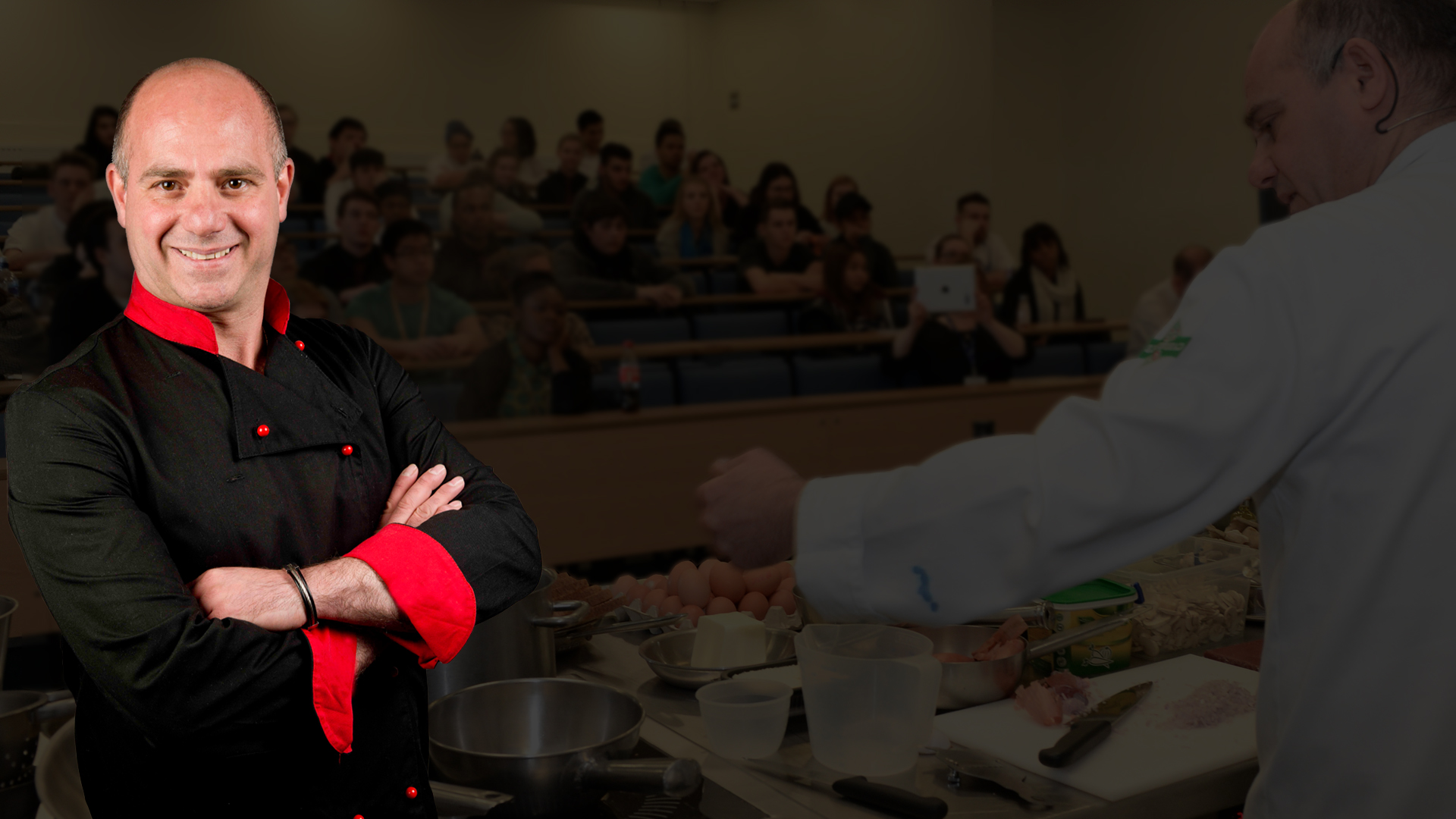
Enzo Oliveri all set to judge at the “Young Chef Olympiad 2018”

 
Worldwide culinary students will compete in India from 28th January to 2nd February
 
Federation of Italian Chefs UK President Enzo Oliveri will represents both the UK and Italy  A student from the Italian city of Udine will compete alongside his mentor
 – London based Italian chef Enzo Oliveri, culinary expert both in the UK and Italy, has been nominated to judge at the “Young Chef Olympiad 2018”.
The initiative takes place on 28th January-2nd February 2018 in India ((New Delhi, Bangalore, Pune and Kolkata). Involving more than 50 countries and the best culinary schools worldwide, it is organized by International Institute of Hotel Management, partnered by International Hospitality Council.
The UK delegation of FIC (Federation of Italian Chefs), of which Enzo Oliveri is president, has selected the hospitality school “I.S.I.S. Bonaldo Stringher” in Udine, northeastern Italy, to compete at the Olympiad: its student Luca Rinaldi, aged 17, will compete with teacher Gianni Nocent as his mentor.
Last year Enzo Oliveri participated as mentor of young chef Luigi Amaduzzi.
Oliveri says: “The next generation of chef needs to know more about what great food is. Nutrition is key in challenging the international food scenario and we are going to demonstrate that the Mediterranean Diet is the best way to help the body stay healthy. The Olympiad is a precious opportunity for the young chefs to learn, network and share knowledges and skills in a global prospective. I can’t wait to return there again”.
Other judges at the Olympiad include the famous chef Sanjeev Kapoor and professor David Foskett who is an educationist and an author.
The participation of chef Oliveri is supported by his London restaurant “TastingSicily Enzo’s Kitchen”, by the national Italian airline Alitalia and by the FIC (Federazione Italiana Cuochi) which advised the hospitality school during the preparation to the Olympiad.
Oliveri, who is promoting a “Culinary Medicine” project focusing on healthy eating, is also the official head chef for the Italian Cycling Team which recently won 7 medals at the Cycling World Championship in Bergen.

Love at the time of Tinder: are dating apps making Londoners more lonely?

by Valerio Esposito

London is a city where it’s easy – almost inevitable – to feel lonely. In such a fast-moving environment it is becoming increasingly difficult to connect with other people. You see it every day: your co-worker is leaving for a better job, your neighbour is moving out because the rent is too high and the girl who made your morning coffee moved back to her country.

It’s a city of 9 million people, and yet it’s never enough to ease your misery: everyone is too caught up in their daily drama to care about others, to even realise that they’re there. And at the end of the day, you crawl into an empty bed and search for the easy solution on the screen of your phone, trying to find comfort in yet another dating app.

A recent survey[1] conducted by tech start-up Wonderush showed that 64 per cent of Londoners feel lonely on a daily basis. Of those surveyed, 65 % attributed their loneliness to the demands of their job, while 42 % said that London itself is the main cause.

Loneliness is a tricky concept: it can be social or emotional, the latter being more damaging. Research suggests that the feeling of loneliness does not arise from the lack of company, but rather the lack of emotionally fulfilling connections. Just try to take a train in the city and look around: not a whisper, or a smile or even innocent eye contact. We are like flies in a web, permanently alone, helplessly disconnected.

But are dating apps making it worse? It sure is difficult – almost impossible – to form meaningful relationships just by playing a little game with the thumb: swipe left, swipe right. Ugly and hot. Good and bad. The selection mechanisms have never been so simple – and ruthless. People have become bidimensional exchange goods, with no depth: their worth is established by the movement of a merciless finger.

”I’ve tried Tinder but it didn’t work. I found that fast mechanism of ‘consumption’ degrading and impoverishing. This model makes it impossible to develop a relationship,” comments retail worker Fiorina, 36. “You can’t keep up with it, you’re always greedy and you can’t focus on what’s in front of you because you’re impatient to see what’s next.”

Julia Keller, love coach and author of Attract Authentic Love, attributes this to our “incapability to communicate with each other. Some say that dating apps were invented because we lost this ability. Or maybe they made us lose this ability. It’s a chicken and egg kind of situation, hard to tell”.

We are a selfish generation and yet we live in the senseless effort to project ourselves onto others. That new pair of shoes, that stylish haircut, that rejuvenating cream and the new red lipstick. Why do we do it, if not to make ourselves more appealing – or tolerable – to others? This is just one of the many faces of this business called love.

Dating apps are perhaps the newest – and most insidious – degeneration of this business. It’s no surprise that people’s approach towards relationships has become increasingly business-like. Student Aara Syed, 19, explains how she felt that “dating apps might be a way to tick a box: boyfriend sorted. People might feel that way because it’s so easy to meet people and have many options. But it doesn’t work like that”.

The truth is that, most of the times, dating apps create a demand by exploiting basic needs: human contact – and affection. They claim to sell a solution: if you can’t find the one, they’ll do it for you. ”We’ve lost the notion of process. We don’t take the time to solve the problem but we just move on to the next things. And that’s why we are constantly dissatisfied. And constantly lonely,” Keller adds.

In the meantime, it seems as dating apps try to convince you that what you want is easy to get; and you end up wanting more – and faster. It’s a scam, a palliative. It offers relief but it doesn’t heal people’s brokenness.

Yes, technology is breaking us. We don’t work the way we used to. ‘’How do you even meet people in the real world?’’ is a question that I have heard countless times. I usually answer with another question: ”How did your parents meet?”

Julia Keller argues that ”It’s a completely different world than it was the time of our parents. People are confused and busy. The world is becoming much more superficial and we find ways to make love faster and easier and this leads to a lot of disappointments”.

Indeed, things have changed. Millennials are the main victims, for they were born in the era of dating apps and might not even know that they have an alternative. Jekaterina Drozdovica, 20, a student in London, explains how “what were normal human interactions are now considered abnormal. Especially in London, If I just went to a bar and started a conversation with a stranger it would be considered… creepy”.

We got to the point where starting a conversation in a train or in a pub has become weird. But, ironically, sending and receiving ”dick pics” and other obscenities is more tolerable.

Maybe it’s true: the world has changed and dating apps have become an essential tool for human interactions. This leaves us wondering if it’s worth fighting the new system or if it’s just better try to find a way to deal with it. Aara is not sure whether dating apps should be completely demonized: ”I can’t say that they make things worse, but they clearly don’t help”.

Love Coach Keeler, on the other hand, believes that it’s all about “learning to navigate the odds. Good or bad they might be, dating apps are still a practical way to get to know people. And once you’ve met someone you just need to know the right thing to do from there”.

[1] http://blog.wonderush.com/pull-sickie-make-friend-month/

London is the best city for financial resources and quality of life

LONDON – Just like every two years, PwC – PricewaterhouseCoopers, a multinational professional services network and the largest professional services firm in the world – published the “Cities of Opportunity” survey, a chart of the cities that better put financial dynamism and high quality of life together.

This year’s survey was the seventh one managed by PwC and it shows the social and financial status of 30 of the biggest cities in the world, taking into account ten factors, including public transport, business development facilities, suitableness for living, use of technology and cost of living. The survey shows that cities can be successful when they both register excellent financial performances and present valid social elements such as the quality of life, elders’ welfare and even the readiness to face natural catastrophies.

www.e-architect.co.uk

London conquered the first place in this chart for the second time in a row: the city excels three out of six factors, including technology development, innovation, suitableness for living and business growth. The following six spots are occupied by Singapore, Toronto, Paris, Amsterdam, New York and Stockholm. Milan is the first Italian city in the chart, ranked 18th – his reputation and image have been strongly boosted by the Expo Milano 2015, which brought tecnhologic innovations and more openness to people, goods, economies and information.